West
Gov. Newsom signs bill to resume harsh penalties for smash-and-grab robberies in California

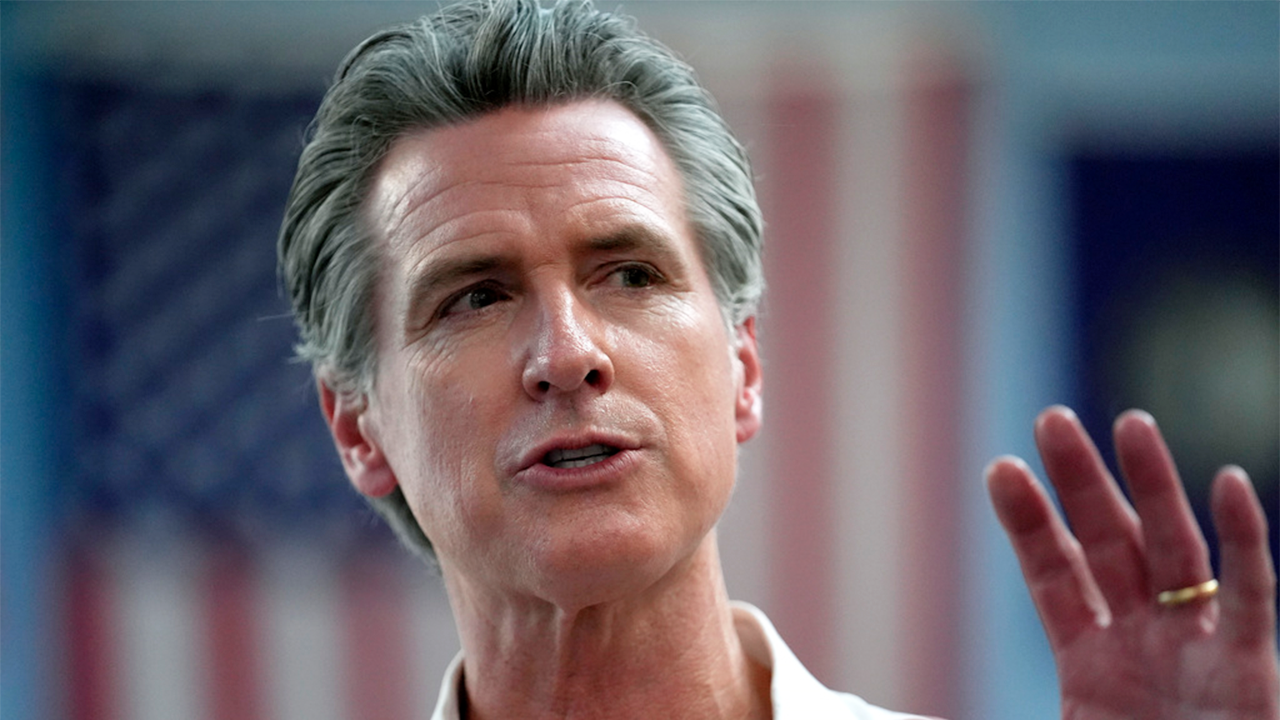
California Gov. Gavin Newsom signed a bill Thursday that reinstates tough criminal penalties for those who conduct large-scale theft schemes and smash-and-grab robberies that continue to frustrate voters across the state.
Under the new law, prosecutors are required to begin imposing harsher sentences on those who damage or destroy property with a value of more than $50,000 while committing a felony.
In 2018, a similar law expired, though the new law will sunset by 2030.
“California already has some of the strictest retail and property crime laws in the nation, and we have made them even stronger with our recent legislation,” Newsom said in a statement. “We can be tough on crime while also being smart on crime. We don’t need to go back to broken policies of the last century.”
SACRAMENTO CITY ATTORNEY REPORTEDLY THREATENED TO FINE TARGET STORE FOR REPORTING THEFT CRIMES
California Gov. Gavin Newsom signed a bill Thursday to return to harsh penalties for those who conduct smash-and-grab retail thefts. (AP Photo/Steven Senne)
Newsom’s decision to bring back tough penalties comes as Democratic lawmakers try to convince voters they are tough on crime. At the same time, the same lawmakers are working to convince voters to reject a ballot measure that would bring even harsher sentences for repeat offenders on shoplifting and drug charges.
In California, shoplifting has been a growing problem, though large-scale smash-and-grab thefts have become a crisis, not just in the Golden State, but across the country.
Smash-and-grab thefts are typically done by groups who rush into stores and snatch merchandise sitting in plain sight. The crimes are oftentimes caught on video and posted to social media, bringing attention to the problem of retail theft in the state.
SACRAMENTO MASS SHOOTING SUSPECT FOUND DEAD IN JAIL CELL WHILE AWAITING TRIAL
Video of a shocking smash-and-grab robbery shows the moment a Sunnyvale jewelry store is overwhelmed by suspects armed with tools and hammers. (KTVU)
Newsom’s new law is part of a bipartisan legislative package of about a dozen bills aimed at cracking down on thefts. The bills also make it easier for prosecutors to go after repeat shoplifters and auto thieves while increasing penalties for those running professional reselling schemes.
“Violent ‘sledgehammer crimes’ and flash-mob attacks by organized gangs must stop now,” Assembly Speaker Robert Rivas, who authored the bill, said in a statement obtained by The Associated Press. “Our business owners and workers should not have to live in fear that these crimes will come to their doorstep.”
The California Retailers Association also supports the measure and said the new penalties would serve as “a deterrent against ‘smash-and-grabs’ and retail crime.”
NEWSOM PROPOSES DEFUNDING LAW ENFORCEMENT, PRISONS, PUBLIC SAFETY AS CALIFORNIA FACES MASSIVE DEFICIT
California Gov. Gavin Newsom speaks Dec. 17, 2021, at a news conference in Dublin, Calif., about headline-grabbing smash-and-grab robberies at high-end stores. (Ray Chavez/Bay Area News Group via AP)
Opponents of the bill, which include public defenders and criminal justice advocates, claim the new legislation will result in more people in prison for non-retail theft crimes.
Under the bill, the opponents said, prison time would increase for a wide range of felony charges. For example, a person who damages vehicles while driving under the influence could be handed a harsher sentence under the new law.
Opponents also said the new law is modeled after a proposed tougher-on-crime ballot initiative Newsom and Democratic legislators spent months criticizing, ultimately losing efforts to keep the measure off the ballot.
“If we’re opposed to it being permanent, why aren’t we opposed to it being temporary?” Taina Vargas, executive director of Initiate Justice Action, told the wire service about the new law. “This makes it apparent that, you know, certain individuals in the Legislature and the governor just want to give off the impression of doing something.”
Newsom’s administration has spent $267 million to help dozens of local law enforcement agencies increase patrols, buy surveillance equipment and prosecute more criminals.
Law enforcement across the state has arrested 6,900 people for retail theft crimes in the first six months of the operation, Newsom’s office said Thursday.
The Associated Press contributed to this report.
Read the full article from Here


The Affordable Groceries Act aimed to increase access to grocery stores and pharmacy chains by taxing empty storefronts and establishing a fund to subsidize groceries.
A view down an aisle at a Safeway supermarket in Walnut Creek, California, on July 22, 2025. Mahmood, who represents the Tenderloin, claims that Lurie stepped in to swat down the grocery store tax proposal because Amazon, which owns Whole Foods Market, had been “lobbying intensely” against the proposal at City Hall for weeks. (Smith Collection/Gado via Getty Images)
“They don’t like taxes on corporations. It’s just philosophical. But the unprecedented part is that yesterday, I got a call that they are going to actively oppose this,” Mahmood said of the Lurie administration. “The only conclusion I can draw is this comes from pressure that Amazon built.”
Mahmood, who represents the Tenderloin, claims that Lurie stepped in to swat down the grocery store tax proposal because Amazon, which owns Whole Foods Market, had been “lobbying intensely” against the proposal at City Hall for weeks.
According to Mahmood, Amazon lobbyists requested an exemption to the legislation for the company’s shuttered Whole Foods storefront on Market Street. Mahmood declined the request.

“They said, if you do this, we will campaign against it,” Mahmood told KQED. “The explicit words from their lobbyists were, we just spent $250,000 against Prop D. We could probably do the same here again.”
Amazon did not immediately respond to a request for comment.
Proposition D, known as the Overpaid CEO Tax, appeared on the June primary ballot and aimed to tax major corporations to fill the city’s budget gaps. Opponents, including moderate political pressure groups and tech leaders, spent millions of dollars to defeat it. Lurie also urged a “no” vote. It ultimately failed to pass.
The closure of grocery stores and pharmacies has factored into affordability challenges in the city.
Nearly a third of San Franciscans living below the poverty line are food insecure, according to a 2024 report by the city’s Food Security Task Force, and nearly 110,000 residents utilize CalFresh, a food benefits program that the Trump administration has made qualifying for more difficult.
But Lurie has said Mahmood’s plan won’t help fill the city’s many empty grocery stores.
“Mayor Lurie is working to bring grocery stories to San Francisco’s communities. More taxes won’t achieve that,” said Charles Lukvak, the mayor’s spokesperson. “We support the Affordable Grocery Fund and will continue working with Supervisor Mahmood and the entire Board to bring more grocery stores to the city.”
Taxes collected on the vacant storefront proposal could have gone toward a new affordable grocery fund, which would also accept private donations if both measures passed. The fund would be intended for a variety of different affordability programs focused on healthy food.
Mahmood said Lurie urged Supervisor Connie Chan to cut the item from the upcoming Budget and Finance Committee agenda, striking its chances of going on the ballot this November.
A spokesperson for Chan said she supports the intent of the legislation but that it required more work and was not ready to go before the board or voters.

“Budget Chair Connie Chan agrees with Supervisor Mahmood’s intent for this measure — we need more neighborhood grocery stores — but she also understands that much work needs to be done to this measure to deliver that intent,” said Robyn Burke, Chan’s spokesperson. “Supervisor Mahmood has amendments he wants to make to his legislation that he is still working on.”
Mahmood said he had support from Supervisors Chyanne Chen, Danny Sauter, Stephen Sherrill and Myrna Melgar for the proposal.
He has a final Hail Mary he is holding out for that could allow the proposal to move forward after a motion next Tuesday, if Board President Rafael Mandelman steps in to initiate a vote. Mandelman did not immediately respond to a request for comment.
“When a proposal to make groceries more affordable gets pulled from the agenda before the public even gets to weigh in, that’s a problem no matter who asked for it,” Mahmood said. “San Franciscans deserve an up-or-down vote, in public, from their elected leaders.”

To the well-trained eye, Denver figured to be one of the epicenters of this NBA offseason.
With two starters due for a combined $25.8 million salary increase, and with a potential rising star on the bench determined to land a lucrative contract extension, something had to give. The Nuggets were about to get too expensive for owner Stan Kroenke to stomach. Especially after their debacle of a playoff run, which ended before it could begin.
This was the prevailing sentiment for two months leading up to free agency. Almost all Nuggets-related chatter, both inside and outside Ball Arena, was about which player(s) they would sacrifice in a trade. Team president Josh Kroenke poured jet fuel on the rumor mill when he declared in May that “everything is on the table” except trading three-time MVP center Nikola Jokic.
Another high-ranking official in the Kroenke sports empire, Kevin Demoff, had hinted months earlier that Denver’s inclination might be to avoid the luxury tax entirely next season as to avoid paying the NBA’s punitive “repeater tax” rates. That was long before the Nuggets revealed to their power brokers that they were nowhere close to championship-worthy.
So, uh, what’s going on in Denver?
More than a week since the league’s free agency period began, most teams have completed their offseason business. The Nuggets have been puzzlingly idle. A few highlights so far: Tim Hardaway Jr. leaving for Miami as expected, Jonas Valanciunas getting waived for salary cap relief as expected, Marvin Bagley III and Tyus Jones signing one-year deals.
Going all-in or playing it conservatively?
Something doesn’t add up. As in, it adds up to a sum that continues to leave most NBA observers skeptical. Denver is leaving everyone guessing right now, even other teams.
Should fans be frustrated by the lack of action? Encouraged by it? Or is everything simply on hold?
There are two sides to this to unpack: the financial and basketball perspectives. They’re obviously intertwined, but when trying to make sense of this situation, it’s best to start with the financial side, because that was an obstacle that seemed to be motivating Denver’s roster decisions even before the on-court problems that emerged against Minnesota.
Before last season, the Nuggets were choosing between two extension-eligible 2022 draftees who had one year remaining on their rookie contracts: Christian Braun and Peyton Watson. They chose Braun, the more proven player at that point, an efficient 15-point-per-game starter the previous season, and a strong (if flawed) defender. They signed him to a five-year deal that would go into effect in 2026. They felt comfortable taking Watson to restricted free agency and maybe even losing him. Three years into his career, he seemed to be developing into a solid 3-and-D bench player, and maybe not much more than that.
The Nuggets were looking ahead to their 2026-27 payroll and didn’t want to commit large chunks of money to both players. Watson told The Denver Post in October: “From what I understand, it was just a financial business decision. Obviously, with the new CBA and the second apron, things of that nature, they wanted to stay out of that.”
Braun went on to have an injury-riddled season, the worst of his career. Watson had the best season of his career, particularly by showcasing his off-the-dribble ability when Jokic was hurt in January.
And so the Nuggets knew they would be entering the 2026 offseason with six starter-level players whose combined salary would result in a roster payroll above all three tax thresholds: the luxury tax ($200.4 million), first apron ($209 million) and second apron ($221.7 million). They wanted to keep Watson, recognizing the importance of his two-way talent and athleticism. They signaled as much to other teams.
If their previous actions had already indicated they were prepared to sacrifice him to stay under the second apron, then changing course and keeping him would surely mean sacrificing someone else.
This was the foundational logic that led people around the NBA to believe they were almost guaranteed to trade a starter. An oversimplification of the salary cap math looked like this: Lose one of your six starter-level players to get under the second apron, or lose two to duck the tax entirely. Perhaps other creative ways to shed salary would emerge, but this was the basic state of the union. Jon Wallace and Ben Tenzer would be tasked with threading the needle between cutting payroll and improving the roster.
From this perspective, the fact that Denver has not traded any of the six starter-level players yet can ironically be interpreted as an aggressive stance, not a conservative one. The moves that were expected to have happened by now would’ve been motivated primarily by money, not purely by basketball. Could it be that the Kroenkes are going all-in to chase a second championship? Suddenly, in the last few days, there’s been reporting from national media outlets such as The Athletic that “Denver’s ownership has not given its front office a mandate to cut costs.” The Post has been told similarly.
But that didn’t seem to be the case three weeks ago when the Nuggets were actively exploring the trade market for Braun and Cam Johnson, as The Post and other outlets reported.
What can it mean? Maybe there’s been a change of heart, and an executive decision has been made to spend lavishly. Maybe it’s connected to the team’s pursuit of LeBron James in free agency (how do you even begin to pitch him on coming to Denver if you’re not willing to pay up?), or maybe it’s a reaction to Jokic’s decision to wait one more year to sign a new extension. As direct as he was in publicly stating his plan to sign next summer, maybe the pressure of him entering the last guaranteed season of his current contract scared the Nuggets straight.
Maybe this is an earnest, full-throttle statement of championship intent.
Or maybe the abrupt timing of this leakage is a little too convenient.

Gauging the Watson market
The Nuggets have multiple reasons to want the rest of the NBA to believe they’re working with a blank check right now. One of those reasons: Watson.
Negotiations have clearly not gone smoothly. The line of demarcation is $25 million. That’s Braun’s average annual value on his new contract — the deal Denver prioritized over Watson — and now it’s the number Watson’s camp can fixate on. His side can point to last season and claim that going forward, he is worth the same amount or more. The Nuggets can point to the previous three years and say Braun’s overall body of work is better so far. As this is happening, another team is reportedly lingering, with a desire to poach Watson. The Clippers reside in his hometown, and they’ve already made moves this summer to get younger and clear their books.
Watson is a restricted free agent, meaning the Clippers must extend him an offer sheet, the terms of which Denver can match to retain him. Offer-sheeting a player can be risky because it ties down your cap until the situation is resolved, with no guarantee that you will successfully land the player you’re targeting. The Nuggets are saying behind the scenes that they’re prepared to match any offer sheet. Basically, they’re trying to scare off LA (and any other suitor) by indicating the offer sheet would be a waste of time, and the only real way to get Watson from them is to execute a sign-and-trade, sending Denver other assets in exchange for the right to sign the RFA. Utah just did this with Walker Kessler, who ended up with the Lakers via sign-and-trade. How can you bolster your leverage in a situation like this? By signaling publicly that you’re willing to pay an exorbitant payroll and tax bill to keep Watson and everyone else.
This also sends a message that you aren’t desperate to trade a starter (or two) to keep Watson — that you’re more than happy to hold on to Johnson, Braun, Aaron Gordon, or Jamal Murray if the offer isn’t strong enough.
If there is a spending mandate, then other teams might look to take advantage with low-ball trade offers.
So maybe the lack of a spending mandate could turn out to be a bluff for leverage. Or maybe it’s a real edict, a genuine commitment to competitiveness at all costs. There’s almost no way to know for sure until the Nuggets take an action to back up their words. For now, inaction has the appearance of aggression, as Denver attempts to feel out the market.
Certainly, it seems like the key domino will be how the Watson dilemma works itself out — either in the form of a contract extension, or an unmatched offer sheet, or a sign-and-trade, or a begrudgingly accepted qualifying offer ($6.5 million).
ESPN front office expert Bobby Marks (a former NBA executive) projected this week that if the Nuggets retain Watson at a $25 million cap hit and don’t trade any starters, their luxury tax bill next season would exceed $170 million — an almost unprecedented amount that includes second apron and repeater tax penalties. That’s in addition to what the raw roster payroll would be.
Between player salaries and taxes, it would be a $400 million team.
Which finally brings us to the basketball perspective on Denver’s offseason holding pattern. It would be one thing to pay that much if the Nuggets had just lost the NBA Finals in a tight six-game series with their current roster — if they knew for a fact that a championship was barely out of reach last season.
But the Nuggets didn’t make the Finals. They didn’t win a single playoff series. They lost in the first round to an injured opponent. They weren’t close.
Fans of an NBA team obviously have no obligation to care about the dent in a billionaire owner’s wallet. But it’s also reasonable enough for Nuggets fans to want change this offseason, independent of the financial complications. There’s a fair case to be made that Denver should be pursuing trades purely based on basketball, even if the Kroenkes have decided they’re willing to spend like few owners have ever spent. Perimeter defense, shot creation depth, downhill quickness and frontcourt physicality are all visibly lacking.
It’s just that the reason fans want change might not be exactly aligned with the reason this ownership group would want change.
It’s difficult to imagine the Nuggets feeling satisfied with the results of the last three seasons enough to truly run it back with the same top six players and less depth.
Then consider that those six players are aging. Then consider that the cost of those six players is multiplying.
That’s more than enough evidence to leave you wondering if Denver’s silence is misleading.
Want more Nuggets news? Sign up for the Nuggets Insider to get all our NBA analysis.
Seattle, WA
Seattle Kraken Sign Goaltender Victor Östman and Defenseman Ville Ottavainen to One-Year Deals | Seattle Kraken

SEATTLE (July 10, 2026) — Today, Seattle Kraken General Manager Jason Botterill announced that the club has signed goaltender Victor Östman and defenseman Ville Ottavainen both to one-year, two-way deals ($850,000 AAV) for the 2026-27 season.
Östman, 25, played his first full professional season with the Coachella Valley Firebirds of the American Hockey League (AHL), appearing in 36 games and posting a 17-15-3 record, 2.81 goals-against average, .906 save percentage and two shutouts. The 6-foot-4 goalie tallied two assists, leading all rookie netminders and tying for fifth among all AHL goaltenders. He posted a season-high 42 saves in a single game. The Danderyd, Sweden, native made his first NHL career start with the Seattle Kraken on April 16, 2026, stopping 35 shots.
Ottavainen, 23, appeared in 53 games with Coachella Valley in his third season with the Firebirds, recording 17 points (3g/14a). The 6-foot-5 blueliner finished the season with 71 penalty minutes, ranking fourth on the roster, while placing second in assists and fourth in points among Coachella Valley defensemen. During the Calder Cup Playoffs, Ottavainen scored one goal and added three assists. In 193 career regular-season AHL games, the Oulu, Finland, native has totaled 66 points (14g/52a), adding nine points (1g/8a) in 36 career playoff games.
-

 Detroit, MI8 minutes ago
Detroit Evening Report: Waymo cars blocking first responders – WDET 101.9 FM
-

 San Francisco, CA16 minutes ago
San Francisco Mayor Daniel Lurie Blocks Vacant Grocery Store Tax Proposal | KQED
-

 Miami, FL21 minutes ago
Oregon Battling Miami, Mario Cristobal for Four-Star EDGE Recruit
-

 Dallas, TX23 minutes ago
FC Dallas Forward Logan Farrington Inks Contract Extension
-

 Boston, MA31 minutes ago
Red Sox face lengthy travel issues ahead of series vs. Mets
-

 Denver, CO38 minutes ago
What’s going on with the Nuggets? Unpacking an NBA offseason on hold
-

 Seattle, WA41 minutes ago
Seattle Kraken Sign Goaltender Victor Östman and Defenseman Ville Ottavainen to One-Year Deals | Seattle Kraken
-

 San Diego, CA46 minutes ago
An executive shuffle at San Diego’s Sempra

