West
Former Dem Rep. Mary Peltola announces U.S. Senate run: ‘Put Alaska first’

NEWYou can now listen to Fox News articles!
Former Rep. Mary Peltola on Monday announced her intent to run for a U.S. Senate seat to represent Alaska, in a race to unseat two-term GOP Sen. Dan Sullivan.
In a two-minute video, Peltola cited “scarcity” and inflation as problems Alaskans currently face.
“Growing up, Alaska was a place of abundance. Now, we have scarcity,” Peltola said. “The salmon, large game, and migratory birds that used to fill our freezers are harder to find. So we buy more groceries, with crushing prices.”
ALASKA NATIVES DEFY DEMOCRATS, CHAMPION PUSH TO REVIVE ARCTIC DRILLING THAT BIDEN SHUT DOWN
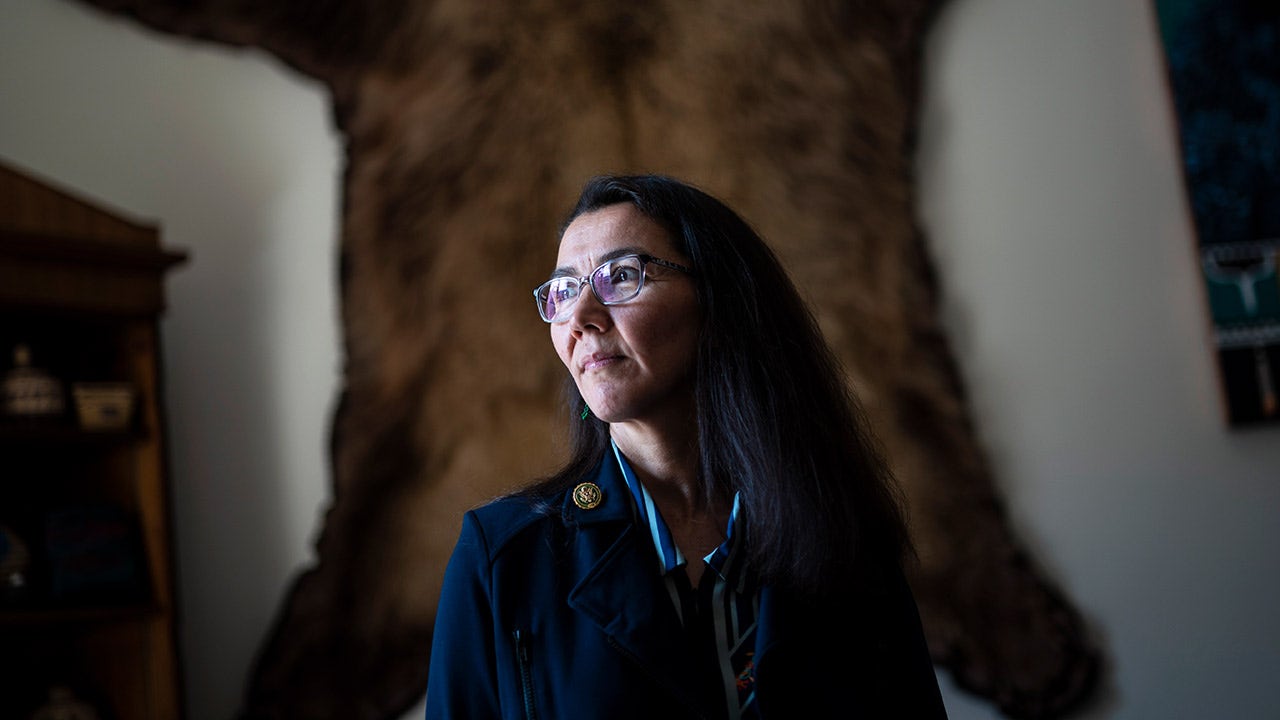
Former Rep. Mary Peltola, D-Alaska, on Monday announced that she will seek to unseat Republican Sen. Dan Sullivan. (Jabin Botsford/Washington Post via Getty Images)
Peltola previously served in the House as Alaska’s lone representative. She won a special 2022 election and full term later that same year in which she defeated four other candidates, including former Gov. Sarah Palin.
She lost her House seat in 2024 to Republican challenger Nick Begich III.
Peltola pointed to the state’s two late Republicans as examples of what happened to lawmakers with agendas in Washington who put politics over the needs of the state.
“Our delegation used to stand up to their party and put Alaska first,” Peltola said. “Ted Stevens and Don Young ignored Lower 48 partisanship to fight for things like public media and disaster relief because Alaska depends on them.”
TRUMP ADMIN ANNOUNCES BIG STEP TOWARD ‘ENERGY DOMINANCE’ WITH MASSIVE ALASKA LNG PROJECT ALLIANCE
Rep. Nick Begich, photographed at the Resource Industry Trade Organizations Host Congressional Candidate Forum. (Ash Adams/Washington Post via Getty Images)
“Ted Stevens often said, ‘to hell with politics, put Alaska first’,” she added. “It’s about time Alaskans teach the rest of the country what Alaska First and, really, America First looks like.”
Peltola’s announcement comes as Democrats are getting ready to try and take back both chambers of Congress in November’s midterm elections.
In a video last month posted online by the Democratic-aligned super PAC Senate Majority PAC, the group chided Sullivan for voting for higher costs for health care and other essentials.
In response, Sullivan, while standing on skis, boasted about tax cuts and railed about Democrats and the Biden administration for policies he said didn’t benefit Alaska.
Two-term Sen. Dan Sullivan, R-Ak., at the US Capitol in Washington, D.C., on Jan. 9, 2025. (Allison Robbert/AFP via Getty Images)
CLICK HERE TO DOWNLOAD THE FOX NEWS APP
“They want what Democrats always want when they’re in charge in D.C.,” Sullivan said, referring to at least 70 executive orders signed by Biden that he said negatively impacted Alaska.
Read the full article from Here



A jury in San Francisco returned to a packed courtroom Thursday morning to tell a judge that it was deadlocked on two counts in the case against seven pro-Palestinian protesters who shut down traffic on the Golden Gate Bridge in 2024 to denounce U.S. aid to Israel in the Israel-Hamas war.
The jury indicated that it could likely reach a decision on one of the deadlocked counts, but the other it could not. San Francisco Superior Court Judge Teresa Caffese asked the jury to resume deliberations on one of the two deadlocked counts.
“Why don’t I send you back, and then we’ll go from there,” Caffese said.
Six of the protesters who chained themselves together on vehicles on the bridge and a protester who was designated to communicate with authorities are each facing eight to nine charges of felony conspiracy and false imprisonment.
The seven defendants sat in the courtroom with anticipation for a verdict, wearing keffiyehs around their necks. Dozens of their supporters packed the courtroom to the brim.
The jury reached unanimous decisions on the rest of the counts. It did not indicate which two counts it was deadlocked on.
Supporters of the seven protesters said that a verdict on the rest of the counts is expected to be read out sometime Thursday.

The Fourth of July weekend is one of the biggest celebrations of the summer, and Denver is delivering a packed lineup of events for every kind of adventurer. Whether you’re looking to watch fireworks light up the Colorado sky, catch a live concert at Red Rocks, enjoy rooftop parties, indulge in seasonal food and drinks or explore the city’s thriving arts and culture scene, there’s no shortage of ways to celebrate Independence Day.
Here’s your guide to the best music, food, fireworks, nightlife, arts, and cultural events happening across Denver this Fourth of July weekend.
Follow @303magazine on Instagram
Read: Best Rooftops to Watch 4th of July Fireworks + Sip Cocktails in Denver
Read: The Ultimate 4th of July Outdoor Colorado Music Guide
FASHION EVENTS

Denver Fashion Week Fall 2026 Second Model Auditions
Where: TBA
Cost: $10+
The Lowdown:
Following overwhelming demand from aspiring models across Colorado, Denver Fashion Week (DFW) has announced a second round of model auditions for its upcoming Fall/Winter 2026 runway season.
MUSIC EVENTS
Read: The Ultimate 4th of July Outdoor Colorado Music Guide


Gillian Grogan and EMMA ROSE
Where: Skylark Lounge – 140 S. Broadway
Cost: $18+
The Lowdown:

Zeds Dead with Sippy, Baauer, Holly, HYDRAULIX & LUMBERJVCK
Where: Red Rocks Amphitheatre – 18300 W Alameda Pkwy, Morrison
Cost: $205+
The Lowdown:

Flobots
Where: Levitt Pavilion Denver – 1380 W Florida Ave
Cost: $0+
The Lowdown:

Don Toliver with SahBabii, SoFaygo, Chase B
Where: Ball Arena – 1000 Chopper Cir
Cost: $105+
The Lowdown:
FOOD EVENTS
Read: Best Rooftops to Watch 4th of July Fireworks + Sip Cocktails in Denver

Dumpling Love: Dim Sum Party
Where: Stir Cooking School Highlands – 3215 Zuni St.
Cost: $120 per person
The Lowdown:
Join the dumpling party and learn how to make pork bao buns, shrimp shumai, pan-fried gyoza, and crab cheese rangoons. All classes include a full bar with beer, wine, and house-curated cocktails for purchase.

Stars, Stripes, and Deck Nights
Where: Woodie Fisher Kitchen & Bar – 1999 Chestnut Pl.
Cost: Free
The Lowdown:
Celebrate America’s 250th with our festive Bomb Pop Drinks, featuring real Bomb Pops and High Noon buckets!

4th of July Rooftop Fiesta at Cimera
Where: The Source Hotel – 3330 Brighton Blvd.
Cost: $60+
The Lowdown:
The experience is an open rooftop gathering featuring live-fire cooking, craft cocktails, and skyline views throughout the evening. Guests will enjoy Peruvian street skewers, duck & chorizo paella, and ceviche prepared live on-site.

Farmers Market Central Park
Where: Central Park – 29th Ave & Roslyn
Cost: Free
The Lowdown:
Local vendors provide Colorado-grown produce, tasty baked goods, specialty meats, gourmet food items and more!
LIFESTYLE EVENTS

Mystic Magnolias; A Southern Gothic Cabaret
Where: Colorado Sake Co – 3559 Larimer St
Cost: $25+
The Lowdown:
Saunter yourself out to The Mystic Magnolias, a Burlesque AND Drag Show with chilling charm and dripping in Southern Gothic atmosphere.

America 250 | Colorado 150 Drone Show presented by Visit Denver
Where: DPAC/Denver Performing Arts Complex – 1400 Curtis St.
Cost: Free
The Lowdown:
Following Sunset Cinema’s showing of National Treasure on July 3rd at Sculpture Park, stay to enjoy the 4th of July Drone Show! This special event will be brought to you by Visit Denver, celebrating American 250 | Colorado 150, including an appearance by Mayor Mike Johnston.

Beat The Bomb Summer Mission: America250 Edition
Where: Beat The Bomb – 3863 Steele St, Unit 1273
Cost: $39+
The Lowdown:
Beat The Bomb announces the limited-time-only Summer Mission: America250 Edition – celebrating America’s 250th with five new games, a collectible beach towel, and a red, white, and blue Paint Blast!

Independence Day Concert with Denver Municipal Band (Cheesman Park)
Where: Cheesman Park – 1900 E. 11th Ave.
Cost: Free
The Lowdown:
Price:Free
Join the Denver Municipal Band’s Concert Band for an Independence Day concert at Cheesman Park Pavilion with special guest Denver District 10 City Councilmember Chris Hinds narrating Aaron Copland’s Lincoln Portrait.
Follow @303magazine on Instagram
Whether you’re dancing at a concert, enjoying a garden dinner, cheering on your favorite soccer team or exploring a new exhibition, Denver offers plenty of ways to fill your 4th of July weekend calendar. Gather your friends, support local businesses, and discover something new around the city.
Seattle, WA
COUNTDOWN: Two days until West Seattle Fourth of July Kids’ Parade! Here’s the newest info

Just two days until hundreds of West Seattle’s youngest residents will parade through the streets of North Admiral with their families, as the Admiral Neighborhood Association again presents the West Seattle Fourth of July Kids’ Parade. We’ve checked in with parade coordinators for the newest info:
>Gina Topp (SPS School Board President, Admiral resident, and owner of Mission Cantina) will kick off the parade.
–Kavya Bhatkar (age 10), a School of Rock student, will sing the anthem.
-Title sponsors for the parade are: Neighborhood Naturopathic and Primary Care and Holy Rosary.
-Food available for purchase including:
Seattle Pops
West Seattle Grounds
Where Ya at Matt
Empanadas El Pachi
La La Lemonade
Seattle Sorbet
Hawk Dogs
Sugar & Spoon
The parade starts at 10 am Saturday from 45th SW and SW Sunset, heads west on Sunset for a bit, turns south and then east, ending at Hamilton Viewpoint Park for a post-parade celebration with sack races, activity booths, the aforementioned food/treat vendors, and if they’re not called away to an emergency, an SFD truck to see. No RSVP or registration required to be in the parade – just show up (non-motorized bikes, trikes, scooters, strollers, etc., welcome, or just walk).
-

 World4 minutes ago
Could water become a flashpoint between Islamabad and New Delhi?
-
 News29 minutes ago
Ukraine latest / Limits of military might / Can major powers regain dominance? : Sources & Methods
-

 Los Angeles, Ca2 hours ago
Juvenile charged with murder after 4-month-old Claremont infant thrown to her death
-

 Detroit, MI2 hours ago
Silence from Jalen Duren’s camp is what the Pistons want to hear
-

 San Francisco, CA2 hours ago
Jury deadlocked on 2 counts for Golden Gate Bridge pro-Palestinian protesters
-

 Dallas, TX2 hours ago
Ross Tower hits the market as Downtown Dallas sale wave builds
-

 Miami, FL2 hours ago
FIFA World Cup Miami Host Committee lends a helping hand to people of Venezuela after deadly earthquakes
-

 Boston, MA3 hours ago
Review & setlist: It was 100 degrees in Boston, and Goose was on fire

