West
Ex-MLB star and Senate candidate Steve Garvey ‘stunned’ by depths of CA homeless crisis, will seek audit

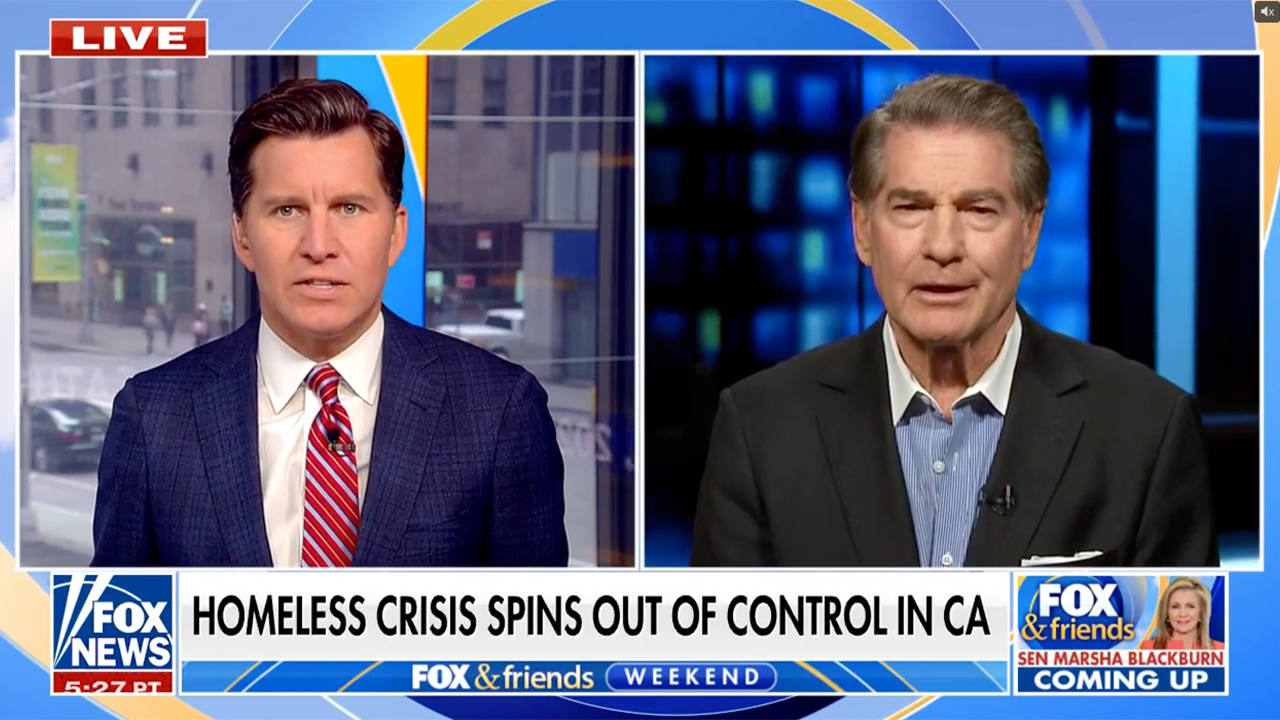
Former MLB star and Republican U.S. Senate candidate Steve Garvey said he’d push for a federal audit of California’s spending after the state has thrown $24 billion at its homeless crisis since 2018 with no data to show how exactly the money is helping.
Garvey, who once played for the Los Angeles Dodgers and San Diego Padres during his professional baseball career, spoke to “Fox & Friends: Weekend” host Will Cain on Saturday, wondering where exactly the money has gone to solve the homelessness problem throughout the state.
He told Cain that he traveled throughout the state for months while discussing his Senate candidacy and was “stunned” by the crisis he saw.
MINNEAPOLIS RESIDENTS URGE CITY TO SHUT DOWN NEIGHBORHOOD HOMELESS ENCAMPMENT AFTER EXPLOSION, STABBING
Republican U.S. Senate candidate Steve Garvey told Fox News Channels Will Cain he is “stunned” by Californias homeless crisis.
“I went from the southern border of California to see what was actually happening there, and then I went to the homeless encampments in San Diego, Los Angeles, and Sacramento. And I was stunned.”
“I was stunned to see how it deteriorated form the fifty years ago that I first came to California,” he added, adding how he developed a passion for the state that has inspired him to help it solve its problems with border security and homelessness specifically.
Garvey marveled at the fact that though the state has dumped nearly $25 billion into solving homelessness, the homeless population has almost doubled from where it was ten years ago, when there were just 100,000 people on the streets.
“But since that time, we’re up to about 186,000 homeless now – 16% more in the last year. And that’s with $30 billion being sent in California.”
The aspiring senator grilled the state’s government, declaring “there’s a lack of oversight” and accused government agencies of having “stopped counting or trying to figure out where the money was going in ’21,” though he noted they’ve “reignited that.”
CA REPUBLICAN CRITICIZES GAVIN NEWSOM’S HOMELESS STRATEGY: ‘YOU CAN’T KEEP THROWING MONEY AT THE SYMPTOMS’
Homeless encampments line the streets in Oakland, California on Friday, March 15, 2024. The city remains plagued by homelessness as nearby businesses close their doors due to safety concerns. (DWS for Fox News Digital)
Cain then asked, “Why does California have a third of the nation’s homeless? And why is it happening in the face of spending $25 billion to try to – at least in words, if not deeds – solve this problem of homelessness?”
The former baseball player said, “Well, obviously, it’s because the weather in California, you know, it’s good. But I think the thing is, it’s a lack of leadership.”
After noting how this crisis breeds crime, Garvey set himself apart from the state’s current lawmakers. “People have come up to me when I start talking about homelessness, and they said, ‘Steve, the reason we’re voting for you is we feel that you’re going to have the political courage to get things done and not throw money at it.’ And that’s what my opponents have done. They’ve thrown money at it.”
He closed out the interview declaring he wants to encourage the “private sector” to help deal with this crisis and added that once he gets to Washington D.C., he’s going to push for a “federal audit that will get to the bottom of this.”
Read the full article from Here


SAN FRANCISCO, Calif. – Walk SF and Families for Safe Streets held a vigil Monday evening to honor a 2-year-old girl who was struck and killed by a driver Friday night in San Francisco’s Mission Bay neighborhood.
The crash happened just before 9 p.m. at Fourth and Channel streets near Oracle Park. Police said the child’s mother was also injured and taken to a hospital with non-life-threatening injuries. The driver remained at the scene, and authorities said drugs or alcohol are not believed to be factors.
Community heartbroken
Community members gathered at the intersection Monday to light candles and lay flowers. Among them was the Howard family.
“We’re just heartbroken and sad,” said Hidelisa Howard.
“I was thinking about heartbroken parents, someone who cannot get their daughter back,” said John Howard.
The intersection is designated as part of San Francisco’s 2022 High Injury Network, identifying streets with the highest concentration of severe and fatal traffic crashes. Speed cameras were recently installed in the surrounding neighborhood.
Jodie Medeiros, executive director of Walk SF, called the crash a tragedy, noting a previous fatal collision involving a child at Fourth and King streets several years ago.
Traffic intensifies
Parents in the area said traffic has intensified with nearby events and development.
“We love having people here in the neighborhood, and it’s brought a lot of life to the area,” said Hidelisa Howard, who lives nearby. “But at the same time, we have people coming in from out of the area. They’re not familiar with the streets, they’re running the lights, they’re running the crosswalks.”
District 6 Supervisor Matt Dorsey said the intersection has been problematic.
“Sometimes people go too fast. I don’t know that this was the issue here, but we need to do everything we can to make our neighborhoods and our streets safer,” Dorsey said.
On Monday, crews with the SFMTA repainted crosswalks and re-timed traffic signals at the intersection.
“It just feels like there’s so many young children in this neighborhood that there should be improvements made to the way that the traffic flows around here,” said Aanisha Jain, a San Francisco resident.
Denver, CO
Denver bans federal law enforcement officers from covering their faces, DHS says it won’t comply

Denver city leaders unanimously passed a ban on all officers, including Immigration and Customs Enforcement agents, from wearing face coverings while detaining or arresting people. That law also requires officers to wear visible identification.
It’s the second sweeping ordinance against federal officers in Denver in just a few days. Last Thursday, Mayor Mike Johnston signed an executive order banning federal immigration agents from operating on city property without a judicial warrant.
It also directs Denver police, deputies and fire personnel to investigate reports of violence and criminal behavior.
The Department of Homeland Security responded calling the executive order “legally illiterate,” adding, “no local official has the authority to bar ICE from carrying out federal law on public property … and while Mayor Johnston continues to release pedophiles, rapists, gang members, and murderers onto their streets, our brave law enforcement will continue to risk their lives to arrest these heinous criminals.”
DHS didn’t mince words when responding to Denver’s new face coverings ban either, saying in part, “To be crystal clear: we will not abide by a city council’s unconstitutional ban. Our officers wear masks to protect themselves from being doxxed and targeted by known and suspected terrorist sympathizers. Not only is ICE law enforcement facing a more than 1,300 percent increase in assaults against them, but we’ve also seen thugs launch websites to reveal officers’ identity.”
On the other hand, the Denver City Council didn’t mince words when it approved the ban.
“It’s very disturbing to me, as an American, to see masked agents on the street,” said Councilman Kevin Flynn who represents District 2. “I don’t know what the best way is to enforce our immigration laws, but I think I know the worst way when I see it.”
“I said all along, this was a slam dunk,” added Councilman Darrell Watson of District 9.
Last month, a federal judge struck down a California law prohibiting federal agents from wearing masks. But, the city council says it made sure its ordinance is enforceable.
You have to treat all law enforcement the same,” said City Council President Amanda Sandoval. “So, our sheriffs can’t have masks. Our State Patrol can’t have masks. And federally you can’t have masks. And we delineate that within the ordinance which, that’s where California got the issue.”
Sandoval said she was monitoring the legal process and comparing the two ordinances to ensure they would be good to go.
Although the city council believes the ordinance is constitutional, the Denver Police Department says it’s still working to determine what implementation could look like, and provided this statement to CBS Colorado:
“Our Safety departments are working with the City Attorney and bill sponsors to determine what implementation could look like. Of utmost importance is discretion and prioritizing de-escalation when encountering these situations. Our goal is to apply this ordinance in a way that builds trust and transparency without putting officers, deputies, or the public at risk.”
Coupled with the city’s new executive order, Sandoval believes Denver now has the necessary guidelines in place.
“A map for residents to understand predictability, and that’s what I always want, is what can the residents be able to rely on.”
There are exemptions in place for the ban, for example: during an active undercover operation, when gear is required for physical safety, and for personnel performing SWAT duties.

SEATTLE, WASHINGTON – MARCH 02: Andrei Svechnikov #37 of the Carolina Hurricanes shoots the puck during the second period of a game against the Seattle Kraken at Climate Pledge Arena on March 02, 2026 in Seattle, Washington. (Christopher Mast / NHLI / Getty Images)
SEATTLE – Joey Daccord made 35 saves and the Seattle Kraken survived a 6-on-4 penalty kill for the final 90 seconds for a 2-1 victory over the East’s top team in the Carolina Hurricanes on Monday night.
Kaapo Kakko and Ben Meyers each scored in the second period for the Kraken as they managed to beat a Hurricanes team that has the second-best record in the NHL, trailing only the Colorado Avalanche. The Kraken are now in a playoff spot by five points as they hold the No. 3 seed in the Pacific Division with 22 games to play.
Nikolaj Ehlers scored the only goal of the night for the Hurricanes late in the second period, but Seattle was able to withstand Carolina’s offensive push in the final period to secure a second straight victory.
The Hurricanes are always a high-volume shooting team and Daccord faced plenty of chances. Carolina had 83 shot attempts to just 31 for the Kraken. Shots on goal were 36-15 in favor of the Hurricanes as well, but scoring chances were just 20-13 in Carolina’s favor as Seattle did a good job limiting the danger of the shots sent at Daccord.
It was an eventful but scoreless first period between the two teams, with Carolina owning a 13-7 edge in shots. All three goals would come in the second.
Adam Larsson – who assisted on both goals for Seattle – deflected an Alexander Nikishin into the neutral zone to start a two-on-one rush chance for Kakko with Berkly Catton in support as Kakko ripped a shot through the armpit of Carolina goaltender Frederik Andersen for a 1-0 lead.
Kakko said he wanted to make the pass to Catton, but the lane was covered by Shane Ghostisbehere, so he elected to shoot.
The Kraken earned a power play chance three minutes later on a tripping call against Eric Robinson. Carolina completely neutered the man-advantage for the first 90 seconds before the Kraken appeared to extend the lead.
With 15 seconds left on the power play, the Kraken rushed into the Hurricanes’ zone with Kakko finding a streaking Jaden Schwartz open on the back door for an easy finish behind Andersen. However, Carolina successfully challenged the goal for a missed offsides on Shane Wright that wiped out the goal.
But the Kraken still managed to extend the lead soon after.
Jacob Melanson continues to be a spark plug for Seattle and helped restore the momentum immediately after the disallowed goal. On the shift coming out of the power play, Melanson delivered a big hit and connected with Adam Larsson on a breakout pass that sparked a rush. Ben Meyers crashed toward the net and was able to finish off his own rebound on a pass from Freddy Gaudreau to officially make it a 2-0 lead.
Melanson didn’t even get an assist out of the sequence, but was a big part of creating a goal for Seattle.
After being extremely sharp defensively all night, Carolina finally pounced on an opportunity the Kraken were unable to turn away. Vince Dunn was just unable to control a loose puck in front of Seattle’s net as it landed on the stick of Nikolaj Ehlers instead, who snapped a shot past Daccord to make it a 2-1 game with 90 seconds left in the second period.
The Hurricanes took 32 shots in the third period as they attempted to find a tying goal, but only nine made it to Daccord, and he stopped them all.
Eeli Tolvanen was called for Seattle’s first and only penalty of the night – a holding call after breaking his stick – with 90 seconds left to play. With Andersen on the bench for a six-on-four chance for Carolina, Daccord stopped all three shots he faced to close out the win for Seattle.
The Source: Information in this story came from FOX 13 Seattle reporting.
MORE KRAKEN NEWS FROM FOX 13 SEATTLE
Jordan Eberle scores twice as Seattle Kraken roll to 5-1 win over Canucks
Dylan Holloway scores hat trick as Seattle Kraken lose 5-1 to Blues
Seattle Kraken flounder to 4-1 loss to Stars in return from Olympics break
Seattle Kraken reach two-year extensions with Ben Meyers, Ryan Winterton
Shane Wright scores twice as Seattle Kraken beat Kings 4-2
To get the best local news, weather and sports in Seattle for free, sign up for the daily FOX Seattle Newsletter.
Download the free FOX LOCAL app for mobile in the Apple App Store or Google Play Store for live Seattle news, top stories, weather updates and more local and national news.

Alleged criminal history of missing mom found after 24 years catches up with her

Millionaire philanthropist allegedly gunned down by worker in female wig; ambushes Maryland trooper: police

War in the Middle East: Iran’s broad retaliation in the Gulf • FRANCE 24 English

Bruce Campbell announces cancer diagnosis; ‘Fear not,’ he tells fans

Vigil held for 2-year-old girl killed in SF Mission Bay crash

Florida High School Football Rankings: Top 25 teams – Oct. 21

Cleary's 21 help Le Moyne down Central Connecticut State 69-64 in OT

How old is Bo Nix? What to know about Oregon quarterback ahead of 2024 NFL Draft

99th annual Pony Swim held in Virginia

Indiana Members Credit Union announced as new anchor tenant at Bottleworks District
War in the Middle East: Iran’s broad retaliation in the Gulf • FRANCE 24 English

Trump sends official notification to Congress on strikes against Iran

Unexpected birth brings hope to near-extinct Amazon tribe

Supreme Court blocks redrawing of New York congressional map, dealing a win for GOP

Map: Earthquake Shakes Central California
-

 World5 days ago
Exclusive: DeepSeek withholds latest AI model from US chipmakers including Nvidia, sources say
-

 Massachusetts6 days ago
Mother and daughter injured in Taunton house explosion
-

 Denver, CO6 days ago
10 acres charred, 5 injured in Thornton grass fire, evacuation orders lifted
-

 Louisiana1 week ago
Wildfire near Gum Swamp Road in Livingston Parish now under control; more than 200 acres burned
-

 Technology1 week ago
Stellantis is in a crisis of its own making
-

 Oregon4 days ago
2026 OSAA Oregon Wrestling State Championship Results And Brackets – FloWrestling
-

 Technology1 week ago
Arturia’s FX Collection 6 adds two new effects and a $99 intro version
-

 News1 week ago
Video: How Lunar New Year Traditions Take Root Across America