Denver, CO
Traffic, parking and transportation at Burnham Yard are focal points around Denver Broncos stadium plans


As the Denver Broncos design a new stadium for Burnham Yard, one of the most critical elements — with some of the highest potential for backlash from neighbors and the team’s fans — will be the plan for getting people to and from the site.
Questions about parking, traffic management, transit access and accessibility have emerged as major concerns for neighbors of the future stadium during early community meetings in west Denver organized by the city and the team.
“It is probably the No. 1 topic that we’re hearing,” said Troy Halouska, the vice president of the La Alma Lincoln Park Neighborhood Association.
Lindsey Noble, a resident of the neighborhood, said in an interview with The Denver Post that she and her neighbors were “pretty concerned about traffic and parking” from the events the new stadium would host — which the team has said would go well beyond Broncos home games.
“They (the Broncos) are creating these problems, and some of the solutions I have heard have to do with altering our neighborhood or changing streets,” she said. “These aren’t things we want.”
The Broncos are still early in the process of laying out plans for the abandoned rail yard as the team aims to build a stadium by 2031. The team has already released some transportation-related details, including proposed changes to street crossings with the Regional Transportation District’s light rail tracks, potential parking options for events, and plans for connections to existing pedestrian and bike infrastructure.
The team plans to build more than just a stadium, though. Alongside their home field, the Broncos want to create a mixed-use entertainment district that uses the space year-round. Like other modern stadiums, it would have restaurants, open space and, potentially, hotels or apartments outside the venue.
Officials with the Broncos say they have heard the worries from nearby residents about the massive development’s potential impact on their neighborhoods. They say they’re looking for ways to integrate the site into the community — without flooding nearby streets with thousands of cars and people.
Generally, the team plans to address those concerns by designing the site in such a way that eventgoers are guided in through the north and south ends of the site, rather than being routed through the mostly residential neighborhood to the east.
The site itself, once the rail yard is cleared, will be nestled between two rail corridors — freight lines to the west and RTD’s light rail tracks to the east. Entities connected to the Broncos have been buying up properties beyond the banana-shaped rail yard for the stadium and surrounding district.

A bit farther to the west of the site is Interstate 25, and the north and south boundaries are generally West 13th Avenue and West Sixth Avenue. An early conceptual plan the team submitted to the city shows how its designers plan to connect local streets through the site. One new street would connect West Eighth Avenue to Osage Street, for instance, incorporating city plans to lower part of Eighth’s current viaduct.
Josh Brooks, a principal at Sasaki, the architecture firm designing the site’s master plan, said during a community meeting in February that the team plans to design the area so that noise and visual impacts are pushed as far from the residential neighborhood as possible.
“Our intention is to ensure this is an integrated community, a mixed-use development that really serves as an extension of the city and becomes part of the shared memory of the community,” Brooks said.
One of the things that most attracted the team to Burnham Yard was its connectivity with other areas. Located near I-25, Sixth and Eighth avenues, an RTD station, walking paths and planned bike lanes, the site won’t need massive changes to help bring in visitors.
But that doesn’t mean the team won’t have plenty of work to do on that front.

During the February community information meeting at the La Alma Recreation Center, the Broncos conducted a quick survey of attendees to ask what their top concerns were. The most-selected item was “traffic congestion during games/events,” followed closely by “impacts to housing expenses.”
The design for the site will focus on connecting existing roads and pedestrian paths and easing those neighborhood concerns, Brooks said.
The Broncos will work with the city in the coming months to develop a small-area plan, which will set out the design for the expanse surrounding the stadium site. While the stadium itself will be privately financed, the team has said, the city and state could be on the hook for infrastructure improvements nearby.
The city already plans to pay for improvements to two major road connections, the nearby Sixth and Eighth avenue viaducts, as part of bond projects passed by voters last fall.
Train crossings and transit access
One advantage of the Burnham Yard site is that it already has an RTD rail station next to it, making transit access easier. But the 10th and Osage station is accessible only from the east, with Burnham Yard west of the tracks. So it would need to be reconstructed to allow pedestrian access from both directions.
Working together with RTD, the Broncos are proposing changes to several light rail crossings. At 13th Avenue, the team has suggested a bridge for trains to pass over the street, with a place for drivers, cyclists and pedestrians to cross beneath.

At 12th and 9th avenues, team officials are proposing a separated-grade crossing for cyclists and pedestrians to also pass underneath the light rail tracks.
Eleventh, 10th and 8th avenues would have at-grade crossings. Halouska, with the La Alma Lincoln Park Association, said residents would like as few at-grade crossings as possible to prevent collisions or other safety hazards.
Besides concerns about transit crossings, Noble expressed worry that there also might not be enough light rail cars on a game day to transfer everyone who arrives and departs that way.
A spokesperson for RTD said there was no one available to discuss the transit agency’s plans for the area.
“RTD is regularly meeting with the project team and other partners to provide feedback and ask questions about their proposed stadium plans. Specific information about any proposed changes to RTD’s services or operations is not yet available,” RTD’s Pauline Haberman said.
What about parking?
Other concerns about the plan center on where those who drive to the stadium will park.
Halouska said even when his group tries to host meetings about other topics, parking is the concern its leaders hear about the most from the neighborhood.
“The Broncos have said themselves they really want this area to be activated 300 days a year, and so folks in the neighborhood are very concerned about what kind of impact that will have on parking,” he said. “We really need more details from the team and the city.”

Team officials have said they plan to provide the same amount of parking at the new site as Empower Field has — which is roughly 7,000 spots. But instead of a stadium surrounded by surface parking, officials are proposing making use of parking structures and shared parking systems.
Noble said the on-site parking spots could make a big difference in the impact to the neighborhood.
The city could also add resident-only parking permit rules for the surrounding streets, much like a longstanding system in the Jefferson Park neighborhood around Empower Field.
A spokesperson for the Department of Transportation and Infrastructure said the same system is possible for Burnham Yard, but it’s too early to know specifics of how it would work.
“We won’t begin designing anything until we understand how the site will work, where impacts could occur, and there’s a focused conversation on (residential parking permits),” Nancy Kuhn wrote in an email.
Halouska said that could help, but only if the parking permits are regularly enforced.
“Having the permits is a fine idea — though it does cost money to get a permit — but if it’s not enforced, then it’s kind of pointless,” Halouska said.
Bike and pedestrian access
It won’t just be public transportation and cars getting people to events or the new development. The Broncos also plan to build connections to surrounding bike and pedestrian infrastructure, like the South Platte River Trail and the bike lane along 13th Avenue, Brooks said.
There could also be a connection to the proposed 5280 urban trail, which as envisioned by planners would weave through several neighborhoods that include La Alma Lincoln Park, Golden Triangle, Capitol Hill, LoDo and Ballpark. The effort, led by the Downtown Denver Partnership, is not yet fully under construction. About a quarter of the plan is in “next steps development,” according to the DDP.
Noble said she hoped the team would find some ways to encourage people to travel to the stadium without driving.
“Really, I think incentivizing people to ride their bike and take public transportation is the way to go to mitigate the impacts,” she said. “Make it easy. Make it affordable.”
Officials say they will wrap up the community-informed small area plan, which will provide policy guidance for city decision-makers, by the end of this year. It will include resident feedback and ideas about housing, sidewalks, open space and grocery access, among other things.
The Broncos and the city plan to host their next community meeting in May.
Get more Colorado news by signing up for our Mile High Roundup email newsletter.



Von Miller has made it abundantly clear that he would like to return to the Denver Broncos and finish his career where it started. Miller has made that fact known at every possible opportunity, including a Von’s Vision charity event on Wednesday.
“I would love to bring back those Super Bowl 50 vibes, love to assist, to be the vice president to Bo Nix, to Courtland Sutton,” Miller said. “I’ve been the guy and also I’ve been the vice president as well. I would love to contribute to us getting back to the glory land, to holding up that trophy.”
Miller went on to note that he has lobbied coach Sean Payton to sign him (Payton coached Miller at a flag football tournament earlier this year).
Unfortunately for Miller, it sounds like there are no plans for a potential reunion with his old club. The Denver Post‘s Luca Evans reported that “as of last week,” there have been no talks between the Broncos and Miller’s representatives about a potential contract.
With a crowded outside linebacker room, Denver seems unlikely to re-sign Miller, but the 37-year-old pass rusher said he will “for sure” play in 2026. After totaling nine sacks with the Washington Commanders last fall, Miller will probably be able to find a home as a rotational pass rusher, but it might not be with the Broncos.
Social: Follow Broncos Wire on Facebook and Twitter/X! Did you know: These 25 celebrities are Broncos fans.
Denver, CO
Denver Summit FC delays opening of Centennial Stadium, will play next 2 home games at Dick’s Sporting Goods Park

Denver Summit FC will play their next two home games at Dick’s Sporting Goods Park.
Colorado’s first professional women’s soccer team was hoping to be at their new training facility in Centennial by July, but team says recent rain delayed construction, so they need to push back by two weeks.
That means their July 3 and July 12 matches will be at Dick’s Sporting Goods Park in Commerce City.
Summit FC is hopeful to be at their stadium in Centennial for their July 18 game against the Portland Thorns.
Centennial Stadium will ultimately become Summit’s training facility. They’ll play their games there until 2028, when they hope to move into their official home stadium at the Santa Fe Yards at Broadway and I-25. The Santa Fe Yards stadium will have room for more than 14,000 fans.
Denver, CO
Denver Fashion Week Responds To Community Demand With Second Model Audition Date – 303 Magazine

Following overwhelming demand from aspiring models across Colorado, Denver Fashion Week (DFW) has announced a second round of model auditions for its upcoming Fall/Winter 2026 runway season.
According to DFW, the organization received a large number of emails and social media messages from models hoping for another opportunity to audition after the initial model auditions on May 17.
In response, DFW will host an additional audition date on August 9, giving fresh talent another chance to join one of Denver’s biggest fashion platforms.
Known for its commitment to inclusivity and community-driven casting, Denver Fashion Week is searching for both traditional and non-traditional models with strong runway presence, personality, and confidence.
Audition opportunities include:
- Male and female models ages 6–65+
- Kids and teen models ages 6–14
- Stylish moms and fashionable children for the “Mommy & Me” runway segment
DFW continues to emphasize its all-inclusive approach to casting and does not select talent based on race, religion, body type, height, age, or sexual orientation. Both agency-represented and independent models are encouraged to audition.
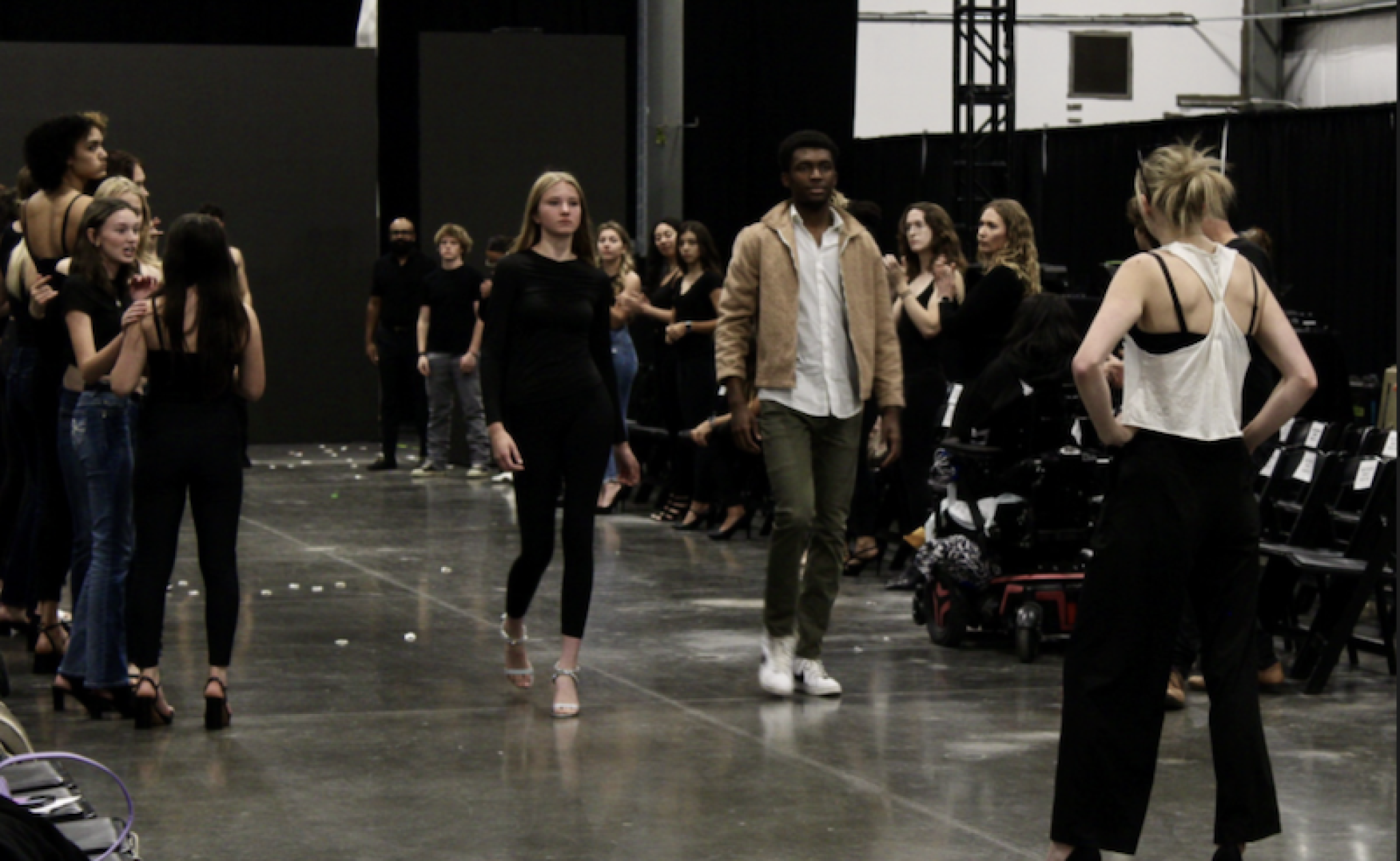
Model Workshop Recommended
For first-time runway talent or anyone looking to sharpen their walk and stage presence, DFW highly recommends attending its Model Workshop ahead of auditions. The workshop is designed to help prepare models for the runway experience and provide insight into what casting directors are looking for during Fashion Week. REGISTER HERE

Audition Schedule
11:00 AM — Mommy & Me
Moms + children ages 6–12
11:45 AM — Ages 14+
Models 5’4” and under
12:20 PM — Kids & Teens
Ages 6–14
1:00 PM — Ages 14+
Models 5’5”–5’7”
1:45 PM — Ages 14+
Models 5’8”–5’10”
2:30 PM — Ages 14+
Models 5’11” and taller

What To Wear
Models are encouraged to wear fitted clothing that allows the casting team to clearly view silhouette and movement.
Recommended attire includes:
- Black fitted tank top or t-shirt
- Skinny or fitted jeans
- Heels 3”+ for those auditioning in heels
- Natural hair
- Minimal makeup and jewelry
DFW also recommends avoiding loud accessories that may distract from the runway presentation.

Important Notes
Models who previously walked in Denver Fashion Week’s Spring 2026 season are not required to audition again.
No comp card is required, as DFW will take measurements, photos and video during auditions.
As Denver Fashion Week continues to expand its platform, the organization remains one of the few major regional fashion weeks actively prioritizing accessibility, diversity and opportunities for emerging talent.
Follow Denver Fashion Week on Instagram
-

 Massachusetts1 minute ago
5 from Mass. dead when bus hits cars in Virginia, state police say
-

 Minnesota8 minutes ago
Minnesota DFL Convention gets underway in Rochester
-

 Mississippi11 minutes ago
High school graduation photos in, near Jackson MS. Find your student
-

 Missouri16 minutes ago
Barry County man breaks Missouri state record with yellow bass catch
-

 Montana23 minutes ago
Counties accept enough signatures to put Bodnar, Eisenhauer on ballot; counts unofficial
-

 Nebraska26 minutes ago
Nebraska Man Fractures Spine After Falling Off Big Boy Locomotive At Whistle-Stop
-

 Nevada31 minutes ago
Nevada SPCA brings adoptable pet to spotlight on Furever Home Friday
-
 New Hampshire38 minutes ago
RFK Jr. visits NH to unveil new federal actions to fight Lyme disease

