Colorado
Tudor Dixon predicts Supreme Court will rule in Trump's favor in Colorado ballot case | Fox News Video





Colorado
Greer, Wooten combine for 20, Colorado women advance in Big 12 Tournament with 55-48 win over Kansas

KANSAS CITY, Mo. — Logyn Greer and Desiree Wooten both scored 10 points in No. 6 seed Colorado’s 55-48 win over No. 11 seed Kansas on Thursday night to advance to the quarterfinals of the Big 12 Conference Tournament.
Greer shot 4 for 7 from the field and drained both her attempts from 3-point range from the Buffaloes (21-10). She had six rebounds and four blocks. Wooten added four assists.
Colorado was in foul trouble early, racking up seven fouls in the first quarter. A 9-0 run in the second quarter broke the game open for the Buffaloes and they entered halftime up 26-18. Their defense held Kansas to 36% (19 of 53) from the field and 15% (2 of 13) from 3-point range.
Kansas (19-13) was led in scoring by S’Mya Nichols, who put up 14. Her and Sania Copeland scored the only 3-pointers for the Jayhawks.
Colorado: Will play No. 3 seed Baylor on Friday. The Lady Bears are ranked No. 20 in the country.
Kansas: Will wait for an invitation into a postseason tournament.
___ Get poll alerts and updates on the AP Top 25 throughout the season. Sign up here. AP women’s college basketball: https://apnews.com/hub/ap-top-25-womens-college-basketball-poll and https://apnews.com/hub/womens-college-basketball

The trade deadline is less than 24 hours away and the Avalanche have already made the three moves that had been clear-cuts needs for the team.
They needed to improve their third pair. They did that by swapping Samuel Girard for Brett Kulak.
They needed to replace the recently departed Ilya Solovyov with a more capable No. 7 option on the blueline. That was accomplished with Wednesday’s trade for Nick Blankenburg.
Most importantly, the Avs needed a third-line center. On Thursday, they paid a hefty price to acquire Nicolas Roy from the Toronto Maple Leafs.
These are all things that had to be done. Now? They have nearly $7 million in available cap space (with Logan O’Connor on LTIR), with an opportunity to improve on the roster they have. This is the part of the trade deadline where general manager Chris MacFarland can bolster the team, find those luxury additions, and maximize his team’s chances and winning a Stanley Cup.
So what could that look like?
Most of the season has seen Ross Colton, Victor Olofsson, and even Gavin Brindley occupy the wings on the third line. With Roy expected to settle into that 3C role, there’s an opportunity to build on the wing. Elliotte Friedman mentioned last week that the Avs could move on from Colton. If so, that would give them a lot more cap space and a valuable asset they can use on the trade market to bring in a solid middle-six winger. Perhaps someone like Blake Coleman.
Olofsson has chemistry with Roy dating back to last season with Vegas, but you have to wonder if they’d be looking to upgrade on his position, too.
That leaves Jack Drury on the fourth line, centering Parker Kelly and Joel Kiviranta. Brindley slots down to the No. 13 forward (when everyone is healthy), while Zakhar Bardakov is the 14th option.
If O’Connor returns before the postseason, he instantly rejoins the fourth line. That would push Kiviranta out, and he’d be the 13th forward just like he was last year. Even in that scenario, I do wonder if the Avs decide to improve on Bardakov. He’s a young centerman who has impressed in limited minutes but has struggled to gain the full trust of the coaching staff.
There’s also the option to add another depth defenseman. Right now, an injury to Kulak or Devon Toews would again force Colorado to have five right-shot defensemen in the lineup. Blankenburg, who also shoots right, would be an ideal fill-in if an injury were to strike on the right side.
But what about another depth option? Colorado won the Cup in 2022 with both Ryan Murray and Jack Johnson on the outside looking in. After Girard’s injury, Johnson stepped in. But it didnd’t hurt to have multiple depth options just in case.
Could the Avs target another depth blueliner? If so, will they go for a bigger body? I’ve seen the name Urho Vaakanainen floated around. He would be the type of left-shot defenseman who could fill that role as an extra. Albeit his $1.55 million cap hit might be too large to take on without retention for such a limited role.

A contentious fight over fur stole the show at day one of the Colorado Parks and Wildlife Commission March meeting. The drama centered around a citizen petition to prohibit the sale of some wild animals furs.
The public meeting was packed with hunting advocates and animal rights groups. A total of 120 people signed up to speak during public comment at the hours-long meeting, not including those who submitted written or virtual comments.
The turnout was so big that Colorado Parks and Wildlife increased security. The meeting was held at the DoubleTree Denver-Westminster. CPW said they conducted security checks at the entrance at the hotel’s request to enforce the venue’s ban on weapons.
Ultimately, the commission voted 6-4 to move a proposed fur ban into the rulemaking phase.
It’s a win for the animal rights groups that submitted the petition.
While the commission did not all-out adopt the petition as it was submitted. They chose to initiate a rulemaking process for a potential ban to be approved down the line.
When the motion was advanced, it was met by jeers and some cheers from an audience full of hunters, trappers and advocates.
“We were hoping that there would be an opposition to moving the petition forward for the variety of reasons,” said Dan Gates, executive director of Coloradans for Responsible Wildlife Management. “It’s kind of frustrating that you sit there that long and you go through that much back and forth. On so many different levels. So it’s kind of disappointing.”
“This is a win. So it’s a good day,” said Samantha Miller, the senior carnivore campaigner for the Center for Biological Diversity.
Miller submitted the petition, which sought to ban the for-profit sale of fur from Colorado wildlife known as furbearers.
Those are 17 species including fox, bobcat, beaver, raccoon and coyote.
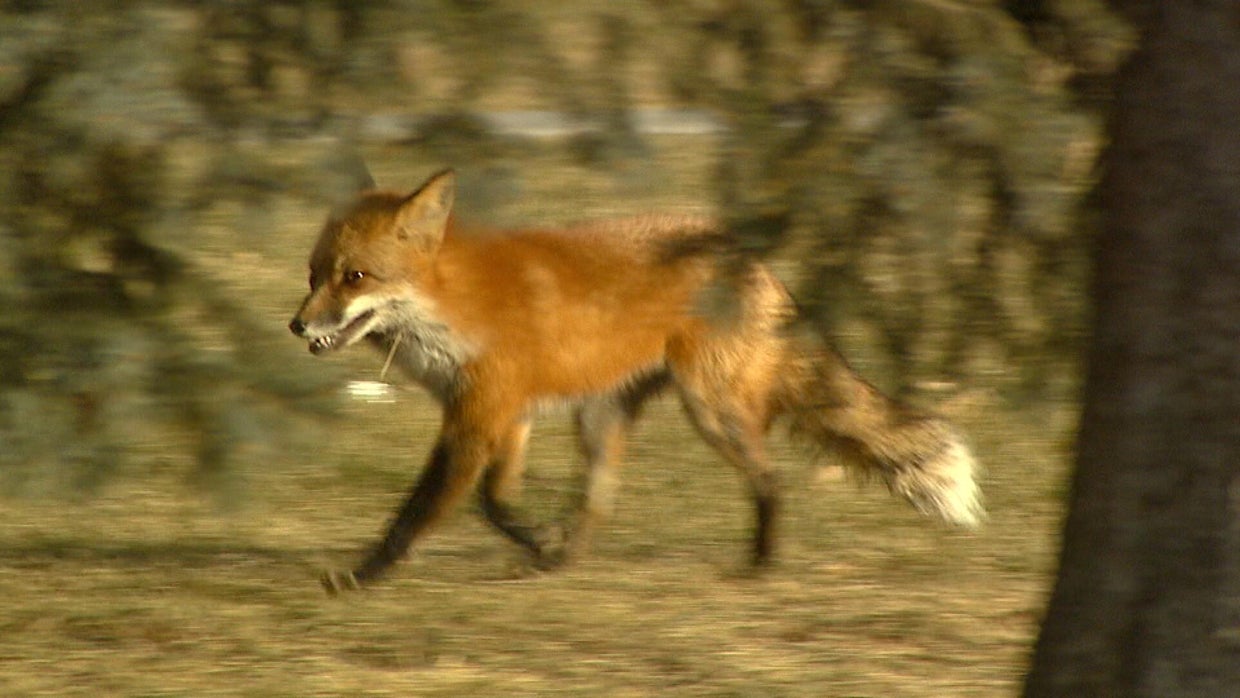
“Right now, furbearers are hunted and trapped in unlimited numbers in the state of Colorado, they also don’t enjoy the same protections against commercial markets that other big game species do enjoy, and in a time of biodiversity crisis and climate change, it’s critical that we up our management levels, modernize them, to reflect the crises we’re facing at the time, and ally for align for rare management with other species,” Miller said.
Colorado law already bans the commercial sale of big game.
As submitted, the petition would not limit the trapping or hunting of furbearers, just the sale of their furs and other parts, including hides, pelts, skins, claws and similar items. The sale of furs from farmed animals or wild animals killed outside Colorado would not be impacted.
The petition proposes exceptions, including fishing flies, western hats and scientific or educational materials.
The petition argues that commercial wildlife markets historically contributed to severe wildlife declines in North America and that modern conservation under the North American Model of Wildlife Conservation calls for eliminating markets for wildlife products.
“So what we’re saying is, let’s at least take this commercial piece off the table. We don’t allow this for any other wild animals, and let’s move forward with this petition,” Miller said.
Public comment speakers who supported the petition urged CPW to put compassion for animals ahead of commercial profits.
While the majority of speakers spoke against the proposed ban, saying the existing science-based wildlife management is working, and pointing out the Coloradans who rely on this industry for their livelihood.
Many pointed out that Denver voters rejected a similar fur ban in 2024.
“As a personal furbearer harvester over the course of the last 50 years, and a wildlife control operator and the president for the Colorado Trappers and Predator Hunters Association as well. We can adamantly say that we are for science-based wildlife management, and there’s been no indication whatsoever from the science-based wildlife managers that there’s a problem with any one of the 17 furbearers in the state of Colorado,” Gates said.
CPW staff recommended denial of the petition, saying the division does not have solid evidence that commercial fur sales are leading to unsustainable harvest levels of these animals.
Staff also worried about potential enforcement issues with proposed exemptions, and that the petition contradicts a state law allowing landowners to hunt, trap, and sell furs from furbearers causing damage to property.
“Colorado Parks and Wildlife laid a very good synopsis down when they were putting that recommendation for denial together, and some of these things will play out, and we’ll just have to see how it does,” Gates said.
The commission’s vote to initiate rulemaking leaves the door open for those concerns to be addressed.
“Rulemaking will clear up all of those misalignments that they have found or identified and make sure that it goes forward to the letter of the law and honoring the intent of the visit of the petition,” Miller said. “It’s a good day, I think, for wildlife to bring our regulations consistent and to start modernizing our furbearer management.”
“It seemed today that the vote was more social minded, more personal preference or ideological minded, as opposed to looking at the science and the data that was given by the agency,” Gates said.
See the petition below:

Nebraska Baseball Weekend Preview: Michigan State

Nevada ends regular season at home vs Air Force

School health insurance rates are increasing across New Hampshire. There’s more at play than just GLP-1 weight loss drugs

From Belmar to Asbury Park, here’s why NJ goes all-in for St. Patrick’s Day

New Mexico (NMAA) High School Boys Basketball State Championship Brackets, Schedules – March 7, 2026

Florida High School Football Rankings: Top 25 teams – Oct. 21

Cleary's 21 help Le Moyne down Central Connecticut State 69-64 in OT

How old is Bo Nix? What to know about Oregon quarterback ahead of 2024 NFL Draft

99th annual Pony Swim held in Virginia

Indiana Members Credit Union announced as new anchor tenant at Bottleworks District

Appeals court declares DC ban on certain gun magazines unconstitutional

‘No deal with Iran except unconditional surrender,’ Trump says

A dead woman’s key fob and two grisly crime scenes: How the Utah triple-murder suspect was tracked across state lines | CNN

DOJ continues Biden autopen probe despite former president unlikely to face charges
Fact check: Did French border guards mock influencers returning from Dubai amid Iran war?
-

 World1 week ago
Exclusive: DeepSeek withholds latest AI model from US chipmakers including Nvidia, sources say
-

 Wisconsin5 days ago
Setting sail on iceboats across a frozen lake in Wisconsin
-

 Massachusetts4 days ago
Massachusetts man awaits word from family in Iran after attacks
-

 Massachusetts1 week ago
Mother and daughter injured in Taunton house explosion
-

 Maryland6 days ago
AM showers Sunday in Maryland
-

 Florida5 days ago
Florida man rescued after being stuck in shoulder-deep mud for days
-

 Denver, CO1 week ago
10 acres charred, 5 injured in Thornton grass fire, evacuation orders lifted
-

 Oregon1 week ago
2026 OSAA Oregon Wrestling State Championship Results And Brackets – FloWrestling