Colorado
Historic Gifts Received By Colby College And Colorado College


Colby College, in Waterville, Maine, which recently received a $50 million gift to boost student … [+]
Colby College and Colorado College announced they had received historic private gifts of $50 million and $18 million, respectively, this past week. In each case, all or most of the funds will go toward increasing student financial aid.
Colby College
On February 7, Colby College a private, liberal arts college in Waterville, Maine, announced it had received a gift of $50 million from the Lunder Foundation. One of the largest gifts in the college’s history, the donation will be used to increase financial aid for Colby students.
“A major priority for the College has been to open the doors of Colby to talented students from around the world and to ensure it is affordable for all of them,” said President David A. Greene, in a news release. “Our leading financial aid program makes this possible, and it is only possible because of the commitment of the Colby community to access and equity. That has never been more true than today with this remarkable gift from the Lunder Foundation and its founders, Peter and Paula Lunder,” Greene continued.
Colby offers very generous financial aid to its students. For students from families with total annual income of $75,000 or less (and other assets typical of that income), it meets 100% of the student’s demonstrated financial need without using loans. Colby also guarantees students from families with income of $150,000 or less and typical assets will pay no more than $15,000 annually.
As a result, Colby has been able to increase its enrollment of first-generation college students by 38% between 2014 to 2023, and according to a recent report from the American Talent Initiative, of which Colby is a member, it saw a 103% enrollment increase between 2015 and 2022 in the number of students receiving Pell Grants.
“Supporting financial aid for higher education has always been one of the major areas of interest of the Lunder Foundation,” said Peter and Paula Lunder. Peter, a 1956 graduate of Colby with a degree in business, is the former president of the Dexter Shoe Company. He and his wife Paula are both members of Colby’s Board of Visitors and its Museum of Art Board of Governors. In addition to Colby College, the Lunders have a long history of philanthropic support for art museums, health care and higher education.
“We feel that it is vitally important to provide the means for qualified students to have access to the life-changing educational opportunity offered by outstanding institutions of higher learning. It is for that reason that our foundation supports endowed scholarship funds at 14 such institutions, including Colby,” said the couple in the news release.
Colorado College
Yesterday, Colorado College, a private liberal arts institution in Colorado Springs, announced it had been given more than $18 million from the estate of the late William “Bill” Clement, a 1942 alumnus of the college. The bequest is the largest cash gift from an individual in the college’s history.
The donation was made without restrictions. The Colorado College Board of Trustees has designated that $16 million will go the institution’s endowment to support student financial aid. The rest of the Clement gift will establish the Clement Challenge, through which for the remainder of 2024, donors can have gifts up to $25,000 doubled by a match from the Clement donation, up to a total of $2 million.
“We are immensely grateful to Mr. Clement for this gift and the impact it will have in propelling student opportunities,” said Colorado College President L. Song Richardson in a news release.
Richardson, who recently announced she would be resigning as president at the end of the academic year, added, “such a commitment allows us to continue welcoming talented and ambitious students to CC and providing them with the support they need to thrive once here. We hear from CC alumni and their employers alike about the ‘superpowers’ our graduates have — the ability to focus deeply, learn quickly, and think creatively — and we believe the world needs more leaders with these qualities.”
With the help of a scholarship funded by Illinois area alumni, Clement attended Colorado College where he served as editor-in-chief of the school newspaper and participated on the debate team, swim team and a thespian group.
Following his graduation in 1942, Clement worked as a physicist on the Manhattan Project at the Radiation Laboratory of the University of California, Berkeley. After the war, he earned an MA in physics and a PhD in philosophy from UC, Berkeley. He subsequently worked in the electronics industry before devoting himself to investments and what he called a “non-professional quest for knowledge.” He was a long-timer supporter of Colorado College.



Aspen Dance Connection’s show, “Emergence,” will feature seven different dances from five well-established Colorado choreographers at 7:30 p.m. July 17 at TACAW.
“There’s so much talent in Colorado; they’re exceptional,” ADC director Fran Page said.
The choreographers — Carbondale resident Alexandra Jerkunica, Amy Anderson of Engage Movement Arts in Denver, Maureen Breeze of Maureen Breeze Dance Theater in Denver and Grand Junction-based Rebecca Fleishman and Liz Vrettos — have generated works for the 18 professional freelance dancers who will perform at TACAW. The artists also dance professionally with Colorado Ballet, Ballet Ariel and Wonderbound in Denver, as well as with choreographers in New York City.
It’s the only time this specific configuration comes together to perform “Emergence,” though Page does take dancers to show up at flash mobs at the Wednesday music at River Park in Basalt — the next one takes place Aug. 12 at 7 p.m.
The dancers will also give free sneak peaks, presenting excerpts from “Emergence,” at the Parachute, New Castle and Glenwood Springs libraries on July 15. From 10-11 a.m. July 16, they perform at the Carbondale library, where Breeze also leads children in combining gestures, rhythms and storytelling.
ADC started in 1978, when eight local choreographers launched it to highlight their original works. Page has been the director since 1986. ADC presented 34 years of Colorado Choreographer Showcases at the Wheeler Opera House before moving to TACAW. The organization also is known for its outreach programs at schools, libraries and outdoor events from Aspen to Parachute, extending to more than 6,450 people.
Friday’s show begins with Vrettos’ uplifting “Emanate.”
“It’s a very, light, spiritual, fluid dance that ends up being more energetic,” Page said.
Then, Gregory Gonzales and Sharon Wehner, the latter of whom was a prima ballerina at Colorado Ballet for 22 years, perform a duet called “Shoes.” It depicts a conflict around a kitchen table, choreographed by Anderson.
“This one really touches you emotionally but leaves on an upbeat (note),” Page said, adding that the ballet technique within the modern dance is very strong. “Gregory Gonzalez, who’s Amy’s husband, also has been a big part of a Colorado Ballet on a lot of different levels as a dancer and a choreographer. Now he’s a visiting dancer, and I think he’s in the best shape ever.”
One of the longest pieces, “Shifting Grounds,” by Breeze, portrays modern society’s divisive world as five dancers move around a long table.
“There’s this parallel of drama on the earth, as well as in our culture with people,” Page said, adding that it also has a light sense of humor.
Breeze’s other piece, “Remnants of You,” reflects on a past relationship and includes a playful duet with a large metal door serving as a unique trapeze. It features lifts and intricate partnering.
The name of ADC’s show, “Emergence,” partially took inspiration from Fleishman’s dance about a dragonfly shedding its skin, portraying the kind of strength that’s needed to emerge into one’s best self. She created the piece after her mother’s death.
“It symbolizes being strong enough to go on with life and making the transformations,” Page said.
Jerkunica’s piece follows, since shapes within the opening and closing reminded Page of a dragonfly.

“To me, it’s like another section — it’s very balletic. She calls it ‘Elevation,’ meaning just flying high,” Page said. “It’s really beautiful … (with) very strong technique, and those shapes, yet there’s a softness at times, too.”
The evening concludes with seven dancers performing Anderson’s “Panama Station,” about people waiting for a bus. It begins with a male drifter and incorporates three tourists, a honeymoon couple and an expatriate.
“(It includes) all the funny stuff you can do with falling off the bench, and the music is upbeat,” Page said. “Amy and her husband (Gonzales) have done a lot of tango, so those rhythms are in there, but again, lots of humor.”

The Front Range Passenger Rail District is rallying support from the cities where the future rail line will operate. Denver City Council got on board with a proclamation made Monday at its regular meeting. Denver is the latest of nearly a dozen municipalities to publicly express its support for the railway.
Councilman Darrell Watson sponsored the proclamation that received unanimous support.
“Right now, we’re dealing with forest fires throughout the state,” Watson said. “That air that’s coming in, having a cleaner approach to transit is important, and the Front Range Rail provides that.”
The proclamation also supports the creation of two additional “special events” stops that are south of Union Station and therefore would need voter approval.
“One is on South Broadway and I-25 for the new Denver Summit stadium, as well as Burnham Yard for the new Denver Broncos stadium,” explained Sal Pace, the Front Range Passenger Rail District’s general manager.
For Pace, the support is another step in the right direction for future expansion.
“We’re asking the local municipalities to agree with the station locations and the placement of stations across the district,” Pace said. “That way if we refer a ballot question, that it’s done in alignment with the local municipalities, such as here in Denver.”
But city support also brings monetary gains.
“Because of its population, Denver will be receiving $225 million in local return Pace explained. “And for passing this proclamation, they’ve just qualified themselves for an additional $22.5 million in local return dollars,” he said. “That money will be coming from any future tax revenue that a district is collecting.”
“This is a unique opportunity, not just for Denver, but for anyone that loves rail and anyone that lives in the Front Range,” Watson added.
The first phase of the railway that the Colorado Connector (CoCo) will make trips on goes from Denver up to Boulder, on to Fort Collins. That phase is already funded and is expected to begin service in 2029. The Rail’s board will have a meeting in August on a possible ballot measure for this November. Voters from Fort Collins down to Trinidad would vote on the tax measure to support future expansion if placed on the ballot.


How ESPN projects the rebuilt Pac-12
ESPN names Boise State favorite in rebuilt Pac-12; San Diego State, Fresno State, WSU and Texas State close behind.
Happy college football prediction month!
July is when preseason projections hit for the upcoming season.
The Colorado State football team is approaching the first preseason camp under new coach Jim Mora, which brings hopes of a new beginning after the Rams went 2-10 in 2025.
Here’s a look at how some of the national outlets project the Rams to fare in 2026:
Athlon Sports
The national college football magazine projection for 2026 picks CSU to finish seventh in the eight-team league.
Tight end Juice Vereen is the only Ram Athlon projects to be first-team all-conference. The magazine also lists Vereen as its No. 10 in the top transfers section.
Oklahoma State transfer Hauss Hejny is the No. 3 player in Athlon’s top transfers, with the magazine saying, “Hejny is a former blue-chip recruit who showed promise for the Cowboys.”
The magazine projects Boise State to beat San Diego State in the Pac-12 title game. It does not project a bowl appearance for CSU.
Phil Steele
Steele has one of the most well-known college football preview magazines. He also projects CSU seventh ahead of only Oregon State in the Pac-12.
Steele on the QB room, led by Hejny and UConn transfer K’saan Farrar: “Despite the inexperience, this unit should top last year’s stats.”
Mora will “have to work his magic” in the offensive line room, Steele says, due to just eight career starts within the group. On the defensive line, Steele says that unit is the strength of the team “with great depth.”
Steele says Mora will “craft a run-oriented offense as (tight end) is the strength” and that the offense should “top last year’s numbers by over a TD per game.”
Overall, Steele says CSU is “stronger on both sides of the ball” and that the Rams are improved and “will win more games but it looks like a rebuilding year. Can Mora work another miracle?”
Betting odds
Some early win total betting lines for CSU include BetMGM with an over/under line of 3.5 wins for the Rams and FanDuel listing CSU with a line of 4.5 wins.
ESPN
ESPN’s FPI computer model has the Rams last in the Pac-12 with a win-loss projection of 3.6 wins and 7.5 losses. Basically, that means ESPN’s model projects between three and four regular season wins for CSU.
How do these rankings compare to a year ago?
Offseason projections get trickier every year in this era of college football with immense roster changes each season. That’s especially true in the case of CSU ahead of the 2026 season, where a new head coach means about a 75% roster turnover.
So, projections are to be taken with caution. A look at the picks from a year ago show why.
- Athlon: Projected CSU fifth in the Mountain West, to play for a bowl and that QB Brayden Fowler-Nicolosi “should compete for All-Mountain West honors.”
- Steele: Projected CSU fifth in the MW as well.
- Betting odds: Projected CSU to win six or seven regular season games.
- ESPN: Projected CSU to win six or seven games.
- Reality: In the end, CSU went 2-10, finished last in the MW, Fowler-Nicolosi was benched and eventually left the team, and coach Jay Norvell was fired.
Sports reporter Kevin Lytle can be found on social media on X, Instagram and Threads @Kevin_Lytle and on Bluesky.
-

 World9 minutes ago
US says latest Iran strike wave over, IRGC claims damage to US Naval HQ
-
 News39 minutes ago
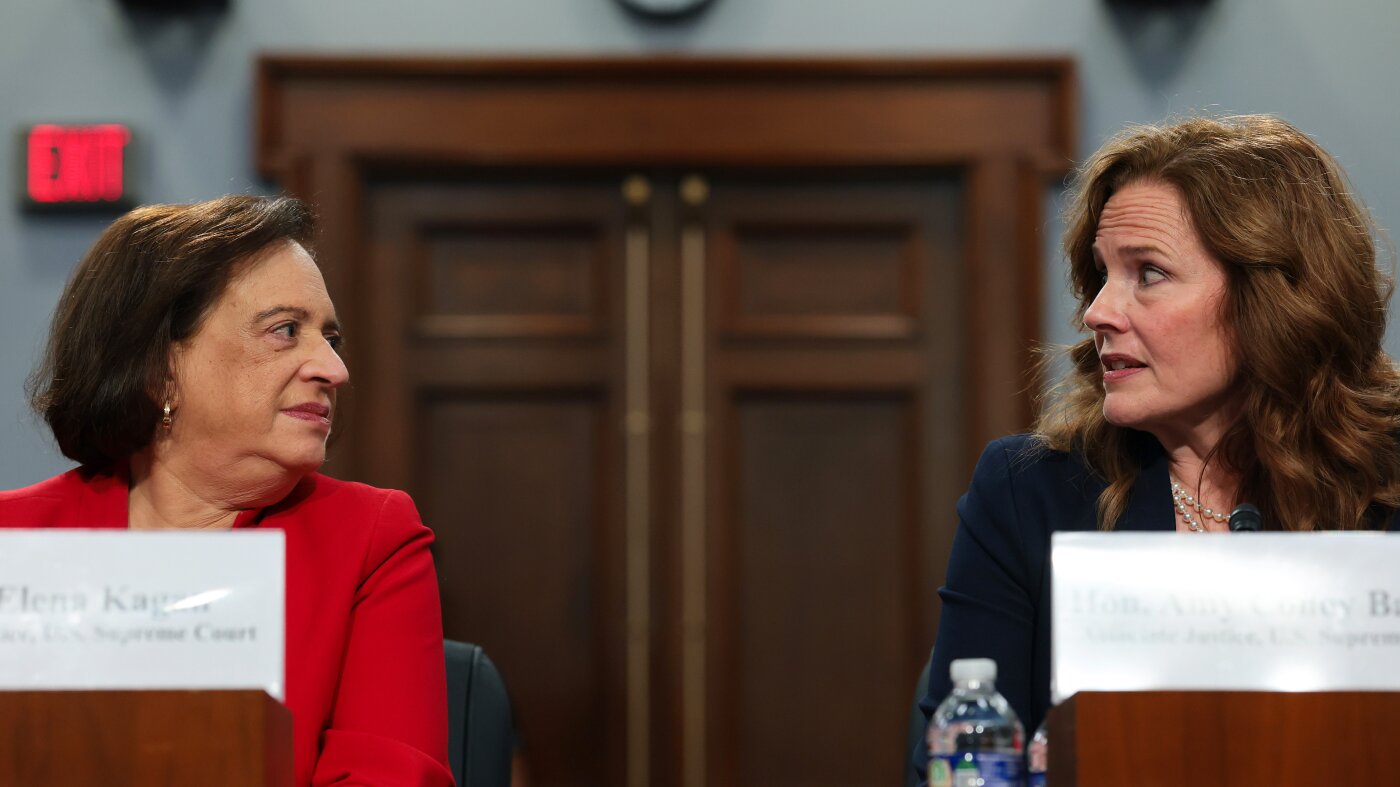
Supreme Court Justices give chilling accounts of threats to their safety
-

 Los Angeles, Ca2 hours ago
Stabbing at Chino Hills liquor store ends in attempted murder arrest
-

 Detroit, MI3 hours ago
A small group of citizens rally for mental health coverage in Detroit
-

 San Francisco, CA3 hours ago
1 dead, 2 missing after boat capsizes near Alcatraz in San Francisco Bay
-

 Dallas, TX3 hours ago
Death penalty off the table for man accused of beheading Dallas motel manager, prosecutors say
-

 Boston, MA3 hours ago
Chickadee, the popular Mediterranean restaurant in Seaport, is shutting down – The Boston Globe
-

 Denver, CO3 hours ago
Denver Nuggets 7-Year NBA Veteran Gets Honest On Peyton Watson

