Colorado
Grading The Week: Meet the Colorado QB who debuted with better stats than CU Buffs star Shedeur Sanders


Remember how insane Shedeur Sanders’ 2024 debut performance was against North Dakota State? Well, what if I told you that 445 passing yards and four scores was only the second-most impressive opening-week performance by a collegiate quarterback in the state of Colorado?
The statniks up in the Grading The Week cubicles didn’t believe it, either, frankly. But then somebody sent them details of Devin Larsen’s prime-time inaugural appearance for CSU-Pueblo up in Rapid City, S.D.
Larsen’s record-breaking debut — A
Making his ThunderWolves debut, the senior transfer from Western New Mexico (’21-’23) by way of Garden City Community College (’21) and Iowa State (’19-’20) piled up 508 passing yards while throwing for five touchdowns and zero interceptions to power CSU-Pueblo to a 35-6 victory.
The 6-foot-4 Arizona native completed 30 of 45 throws on the night. His 508 yards were a school record and the most by any collegiate QB at any NCAA level for the week.
While Sanders has showcased his talents as a singer, writer, rapper and performer, it turns out Larsen is something of a renaissance man himself. In April 2023, the future CSU Pueblo signal-caller won a creative writing contest held by the Western New Mexico humanities department for his poetry. Larsen’s winning entry was titled “To Find My Great Perhaps,” and was described by the university as a work that “celebrates the adventure of living in nature.”
If Larsen’s initial appearance for the ThunderWolves is any indication, CSU-Pueblo fans could be in for more than a few celebratory adventures this fall.
PS2’s reign as NFL’s highest-paid CB — B
Pat Surtain II will always have Wednesday. And Thursday. And … well, that’s pretty much it. Turns out PS2’s reign as the NFL’s highest-paid cornerback, while deserved, also became fairly brief. So brief, it lasted about two days.
This past Wednesday, the Broncos’ Pro Bowl defender inked a deal worth $24 million per year. On Friday, the Dolphins gave Jalen Ramsey a three-year deal worth a reported $24.1 million a season, just pipping Surtain over the finish line.
Dollander’s dominance — A
More than 13 strikeouts per game. A K-to-walk ratio of almost 4-to-1. A 2.38 ERA overall, and a 1.65 ERA over his last eight starts.
Sounds a lot like Paul Skenes, you say? Darn straight. Only those numbers belong not to the National League’s most exciting starter. They’re the latest stats for arguably the most exciting National League starter in the minors right now — and he’s a Rockie.
If you’re like the kids on the GTW staff, you’d sooner stare into the high desert sun than watch the pitching on 20th and Bleak. But would you believe help is on the way?
While Bo Nix, Sean Payton, Deion Sanders and Travis Hunter are stealing all the digital ink to start the fall, Rockies right-handed starter Chase Dollander, Colorado’s top pick in the ’23 MLB Draft, is quietly making a case to be considered one of the top pitching prospects chucking it right now.
This past Thursday, the 6-foot-2 Georgia native posted his sixth straight appearance for the Double-A Hartford Yard Goats of at least five innings pitched, at least six strikeouts and with two or fewer runs allowed.
Late last month, he became the first Hartford pitcher to record back-to-back games of double-digits Ks, fanning 10 Binghamton hitters after recording 10 strikeouts against New Hampshire. The righty’s racked up at least 10 Ks in six of his 22 appearances this season for Spokane and Hartford. Other than the baseball gods, who says Rockies fans can’t have nice things?
Originally Published:



Colorado
Suddenly hazy skies in Denver prompt some residents concerned about wildfire smoke to call 911

Some people who live in the Denver metro area on Thursday afternoon were making calls to 911 after skies became noticeably hazy and winds kicked up. It was due to smoke from wildfires in Nebraska moving into Colorado. A cold front also was moving through the Front Range, and there is dust in the air.
The poor air conditions led to reduced visibility downtown after 3 p.m. Several of CBS Colorado’s City Cams showed dust or smoke in the air.
Temperatures were expected to drop by as much as 20 to 30 degrees with the cold front.
The suddenly dusty skies prompted at least one fire agency to put out a plea to residents to please only call 911 “if you see flames.” That warning was put out by South Metro Fire Rescue, which shared a photo on X of an office building with haze visible outside.
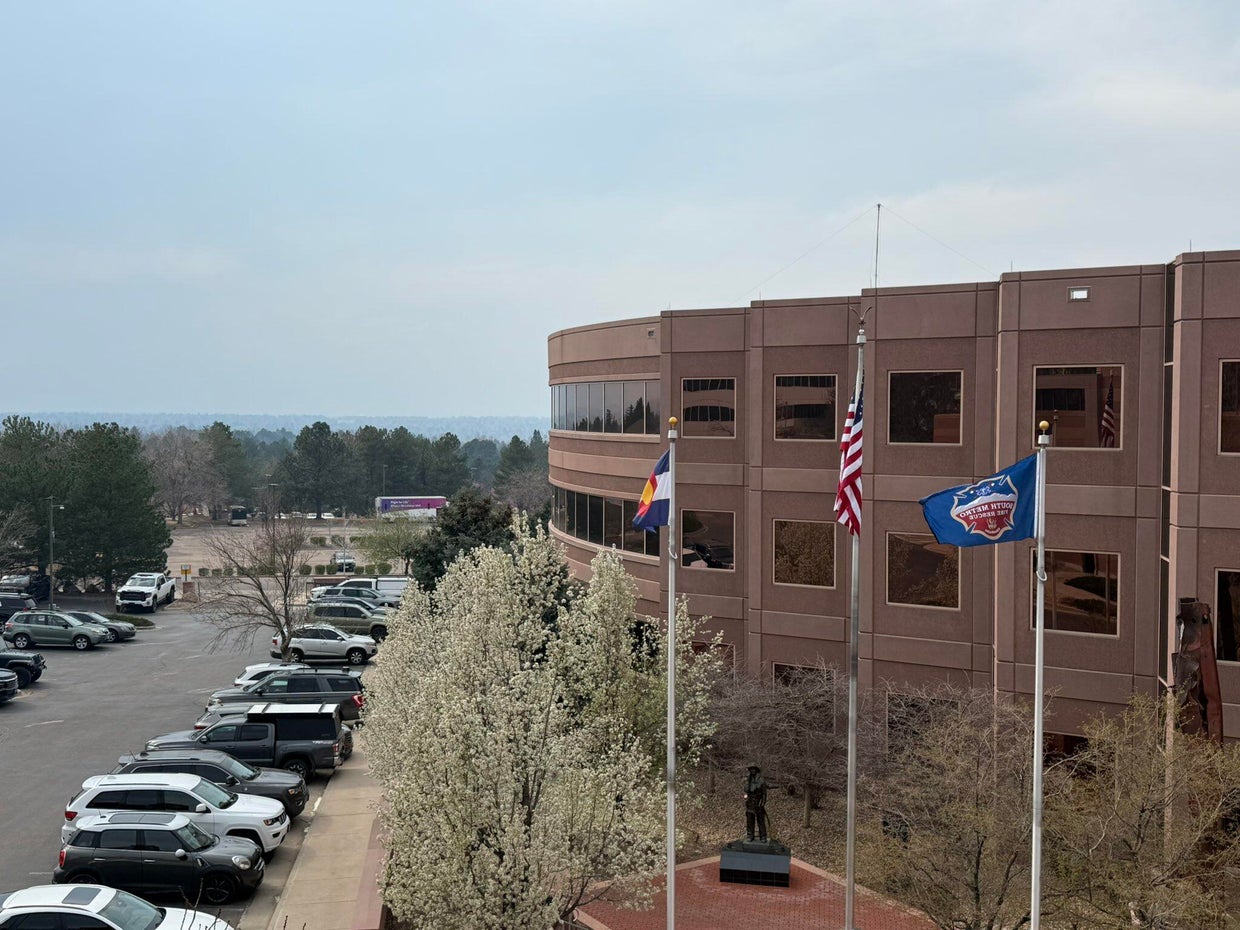
South Metro Fire Rescue said in their post that the smoke is from Colorado’s neighbor to the east. They called it a “significant haze” in the air.
Earlier this month, the Morrill Fire and the Cottonwood Fire burned a significant amount of Nebraska grassland and ranchland. They have mostly been contained by firefighters. Nebraska Gov. Jim Pillen said those two fires combined with several others have burned approximately 800,000 acres of land. On Thursday, Pillen announced that he is signing several executive actions intended to ease the burden caused by the fires.
There were no wildfires burning in the Denver metro area on Thursday afternoon.

ARAPAHOE COUNTY, Colo. (KKTV) – A homicide suspect based out of Colorado, wanted in a fentanyl-related death, is back in the state after being captured in Colombia.
The Arapahoe County Sheriff’s Office (ACSO) said 33-year-old Max Arsenault had been on the run since January 17.
Deputies said this stemmed from an incident in May 2023, where deputies responded to a call for a man named Nicholas Dorotik, who was found unresponsive.
ACSO said the cause of death was a mixed drug overdose involving meth and fentanyl, having about three times the lethal amount of fentanyl in his system.
One year later, Arsenault was arrested. He was scheduled for trial in January 2026 when deputies said he fled the country while on bond three days before the trial was set to start.
He was caught in Medellin, Colombia, on March 4, following a two-month international investigation. He has since been extradited back to Denver, where he is facing charges and awaiting trial.
Copyright 2026 KKTV. All rights reserved.


ND State Fair completes 2026 grandstand lineup with EDM artist Zedd, ‘Turn Up ND!’

Thousands head to Columbus for 23rd annual Home Improvement Show at Ohio Expo Center

Oklahoma City Comets preliminary 2026 roster

Merkley Announces Additional Oregon Town Halls April 2-4

Pennsylvania-born indie rockers Tigers Jaw return with new album release

Florida High School Football Rankings: Top 25 teams – Oct. 21

How old is Bo Nix? What to know about Oregon quarterback ahead of 2024 NFL Draft

Cleary's 21 help Le Moyne down Central Connecticut State 69-64 in OT

99th annual Pony Swim held in Virginia

Indiana Members Credit Union announced as new anchor tenant at Bottleworks District

Video: Will ICE Change Under Its New Leader?

DHS shutdown breakthrough comes at cost for Republicans as funding fights nears end

Rubio joins crucial G7 talks as Iran war set to dominate second day

A surprise resignation could open the door for an independent to win a Montana Senate seat

Video: Savannah Guthrie Says She Believes Her Mother Was Taken for Ransom
-

 Detroit, MI1 week ago
Drummer Brian Pastoria, longtime Detroit music advocate, dies at 68
-

 Science1 week ago
How a Melting Glacier in Antarctica Could Affect Tens of Millions Around the Globe
-

 Movie Reviews1 week ago
‘Youth’ Twitter review: Ken Karunaas impresses audiences; Suraj Venjaramoodu adds charm; music wins praise | – The Times of India
-
 Science1 week ago
I had to man up and get a mammogram
-

 Sports6 days ago
IOC addresses execution of 19-year-old Iranian wrestler Saleh Mohammadi
-

 New Mexico5 days ago
Clovis shooting leaves one dead, four injured
-
 Business1 week ago
Disney’s new CEO says his focus is on storytelling and creativity
-

 Texas1 week ago
How to buy Houston vs. Texas A&M 2026 March Madness tickets