Colorado
Colorado sees slowest population gain since the oil bust of the late 1980s


Colorado’s population rose by 24,059 people last year, the weakest increase measured since 1990, according to an update Tuesday from the U.S. Census Bureau. The gain, however, was enough to push the state’s population above 6 million for the first time.
Thirty-five years ago, Colorado was among a handful of oil and gas states experiencing a severe recession because of low energy prices, and from 1986 to 1990, more people left the state to pursue better opportunities elsewhere than moved in.
The state economy is chugging along this time around — not great, but not horrible. Yet, it appears high housing costs and slower job growth may be exerting a strong outward push. Last year, the state saw a weakening in its strongest contributor to population growth since the pandemic — immigration.
Nationally, President Donald Trump’s push to curb immigration a year ago lowered the country’s population growth rate from 1% in 2024 to 0.5% in 2025. Colorado’s decrease was even larger, going from a 1.29% growth rate to a 0.4%, a two-thirds decline.
Trump’s immigration crackdown led to drop in US growth rate last year as population hit 342 million
The U.S. Census Bureau measures changes in population from July 1 to June 30 every year in what is called a “vintage.” The strictest immigration policies were in place for only half that period, but they were enough to help push net immigration from 2.8 million people in the prior period to 1.3 million.
If that trend continues, the annual gain from net immigration in the next count, mid-2026, could drop to only 321,000 people, the U.S. Census Bureau estimates.
Colorado’s gain included 20,608 from natural increases, or births minus deaths. Net migration contributed 3,256 residents, with net immigration of 15,356 offsetting a net decline of 12,100 from domestic migration.
The country had an estimated population of nearly 342 million compared to 340 million in the 2024 count. The state’s population rose from 5,988,502 to 6,012,561. Colorado remains the 20th most populous state, behind Maryland and ahead of Wisconsin.
The downward shift was more pronounced in other states. California went from a gain of 232,000 residents in 2024 to a loss of 9,500 people in 2025, due primarily to reduced immigration. Hawaii, New Mexico, Vermont and West Virginia also lost population.
New York added only 1,008 people after a drop in immigration from 207,000 to 95,600. Florida saw its domestic migration drop by nearly two-thirds and immigration dropped by more than half, but it still had one of the largest overall gains, along with Texas and North Carolina.
South Carolina, Idaho and North Carolina had the highest year-over-year population growth rates, ranging from 1.3% to 1.5%.
“Many of these states are going to show even smaller growth when we get to next year,” Brookings demographer William Frey predicted Tuesday.
In 1990, the state added 18,840 residents. But the population is now 80% larger, so the comparison isn’t an even one. Although the pandemic slowed growth, the last time the rate of population growth was so low was in 1989. Only half done, this decade is shaping up to be the slowest the state has seen for growth since the 1980s.
Since 2020, Colorado has seen a net 17,729 people arrive from other U.S. states. By contrast, net immigration, people arriving from other countries, surged by 130,218. Net migration, which historically is 80% domestic and 20% international, has flipped the other way and then some.
Little on the horizon suggests that slower population growth will reverse itself, especially with fewer immigrants and now more outflows than inflows domestically. Demographic winter, long predicted, could be arriving earlier than expected.
On the plus side demographically, births rose 4.6% to 65,380 from the 2023-2024 period, and are now at the highest pace since 2017. Deaths remained fairly flat, rising by 59 or 0.1% from the prior period. That said, the holiday that death can take is limited, given the state’s aging population.
The State Demography Office had forecast a population gain of 33,154 and net migration of 13,568 for 2025. It was off by nearly 10,000, due almost entirely to weaker net migration. Last year, it had cut population forecasts through 2029 by 120,000 residents, and it may need to make more revisions, especially if immigration dries up even more.
What caused domestic migration to turn negative, given the absence of a recession? When someone arrives in a state from another country, they are counted as an international migrant. But if they move to another state, they are counted as a domestic migrant, according to the State Demography Office.
A lot of the international arrivals to Colorado between 2022 and 2025 came on humanitarian grounds and were likely headed elsewhere. And the Census Bureau, which makes no distinction between legal and illegal immigration, has gotten better at counting those arriving as refugees or under a protected status than in the past.
“At least some portion of the domestic out-migration from Colorado is made up of recently arrived international migrants,” the State Demography Office said in a release discussing the Census numbers.
That means a drop in immigration could translate into better numbers on domestic migration in the next estimate.
But an annual survey from United Van Lines, whose customers tend to be older and higher-income households, reported that Colorado last year had become a “strong outbound” state, one of only five, for the first time since 1990. For much of the 2010s, Colorado was a “strong inbound” state, before becoming more balanced after the pandemic.
That would suggest that it isn’t only the newest residents who departed, but also more established and wealthier households who were picking up and leaving.
Slower growth should allow the state to catch up on its housing shortfall, and if population gains are weak enough, reduced demand could even push rents and home prices lower. Apartment rents in Denver are already back to 2022 levels.
Governments could catch up on much-needed infrastructure, but their budgets may also take a hit given that population growth, along with inflation, determines how much additional spending they are allowed each year.
Broomfield economist Gary Horvathsaid slower population gains and slower job gains tend to correlate with each other. Normally, a lack of job opportunities results in slower population growth. But he suggests the situation might be reversed.
“With the exception of health care, in 2025, there was weak job growth in many sectors. If a person is needed to fill a job, and we don’t have that person, the labor market will struggle — not from a lack of demand, but from a lack of supply,” he said.
The Associated Press contributed to this report.
Get more business news by signing up for our Economy Now newsletter.



Colorado
Suddenly hazy skies in Denver prompt some residents concerned about wildfire smoke to call 911

Some people who live in the Denver metro area on Thursday afternoon were making calls to 911 after skies became noticeably hazy and winds kicked up. It was due to smoke from wildfires in Nebraska moving into Colorado. A cold front also was moving through the Front Range, and there is dust in the air.
The poor air conditions led to reduced visibility downtown after 3 p.m. Several of CBS Colorado’s City Cams showed dust or smoke in the air.
Temperatures were expected to drop by as much as 20 to 30 degrees with the cold front.
The suddenly dusty skies prompted at least one fire agency to put out a plea to residents to please only call 911 “if you see flames.” That warning was put out by South Metro Fire Rescue, which shared a photo on X of an office building with haze visible outside.
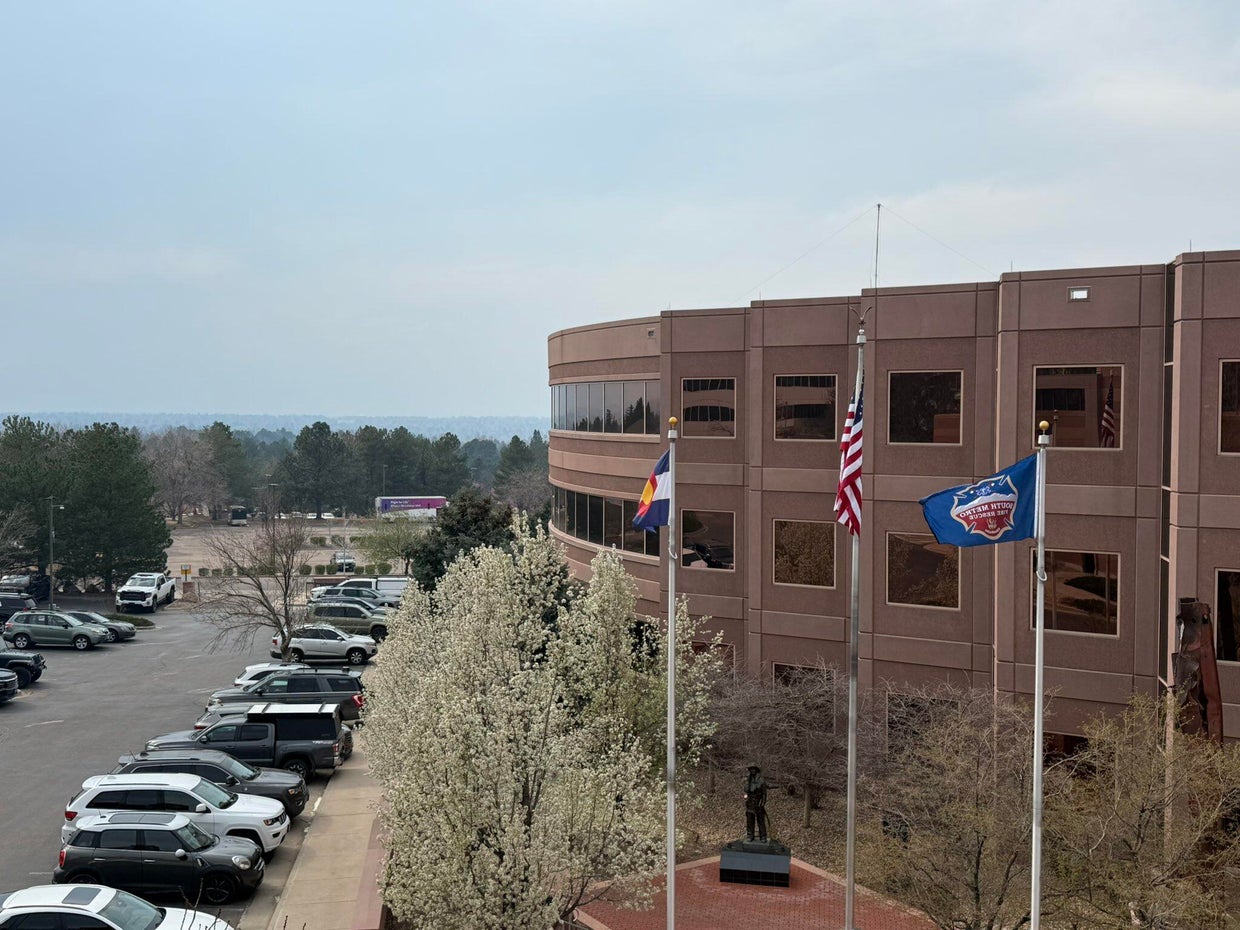
South Metro Fire Rescue said in their post that the smoke is from Colorado’s neighbor to the east. They called it a “significant haze” in the air.
Earlier this month, the Morrill Fire and the Cottonwood Fire burned a significant amount of Nebraska grassland and ranchland. They have mostly been contained by firefighters. Nebraska Gov. Jim Pillen said those two fires combined with several others have burned approximately 800,000 acres of land. On Thursday, Pillen announced that he is signing several executive actions intended to ease the burden caused by the fires.
There were no wildfires burning in the Denver metro area on Thursday afternoon.

ARAPAHOE COUNTY, Colo. (KKTV) – A homicide suspect based out of Colorado, wanted in a fentanyl-related death, is back in the state after being captured in Colombia.
The Arapahoe County Sheriff’s Office (ACSO) said 33-year-old Max Arsenault had been on the run since January 17.
Deputies said this stemmed from an incident in May 2023, where deputies responded to a call for a man named Nicholas Dorotik, who was found unresponsive.
ACSO said the cause of death was a mixed drug overdose involving meth and fentanyl, having about three times the lethal amount of fentanyl in his system.
One year later, Arsenault was arrested. He was scheduled for trial in January 2026 when deputies said he fled the country while on bond three days before the trial was set to start.
He was caught in Medellin, Colombia, on March 4, following a two-month international investigation. He has since been extradited back to Denver, where he is facing charges and awaiting trial.
Copyright 2026 KKTV. All rights reserved.


ND State Fair completes 2026 grandstand lineup with EDM artist Zedd, ‘Turn Up ND!’

Thousands head to Columbus for 23rd annual Home Improvement Show at Ohio Expo Center

Oklahoma City Comets preliminary 2026 roster

Merkley Announces Additional Oregon Town Halls April 2-4

Pennsylvania-born indie rockers Tigers Jaw return with new album release

Florida High School Football Rankings: Top 25 teams – Oct. 21

How old is Bo Nix? What to know about Oregon quarterback ahead of 2024 NFL Draft

Cleary's 21 help Le Moyne down Central Connecticut State 69-64 in OT

99th annual Pony Swim held in Virginia

Indiana Members Credit Union announced as new anchor tenant at Bottleworks District

Video: Will ICE Change Under Its New Leader?

DHS shutdown breakthrough comes at cost for Republicans as funding fights nears end

Rubio joins crucial G7 talks as Iran war set to dominate second day

A surprise resignation could open the door for an independent to win a Montana Senate seat

Video: Savannah Guthrie Says She Believes Her Mother Was Taken for Ransom
-

 Detroit, MI1 week ago
Drummer Brian Pastoria, longtime Detroit music advocate, dies at 68
-

 Science1 week ago
How a Melting Glacier in Antarctica Could Affect Tens of Millions Around the Globe
-

 Movie Reviews1 week ago
‘Youth’ Twitter review: Ken Karunaas impresses audiences; Suraj Venjaramoodu adds charm; music wins praise | – The Times of India
-
 Science1 week ago
I had to man up and get a mammogram
-

 Sports6 days ago
IOC addresses execution of 19-year-old Iranian wrestler Saleh Mohammadi
-

 New Mexico5 days ago
Clovis shooting leaves one dead, four injured
-
 Business1 week ago
Disney’s new CEO says his focus is on storytelling and creativity
-

 Texas1 week ago
How to buy Houston vs. Texas A&M 2026 March Madness tickets