Colorado
Colorado residents who switch to heat pumps can expect more rebates this summer

The group behind an upcoming rebate program is hoping to get more Coloradans to make the switch to heat pumps for their heating and cooling needs.
Power Ahead Colorado, administered by the Denver Regional Council of Governments, says applications for the new rebates will open this summer. However, people are already taking advantage of incentives.
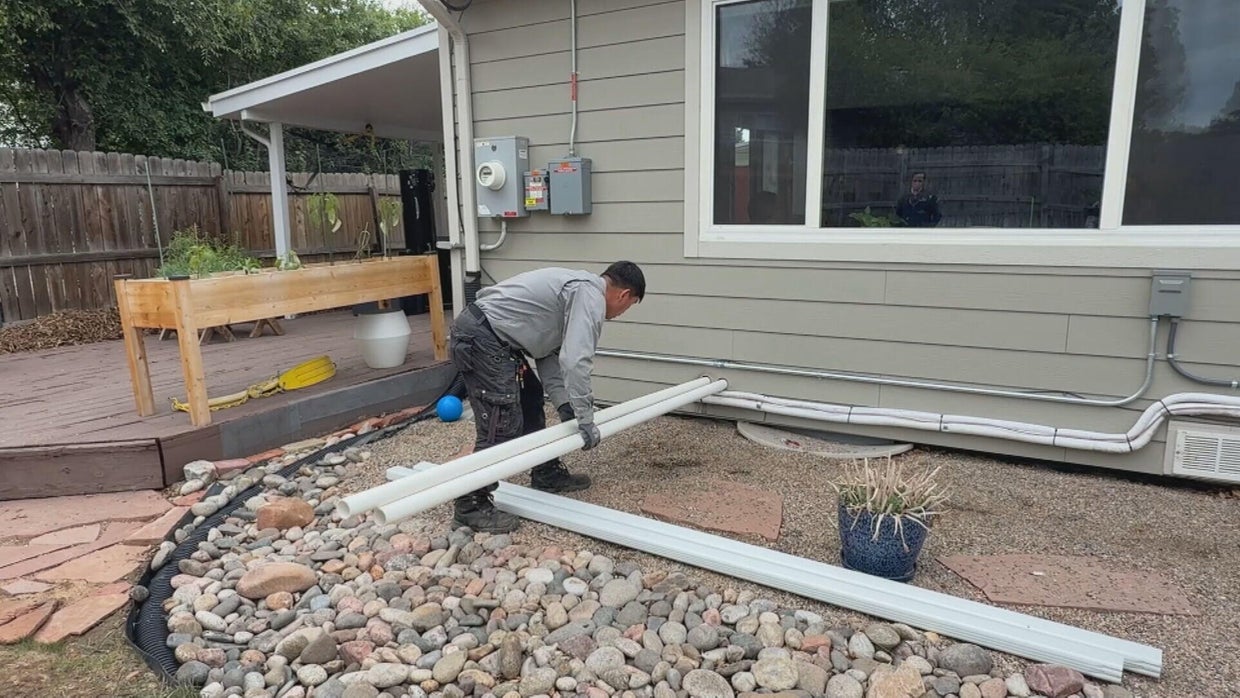
“I am so ready for the summer,” said Denver homeowner Eric Gehringer, who came home from work as his heat pump was being installed, and he’s pretty excited about it.
“We’re going to be in the house, just chillin’, like, ‘Oh man, is it warm outside? I don’t even know,’” he joked.
Gehringer is upgrading from a swamp cooler and chose a heat pump over a traditional heating and cooling system.
“With the rebates that are happening right now, it just made financial sense as well,” he said.
Several rebates can be stacked for maximum savings, including a state rebate from Xcel Energy.
“The average size of those rebates has been anywhere from $6,000 to $12,000, depending on the size of the heat pump,” said Trevor Seeyle, the president and CEO of Independent Power, a Boulder-based company that installs heat pumps.


Power Ahead Colorado will also be launching a $1,500 rebate program this summer.
“Our typical heat pump installation is probably anywhere from $15,000 to $25,000, and on average, those stacked heat pump rebates are probably about $10,000, and so it’s a significant portion of the installation cost,” Seeyle added.
Heat pumps are also a more energy-efficient option than traditional heating and cooling, and more Coloradans are making the switch.
Independent Power says they install around seven to eight per week.
Heat pumps work by pulling heat from the outside air when it’s cold, and cold from the air when it’s hot outside. The unit then disperses it within the home.
And although heat pump technology has improved to handle sub-zero temperatures in the colder months, there’s also an option to install a furnace along with it.
“That’s the backup that will typically only be running when it’s very, very cold outside,” Seeyle explained.
Heat pumps could be the long-term future of heating and cooling, with people like Gehringer eager to go all in.
“And seeing that the swamp cooler is gone is fabulous,” Gehringer added.