West
Colorado Gov. Polis signs funeral home regulatory crackdowns into law

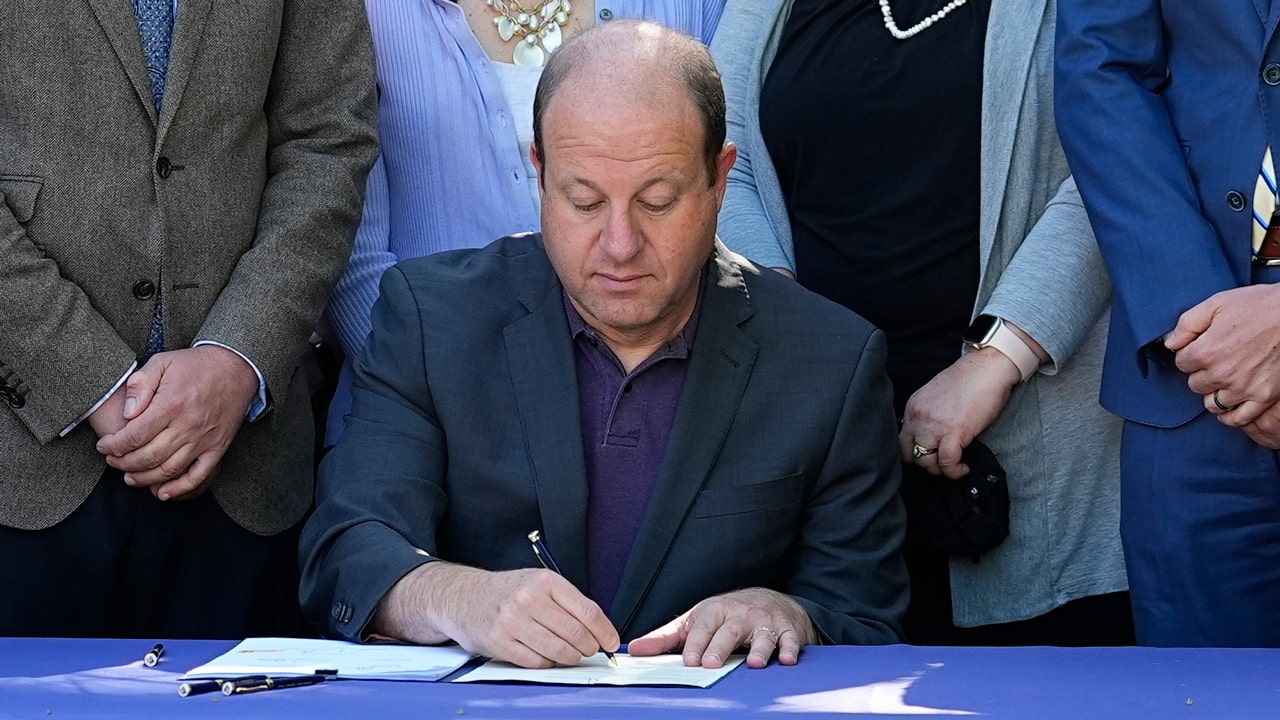
Colorado Gov. Jared Polis signed two bills into law Friday that overhaul state oversight of the funeral home industry after a series of gruesome discoveries, including 190 discomposing bodies in a facility, families being sent fake ashes and the unauthorized sale of body parts.
The cases put Colorado’s lax funeral home regulations — some of the weakest in the nation — in the spotlight and rocked hundreds of already grieving families.
Some families had ceremonially spread ashes that turned out to be fake. Others said they had nightmares about what their loved ones might have looked like in a decayed state.
CO LEGISLATURE PASSES FUNERAL HOME CRACKDOWN AFTER FAKE ASHES, HEAPS OF ROTTING BODIES MAKE NATIONAL HEADLINES
“When grieving the loss of a loved one, the last thing a family should worry about is the trustworthiness and professionalism of those entrusted to care for the person who has passed,” Polis said in a statement.
The new laws bring Colorado in line with most other states.
One requires regulators to routinely inspect funeral homes and give them more enforcement power. Another implements licensing for funeral directors and other workers in the industry. They would need to pass background checks and a national exam while possessing degrees and work experience.
Previously, funeral home directors in Colorado didn’t have to graduate from high school, let alone have a degree.
Colorado Gov. Jared Polis, front center, signs bills into law to bring more comprehensive guidelines into place for funeral facilities Friday, May 24, 2024, during a ceremony outside the Governor’s mansion in downtown Denver. (AP Photo/David Zalubowski)
The funeral home industry was generally on board with the changes though some expressed concern that strict requirements for funeral home directors were unnecessary and would make it difficult to find hirable applicants.
The bill signings follow a rocky year for Colorado funeral homes.
In early October, neighbors noticed a putrid smell coming from a building in the town of Penrose about two hours south of Denver. Authorities soon found 190 decaying bodies there including adults, infants and fetuses.
Some were stacked atop each other. Decomposition fluid covered the floors while flies and maggots swarmed.
Almost two dozen bodies dated to 2019 and some 60 more were from 2020. As the bodies were identified, families who had received ashes learned the cremains weren’t their loved ones.
The mother of a man whose body was found in the Penrose facility said she would keep after Colorado lawmakers to make sure the new laws are implemented stringently.
“I’m super excited. I think this is a great first step,” said Crystina Page, mother of David Jaxon Page, 20, who was killed by police during a mental health crisis in 2019.
The new laws should lead to regulations requiring crematoriums to independently verify the identity of remains, then certify to the state that those remains were cremated, Page said.
In most states, funeral homes are routinely inspected but no such rules were on the books in Colorado. The owners of the funeral home were arrested in November and collectively face hundreds of charges of abusing corpses and other counts.
Just months later, in February, a woman’s body was found in the back of hearse where a suburban Denver funeral home had left it for over a year. At least 30 sets of cremated remains were found stashed throughout the funeral director’s home.
Read the full article from Here

The Montana Lottery offers multiple draw games for those aiming to win big.
Here’s a look at July 3, 2026, results for each game:
Winning Mega Millions numbers from July 3 drawing
05-09-29-47-57, Mega Ball: 16
Check Mega Millions payouts and previous drawings here.
Winning Big Sky Bonus numbers from July 3 drawing
02-09-24-28, Bonus: 16
Check Big Sky Bonus payouts and previous drawings here.
Winning Millionaire for Life numbers from July 3 drawing
07-08-24-42-47, Bonus: 03
Check Millionaire for Life payouts and previous drawings here.
Feeling lucky? Explore the latest lottery news & results
When are the Montana Lottery drawings held?
- Powerball: 8:59 p.m. MT on Monday, Wednesday, and Saturday.
- Mega Millions: 9 p.m. MT on Tuesday and Friday.
- Lucky For Life: 8:38 p.m. MT daily.
- Lotto America: 9 p.m. MT on Monday, Wednesday and Saturday.
- Big Sky Bonus: 7:30 p.m. MT daily.
- Powerball Double Play: 8:59 p.m. MT on Monday, Wednesday, and Saturday.
- Montana Cash: 8 p.m. MT on Wednesday and Saturday.
- Millionaire for Life: 9:15 p.m. MT daily.
Missed a draw? Peek at the past week’s winning numbers.
This results page was generated automatically using information from TinBu and a template written and reviewed by a Great Falls Tribune editor. You can send feedback using this form.

California fireworks fans hungry for more high-powered pyrotechnics not sold in the state are heading for the Nevada border to get their illegal Fourth of July fix.
The Golden State only sells firecrackers that are certified “safe and sane” and sold by licensed sellers. But dozens of dealers in Nevada just miles from the California border have become a magnet for buyers looking for a bigger bang.
At Cosmic Boom Fireworks in Amargosa Valley, cashier Jovon Oseguera said business has picked up sharply among Californians.
“It’s making [us] busier, people from everywhere just come by in the past week or so with roughly 25 to 30% of customers in a day from California,” he said.
Oseguera said Californians are drawn to higher powered aerials “mostly mortar shells and fireworks cakes” they can’t buy in their own state.
At a Fourth of July party last year, a man lit an illegal $400 cake containing professional-grade explosives that malfunctioned and killed an 8-year-old girl.
“A lot of them ask if they can take the fireworks back across the state line, but I tell them there’s not much [they] could really take back, except… really small stuff,” Oseguera added.
While some Nevada stores require that customers fill out forms for their purchases, his shop only checks that buyers are over 18.
A worker at Blackjack Fireworks in Pahrump, Nevada, said that the shop attracts hundreds of buyers from outside Nevada, with a significant number arriving from California during the week of July 4.
“If you come to the store, there will be several hundred cars all year round,” said the employee, who declined to provide her name.
The staffer said some choose light the fireworks off near Walker Lake on the Nevada side, but the shop doesn’t keep track of where buyers go after their shopping sprees.
“I have no business asking where they are coming from or what their final destination will be, as it will be a violation of their rights,” the worker said.
Getty Images
According to the latest California Department of Public Health data from 2023, the state saw 200 nonfatal hospitalizations and 718 emergency department visits due to fireworks.
In 2024, Cal Fire reported over 1,200 illegal fireworks-related fires and hundreds of injuries.
“Each year, we continue to see illegal fireworks, particularly those purchased online or shipped into California from out of state, pose a significant threat to public safety, property, and our natural resources,” a Cal Fire spokesperson told The California Post.
While Cal Fire could not share details about sensitive operations ahead of July 4 or ongoing investigations, the department is “working in close partnership with local, state, federal, and out-of-state law enforcement agencies to investigate the illegal sale, distribution, and use of dangerous fireworks.”
Los Angeles County District Attorney Nathan J. Hochman urged the residents to report illegal fireworks activity, saying that celebrations with illegal fireworks and explosives are not harmless entertainment.
“These devices can kill people, causing devastating injuries and destroying entire neighborhoods,” he said.
The DA is also currently investigating several cases of illegal fireworks possession.
- East Los Angeles/Pico Rivera: Four individuals were charged after approximately 8,500 pounds of illegal fireworks and homemade explosive devices seized on June 22, 2026.
- South Los Angeles: Over 37,000 pounds of fireworks were discovered at a residence on May 27, 2026, leading to charges against four p eople, including child abuse charges for two defendants due to a child living in the home.
- 6th Street Bridge: Three individuals face 21 felony counts each after the LAPD Bomb Squad recovered homemade explosives from a car on May 2, 2026.
- Whittier: A seizure on January 13, 2026, uncovered over 24,000 pounds of fireworks and explosive-making materials in a storage unit near a preschool.

EL PASO, Texas (KVIA) — As families across the country gather together to celebrate the 4th of July, one family will reunite for the first time in years in El Paso.
Juan Escobar, an Albuquerque native, will finally be able to celebrate a holiday with his 14-year-old son, Andrew, all thanks to the El Paso Police Department.
Over the last three years, Escobar endured a long-standing search and custody battle over Andrew with his Miriam Felix, Andrew’s mom, which he originally won in 2023.
Not long after that custody victory, Andrew went with Felix for an overnight stay.
He never came home.
Missing posters said Andrew went missing June 25, 2023. He was 11 years old at the time.
Escobar hired a private investigator to uncover Andrew’s whereabouts. Investigation revealed Felix changed her name to Sophie Shelton and changed Andrew’s name to Oliver Shelton. The two reportedly moved to an area near Fort Collins, Colorado.
Suddenly, the case changed from a missing child to an abduction.
Escobar wasn’t able to find Andrew or Felix in Fort Collins.
After years of prayer and searching for answers, Juan received a phone call from El Paso Police last week.
In the call, EPPD said they had Felix in custody and Andrew waiting for him.

Escobar said Andrew told authorities he and his mom traveled to several countries over the three-year period, including Austria, Albania and Turkey.
He reportedly said he went to school online and just finished eighth grade.
However, his father is worried about his mental health.
“Physically, he’s well,” Escobar said. “But he’s just been through so much the last three years emotionally and mentally.”
Escobar told ABC-7 police said Border Patrol identified Andrew as a missing person while he and Felix reportedly crossed into El Paso from Ciudad Juarez, putting both of them into custody.
Escobar told ABC-7 his wife drove him down to El Paso and told him he wasn’t “in the condition to drive.”
He said his first instinct was to hug Andrew, since they used to love wrestling, but was told to give him space instead.
“The reality is that Andrew was an 11-year-old boy that was abducted and was moved across the country, and then moved out of the country and possibly overseas over the last three years,” Escobar said. “He’s a boy right now who has been in flight or fight mode for the last three years.”
Escobar said he’s now investigating how Andrew reportedly traveled around the world without being flagged as a missing person.
He also said he hopes Felix understands the gravity of what she’s done.
“This isn’t just trying to keep a father away from his son. This is breaking local law and breaking international law,” Escobar said. “I’m hopeful she understands what she’s done and she gets the help that she needs.”
Escobar also questioned how Felix afforded international trips.
As Andrew reunites with his father, Escobar has a simple message for parents and families this holiday weekend:
“Do what’s best for your children,” Escobar said. “Because ultimately, they’re what matter the most.”
Escobar said he’s excited to spend the holiday weekend with his son.
-

 Iowa29 seconds ago
Storm puts a pause to Savannah Bananas game at Kinnick Stadium
-
 Kansas6 minutes ago
Colombia fans in Kansas City celebrated victory Friday over Ghana in the Round of 32 World Cup match
-

 Kentucky13 minutes ago
Kentucky Democratic Senate candidate says voters deserve ‘honest answer’ about McConnell’s health
-

 Louisiana13 minutes ago
Louisiana Supreme Court recalls Liz Murrill’s arrest warrant in late-night emergency ruling
-

 Maine21 minutes ago
Where did Maine’s 24/7 restaurants go?
-

 Maryland28 minutes ago
Maryland Lottery Mega Millions, Pick 3 results for July 3, 2026
-

 Michigan31 minutes ago
What to know about cyclosporiasis as Michigan health officials investigate 300+ cases in outbreak
-

 Massachusetts36 minutes ago
American flags

