California
Why Southern California’s most vulnerable youths face hunger during school holidays

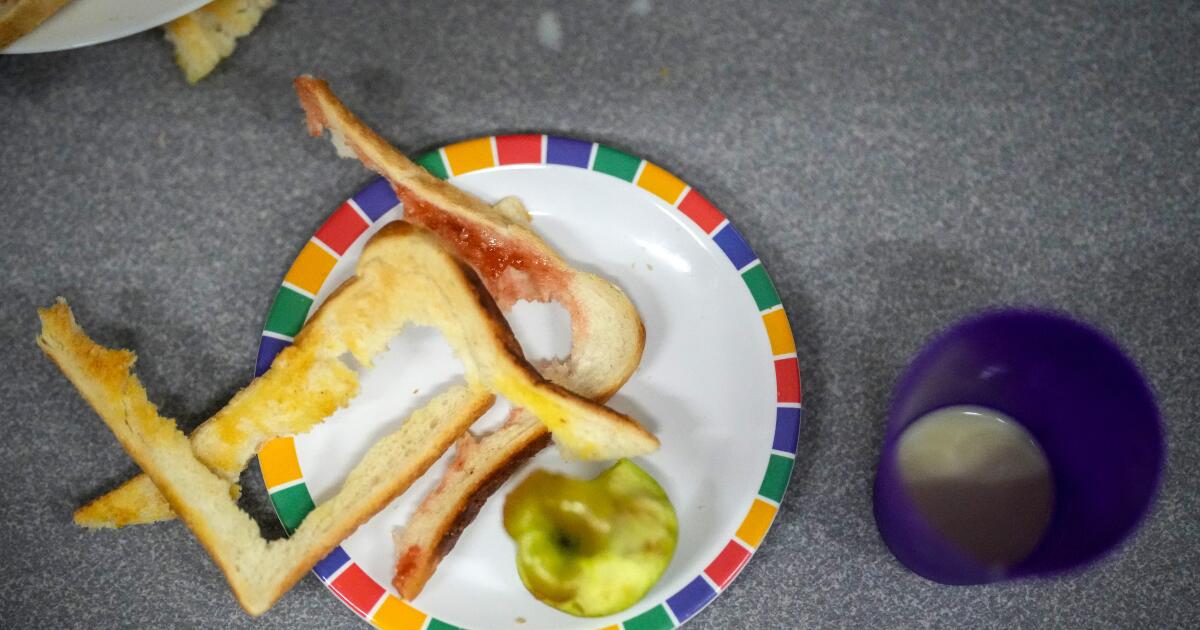
The holidays are a time when people gather with loved ones and celebrate abundance, but when California’s most vulnerable young people aren’t going to school because they are on break, it means even more uncertainty over where to find food. And that leads to even greater risk.
That’s the finding of a coalition of Orange County nonprofits that is tracking 500 at-risk youths to better understand what they need to live more stable lives and steer clear of abusive situations.
The collaboration uses a new tool for digital case management, research and prevention, developed by EverFree, which supports human trafficking survivors, in partnership with UC Irvine. It allows the nonprofits to collect information from young people, ranging from those in elementary or middle school to 24-year-olds.
Almost half the students tracked with the digital tool, who were referred by social-work case managers, said they aren’t living a healthy lifestyle, the nonprofits said. One in 5 said they often don’t know how they’ll eat and one-third said they struggle with mental and emotional well-being.
All of the participants come from families that are either unhoused, living in temporary housing such as motels or sharing crowded dwellings with multiple, unrelated families, said Shelby Feliciano-Sabala, a social worker who is chief partnership officer at Project Hope Alliance, a nonprofit that helps children experiencing homeless. The organization is working on the project with EverFree and Stand Up for Kids Orange County.
School can be much more than a place to learn, Feliciano-Sabala said.
“Youth experiencing homelessness get a sense of belonging, safety and routine when they’re at school,” she said. “When you don’t have that routine, and you don’t have access to that food, that disrupts your regular life.”
When already-vulnerable youths undergo even more uncertainty about getting food, there is often someone waiting to exploit that situation by luring them into coerced labor and sex work or subjecting them to gender-based violence, said Kelsey Morgan, co-founder and chief executive officer of EverFree.
“We’ve heard stories from many of our other partners of youth who run away and are approached by a trafficker who simply offers a McDonald’s cheeseburger,” Morgan said.
Feliciano-Sabala said she’s heard of traffickers winning over young people with a gift as meager as a bag of Takis rolled tortilla chips.
“Food insecurity is actually resulting in runaway situations where kids are so desperate that any person willing to offer them something small is winning their trust,” she said.
Feliciano-Sabala said private nonprofits represent “critical infrastructure” all year round, but particularly during the holidays, when the need tends to spike.
For families living in their cars, for instance, her nonprofit distributes gift cards to restaurants where they can eat in more comfort and safety, she said. Families staying in hotels with nowhere to cook can receive prepared food such as turkeys and tamales. Her nonprofit also distributes food from its small pantry or buys groceries for families in need.
Inadequate food is an ongoing problem for young people and families across California and the U.S., and it’s not only school-age children who are at risk.
One in 4 college students nationwide has an unreliable food situation, according to an analysis by the nonpartisan U.S. Government Accountability Office, which provides fact-based information to Congress. However, most of those who are potentially eligible are not enrolled in the federal Supplemental Nutrition Assistance Program — or SNAP — the GAO found.
Congress passed a law in 2024 designed to raise enrollment in federal food-aid among students by giving the U.S. Department of Education the authority to share student data with both federal and state SNAP agencies to determine their eligibility. But in a report this year, the GAO said that the department still had not made a plan to share this data, or given states guidance about the benefits of the law.
Self-assessments completed by young people ages 18-24 in Orange County as part of the nonprofits’ data collection mirror the food-access concerns that young adults across the country report. The research shows about half go to an institution of higher learning full-time, a third go to school and work part-time and the rest work full-time. So even though they have income, many are worrying about food, Morgan said.
In fact, getting enough to eat ranked higher than adequate clothing and safe, stable housing among college-age students who shared their top priorities ahead of the holiday season in 2024, she said. The nonprofits plan to release more insights about youths they’re tracking in 2026.
“When you look to the data of what these youth are asking for, it sheds a lot of light on what those core vulnerabilities are,” Morgan said. “These are individuals who want, desperately, dignified employment. They’re prioritizing things like savings, household income, money management, skills for employment and healthy lifestyles.”
Feliciano-Sabala said the digital tool was developed in response to the desire among case workers to offer help that is more tailored to those in their care.
The nonprofits hope to share their findings with service providers and policymakers to better address what young people say about their lives and dreams.


BAKERSFIELD, Calif. (KBAK/KBFX) — The California Highway Patrol is urging drivers to stay focused on the road as they head out for Fourth of July celebrations.
The holiday weekend can be a dangerous time on our roads as millions of drivers are expected to travel.
CHP Officer Jorge Toro joined Eyewitness News Mornings to share how drivers can stay safe behind the wheel.
Officer Toro also highlighted the importance of sober driving over the holiday.
BE THE FIRST TO COMMENT
He says anyone hosting a party should make sure all of their guests get home safely, ensuring anyone who may be impaired doesn’t drive.

California is returning a stretch of rugged Mendocino County coast to the Indigenous nations whose ancestors once stewarded its shores.
State transportation officials recently approved the transfer of Blues Beach and the surrounding bluffs to Kai Poma, a nonprofit founded by representatives of the Sherwood Valley Band of Pomo Indians, Round Valley Indian Tribes and Coyote Valley Band of Pomo Indians.
The transfer of 136 acres just south of the community of Westport will mark the first time land managed by the California Department of Transportation has been returned to Indigenous tribes.
“This is beyond huge,” said J. Carlos Rivera, tribal chairman of the Sherwood Valley Band of Pomo Indians. “It’s enormous from our tribal perspective that we are basically obtaining the land that our people once lived on before colonization.”
California purchased the swath of rocky cliffs and windswept shoreline in the 1960s to expand the construction of Highway 1 and create a scenic viewpoint for highway travelers, according to a California Coastal Commission report.
More recently, public access has been largely unregulated, and summer weekends and holidays have drawn large groups who camp and party on the beach, at times driving through sensitive areas, damaging cultural sites and leaving behind trash, the report states.
Kai Poma plans to conduct cultural and archaeological resource studies and environmental surveys and then prepare a resource management plan for the property, according to planning documents. The nonprofit and the Coastal Commission have drafted a public access management plan that states the land will be open from sunrise to sunset.
Rivera described the entire property as a sacred site. The coastal waters are used by tribal people for seaweed and abalone gathering, and the shores host youth cultural camps, he said. “Protecting the land, it has a deeper meaning for us because we’re connected to the land,” he said.
The effort to acquire the land took years — and required a change in state law. Caltrans lacked the ability to transfer land to tribal governments until 2021, when Gov. Gavin Newsom signed a bill sponsored by state Sen. Mike McGuire (D-Healdsburg) that enabled the transfer, according to a news release issued at the time. The law also bars commercial activity on the property and requires public access be maintained.
“With 136 acres now officially transferred into tribal stewardship, one of the most spectacular stretches of the Mendocino Coast will be forever protected,” McGuire said in a statement.
“This agreement, the first of its kind in California, gives these three dynamic Native American tribes the rightful opportunity to reclaim sacred lands and cultural traditions on this special piece of earth. And it’s about damn time.”
The land transfer cleared its last regulatory hurdle June 26 with the approval by the California Transportation Commission, said Neil Thapar, an attorney who works as an advisor and legal consultant to Kai Poma. Caltrans staff will next record the deed transferring the title from the state of California to Kai Poma, which is expected to happen any day, he said.


Fireworks Safety Guide
Essential safety tips for buying, handling, and watching fireworks to ensure a safe celebration.
With July 4 falling on a Saturday this year, many businesses and organizations are taking the day off Friday, July 3, to mark America’s 250th birthday. From banking to mail service, here’s what’s open and closed for the holiday weekend.
Most federal offices closed, mail service to continue
Non-essential federal offices will be closed on July 3. However, mail service will continue as normal, and post offices are scheduled to remain open.
Most California government offices to remain open
Most California government offices will be open on July 3, with some exceptions.
DMV offices throughout the state will be open. However, the Employment Development Department will be closed.
DMV offices that offer Saturday hours will be closed on July 4.
Private parcel services to remain open
UPS and FedEx are both scheduled to operate normally on July 3, but will suspend service on July 4.
Stock markets closed
Both the New York Stock Exchange and Nasdaq will be closed on July 3.
Most banks to stay open
While most banks were expected to operate normally on July 3, some may operate under modified holiday hours. All banks will be closed on July 4.
Online banking services should remain operational.
Grocery stores
Most major grocery chains will be open on both July 3 and July 4. Trader Joe’s locations will be open for regular business on July 3 but will close early at 5 p.m. on the Fourth of July.
Retailers
Many major retail stores, such as Walmart and Target, plan to operate under normal business hours on both July 3 and 4. All Costco warehouse stores operate under normal business hours on July 3, but will close on July 4.
Restaurants
Most major restaurant chains remain open on July 4, but some will have limited hours. All Raising Cane’s locations will close on July 4.
-

 Health22 minutes ago
Is Skipping Breakfast Bad? The Weight-Loss Truth May Surprise You
-
 Lifestyle36 minutes ago
Nearly half of Americans surveyed don’t know what America 250 commemorates
-

 Technology46 minutes ago
Amazon updated 2023’s Fire HD 10 tablet with 4GB of RAM
-

 World51 minutes ago
Interpol issues red notice for Ukrainian woman wanted for Monaco apartment bombing targeting oligarch
-

 Politics58 minutes ago
Mamdani blasts ICE agents, Elon Musk and ‘supremacy’ in America 250 speech ahead of July 4 weekend
-

 Health1 hour ago
What killed Americans in 1776? The answer is dramatically different from today
-

 Sports1 hour ago
Knicks champion says he hopes ‘truth comes out’ after leaving team for Eastern Conference rival
-

 Technology1 hour ago
Cheap streaming box could hijack your home internet

