California
Supreme Court ruling could jeopardize California's environmental rules

A recent U.S. Supreme Court ruling will probably pave the way for more legal challenges — and potential setbacks — for California’s groundbreaking clean air rules and myriad other federal environmental protections.
In a 6-3 decision last week, the Supreme Court overturned the so-called Chevron doctrine, a long-standing legal precedent that instructed U.S. courts to rely on federal agencies to interpret ambiguous laws. By invalidating the legal doctrine, the nation’s highest court has effectively stripped power from federal administrative agencies, such as the U.S. Environmental Protection Agency, and handed more authority to U.S. courts to independently decide whether newly enacted rules are consistent with federal law.
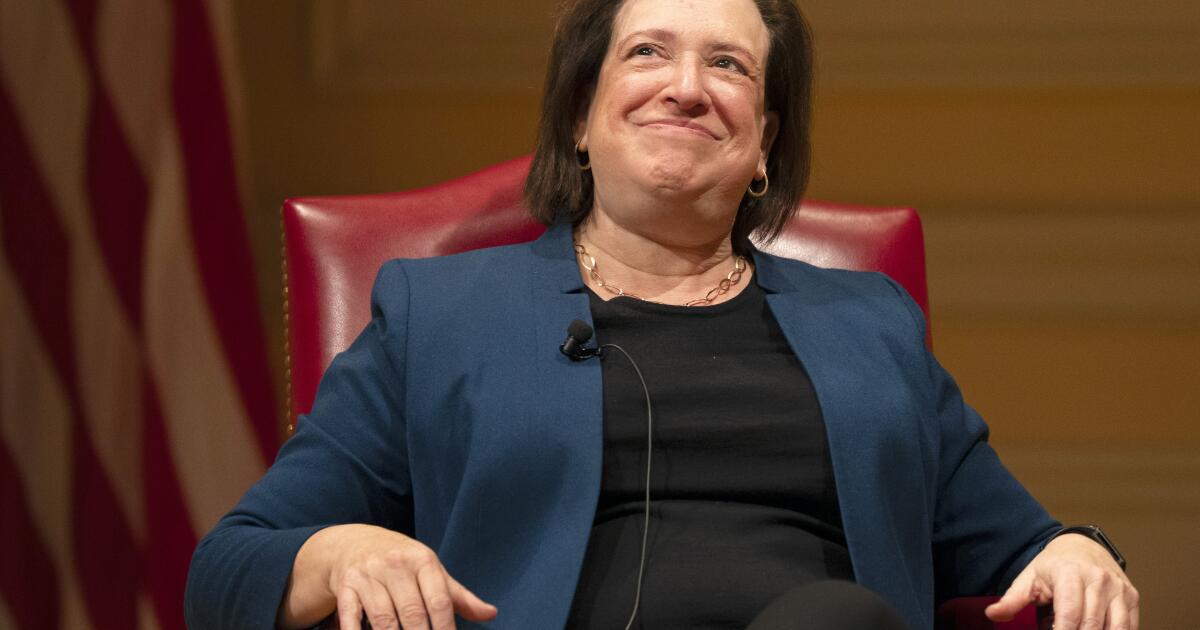
The six justices voting to overturn the deference rule were appointed by Republican presidents, including Chief Justice John G. Roberts Jr., who wrote the majority opinion. The decision was repudiated by Justice Elena Kagan, who dissented along with Justices Ketanji Brown Jackson and Sonia Sotomayor — all of whom were appointed by Democratic presidents.
Aggressive and impactful reporting on climate change, the environment, health and science.
“What actions can be taken to address climate change or other environmental challenges?” Kagan asked. “What will the nation’s health-care system look like in the coming decades? Or the financial or transportation systems? What rules are going to constrain the development of A.I.?
“In every sphere of current or future federal regulation, expect courts from now on to play a commanding role.”
After years of political divisiveness and congressional gridlock, the U.S. EPA has been forced to use decades-old environmental laws to craft modern regulations to slow climate change and crack down on pollution from new industries. Legal experts say the ruling could have a chilling effect on ambitious federal rulemaking, which will now be subject to a federal judiciary filled with Trump appointees.
This may also spell trouble for California’s ambitious rules for vehicle emissions, which have relied on Obama- and Biden-era interpretations of the Clean Air Act — a law last amended in 1990 that doesn’t even mention greenhouse gases.
With at least nine of California’s clean air rules awaiting EPA approval, the Supreme Court decision raises the stakes on the numerous court battles over the state’s zero-emission vehicle mandates and other emissions standards.
“While the courts are entitled to hear what the agency thinks, they don’t have to respect it,” said Julia Stein, deputy director for the Emmett Institute on Climate Change and the Environment at UCLA School of Law. “They’re open to adopt their own interpretation.”
The Supreme Court ruling could also have implications for the Clean Water Act, which regulates pollution into bodies of water.
The law applies to “navigable waters,” which has left uncertainty over whether habitats like wetlands and creeks are covered.
The potential for federal courts to alter environmental rules underscores the importance of states having their own laws on the books, Stein said.
“We have our own statutory scheme in California applied very robustly by state agencies here at home,” Stein said about water regulation. “So even if something were to happen at the federal level, we have a very robust backup at the state level to manage that.”


BAKERSFIELD, Calif. (KBAK/KBFX) — The California Highway Patrol is urging drivers to stay focused on the road as they head out for Fourth of July celebrations.
The holiday weekend can be a dangerous time on our roads as millions of drivers are expected to travel.
CHP Officer Jorge Toro joined Eyewitness News Mornings to share how drivers can stay safe behind the wheel.
Officer Toro also highlighted the importance of sober driving over the holiday.
BE THE FIRST TO COMMENT
He says anyone hosting a party should make sure all of their guests get home safely, ensuring anyone who may be impaired doesn’t drive.

California is returning a stretch of rugged Mendocino County coast to the Indigenous nations whose ancestors once stewarded its shores.
State transportation officials recently approved the transfer of Blues Beach and the surrounding bluffs to Kai Poma, a nonprofit founded by representatives of the Sherwood Valley Band of Pomo Indians, Round Valley Indian Tribes and Coyote Valley Band of Pomo Indians.
The transfer of 136 acres just south of the community of Westport will mark the first time land managed by the California Department of Transportation has been returned to Indigenous tribes.
“This is beyond huge,” said J. Carlos Rivera, tribal chairman of the Sherwood Valley Band of Pomo Indians. “It’s enormous from our tribal perspective that we are basically obtaining the land that our people once lived on before colonization.”
California purchased the swath of rocky cliffs and windswept shoreline in the 1960s to expand the construction of Highway 1 and create a scenic viewpoint for highway travelers, according to a California Coastal Commission report.
More recently, public access has been largely unregulated, and summer weekends and holidays have drawn large groups who camp and party on the beach, at times driving through sensitive areas, damaging cultural sites and leaving behind trash, the report states.
Kai Poma plans to conduct cultural and archaeological resource studies and environmental surveys and then prepare a resource management plan for the property, according to planning documents. The nonprofit and the Coastal Commission have drafted a public access management plan that states the land will be open from sunrise to sunset.
Rivera described the entire property as a sacred site. The coastal waters are used by tribal people for seaweed and abalone gathering, and the shores host youth cultural camps, he said. “Protecting the land, it has a deeper meaning for us because we’re connected to the land,” he said.
The effort to acquire the land took years — and required a change in state law. Caltrans lacked the ability to transfer land to tribal governments until 2021, when Gov. Gavin Newsom signed a bill sponsored by state Sen. Mike McGuire (D-Healdsburg) that enabled the transfer, according to a news release issued at the time. The law also bars commercial activity on the property and requires public access be maintained.
“With 136 acres now officially transferred into tribal stewardship, one of the most spectacular stretches of the Mendocino Coast will be forever protected,” McGuire said in a statement.
“This agreement, the first of its kind in California, gives these three dynamic Native American tribes the rightful opportunity to reclaim sacred lands and cultural traditions on this special piece of earth. And it’s about damn time.”
The land transfer cleared its last regulatory hurdle June 26 with the approval by the California Transportation Commission, said Neil Thapar, an attorney who works as an advisor and legal consultant to Kai Poma. Caltrans staff will next record the deed transferring the title from the state of California to Kai Poma, which is expected to happen any day, he said.


Fireworks Safety Guide
Essential safety tips for buying, handling, and watching fireworks to ensure a safe celebration.
With July 4 falling on a Saturday this year, many businesses and organizations are taking the day off Friday, July 3, to mark America’s 250th birthday. From banking to mail service, here’s what’s open and closed for the holiday weekend.
Most federal offices closed, mail service to continue
Non-essential federal offices will be closed on July 3. However, mail service will continue as normal, and post offices are scheduled to remain open.
Most California government offices to remain open
Most California government offices will be open on July 3, with some exceptions.
DMV offices throughout the state will be open. However, the Employment Development Department will be closed.
DMV offices that offer Saturday hours will be closed on July 4.
Private parcel services to remain open
UPS and FedEx are both scheduled to operate normally on July 3, but will suspend service on July 4.
Stock markets closed
Both the New York Stock Exchange and Nasdaq will be closed on July 3.
Most banks to stay open
While most banks were expected to operate normally on July 3, some may operate under modified holiday hours. All banks will be closed on July 4.
Online banking services should remain operational.
Grocery stores
Most major grocery chains will be open on both July 3 and July 4. Trader Joe’s locations will be open for regular business on July 3 but will close early at 5 p.m. on the Fourth of July.
Retailers
Many major retail stores, such as Walmart and Target, plan to operate under normal business hours on both July 3 and 4. All Costco warehouse stores operate under normal business hours on July 3, but will close on July 4.
Restaurants
Most major restaurant chains remain open on July 4, but some will have limited hours. All Raising Cane’s locations will close on July 4.
-

 Maryland6 minutes ago
Portion of I-97 buckles under extreme heat – WTOP News
-

 Michigan9 minutes ago
Two people dead and a third injured in shooting at Michigan shopping mall
-

 Massachusetts14 minutes ago
Swimmer rescued from Houghton’s Pond in Milton
-

 Minnesota21 minutes ago
Hope lost: Minnesota AG closes unit that freed wrongfully convicted prisoners
-

 Mississippi24 minutes ago
Mississippi Lottery rolls out 4 new scratch-off games for July – SuperTalk Mississippi
-

 Missouri29 minutes ago
Missouri Highway Patrol investigates death of staffer at youth ranch in Reynolds County; 1 juvenile arrested
-

 Montana36 minutes ago
Montana DEQ warns of algal blooms ahead of holiday weekend
-

 Nebraska39 minutes ago
Some Nebraska communities ban fireworks in year marked by drought, wildfires

