California
Governor Newsom on California AI bill SB 1047: 'I can't solve for everything' | TechCrunch

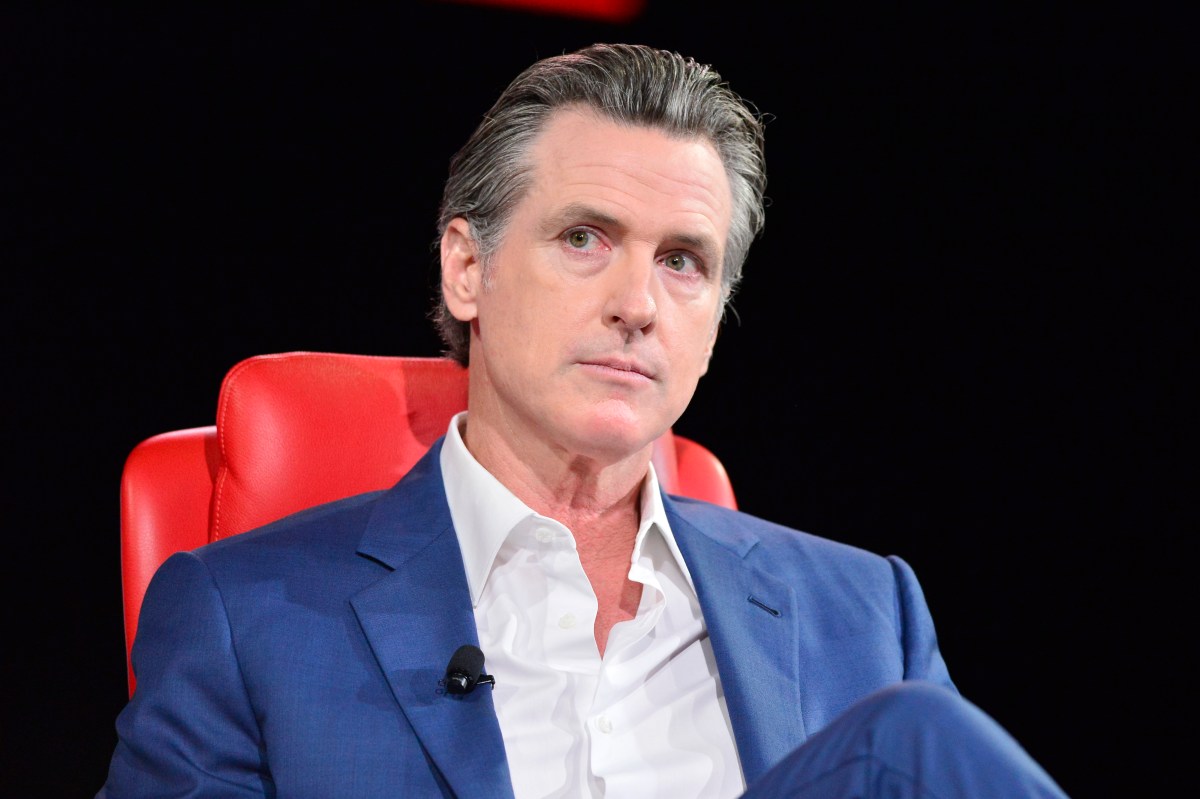
California Governor Gavin Newsom said there are 38 bills on his desk that would create laws around artificial intelligence on Tuesday, but one looms larger than all of them: SB 1047, California’s bill that tries to prevent AI systems from causing catastrophes. For the first time, California’s Governor shared how he’s thinking about the controversial bill.
In short, he thinks SB 1047 has problems. Newsom said he’s interested in AI bills that can solve today’s problems without upsetting California’s booming AI industry. That’s not very promising for the future of SB 1047, which aims to protect against disasters by holding big AI vendors liable if their products are used to cause grievous harm, like bringing down critical infrastructure. At the same time, signing the bill would upset large swaths of the AI industry who want Newsom to veto the bill.
“We’ve been working over the last couple years to come up with some rational regulation that supports risk taking, but not recklessness,” said Newsom in a conversation with Salesforce CEO Marc Benioff on Tuesday, on stage at the 2024 Dreamforce conference. “That’s challenging now in this space, particularly with SB 1047, because of the sort of outsized impact that legislation could have, and the chilling effect, particularly in the open source community.”
Newsom went on to say he must consider demonstrable risks versus hypothetical risks. He later noted, “I can’t solve for everything. What can we solve for?”
The governor hit on a major criticism of SB 1047: the bill tries to prevent AI’s role in mass casualty events and cyber security events costing more than $500 million, but does little to hold tech companies accountable for anything short of that. Critics of SB 1047 have argued that the bill could stifle innovation, while failing to regulate the short-term issues AI systems are creating today.
Newsom gave these remarks to a room full of people attending an enterprise technology conference in the heart of San Francisco. At most tech conferences I’ve attended recently, you hear rumblings in the bathroom line about SB 1047’s many problems. Newsom likely knew which kind of voters were in the audience, and may have been playing to the crowd.
That said, the governor is putting his AI regulation where his mouth is. Earlier on Tuesday, California’s Governor signed five bills into law that address AI problems we’ve already seen play out in 2024, such as AI-generated election misinformation and Hollywood studios creating AI clones of actors. These may be the “demonstrable risks” Newsom is referencing.
“Governor Newsom understands better than anyone the importance of California’s leadership when the federal government does not step up,” said state Senator Scott Wiener in a statement to TechCrunch. “The Governor and the First Partner’s work to bring awareness to the impacts of social media is a direct result of the federal government’s failure to regulate social media. I have every confidence the Governor will give this bill the consideration it deserves.”
Newsom lamented on Tuesday how the federal government has “failed to regulate” in the AI space. The governor noted how California has led previous on tech regulation – namely, social media and privacy – and he isn’t surprised that people are looking to the state for leadership again. However, Newsom says he’s being careful not to squander California’s early lead in AI.
“[AI] is a space where we dominate, and I want to maintain our dominance,” said Newsom. “At the same time, you feel a deep sense of responsibility to address some of the more extreme concerns that many of us have – even the biggest and strongest promoters of this technology have – and that’s a difficult place to land.”
Newsom alluded that it’s probably been overstated how signing SB 1047 would disrupt the AI industry overnight. However, he noted how the impact of signing the wrong bills over the course of a few years could profoundly impact California’s dominance.
The California governor didn’t explicitly say on Tuesday whether he would sign or veto the bill. He told the LA times he has yet to make up his mind on the bill. OpenAI, Nancy Pelosi, the United States Chamber of Commerce, and Big Tech trade groups are pushing Newsom to veto SB 1047. On the other side, Elon Musk and Anthropic have expressed tepid enthusiasm, while some well regarded AI researchers, such as Yoshua Benjio and Geoffrey Hinton, have fully endorsed SB 1047.
Governor Newsom has two weeks to make his decision. Until then, we’re left with a pile of remarks that don’t look promising for the bill’s future.



California
Mother, daughter found ‘alive and well’ after going missing on Southern California hiking trail

A mother and daughter who went missing after going for a hike on a difficult trail in San Bernardino County’s San Gorgonio Wilderness have been found “alive and well,” the sheriff’s department announced Friday.
The San Bernardino County Sheriff’s Department told KTLA they were uninjured and “walked out on their own.”
Krystal Meyers, 41, and her daughter Alexis Meyers Martinez, 21, were hiking on the Vivian Creek Trail Thursday but didn’t return, according to the San Bernardino County Sheriff’s Department.
They were last known to be at the 10,300-foot elevation mark above the High Creek switchbacks at 11 a.m., according to the San Gorgonio Search and Rescue team.
The Vivian Creek Trail is widely considered one of the more strenuous and hazardous routes in the San Gorgonio Wilderness.
The U.S. Forest Service says it’s the shortest and steepest route to the summit of Mount San Gorgonio and requires experienced mountaineering skills.
Officials did not provide any further details about the circumstances surrounding their disappearance.

BAKERSFIELD, Calif. (KBAK/KBFX) — The California Highway Patrol is urging drivers to stay focused on the road as they head out for Fourth of July celebrations.
The holiday weekend can be a dangerous time on our roads as millions of drivers are expected to travel.
CHP Officer Jorge Toro joined Eyewitness News Mornings to share how drivers can stay safe behind the wheel.
Officer Toro also highlighted the importance of sober driving over the holiday.
BE THE FIRST TO COMMENT
He says anyone hosting a party should make sure all of their guests get home safely, ensuring anyone who may be impaired doesn’t drive.

California is returning a stretch of rugged Mendocino County coast to the Indigenous nations whose ancestors once stewarded its shores.
State transportation officials recently approved the transfer of Blues Beach and the surrounding bluffs to Kai Poma, a nonprofit founded by representatives of the Sherwood Valley Band of Pomo Indians, Round Valley Indian Tribes and Coyote Valley Band of Pomo Indians.
The transfer of 136 acres just south of the community of Westport will mark the first time land managed by the California Department of Transportation has been returned to Indigenous tribes.
“This is beyond huge,” said J. Carlos Rivera, tribal chairman of the Sherwood Valley Band of Pomo Indians. “It’s enormous from our tribal perspective that we are basically obtaining the land that our people once lived on before colonization.”
California purchased the swath of rocky cliffs and windswept shoreline in the 1960s to expand the construction of Highway 1 and create a scenic viewpoint for highway travelers, according to a California Coastal Commission report.
More recently, public access has been largely unregulated, and summer weekends and holidays have drawn large groups who camp and party on the beach, at times driving through sensitive areas, damaging cultural sites and leaving behind trash, the report states.
Kai Poma plans to conduct cultural and archaeological resource studies and environmental surveys and then prepare a resource management plan for the property, according to planning documents. The nonprofit and the Coastal Commission have drafted a public access management plan that states the land will be open from sunrise to sunset.
Rivera described the entire property as a sacred site. The coastal waters are used by tribal people for seaweed and abalone gathering, and the shores host youth cultural camps, he said. “Protecting the land, it has a deeper meaning for us because we’re connected to the land,” he said.
The effort to acquire the land took years — and required a change in state law. Caltrans lacked the ability to transfer land to tribal governments until 2021, when Gov. Gavin Newsom signed a bill sponsored by state Sen. Mike McGuire (D-Healdsburg) that enabled the transfer, according to a news release issued at the time. The law also bars commercial activity on the property and requires public access be maintained.
“With 136 acres now officially transferred into tribal stewardship, one of the most spectacular stretches of the Mendocino Coast will be forever protected,” McGuire said in a statement.
“This agreement, the first of its kind in California, gives these three dynamic Native American tribes the rightful opportunity to reclaim sacred lands and cultural traditions on this special piece of earth. And it’s about damn time.”
The land transfer cleared its last regulatory hurdle June 26 with the approval by the California Transportation Commission, said Neil Thapar, an attorney who works as an advisor and legal consultant to Kai Poma. Caltrans staff will next record the deed transferring the title from the state of California to Kai Poma, which is expected to happen any day, he said.
-
 Lifestyle39 minutes ago
After weeks of speculation, Taylor Swift, Travis Kelce wed in New York
-

 Technology47 minutes ago
While you’re watching the World Cup, the feds may be watching you
-

 World54 minutes ago
Conservative Keiko Fujimori officially declared winner of Peru’s presidential runoff election
-

 Politics57 minutes ago
Trump hails America as ‘most exceptional nation ever to exist’ in Mount Rushmore speech
-

 Health1 hour ago
Scientists discover possible link between 9/11 and accelerated aging
-

 Sports1 hour ago
Messi, Argentina avoid a shocking upset in wild knockout stage match against Cape Verde
-

 Technology1 hour ago
Zoox robotaxi redesign brings big rider upgrades
-
 Business1 hour ago
Commentary: It’s not just vaccines — from infancy to adolescence, Republicans are waging war on children’s health

