California
10 summer books from LA authors and independent Southern California presses


Summertime and the livin’ is … literary.
If you’re a book lover looking to get your hands on some indie lit to lounge by the pool with, we’ve got you covered. Earlier this year, Small Press Distribution abruptly closed after a 55-year run, a move that jolted the literary community awake: Small presses need reader support.
We took the wake-up call seriously and compiled a list of the latest and forthcoming titles we’re most excited about. Hitting bookshop shelves this summer are clandestine tales of wife-swapping gone awry, a Korean American reimagining of Dostoevsky’s “The Brothers Karamazov,” a Soviet-Afghan war veteran’s descent into violent madness, and a hopeless cast of Angelenos looking for love in the wrong places — all from Southern California small presses and L.A. indie authors.
Check out the full list below:
“American Narcissus” by Chandler Morrison
Publication Date: May 14 (Dead Sky Publishing)
Baxter Kent is a surfer with a porn addiction that’s made it impossible for him to be intimate with “real girls,” so he turns to a sex robot. Arden Coover just graduated from Berkeley with a philosophy degree but would rather hole up in his parent’s pool house and do acid while he peruses dating apps. His 18-year-old sister, Tess, is entangled with a narcissistic novelist who wants to make her his fourth wife (the first three were too predictable). Ryland Richter is a booze and drug-addled insurance executive who’s sleeping with his new employee, an unstable claims adjustment agent who keeps threatening to ruin his life in myriad ways. In “American Narcissus,” the American dream is dead, Los Angeles is on fire, and this motley crew of characters can’t help but search for love in all the wrong places.
Morrison and I will discuss “American Narcissus” at Permanent Records Roadhouse in Los Angeles on June 8 at 2:00 p.m. RSVP here.

“The Future Was Color” by Patrick Nathan
Publication Date: June 4, 2024 (Counterpoint)
It’s 1950s Los Angeles, and George Curtis, a gay Hungarian-born Jewish man, is writing B-list monster movies. His true passion is political writing, so when a wealthy socialite offers George the chance to become the writer in residence at her glamorous Malibu mansion, he jumps at the chance to leave the studio behind. Soon, he’s shrouded in postwar decadence and sipping cocktails near the pool, but the people who’ve pulled him into their circle and the country where he’s emigrated to aren’t as they initially seem. Nathan’s L.A. noir novel spans decades and countries and delves into the power of art, self-reinvention, and the tether between the personal and the political.

“The Sisters K” by Maureen Sun
Publication Date: June 11 (Unnamed Press)
Maureen Sun’s debut novel “The Sisters K” is a modern reimagining of Dostoevsky’s “The Brothers Karamazov,” which follows three estranged Korean American sisters raised in Los Angeles. Brought together again by the looming death of their cruel and conniving father, sisters Minah, Sarah, and Esther confront their past and present, and the potential fortune at their fingertips from conflicting viewpoints. The starred Kirkus review calls “The Sisters K” a book that does “far more than retell a classic tale: it constructs a whole new vocabulary to discuss the most central of human conundrums: how to love and be loved in return.”
Sun was born in Los Angeles and will be returning for one of her two events with Katya Apekina at North Figueroa Bookshop in Highland Park at 7 p.m. June 5.

“Russian Gothic” by Aleksandr Skorobogatov and translated by Ilona Yazhbin Chavasse
Publication Date: June 11 (Rare Bird Books)
Nikolai, an unemployed veteran of the Soviet-Afghan war, begins his descent into madness when the elusive Sergeant Bertrand swings open his front door and kisses the hand of his wife Vera. Or maybe he just rang the doorbell and whispered sweet nothings into her ear. Nikolai isn’t sure how Sergeant Bertrand came into his life, he isn’t sure of much. But Sergeant Bertrand’s presence becomes increasingly intrusive, with violent consequences for Vera and the people in her orbit. “Russian Gothic” examines the devastating toll of PTSD, toxic jealousy, grief and misogyny. Aleksandr Skorobogatov is the author of five acclaimed novels but “Russian Gothic,” originally published in Europe in 1991, is the first of his books to be translated into English. It’s been hailed as a masterpiece of post-Soviet literature.

“A Punishing Breed” by DC Frost
Publication Date: June 11, 2024 (Red Hen Press)
“A Punishing Breed” is novelist DC Frost’s mystery debut and the first in a series that follows Detective DJ Arias, a jaded but shrewd investigator who tends to see the worst in people. When Danny Mendoza calls in a murder that happens at the liberal arts college where he works, it’s Detective Arias who’s assigned to the case, the same cop who locked up Mendoza a decade prior. At a campus that hides behind a facade of progressive curriculum, Detective Arias begins to uncover seething jealousy, racial and sexual tension, and a hierarchy that buries dark secrets. He must confront his own biases and dwindling humanity to crack the case and stop the murderer before they strike again.
Frost will be in conversation with Saul Gonzalez at Vroman’s Bookstore in Pasadena on June 25 at 7 p.m.

“Reap the Whirlwind: Violence, Race, Justice and the True Story of Sagon Penn” by Peter Houlahan
Publication Date: July 23 (Counterpoint)
On March 31, 1985, Sagon Penn applied to be an officer for the San Diego Police Department and was scheduled to take the written exam the following week. But just hours later, the young Black man was pulled over by two patrol police officers and things went horribly awry. The traffic stop escalated and Penn seized one of the officer’s guns, shooting both (killing one) and shooting a woman who was on a ride-along in one of the police cars. After two sensationalized trials, with the help of a fearless defense attorney, Penn was found not guilty on all charges. “Reap the Whirlwind,” written by “Norco ’80” author Peter Houlahan, examines the long-fraught relationship between Black communities and the police and interrogates the question, what, if anything, could justify Penn’s actions?

“Blue Graffiti” by Calahan Skogman
Publication Date: August 13 (Unnamed Press)
Cash is a handyman and sometimes painter living in middle-of-nowhere Wisconsin. He inherited his childhood home from his dead mother, was abandoned by his bereft father, and he’s never known anything outside of the small town where he lives, and the friends who fill the barstools beside him. Cash spends most of his time reminiscing about the past or dreaming up big plans for the future, but one night, his world is upended when an emerald-eyed beauty strolls into the town bar. Cash falls head over heels in love but first, he must confront the ghosts of his past before he can build a new future. Kirkus called Skogman’s poetic debut “a love letter to bar-stool philosophizing and a tender portrait of small-town life with a simple but powerful message: There’s always something special about home.”
Skogman will be in conversation with Leigh Bardugo at an event hosted by Skylight Books at Barnsdall Theater on August 29.

“Watching Over You” by Simon Delaney
Publication Date: August 13 (Rare Bird Books)
Alternating between London and Paris in the 1940s, the 1960s, and the present, “Watching Over You” follows restaurateur Michel de la Rue and his brother, Chef Antoine as they take a foodie tour of France (which is being filmed by a documentary TV crew). Throw in a scheming art dealer, Alain Deschamps, and his pursuers, Interpol’s Lorenzo Pieters and the Le Monde journalist, Fabian Ritzier, and you have a page-turning story of Michel desperate to protect his family’s precious heirloom – paintings hidden from the plundering Nazis during World War II – and Alain’s ruthless search for the missing paintings.

“Post-Apocalyptic Valentine” by Linda Watanabe McFerrin
Publication Date: September 3 (7.13 Books)
Award-winning novelist and travel writer Linda Watanabe McFerrin’s new poetry collection examines depression, humor, and dark revelation. McFerrin’s poetry explores history as well as the modern challenges of individuals living in a flawed society on a doomed planet. While McFerrin’s collection reaches as far as the galaxy in search of understanding, she narrows in on the minutia of day-to-day life to interrogate what it means to love.

“Olive Days” by Jessica Elisheva Emerson
Publication Date: September 10 (Counterpoint)
Jessica Elisheva Emerson’s debut novel follows Rina Kirsh, a modern orthodox Jew living in the Pico-Robertson neighborhood of Los Angeles. She’s an exhausted young mom and a closet atheist, and her husband insists that a night of wife-swapping with a few other couples will bring a spark back to their marriage. When Rina caves, it’s not her marriage that’s reinvigorated, but her passion for painting which leads her down a rabbit hole of lust, secrets and angst when she becomes entangled with her married Mexican American art teacher, Will Ochoa.



SAN FRANCISCO — The man accused of trying to kill OpenAI CEO Sam Altman by throwing a Molotov cocktail at his San Francisco home is set to make an initial court appearance Tuesday.
Daniel Moreno-Gama, of Spring, Texas, traveled to San Francisco last week and hurled the incendiary device at Altman’s home Friday, setting an exterior gate on fire before fleeing on foot, authorities said. Less than an hour later, Moreno-Gama went to OpenAI’s headquarters about 3 miles (5 kilometers) away and threatened to burn down the building, they said.
No one was injured at Altman’s home or the company’s offices.
Authorities said Moreno-Gama, 20, expressed hatred of artificial intelligence in his writings, describing it as a danger to humanity and warning of “impending extinction,” according to court filings.
“This was not spontaneous. This was planned, targeted and extremely serious,” FBI San Francisco Acting Special Agent in Charge Matt Cobo said during a news conference Monday.
Moreno-Gama is charged in California state court with two counts of attempted murder and attempted arson, San Francisco District Attorney Brooke Jenkins said. He tried to kill both Altman and a security guard at Altman’s residence, she alleged. Officials have not said whether Altman was home at the time.
Online state court records do not yet show whether Moreno-Gama has an attorney who can speak on his behalf.
Craig Missakian, U.S. Attorney, Northern District of California, middle, speaks during a news conference Monday, April 13, 2026, in San Francisco. Credit: AP/Jeff Chiu
Jenkins said the state charges carry penalties ranging from 19 years to life in prison.
On Monday morning, FBI agents went to Moreno-Gama’s home in a Houston suburb where they spent several hours before leaving. He has also been charged by federal prosecutors with possession of an unregistered firearm and damage and destruction of property by means of explosives. Those charges carry respective penalties of up to 10 years and 20 years in prison.
“We will treat this as an act of domestic terrorism, and together with our partners, prosecute him to the fullest extent of the law,” U.S. Attorney Craig Missakian said when announcing the federal charges Monday.
The federal court documents do not list an attorney for Moreno-Gama, and he has not yet had his first appearance in federal court.
The document in which Moreno-Gama discussed his opposition to AI also made threats against Altman and executives at other AI companies, officials said.
“If I am going to advocate for others to kill and commit crimes, then I must lead by example and show that I am fully sincere in my message,” Moreno-Gama wrote, according to authorities.
Advocacy groups that have issued grave warnings about AI’s risks to society condemned the violence.
Anthony Aguirre, president and CEO of the Future of Life Institute, said in a written statement Friday that “violence and intimidation of any kind have no place in the conversation about the future of AI.”
Another group, PauseAI, said in a statement that the suspect had no role in the group but joined its forum on the social media platform Discord about two years ago and posted about 34 messages there, none containing explicit calls to violence but one that was flagged as “ambiguous.”
Discord said Monday that it has banned Moreno-Gama for “off-platform behavior.”

Dad charged with incest after allegedly assaulting daughter
Makayla Rene Settles moved to California to chase her dreams. Two days later, her family says her biological father sexually assaulted her. She was 18. She died five months later. Now her family is fighting to make sure her accused attacker faces trial.
VENTURA COUNTY, Calif. – When Makayla Rene Settles turned 18, she left Raleigh, North Carolina, for a fresh start. She moved to Moorpark, California, to live with her biological father, Stephen Vincent Chavez, with plans to attend college and build a new life. Two days after she arrived, her family says she called terrified and asking for help.
“It was just the fear in her voice, her crying. I didn’t need details. I knew something was wrong, and I said, ‘I’m on the way,’” said Carolina Sandoval, Makayla’s mother.
Carolina says she rushed to Chavez’s home. When she saw her daughter, she was devastated.
“She’s barely walking,” Carolina said. “My brother picks her up and hugs her.”
Makayla was taken to a hospital, where a rape kit was performed. According to the family, the results came back positive for Stephen Vincent Chavez’s DNA. He was arrested that same night and charged with incest, taking advantage of a position of trust, and providing alcohol to a minor.
Her cousin, Crystal Sandoval, was in disbelief. She said, “I was screaming, I was crying. I just kept thinking, why would he do that to her? This is something she could not come back from.”
Crystal was right. Five months later, Makayla Rene Settles died by suicide.
“If I’m being honest, it feels like I handed my daughter to the devil,” said Carolina.
On the night Makayla was taken to the hospital, Sandoval says Chavez sent her a text message. It read, “I’m never drinking liquor again. I don’t want that blackout to happen again.”
Now, the family says they’ve been dealt another devastating blow. According to Crystal Sandoval, the Ventura County DA’s Office has told them the case may not go to trial because Makayla is no longer alive to testify.
“The DA was essentially saying, ‘We don’t know if we have a case because she’s no longer here,’ and when she told me that, I immediately said, ‘No, we’re not going to let that slide,’” said Crystal.
Determined to get justice, Crystal took to social media. Her videos went viral, drawing widespread outrage and prompting hundreds to promise to show up to Chavez’s next court hearing, scheduled for April 21 at the Ventura County Courthouse.
“It was like he took her sunshine away and just kind of broke her soul,” Crystal said.
The Ventura County District Attorney’s Office issued the following statement:
“We have seen the posts online and want to let the public know that our Sexual Assault Unit continues to prosecute the defendant for this extremely serious crime. This case has been filed since July 2025, when the evidence supported the filing of felony charges. As with any case, prosecutors filed charges based on the evidence. The court sets bail. Our office successfully moved to increase bail to $250K in July 2025 when the case was filed. The defendant requested that bail be reduced, but we successfully argued against that. The defendant has since posted $250K bail and is out of custody. With respect to the upcoming hearing, the April 21 date is an early disposition conference. This is a standard pretrial proceeding where the court and parties address the status of the case and set future dates as appropriate.”
Despite that statement, the family says they have already been told a trial is not guaranteed, and they are not backing down. Chavez has pleaded not guilty. His next court hearing is April 21 at 8:30 a.m. in Courtroom 14 at the Ventura County Courthouse.
California
California’s leading GOP candidate for governor reacts to Swalwell’s exit from race | CNN Politics

California’s leading GOP candidate for governor reacts to Swalwell’s exit from race
Republican Gov. candidate Steve Hilton joins CNN’s Dana Bash after one of his opponents, Rep. Eric Swalwell, exited the California governor’s race amid sexual misconduct allegations. “We desperately need change. And no Democrat can provide that,” Hilton says.

Do you have a right to wear a penis costume in public? A 62-year-old Alabama woman is about to find out.

Alaska AG Enters Into $800K Settlement With Car Dealer Group (via Passle)

Huge Usher and Chris Brown tour coming to iconic Arizona concert spot

Shepherd confirmed as federal judge in Arkansas’ Western District – Talk Business & Politics

Suspect in Molotov attack at Sam Altman’s California home set to appear in court

Florida High School Football Rankings: Top 25 teams – Oct. 21

How old is Bo Nix? What to know about Oregon quarterback ahead of 2024 NFL Draft

Cleary's 21 help Le Moyne down Central Connecticut State 69-64 in OT

99th annual Pony Swim held in Virginia

Indiana Members Credit Union announced as new anchor tenant at Bottleworks District

Video: How Stephen Miller Is Adjusting Trump’s Immigration Agenda

Biden DOJ weaponized FACE Act against pro-life Americans, 882-report alleges

Mass drone warfare is Europe’s rising security threat
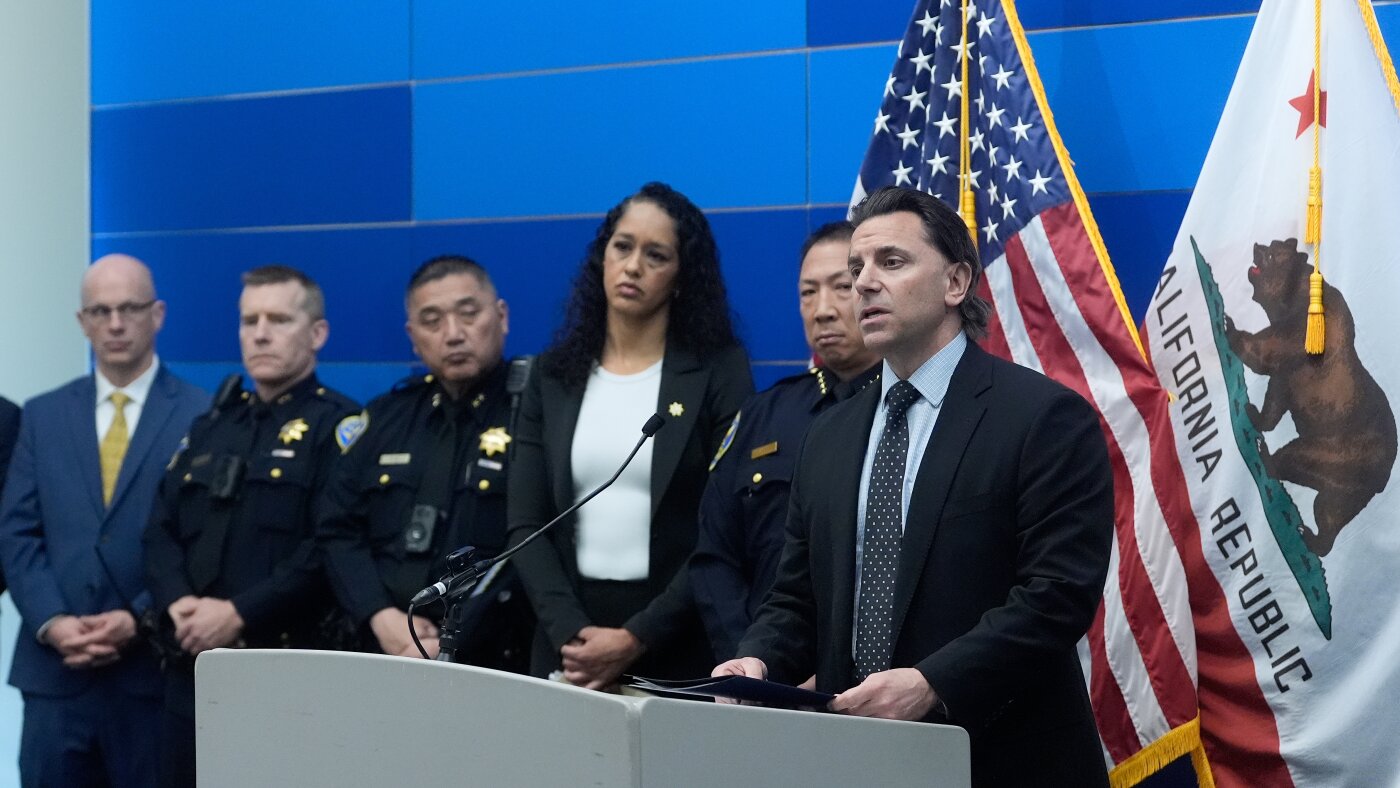
Man accused in Molotov cocktail attack of OpenAI CEO’s home charged with attempted murder

Embattled Rep Tony Gonzales announces plans to resign amid sexual misconduct allegations
-

 Atlanta, GA1 week ago
1 teenage girl killed, another injured in shooting at Piedmont Park, police say
-

 Georgia1 week ago
Georgia House Special Runoff Election 2026 Live Results
-

 Arkansas4 days ago
Arkansas TV meteorologist Melinda Mayo retires after nearly four decades on air
-

 Pennsylvania1 week ago
Parents charged after toddler injured by wolf at Pennsylvania zoo
-
 Milwaukee, WI1 week ago
Potawatomi Casino Hotel evacuated after fire breaks out in rooftop HVAC system
-

 Austin, TX7 days ago
ABC Kite Fest Returns to Austin for Annual Celebration – Austin Today
-

 World1 week ago
Zelenskyy warns US-Iran war could divert critical aid from Ukraine
-

 World1 week ago
Indonesia receives bodies of peacekeepers killed in southern Lebanon