West
California Senate leader announces 2026 bid for governor

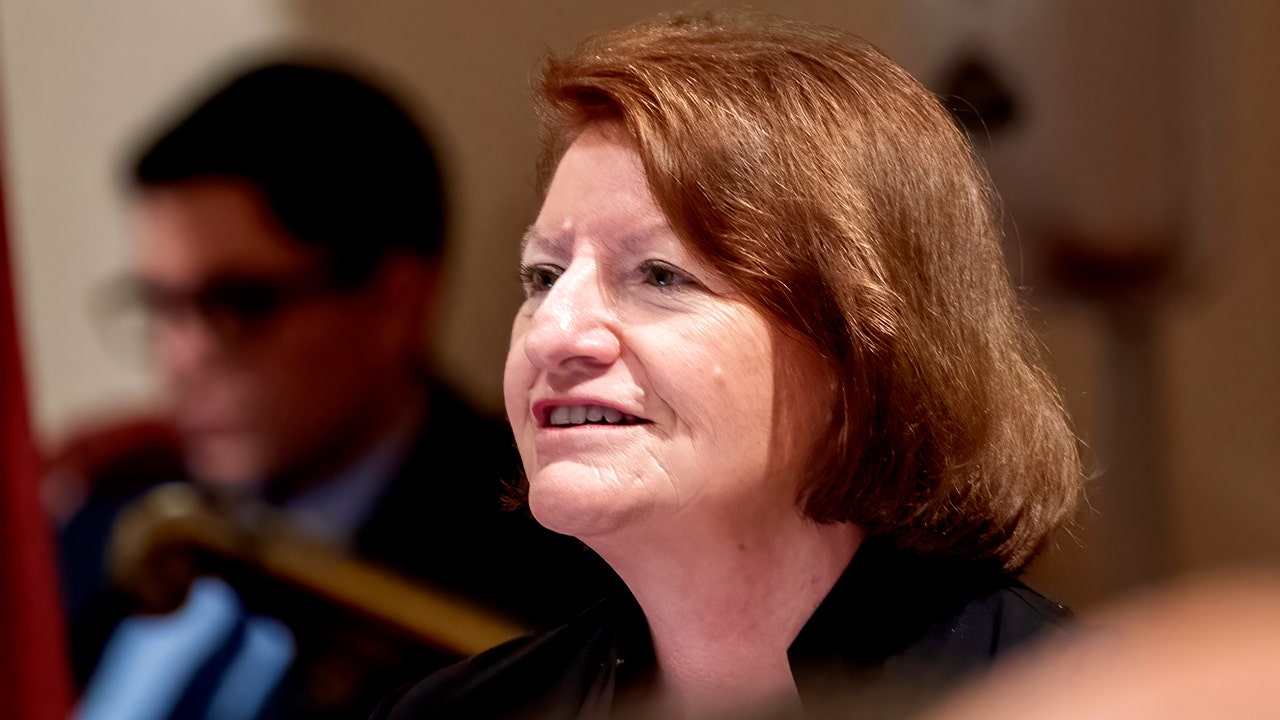
- Toni Atkins, the president pro tempore of the California state Senate, has declared her candidacy for the Golden State’s governorship in 2026.
- Atkins joins several other big-name Democrats, including Lt. Gov Eleni Kounalakis and Public Instruction Superintendent Tony Thurmond, in the race to succeed term-limited incumbent Gov. Gavin Newsom.
- If elected, Atkins will be both the first woman and first LGBTQ person to hold the California governorship.
The leader of the California Senate on Friday said she would run for governor in 2026, entering a campaign that is far from the minds of voters but is quickly filling with candidates in a state that requires frequent fundraising to compete in some of the nation’s most expensive media markets.
Toni Atkins, a Democrat from San Diego, made history as only the third person and the first woman to hold both of the state Legislature’s top jobs — speaker of the Assembly and president pro tempore of the Senate.
Atkins is still in the latter role, but plans to step down early next month as she enters the final year of her term and cannot seek reelection because of term limits.
REPUBLICAN VYING FOR KEVIN MCCARTHY’S VACATED SEAT OUTLINES PROMISE OF ‘CALIFORNIA FOR ALL CALIFORNIANS’
California, despite its progressive reputation, has never had a woman or an openly LGBTQ governor. Atkins, who is a lesbian, could be both. But she’ll have to compete against a strong field of Democrats, including Superintendent of Public Instruction Tony Thurmond, former Controller Betty Yee and Lt. Gov. Eleni Kounalakis. Attorney General Rob Bonta is also considering a run to succeed current Gov. Gavin Newsom, who cannot seek a third term.
Kounalakis, Thurmond, Yee and Bonta have the benefit of appearing — and winning — in a statewide election, meaning voters will be familiar with them. Atkins has only ever been elected by voters in San Diego.
President Pro Tempore Toni Atkins of the California state Senate is photographed at the Capitol in Sacramento, California, Monday, July 10, 2023. (AP Photo/Rich Pedroncelli,File)
But she is well-versed in the inner workings of the Capitol and policymaking. She has negotiated multibillion-dollar budgets and major legislation with two governors. And she has a compelling personal story — growing up in a house with no running water in rural Virginia before making her way out West and becoming one of the most powerful elected officials in the state.
“I certainly don’t fit the mold of past governors or even some of the candidates that will be in this race,” Atkins said. “I’m going to lean on my story, because I think Californians are going to want someone more like them.”
Atkins came to California in 1985 to help care for her sister’s young son. She later worked at a women’s health clinic that performed abortions before getting elected to the San Diego City Council. She had a brief stint as mayor before getting elected to the state Assembly in 2010 and the state Senate in 2016.
In the Legislature she worked with former Gov. Jerry Brown and Newsom to craft a series of budgets marked by multibillion-dollar surpluses. That ended last year when the state had a multibillion-dollar deficit.
Newsom has steadfastly refused sweeping tax increases to balance the budget — something Atkins, too, said she would try to stay away from if she were elected governor.
“We want to preserve what we’ve done. It took a lot of work,” Atkins said. “I would not gravitate toward raising taxes in this moment. I don’t think it’s called for yet.”
Read the full article from Here

Alaska
Alaska Sen. Dan Sullivan’s primary challenger who has the same name is eligible for ballot, judge rules

A man with the same name and party affiliation as Alaska Republican U.S. Sen. Dan Sullivan is eligible to challenge the senator in the August primary, a judge ruled Friday.
Superior Court Judge Thomas Matthews’ ruling overturns a June 15 decision by Division of Elections Director Carol Beecher to disqualify the challenger and keep him off the primary ballot. Matthews’ ruling can be appealed to the state Supreme Court.
Attorneys for the state have said Tuesday is the deadline for a final ruling so that ballots for the Aug. 18 primary can be printed.
The judge ruled that the division’s decision to exclude Dan J. Sullivan because his candidacy was not “in good faith” was not based on the Constitution, Alaska law or the division’s own regulations. The retired teacher from the small fishing community of Petersburg filed to challenge the incumbent.
“Instead, the decision was based upon a new, previously unstated, ‘good faith’ criteria,” the judge wrote.
The division is appealing the decision, Sam Curtis, a spokesperson with the state Department of Law, said by email Saturday. Jeffrey Robinson, an attorney for Dan J. Sullivan, said in an email he expected the division to appeal and couldn’t comment until the Alaska Supreme Court rules on the case.
The controversy over the two Dan Sullivans has underscored the stakes involved in the incumbent’s reelection campaign. The Alaska race is one of about half a dozen U.S. Senate races expected to be highly competitive in the fall, and the seat is one Democrats are trying to flip in their efforts to try to regain the majority. But it’s expected to be an uphill battle in a state that President Trump won by 13 points in 2024.
The senator and allies, including the National Republican Senatorial Committee, have condemned the challenger’s efforts to join the race, arguing his presence could confuse voters. Republican Lt. Gov. Nancy Dahlstrom earlier this month opened an investigation into the non-Senator Sullivan’s candidacy.
Under Alaska’s election system, the top four candidates from the primary, regardless of party, move on to the ranked-choice November general election.
The senator has accused the challenger Sullivan of working with Democrats and the campaign of Democratic former U.S. Rep. Mary Peltola — who is considered the senator’s main opponent — to cause confusion and boost Peltola’s chances. The sitting senator brought the situation to reporters’ attention at the Capitol earlier this month, accusing Democrats of being “complicit in trying to trick Alaskans” to “rig an election in their favor.”

Peltola’s campaign and state Democrats have denied the allegation, as has the challenger.
Sen. Sullivan and Peltola are the highest-profile candidates in the crowded race and the only ones to report raising any money.
Beecher has said she determined the challenger Sullivan is not eligible to run because his candidacy was not filed in good faith and instead was done with an intent to confuse voters. She said he had registered to vote as Daniel J. Sullivan Jr. and, in conjunction with his candidacy, changed his party affiliation to Republican. She also cited similarities between his campaign website and the senator’s, and his work with a consultant whose clients have included some Democrats. She did not mention finding any evidence of alleged coordination.
In arguing to keep the challenger disqualified, attorneys for the state pushed back on suggestions the ballot could be designed in a way to reduce voter confusion over two candidates with the same name and party running for the same office.
“The Constitution does not require States to place a sham candidate on the ballot and then attempt to mitigate the damage through design choices,” attorney Rachel Witty, with the Alaska Department of Law, and outside attorneys Christopher Murray and Michael Francisco wrote in court filings.
Attorneys for the challenger Sullivan argued that the Constitution lays out three exclusive qualifications for the Senate, addressing only age, citizenship and residency. They said Beecher lacked the legal authority to boot their client off the ballot.
The challenger Sullivan has said that sharing a name and party affiliation with the incumbent gave him “an instant megaphone.” But the 69-year-old retired teacher and former U.S. Forest Service employee said he had considered a run for some time and had grown frustrated with the senator.
He initially was certified on the state’s candidate list as Dan J. Sullivan, with the senator listed as Dan S. Sullivan and identified as the incumbent.

Arizona’s growth is landing hardest where there is still land to build, road to widen, and a job within commuting distance. The state added about 97,000 residents between mid-2024 and mid-2025, with Maricopa and Pinal counties taking the largest share. The pressure keeps pushing out from Phoenix into the West Valley and Pinal County while southern and rural Arizona stay flat or shrink. Housing supply and commuter access and big new master-planned communities are deciding where people land. The result is a growth map led by Buckeye and Queen Creek and the fast-rising cities of Pinal County.
Buckeye
Buckeye is one of Arizona’s biggest growth stories because it still has open desert to fill west of Phoenix. The city jumped about 37% since 2020 to roughly 125,400 residents, one of the largest numeric gains in the state. The pattern is housing first, access second. There is more room here than in the older Phoenix suburbs, and I-10 keeps it tied to jobs across the West Valley and central Phoenix. The city has projected more than 2,900 new homes for 2025 alone, which is most of the story. Verrado, Sundance, Tartesso, and the corridors along Watson and Yuma roads are where the change shows on the ground. Buckeye grows because West Valley demand keeps moving farther out.
Queen Creek

Few Arizona towns have changed as fast as Queen Creek. It grew more than 50% since 2020 to about 89,800 residents, one of the steepest rates among the state’s larger places. The town sits where Maricopa and Pinal County growth meet, part bedroom community, part job corridor, part family-housing magnet. New subdivisions, retail, schools, and road work have all chased the population up. The town is planning for a build-out near 150,000, so this is not a short-term bump. The change is loudest around Queen Creek Marketplace, Ellsworth Loop Road, the town center, and the neighborhoods spreading toward San Tan Valley.
Maricopa
Maricopa shows how much of Arizona’s growth is now spilling into Pinal County. The city climbed about 35% since 2020 to roughly 76,700 residents, ranking among the state’s largest city-level gainers year over year. Housing is the draw, but the commute defines daily life. Most residents rely on State Route 347 to reach jobs in Chandler, Tempe, Phoenix, and the wider Valley, which is exactly why the SR 347 widening has become such a fight. Copper Sky, the city center, and the commercial growth along John Wayne Parkway give Maricopa more services than it had in earlier boom years. The city keeps growing because families keep finding homes there, even as the roads work to catch up.
Goodyear
Goodyear has become one of the West Valley’s major growth centers. The city rose about 30% since 2020 to roughly 118,200 residents, again among the state’s largest numeric gainers. Its growth runs on a mix of housing, jobs, healthcare, logistics, and freeway access. Goodyear sits along I-10 with newer neighborhoods spreading south and west while employers cluster around the business parks, industrial areas, and the airport. It ranks among the country’s fastest-growing cities above 50,000, with more than 20,000 acres of parks and trails feeding a family-and-retirement appeal. Estrella, Palm Valley, Goodyear Civic Square, and the Loop 303 area give the city several growth points instead of one.
Surprise
Surprise keeps gaining as the northwest Valley builds out. The city reached about 167,600 residents in 2025, up roughly 22% since 2020, and it added more people year over year than any Arizona city except Phoenix. The growth is housing and retail finally catching up to each other. Newer subdivisions, retirement communities, spring-training crowds, and expanding shopping mean fewer trips deeper into Phoenix for everyday errands. Surprise City Center is filling in while the Prasada area has become one of the northwest Valley’s busiest retail zones. The Surprise Stadium area, Bell Road, Asante, and the northern neighborhoods each show a different side of the build-out.
Casa Grande
Casa Grande is at the center of the Pinal County shift between Phoenix and Tucson. The city grew about 30% since 2020 to roughly 69,800 residents, one of Arizona’s fastest gainers. What sets it apart is that it is not only a commuter town. Casa Grande has turned into a manufacturing and logistics hub, with Lucid Motors, Kohler, Frito-Lay, and Abbott Nutrition tied to the I-10 and I-8 corridors. Lucid alone has put about $2 billion into the city and created some 2,500 jobs. Downtown, the Promenade, the industrial parks, and the new subdivisions show jobs and housing climbing together, which makes Casa Grande a regional center rather than a midpoint.
Coolidge
Coolidge is smaller than most of this list, but its growth rate stands out. The city grew roughly 48% since 2020 to just under 20,000 residents, among the fastest in the state. The reasons are location and cheap land. Coolidge sits in central Pinal County, close to Casa Grande, Florence, Queen Creek, and the wider Phoenix-Tucson corridor, right in the path of the industrial and logistics growth spreading across the county. New housing and job access are turning a former farm town into a connected piece of central Arizona’s map. The land around Arizona Boulevard and Coolidge Avenue gives the city room for both homes and employers.
Marana
Marana is southern Arizona’s clearest entry here, the only Pima County city among the state’s ten fastest-growing since 2020. The town grew about 26% over those five years to roughly 65,500 residents. The push comes from Tucson’s northward spread. Marana has I-10 access, master-planned communities, schools, and new development along Tangerine, Cortaro, and Twin Peaks roads. A planned downtown is in the works on about 60 acres near the Ed Honea Marana Municipal Complex. Marana adds residents because it offers Tucson-area households newer housing and desert scenery without pulling them far from the metro economy.
Where Arizona’s Growth Is Heading
Arizona’s growth is still anchored in the Phoenix region, but the pressure is spreading outward rather than filling the old urban core. Maricopa County still adds the most people by number, while Pinal County has become the state’s fastest-growing county by rate. That puts housing, roads, schools, water, and local services at the center of the next decade in places like Buckeye, Queen Creek, and Casa Grande. The cities that do well will be the ones that add homes and jobs together, so daily life does not turn into a long commute between subdivisions and services.

Long Beach city officials have confirmed California’s first human case of West Nile virus in 2026.
In a news release shared Friday, the Long Beach Department of Health and Human Services said that the person was hospitalized with “neuroinvasive illness” and has since been recovering at home.
“While there have been WNV positive mosquito detections in California, including in Long Beach, this is the first symptomatic case reported in California for the 2026 season,” the release said.
Health officials said that West Nile virus typically spreads through the bite of an infected Culex mosquito. While most people who get infected with WNV have no symptoms, one in 150 may develop more serious illnesses like brain inflammation, paralysis or death. Typical symptoms include fever, rash, body aches, headache, nausea and vomiting.
They advised anyone exhibiting such symptoms to seek immediate medical care.
“The risk of WNV and other mosquito-borne diseases increases during hot weather, typically from June to October,” officials said. “People who are over 55 years old or have chronic health conditions are at higher risk for severe illness.”
Acting Long Beach City Health Officer Dr. Cliff Okada urged residents to take several precautions to prevent infection, including:
- using insect repellent to prevent mosquito bites
- wear long-sleeved shirts and long pants if spending time outdoors during dawn or dusk
- install or repair window screens
- remove standing water around their homes
- report increased mosquito activity so health officials can take action
People seeking further information or who wish to know more about how to protect themselves from mosquito bites was asked to contact the city’s mosquito hotline at 562-570-4132.
Health officials said the risk of West Nile virus and other mosquito-
borne diseases increases during hot weather, typically from June to October.
WNV spreads through the bite of an infected Culex mosquito.
Symptoms of may include fever, body aches, rash, nausea, vomiting and
headaches. Most people infected have no symptoms; approximately one in 150 may
develop more serious disease, such as brain inflammation, paralysis or death.
Those who are over 55 years old or have chronic health conditions are
at higher risk for severe illness. People with these symptoms should seek
immediate medical care.
There is no vaccine or treatment for West Nile virus.
Acting City Health Officer Dr. Cliff Okada urged residents to take the
following precautions:
— Dump and drain standing water around your home.
— Prevent mosquito bites by applying insect repellent with EPA-
registered active ingredients such as DEET, picaridin, IR3535 or lemon
eucalyptus before going outside.
— Wear long-sleeved shirts and long pants if spending time outside
during dawn and dusk.
— Install or repair door and window screens.
Additional information about mosquito prevention and West Nile virus
is available at longbeach.gov/mosquitoes.
-

 Milwaukee, WI9 minutes ago
Venezuela earthquakes: Milwaukee donation drive to help families affected
-

 Atlanta, GA14 minutes ago
DR Congo advances to knockouts after defeating Uzbekistan 3-1
-

 Minneapolis, MN21 minutes ago
Minneapolis LGBTQ+ literature haven Quatrefoil Library celebrates 40 years
-

 Indianapolis, IN24 minutes ago
Turning hot and humid through midweek | June 27, 2026
-

 Pittsburg, PA29 minutes ago
Late homer by Eugenio Suarez gives the Reds a win in Pittsburgh – Redleg Nation
-

 Augusta, GA36 minutes ago
Augusta YMCA hosts grocery giveaway, serves 150 families in first hour
-

 Washington, D.C39 minutes ago
Peace walk in Southeast DC brings together those impacted by gun violence
-

 Cleveland, OH44 minutes ago
Timofey Mozgov Reveals Sadness, Regret Over Viral 2016 Cleveland Cavaliers Reunion

