West
California prisoner who spent 13 years on the run after escaping prison camp is recaptured

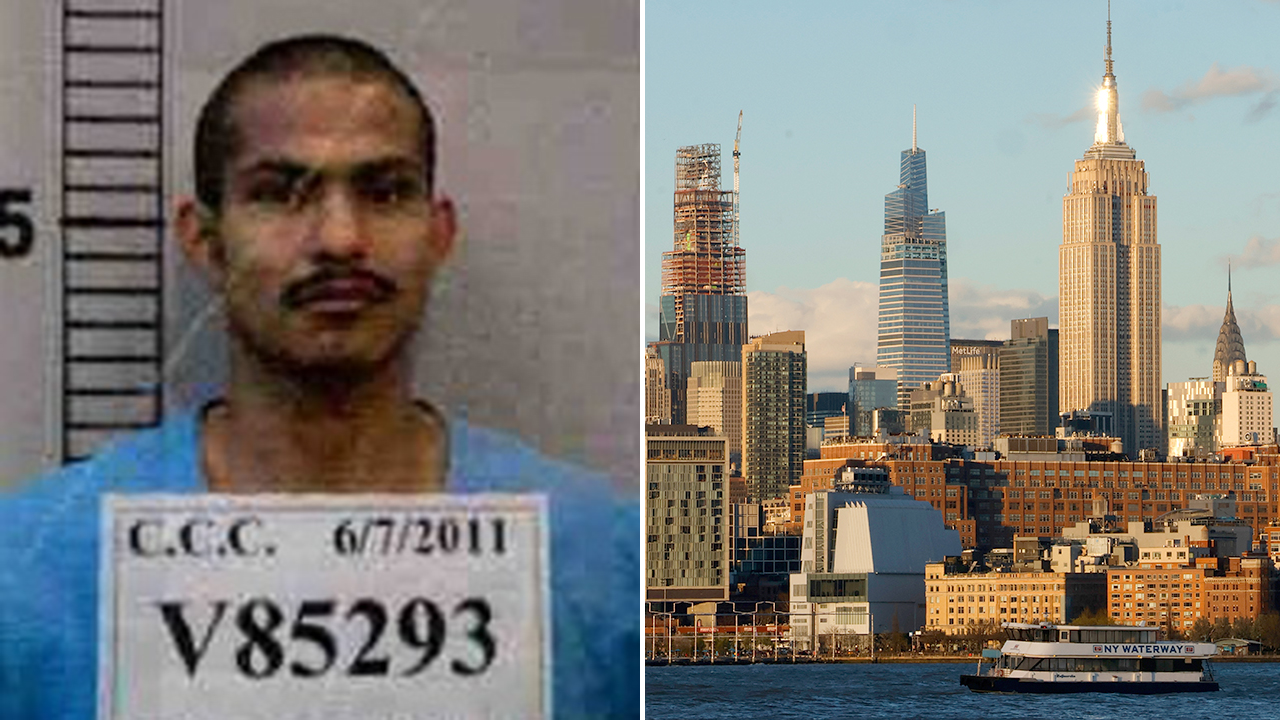
An inmate who vanished nearly 13 years ago from a prison camp in California has been arrested in New York City, corrections officials say.
Eduardo Hernandez, who disappeared from the Delta Conservation Camp in Suisun City in November 2011, was taken into custody without incident on May 20 in New York, according to the California Department of Corrections and Rehabilitation (CDCR).
“Hernandez was sentenced to thirteen years for carjacking with an enhancement for use of a firearm,” it said in a recent statement announcing his arrest, adding that Hernandez will be extradited back to California and could face escape charges.
“Since 1977, 99 percent of all people who have left an adult institution, camp, or community-based program without permission have been apprehended,” the CDCR added.
TEXAS CRIMINAL SERVING 20-YEAR SENTENCE CAPTURED 3 MILES FROM PRISON AFTER ESCAPING
Eduardo Hernandez was arrested without incident on May 20 in New York City, the California Department of Corrections and Rehabilitation says. (CDCR/Gary Hershorn/Getty Images)
During Hernandez’s escape in 2011, he fled with another inmate – Jose Padilla – who remains on the run, according to the Los Angeles Times.
The newspaper reports that both men had last been seen early in the morning of Nov. 15, 2011 and escaped while wearing orange jeans and shirts with the label “C.D.C.R. prisoner” on them.
The CDCR says on its website that the “primary mission” of the Delta Conservation Camp in California’s Bay Area is to “provide incarcerated fire crews for fire suppression in the Sonoma, Lake, Napa Unit and Solano County areas.”
2 ESCAPED LOUISIANA INMATES FOUND HIDING IN DUMPSTER BEHIND DOLLAR GENERAL STORE
California Department of Corrections inmate fire crews from Delta Conservation Camp pull down low-hanging branches while working with Cal Fire to help reduce the risk of a wildfire on May 12, 2014, in Yountville, California. (Justin Sullivan/Getty Images)
Hernandez’s capture comes after another inmate was detained following his escape from the camp in mid-May.
James Xiong, who most recently had been sentenced to “one-year, four months for possessing/owning a firearm by a felon or addict,” fled from the Delta Conservation Camp on May 13, the CDCR says.
James Xiong, another inmate who was recaptured after escaping from the same camp as Eduardo Hernandez.
He was then tracked down in Monterey around two weeks later, where “officers were required to use physical force and a taser to take him into custody,” the CDCR added.
Read the full article from Here


Six months before the legislative session is slated to kick off, a group of Republicans in Senate leadership have thrown their support behind a flat income tax proposal for 2027, thrusting one of Republican Gov. Greg Gianforte’s long-term priorities into the spotlight.
A Monday press release cited support for the policy from Senate President Matt Regier; Senate President Pro Tempore Ken Bogner; Senate Majority Leader Tom McGillvray; all the Senate majority whips; and Greg Hertz, R-Polson, who heads the Senate Taxation committee. Regier has requested a bill draft to “lower Montana income tax rates” for the 2027 session.
“The governor is encouraged by the growing support for his call for a flat income tax and looks forward to working with the legislature to deliver on this promise to Montanans,” said Kaitlin Timken, the governor’s director of communications. “In 2027, Governor Gianforte is focused on securing a fair, flat income tax rate to continue Montana’s strong economic momentum and return money back to Montanans who work hard to earn it.”
For the last three legislative sessions, the legislature has slashed income tax rates, moving the top income tax bracket from 6.9% to 5.4% during Gianforte’s tenure. The state has also moved from seven different income tax brackets to two.
Even as members of Senate leadership proclaim their support for the move to a flat income tax ahead of 2027’s session, some have found themselves at odds with more aggressive efforts to slash income taxes before.
During the 2025 session, for instance, the governor’s income tax proposal in Senate Bill 323 was tabled in Hertz’s Senate Taxation Committee. It would have cut the top-bracket tax rate from 5.9% to 4.9%. Hertz told the Montana Free Press at the time the legislation “pulls off too much money, too fast, at the top.” What eventually passed in 2025 in the form of House Bill 337 was a phased decrease of that top-bracket rate from 5.9% to 5.4%, along with raising the maximum threshold for the lower tax bracket, which stands at 4.7%.
Regier cited “momentum” on the issue as the reason Senate leadership has jumped into the fray to back the idea now. He said getting Senate leadership on board included some debate on the issue. But ultimately, there was agreement that the governor’s position was right on flat income tax. Regier pointed to both income tax and property tax cuts as topics of importance to Senate leadership ahead of 2027.
“We’ve had large, large surpluses in the past two sessions,” Regier said in an interview with the Beacon. “I’m looking at another surplus session. We have cut income tax the last two sessions … so it’s, to me, the premise of this — and to a lot of Republicans — is government is not a business. We should only take enough money from the people to operate government, and so we shouldn’t be running surpluses like that.”
During a February discussion with the Mountain States Policy Center, a right-leaning think tank, Gianforte said he hoped to get the state to a 4.7% flat income tax rate. A 2029 biennium report from the Legislative Fiscal Division projects that move would decrease individual income tax collections by an estimated $130 million per year by fiscal year 2029.
In Montana, income tax makes up the lion’s share of the state’s general fund, accounting for 66% of general fund revenues in fiscal year 2025, per a recent historical analysis from the Legislative Fiscal Division. Those dollars fund schools up to the Base Amount for School Equity, state supported public health programs, and salaries and pensions for state employees, among other items. In recent years, the state’s general fund has been flush with cash, in part thanks to higher-than-anticipated income tax collections.
Sen. Dave Fern, D-Whitefish, a seasoned legislator who serves on the Revenue Interim Committee, said several factors have contributed to the state’s revenue growth. In his estimation, those include high in-migration since the COVID days, more wealth in the state with people working remotely and making higher salaries, and more federal dollars going into people’s pockets thanks to pandemic-era policies.
Even so, Fern and most of his fellow Democratic caucus members have long been skeptical of the flat income tax idea. He cautioned that creating and maintaining a tax structure that keeps Montana’s general fund coffers at a sustainable level is important. Fern added he’s an advocate for maintaining the state’s current income tax levels for another two years to gain a better understanding of what Montana’s growth will look like moving forward — particularly as he anticipates changes coming down the pike.
“Beyond two years, do we have the capacity to deal with what we’re doing?” Fern said. “Will that growth rate of revenue, more income, more people moving here — will that continue? And you know, my reaction is, it will be neutered a bit, getting back to a more normal rate of growth.”
He also pointed to the 2029 biennium outlook, which identified provisions of 2025’s One Big Beautiful Bill Act that that could lower the amount of income tax the state collects. And, depending on the recommendations of the School Funding Interim Commission, which Fern sits on, he said the state could be looking at a different way of bankrolling school districts, which he anticipates could have a higher price tag on it than what has been status quo.
“It’s much easier to cut taxes than increase taxes,” Fern said.
For Gov. Gianforte, the same thing Fern identified as a holdup when it comes to a flat income tax rate serves as a go sign.
“The real advantage of a flat tax is once you get there, it’s very hard for future legislatures to raise it, because they’ve got to raise the tax on everybody, right?” the governor said at the Mountain States Policy Center discussion in February. “So, the penalty is higher.”
[email protected]

Attorney General Aaron Ford announced Wednesday afternoon that his office has reached a nearly $30 million settlement with drug manufacturer Glenmark.
The settlement is part of a multi-state antitrust case against the generic drug manufacturer. 48 U.S. states and territories allege Glenmark engaged in a conspiracy to artificially inflate prices and reduce competition on the sale of more than 100 medications.
That includes drugs used to treat asthma, cancer and diabetes, among other conditions.
Nevada will distribute $41,000 to impacted agencies and over $13 million to a consumer restitution fund.
Individual Nevadans who bought one of Glenmark’s products between May 2009 and December 2019 may also be eligible for monetary compensation. Members of the public can find more information about eligibility at aggenericdrugs.com.

NEW MEXICO (KRQE) – Emergency crews are responding to a tank battery fire in the area of Frying Pan Road and Anthony Road in southern Lea County.
Officials are asking people to avoid the area and follow directions from emergency personnel and law enforcement. Multiple agencies are responding to the fire. No other information has been release, this is a developing story.
-

 Kansas7 seconds ago
Kansas City Current vs San Diego Wave FC: Where to watch, TV channel, live stream & kick-off time | Goal.com US
-

 Kentucky6 minutes ago
Adkins among new appointments to Kentucky State Fair Board
-

 Louisiana12 minutes ago
How vital is New Orleans to Louisiana’s economy? See the data after Landry’s ‘special’ comments.
-

 Maine18 minutes ago
Maine Democrats must show moral courage on Palestine | Opinion
-

 Maryland24 minutes ago
Maryland residents got a pro-data center text linked to an ‘interfaith’ website. Who’s behind it?
-

 Michigan30 minutes ago
Two from Colombia extradited, face federal drug trafficking charges in West Michigan
-

 Massachusetts36 minutes ago
Free Ice Cream Deals In MA For National Ice Cream Day 2026: Cheap Eats
-
Minnesota42 minutes ago
Wildfire smoke from Canada and Minnesota pushes further into US, engulfing DC in eerie haze


