West
Blue state residents blast new law requiring lawnmowers, leaf blowers to go green, 'pandering to a base'

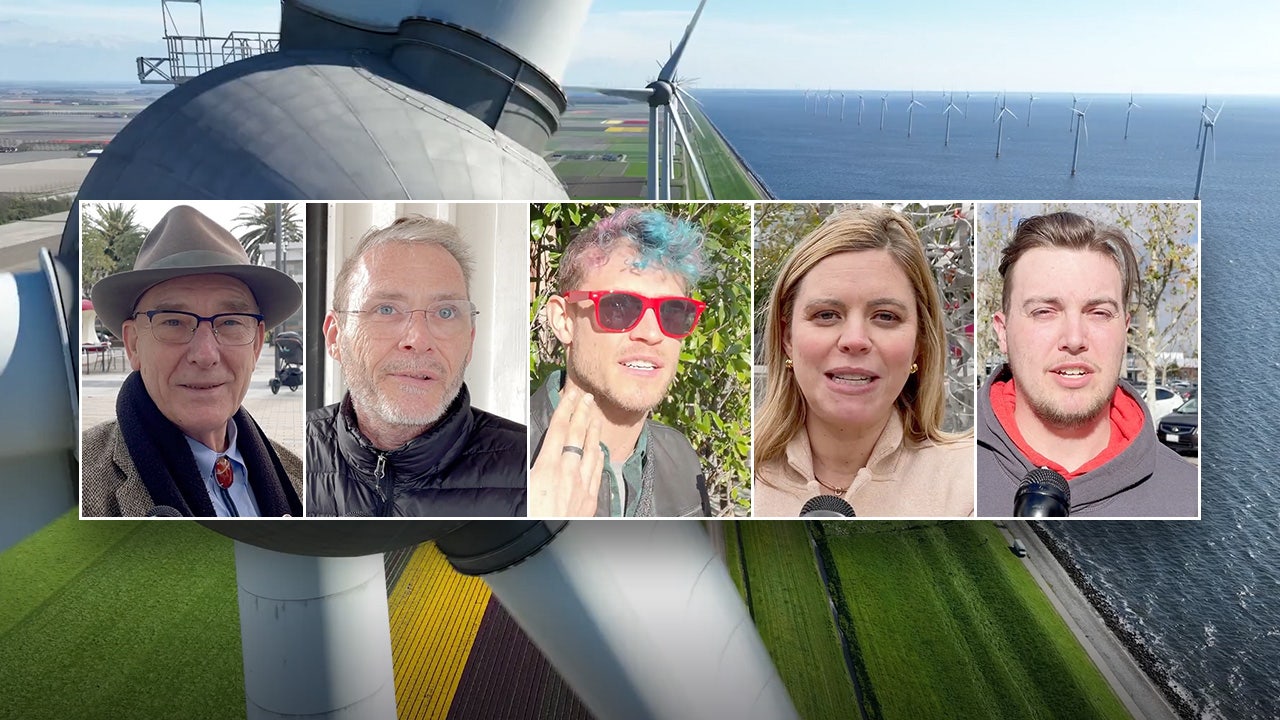
Americans in Silicon Valley are torn about whether the long-term climate impact is worth Democratic officials’ green-fueled consumer regulations as gas-powered lawn equipment is phased out for electric yard tools.
“It sounds like pandering to a base,” Ken, of San Jose, California, told Fox News. “It creates a false sense of security.”
WATCH MORE FOX NEWS DIGITAL ORIGINALS HERE
But Richard, who previously owned a landscaping business, said he only uses battery-powered yard tools.
“They’re lighter. They’re easier to maintain,” he said. “If you have the appropriate number of batteries and supplies… I don’t see any problem with it.”
A California law is regulating gas-powered lawn and garden equipment in 2024. (NICOLAS MAETERLINCK/BELGA MAG/AFP via Getty Images)
A California law is requiring newly-manufactured small off-road engines, including primarily leaf blowers, lawn mowers and other lawn or garden equipment, to produce zero emissions starting in 2024 as part of the blue state’s green-fueled regulations. The law, signed by Gov. Gavin Newsom in 2021, doesn’t prohibit the use of existing gas-powered lawn tools but begins to phase out the equipment for certain electric machines in 2024, raising concerns for some Americans about consumer choice as they face growing restrictions on gas stoves and traditional cars.
NYC’S PRIZED COAL-FIRED PIZZA SHOPS COULD BE ‘CRUSHED’ BY COSTLY, GREEN-FUELED REGULATIONS: PIZZERIA OWNER
“I think for some uses, some niche cases, electric things are fantastic, but in the case of these high-powered quick uses, I don’t think they’re very good,” Steve said.
Steve, of San Jose, California, says the U.S. isn’t ready for the green revolution, despite the benefits of switching to certain electric products. (Fox News/Jon Michael Raasch)
But Travis said there are downsides to both options. He raised concerns about battery production polluting the air.
“You’re still polluting the air either way,” Travis said. “It’s just which one’s more beneficial long-term.”
BIDEN ADMIN AIMS TO PUSH TOWNS, CITIES TO ADOPT GREEN ENERGY BUILDING CODES: ‘VERY SUSPICIOUS’
Supporters have argued that gas-powered lawn and garden equipment emit high pollutants, which can lead to asthma and other illnesses from air pollution. The latest gas-powered lawn mowers running for one hour produce similar emissions as driving a car 100 miles, according to the California Air Resources Board, a state agency that regulates air quality.
But critics have said regulating or eliminating gas-powered products is federal overreach and harms consumer choice. Others have raised ethical concerns about alleged forced child labor in poor conditions to produce batteries.
Democrat-led cities are proposing measures to ban gas-powered products like stoves, raising concerns among critics that the regulations harm consumer choice. (Jakub Porzycki/NurPhoto via Getty Images)
And some, like Steve, said a complete switch to electric-powered equipment just isn’t realistic, despite climate benefits.
“I think that the performance profile is not yet there in terms of electric vehicles or electric tools,” Steve said. “It’s not quite there in a major way to match traditional, conventional oil and gas.”
“I don’t think the United States or the world is able to make the switch, however good and convenient and environmentally friendly,” he said.
Read the full article from Here



Golden Gate Bridge fireworks will be a rare patriotic event
This year on July 4th, for the third time in history, an organized fireworks display will be held at San Francisco’s iconic Golden Gate Bridge. This only happned in twice before in 1987 and 2012 for the bridge’s 50th and 75th annivesary. Expect crowds to be massive and public transportation, ride shares and simply walking is highly recommended.
SAN FRANCISCO – San Francisco is preparing for its major July 4th fireworks display on Saturday night, an event expected to draw massive crowds as pyrotechnics are launched directly from the Golden Gate Bridge for only the third time in history.
Will crowds flood Marina?
What we don’t know:
To pull off the event, the Golden Gate Bridge, major roadways, and key parking lots at Marina Green and Crissy Field will be shut down.
Several neighborhood streets will also be blocked off, creating significant traffic hurdles. Officials are strongly advising spectators to utilize public transit due to severely limited parking.
Local residents in the Marina District have expressed concern over the impending chaos as crowds flood the neighborhood.
“I’m a little worried, yeah,” said nearby resident Michael Zoboski. “I think it’s gonna be definitely hectic. I don’t know where people are going to park, it seems like it’s taking up a large amount of the streets up here. I think it’s going to be a little crazy.”
To manage the influx, access to many surrounding neighborhoods will be strictly limited to local residents.
Checking IDs
What we know:
Law enforcement officers will be checking IDs and questioning drivers to verify residency. According to the district supervisor, there will be 10 police officers deployed per block in the Marina.
Road closures will stretch from Baker Street to Van Ness Avenue between 8 p.m. and 11 p.m.
Portions of Fisherman’s Wharf are scheduled to shut down even earlier, starting at 1 p.m. Saturday afternoon, with much of that neighborhood also restricted to local access. The Golden Gate Bridge itself will close to traffic starting at 9 p.m.
Additionally, roads will be closed in the Presidio and Richmond District. To encourage the use of public transportation, Muni is providing special shuttles to help transport spectators to the viewing areas.
The Source: Marina neighbors, Muni, San Francisco city website

There have been many great offensive linemen in Denver Broncos history, so this list is likely going to vary greatly from person to person. In fact, my take might be a little too bold, but I’m sticking with it.
At the top spot, I think Garett Bolles has earned it. Since coming into the league as a first-round pick in 2017, he has grinded through one of the worst periods in Broncos’ history and grown from beleaguered oft-penalized first-round bust into a perennial All-Pro caliber left tackle. Even more, he has stayed a Bronco through his entire career. The rest of my list speaks for itself and is a throwback to Super Bowl greatness.
Here’s where our Mile High Report staff landed on the top five for offensive line:
Scotty Payne: Tom Nalen was the leader of Mike Shanahan’s offensive line, Ryan Clady was a top LT on a Hall of Fame career before injury and Stink was a key member of the Broncos Super Bowl winning OL back in the 90s. I included Bolles and Meinerz since both will be on this list once their successful careers are over with.
Chris Hart: This position group was one of the toughest to come up with a top five. Denver has an incredible history of top-tier offensive lineman. There are several players I left off who were certainly deserving. I posted Tom Nalen as my top guy because he was a stalwart at the pivot for many years for the franchise. We all know what Gary Zimmerman and Mark Schlereth provided on the field and they are both Super Bowl champions. The last two spots go to two recent Broncos, left tackles Garret Bolles and Ryan Clady. Bolles, a decade into his career, continues to play at a high level and Clady was a fantastic blindside protector whose career ended earlier than it should due to injury.
Ian St. Clair: For the first time in Elway’s career, he had a blind-side protector. And Zimmerman is one of the best to ever do it. Same for Nalen, who should be in the HOF. Clady was special. Bishop was the first Broncos offensive lineman in franchise history to get a Pro Bowl invite and provided one of the best in-game quotes ever when he said in Denver’s endzone at old Cleveland Stadium before hiking the ball at the 2-yard line in what would become The Drive, “We got ‘em right right where want ‘em.” And Schlereth helped lock down the left side of the line that was one of the best in league history.
Sadaraine: The top 3 are largely indisputable, other than maybe swapping Schlereth and Zimmerman. Ken Lanier started 178 consecutive games, which is nuts for an OT, and appeared in 3 Super Bowls. Garret Bolles has crafted himself into an all-time great at tackle and may move up the list.
Ross Allen: The Hall-of-Famer Gary Zimmerman was everything you could ever ask for in a left tackle and was a huge reason why John Elway and that 1997 team was so dominant. Schlereth also gets his credit as he was a massive contributor to Denver’s Super Bowl successes. There’s a strong case for Tom Nalen deserving a spot in the Hall of Fame too. And for the past two years I’ve become a huge spouter of Bolles being destined for the Ring of Fame. He’s an incredible talent as has been the cornerstone of this team for a while now. I just hope he gets his Super Bowl.
Joe Mahoney: Top 3 are a no-brainer. Bolles will finish his career with more starts on the OL than any other Bronco. The man he will pass is Ken Lanier. Since stats from Lanier’s era don’t exist we only have starts to go off, but Lanier was an iron man. He started 167 NFL games and 165 were for the Broncos.
There is a bit of variation here, but a general consensus of who should be in the Top 5. I loved the throwback to Keith Bishop who was a big part of the John Elway fourth quarter magic back in the day.
Who gets into your top five offensive lineman list?
-

 Wisconsin4 minutes ago
Southeastern Wisconsin severe weather; cleanup underway
-

 West Virginia7 minutes ago
America250 fireworks, events happening this weekend in North Central West Virginia
-

 Wyoming12 minutes ago
14 Wyoming Cowboys make Athlon All-Mountain West preseason team
-

 Crypto19 minutes ago
OKX Announces Direct Crypto Aid for Venezuelans Hit by Devastating Twin Earthquakes
-

 Finance22 minutes ago
Regions expands municipal finance business with acquisition of Montgomery’s Frazer Lanier
-
Fitness27 minutes ago
Huge 30-Year Study Finds Exercise Variety Can Help You Live Longer – Here’s the Ideal Mix
-

 Movie Reviews37 minutes ago
The Kernel: Freshly popped film reviews — Batch #6 – Excalibur
-

 World49 minutes ago
AI ‘Organisms’ Come Alive in Kuala Lumpur as Dutch Artist Unveils Immersive Show


