Arizona
What do you do if you get bit by a rattlesnake in Arizona? Here’s what to know


Mexican gray wolf numbers are slowly growing
The survey marks the eighth consecutive year of growth, but the number is still well below what’s required to consider the species recovered.
A Florence toddler’s unfortunate encounter with a rattlesnake is a stark reminder that the rapidly warming Arizona weather signals rattlesnake season.
Cara Reed has been in and out of the hospital as doctors work to remove damaged tissue from her left foot, where the snake bit her twice on May 16.
Cara was playing in the carport at the family’s home on the outskirts of Florence when a snake slithered out from some propane tanks and struck the top of her foot.
The long-term prognosis for her foot is still unclear at this early stage, but dead skin and damaged tissue is being removed.
As the 15-month-old deals with surgery and its aftereffects, medical and wildlife officials offer tips on how to deal with these desert dwellers.
Here’s what to know.
How likely is it to encounter a rattlesnake in Arizona?
The rattlesnakes are out there, but they really don’t want to tangle with humans.
“For the most part, they want nothing to do with us,” said Tom Jones, the amphibians and reptiles program manager for the Arizona Game & Fish Department. “If you are an avid hiker, most likely you have walked right by one and not noticed it.”
But if you hear a rattle, Jones said, take care. Don’t confront the snake, just give it a wide berth and walk around it.
How common are rattlesnake bites?
The Arizona Poison and Drug Information Center reported 182 bites in the state in 2024, a 4% increase from the previous year.
The vast majority of bites happened in Pima County, which reported 107 incidents. Cochise County was next with 20 and 12 in Mohave County. There were no reports from Maricopa County, despite being the most populous in the state.
Although often associated with wildlands, the center reported most of the bites occurred at a residence.
What is the protocol for treating a rattlesnake bite?
Dr. Frank LoVecchio, a medical toxicologist at Valleywise Health, offered these key steps:
Remove any close-fitting items, such as clothing, jewelry and watches. The bite area will swell almost immediately, LoVecchio said, as the digestive enzymes in the snake’s venom start to try and digest blood, tissue and muscles.
“Your forearm might get as big as your thigh,” he said.
Immobilize the bite area. “The more you move it, the more it hurts,” LoVecchio said.
He also recommends elevating the affected limb or body part, a practice that the poison center also emphasizes. That prevents the venom from pooling in one part of the body, where the enzymes can do damage.
Head for a hospital immediately, and call ahead to ensure the facility has antivenom on hand. Calling the poison center at 1-800-221-1222 is also helpful for expert guidance.
Are there things I shouldn’t do?
LoVecchio has a no-go list.
“We don’t do anything crazy; we don’t suck out the venom, we don’t do a tourniquet,” he said.
He also advises that bite victims should refrain from drinking much water or eating anything, in case their treatment leads to surgery.
How fatal are rattlesnake bites?
They’re not common, LoVecchio said.
The poison center did not record any deaths due to rattlesnake bites in 2024. But it’s important to get to prompt medical treatment at a hospital, the center advises.
Reach the reporter at maryjo.pitzl@arizonarepublic.com or at 602-228-7566 and follow her on social media @maryjpitzl.
Support local journalism. Subscribe to azcentral.com today.



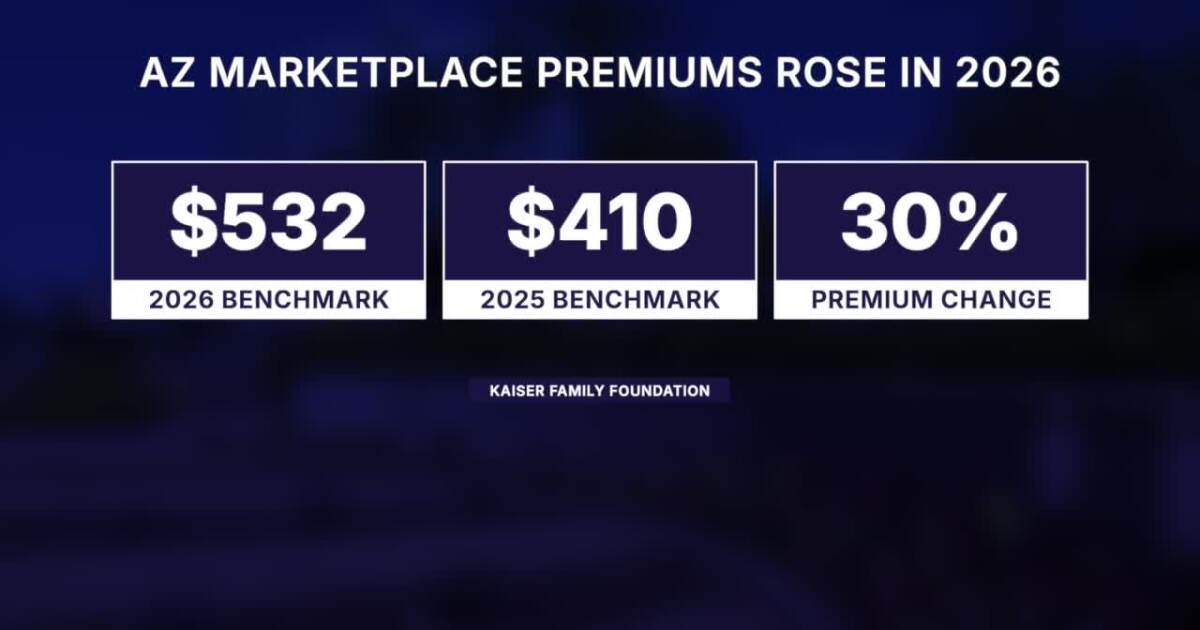
PHOENIX — Arizona’s ACA marketplace enrollment fell from 363,000 to just over 255,000 in a single year — a nearly 30% decline and the third-largest annual drop in the country.
Rising premiums and expired tax credits are driving the trend, with the average benchmark plan premium in Arizona now at $532 — up 30% from 2025.
In the player above, ABC15 Data Analyst Garrett Archer takes a look inside the numbers on how healthcare premiums are impacting health insurance enrollment.
This story was reported on-air by a journalist and has been converted to this platform with the assistance of AI. Our editorial team verifies all reporting on all platforms for fairness and accuracy.
Want more news in your community? Add ABC15 as a preferred source on Google below:

Arizona
Arizona man pleads guilty after illegally living in forest for years among ‘1,000lbs of trash’

A man in Arizona has pleaded guilty to violating federal fire restrictions and unlawfully residing in a national forest, after authorities said he spent years living at a makeshift campsite surrounded by what officials described as “approximately 1,000 pounds of trash”.
Mark Aaron Gatz was arrested on 25 June at his illegal campsite in Arizona’s Tonto national forest, according to court records. A United States Forest Service (USFS) officer wrote in documents submitted to court that Gatz had been operating an “illegal campsite” with a “hot wood burning campfire” despite fire restrictions and that he had told investigators that he had been living in the forest for about eight years.
The officer wrote that a records check found that Gatz had previously received multiple citations and was the subject of six outstanding federal arrest warrants for earlier violations, including for building fires during fire restrictions, constructing on national forest service lands, unsanitary conditions and occupying national forest as a residence.
Gatz “said that he knew about current fire restrictions but had to have fire to eat”, authorities said. The documents show that USFS officers made contact with Gatz multiple times over the last year or so, and issued him warnings as well as a violation notice for having campfires during fire restrictions.
Notes from officers’ previous encounters with Gatz earlier this year, submitted into the court docket, state that authorities observed “trash such as clothing, pans, tools, and plastic cups scattered throughout the campsite along with a structure that was four feet in height build using wood panels”.
During an encounter with Gatz in May, officers reported observing “approximately 1,000 pounds of trash” at the site, which they said included tires, plastic bags, trash bags, aluminum cans and other items. They also wrote that they found that the campfire site had been left unattended by Gatz the previous day while still hot.
In a separate report filed by law enforcement from an encounter in February, one officer wrote that “upon arrival at the camp, I was flabbergasted by the amount of debris in the area”.
Investigators said that during that encounter, the debris consisted of three ladders, six to eight totes “overfilled with debris”, five 55-gallon drums, eight tires, multiple bicycle frames, 5 gallons of motor oil, plywood and other “miscellaneous lumber”, and they wrote that trash was scattered over approximately half an acre of Forest Service land and creating what officers described as public safety concerns.
In a separate report from July 2025, officers said they observed what they described as a “large messy campsite” while patrolling the area due to complaints “from the district office abut one large messy camp”.
“There was roughly half an acre of resources ruined due to so much trash and goods on the ground for an extended period of time,” the officer wrote.
This week, after Gatz pleaded guilty, he was sentenced to time served and three years of probation, according to court records.
A representative for Gatz did not immediately respond to a request for comment.

Odds of winning the Powerball and Mega Millions are NOT in your favor
Odds of hitting the jackpot in Mega Millions or Powerball are around 1-in-292 million. Here are things that you’re more likely to land than big bucks.
The Arizona Lottery offers multiple draw games for those aiming to win big.
Here’s a look at Tuesday, July 7, 2026 results for each game:
Winning Mega Millions numbers
02-31-35-36-63, Mega Ball: 12
Check Mega Millions payouts and previous drawings here.
Winning Pick 3 Evening numbers
Evening: 4-7-2
Winning Fantasy 5 numbers
03-05-10-14-37
Check Fantasy 5 payouts and previous drawings here.
Winning Triple Twist numbers
03-06-18-23-27-32
Check Triple Twist payouts and previous drawings here.
Feeling lucky? Explore the latest lottery news and results
What time is the Powerball drawing?
Powerball drawings are at 7:59 p.m. Arizona time on Mondays, Wednesdays and Saturdays.
How much is a Powerball lottery ticket today?
In Arizona, Powerball tickets cost $2 per game, according to the Arizona Lottery.
How to play the Powerball
To play, select five numbers from 1 to 69 for the white balls, then select one number from 1 to 26 for the red Powerball.
You can choose your lucky numbers on a play slip or let the lottery terminal randomly pick your numbers.
To win, match one of the 9 Ways to Win:
- 5 white balls + 1 red Powerball = Grand prize.
- 5 white balls = $1 million.
- 4 white balls + 1 red Powerball = $50,000.
- 4 white balls = $100.
- 3 white balls + 1 red Powerball = $100.
- 3 white balls = $7.
- 2 white balls + 1 red Powerball = $7.
- 1 white ball + 1 red Powerball = $4.
- 1 red Powerball = $4.
There’s a chance to have your winnings increased two, three, four, five and 10 times through the Power Play for an additional $1 per play. Players can multiply non-jackpot wins up to 10 times when the jackpot is $150 million or less.
Are you a winner? Here’s how to claim your lottery prize
All Arizona Lottery retailers will redeem prizes up to $100 and may redeem winnings up to $599. For prizes over $599, winners can submit winning tickets through the mail or in person at Arizona Lottery offices. By mail, send a winner claim form, winning lottery ticket and a copy of a government-issued ID to P.O. Box 2913, Phoenix, AZ 85062.
To submit in person, sign the back of your ticket, fill out a winner claim form and deliver the form, along with the ticket and government-issued ID to any of these locations:
Phoenix Arizona Lottery Office: 4740 E. University Drive, Phoenix, AZ 85034, 480-921-4400. Hours: 7:30 a.m. to 5 p.m. Monday through Friday, closed holidays. This office can cash prizes of any amount.
Tucson Arizona Lottery Office: 2955 E. Grant Road, Tucson, AZ 85716, 520-628-5107. Hours: 7:30 a.m. to 5 p.m. Monday through Friday, closed holidays. This office can cash prizes of any amount.
Phoenix Sky Harbor Lottery Office: Terminal 4 Baggage Claim, 3400 E. Sky Harbor Blvd., Phoenix, AZ 85034, 480-921-4424. Hours: 8:30 a.m. to 5 p.m. Monday through Sunday, closed holidays. This office can cash prizes up to $49,999.
Kingman Arizona Lottery Office: Inside Walmart, 3396 Stockton Hill Road, Kingman, AZ 86409, 928-753-8808. Hours: 8 a.m. to 8 p.m. Monday through Friday, 8:30 a.m. to 5 p.m. Saturday and Sunday, closed holidays. This office can cash prizes up to $49,999.
Check previous winning numbers and payouts at https://www.arizonalottery.com/.
This results page was generated automatically using information from TinBu and a template written and reviewed by an Arizona Republic editor. You can send feedback using this form.
-

 Denver, CO3 minutes ago
Denver officers cited for separate incidents, 1 fired
-

 Seattle, WA10 minutes ago
Study finds dangerous chemicals in the breast milk of Seattle moms
-

 San Diego, CA13 minutes ago
Tom Krasovic: Justin Verlander’s announcement recalls Padres’ 2004 draft blunder
-
 Milwaukee, WI18 minutes ago
‘Peace on Every Block’ brings Milwaukee community together to fight gun violence
-

 Atlanta, GA26 minutes ago
Atlanta smash-and-grab: Masked men ram U-Haul into clothing store
-

 Minneapolis, MN29 minutes ago
Minneapolis police drone debate sparks privacy concerns
-
Indianapolis, IN33 minutes ago
Adam Vinatieri will celebrate on the field in Indianapolis again as Colts’ Ring of Honor member
-

 Pittsburg, PA40 minutes ago
U.S. launches more strikes against Iran


