Arizona
Report from the Frontline—Arizona Workers Under Attack


As acting Secretary of Labor under President Biden, I traveled to Phoenix several times to ensure that federal funds spent in the region were benefiting all communities; to meet with my team, U.S. Department of Labor (DOL) staff who enforced essential protections for workers; and to partner with local elected officials and organizations to ensure the jobs being created were good jobs that brought not only decent wages and working conditions but real security and dignity. During these trips, I frequently sat down with workers to hear their concerns, to tell them what DOL was doing to address them, and to learn what more we could and should be doing. For example, I heard from workers who were affected by the record high temperatures in Arizona and told them that we were proposing the first nationwide standard to protect workers from the hazards of heat. The day of that discussion, the temperature approached 110 degrees, and it was not unique. Last year was the hottest summer on record and in Phoenix, there was a record 113 consecutive days with temperatures at or above 100 degrees. For workers, heat is not just uncomfortable or inconvenient; it can be deadly. The standard we proposed would save lives, but it requires the Trump administration to see it through.
Though my role as head of the Department of Labor has ended, my concern for workers has not. In May, I returned to Phoenix for a listening session with workers, to hear directly about the ongoing struggles of working people in the face of relentless attacks by the Trump administration. This was the latest stop in my continuing campaign for good jobs and worker rights, powered by The Century Foundation.
Workers Today Feel Attacked, Not Supported
For the listening session, we gathered at the International Union of Painters and Allied Trades (IUPAT) Local 86, a place the union regularly opens up for community events.

What I heard was heartbreaking. While each person had a unique story to tell, the pervasive fear, anxiety, and sense of being under attack were not things I’d heard during my prior trips to Arizona. Immigrants feel vulnerable, as if the ground can be pulled out from under them at any moment. Indeed, immigrants being rounded up on the way to work or while at work has sent a message to the immigrant workers in attendance at the union hall that they could be next. A worker with Temporary Protected Status expressed his deep concern that the anti-immigrant administration currently in power will deport him on a whim.
One man wore a t-shirt that said, “Protect VA Healthcare.” As he talked about the importance of access to health services for veterans that are now on the chopping block, he adjusted his Army Vet cap. To him, this administration’s hostility to veterans is a breach of a promise that had been made to those who’ve served. As the evening unfolded, federal employees echoed this sentiment. “We served our country in uniform, then when we returned home, we traded our uniform in to serve in the federal government, and now we are being disrespected and pushed out,” said one federal worker who was in the room. The federal government is the largest employer of veterans in the country—roughly 30 percent of federal employees are veterans—and this administration’s reign of terror over its own federal staff has had a disproportionate impact on veterans.
I also heard about a program dedicated to giving women who had survived domestic violence and poverty a fresh start—a chance to gain new skills, receive counseling and other support, and experience independence and the pride that comes with a good job. Funding for that program has been cut by Trump’s Department of Labor. It was devastating.
A woman rose to share that she’d survived sexual harassment and abuse at the hands of her former employer. Another had been denied overtime pay. Both described the value of having federal government agencies with whom to lodge a complaint—and compassionate, knowledgeable public servants in those agencies who took seriously their responsibility to enforce the laws. What I witnessed was a sense of community: the trust built between those in government and those who rely on them, and the pain and outrage caused by the Trump administration’s indiscriminate cuts. The public servants who chose government careers in Phoenix are not, as the Trump administration believes, enemies of the people; to the contrary, they are neighbors, friends, coaches, community volunteers, and trusted fellow citizens.
Workers Deserve a Partner in Government, Not an Adversary
Throughout the night, I heard about suffering, but I also heard hope and strength. Immigrant workers talked about the power of speaking up and how critical it is to have U.S. Department of Labor investigators who live in the community, conduct outreach and education, and work in local offices. They shared how much it meant when, under the Biden administration, we helped make sure that when workers speak up about abuse, their immigration status wouldn’t be weaponized against them. A farmworker who was there with his coworkers spoke about the power of unity. Workers from researchers to hotel housekeepers came that night to be heard. And federal employees who worked to combat discrimination and wage theft said they would keep speaking out despite threats from the Trump administration of criminal prosecution for exercising their First Amendment rights.
A UNITE HERE shop steward shared how, before he got a union job, he had to pay for his root canal out of pocket; now that he has a union job, he has health insurance, and that makes all the difference. He loves his leadership role in the union because it allows him to take care of his fellow workers.
With everything that’s happening, it can feel like we are powerless to make things better. The workers I met, though, refuse to give up their power. They came to speak, many after a long day at work already, about the harm Donald Trump, Elon Musk, and the Trump administration are inflicting. They came to testify about what working people really deserve, and about why we have to have each other’s backs. Some of the workers had never stood up in front of a room full of strangers to tell their story. Now that they have, I believe that they are not going to stop. They are part of the growing voices—many of whom never expected to speak at listening sessions, town halls, rallies or press conferences—who are speaking now, documenting the cruelty and lawlessness of an administration that has declared open season on immigrants, women, veterans, working people, people with disabilities, and federal civil servants.
Looking Ahead
Listening sessions like this one are essential in this moment, so that workers can voice their concerns, particularly in the face of an uncaring or even hostile federal government. This session would not have happened without the efforts of Fred Yamashita, who moderated the listening session, and the Arizona AFL-CIO, who moderated the listening session, and Andrea Moreno and the team at Honest Arizona. Fred and I were joined by Omar Algeciras, a U.S. Department of Labor wage and hour investigator who I had the honor of working with as acting secretary, Phoenix City Councilwoman Betty Guardado, and Steve Valencia of Arizona Jobs with Justice. All of them have built their careers around supporting workers and making sure they are heard.
One of the things I loved best about serving in the cabinet of the Biden administration was the ability to bring people together and to include the voices of those who are too seldom heard. Today, when those individuals are being vilified, fired, silenced, undermined, and attacked by the very government that is supposed to be there to protect them, their willingness to speak out is an incredible act of bravery and resistance.
Our work remains unfinished. Workers still need protections from heat. Too many jobs still don’t provide a just day’s pay and real security, which means working people are still working too hard and barely getting by. To the workers and families who came and spoke, your stories and solidarity matter more than you know.



A new study has ranked Arizona as one of the worst states to move to for two years in a row, largely due to what it calls a poor quality of life.
The study conducted by Consumer Affairs analyzed the best states to move to in the United States, putting Arizona at the bottom of the list.
Before Arizonans get too defensive about the Grand Canyon State, Consumer Affairs used factors such as affordability, safety, economic strength and education to measure each state, leaving out factors like entertainment, retirement benefits and other considerations that may be important to people living here.
Popular states such as California and New York also landed at the bottom of the list due to their lack of affordability, even though they both have some of the best health care and education in the nation, Consumer Affairs noted.
Here’s why the study says you shouldn’t move to Arizona. Do you agree?
Why you shouldn’t move to Arizona
Arizona ranked No. 10 out of the worst states to move to, scoring especially poorly in quality of life.
Quality of life was measured by the state’s Social Progress Index, average air quality, weather, environmental protection and number of national parks. Due to Arizona’s extreme summers and Phoenix’s consistently poor air quality, it’s easy to see why Arizona ranked No. 44 in quality of life out of 50 states, even though the Grand Canyon is one of the most popular national parks in the nation.
However, Arizona also ranked poorly in other categories, sitting at No. 42 in health care and education, No. 41 in safety and No. 34 in affordability out of 50 states.
There was one category Arizona did impressively well in, ranking No. 5 in economic strength even as one of the youngest states in the country. Still, Arizona’s economic power wasn’t enough to boost its ranking.
Top 10 worst states to move to
Arizona wasn’t alone; some of the biggest states in the country were also considered the worst states to move to in 2026.
- New Mexico
- Louisiana
- California
- Arkansas
- Oklahoma
- Nevada
- Alaska
- Mississippi
- Oregon
- Arizona
Top 10 best states to move to
- Utah
- New Hampshire
- Idaho
- Minnesota
- Massachusetts
- Maine
- North Dakota
- Pennsylvania
- Iowa
- South Dakota
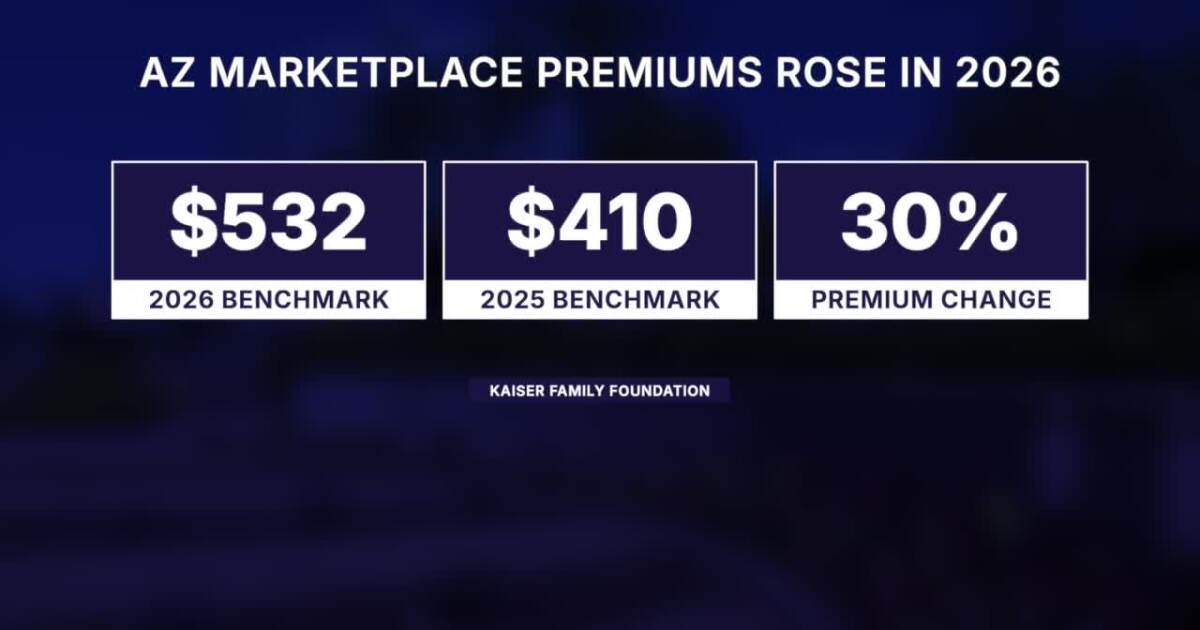
PHOENIX — Arizona’s ACA marketplace enrollment fell from 363,000 to just over 255,000 in a single year — a nearly 30% decline and the third-largest annual drop in the country.
Rising premiums and expired tax credits are driving the trend, with the average benchmark plan premium in Arizona now at $532 — up 30% from 2025.
In the player above, ABC15 Data Analyst Garrett Archer takes a look inside the numbers on how healthcare premiums are impacting health insurance enrollment.
This story was reported on-air by a journalist and has been converted to this platform with the assistance of AI. Our editorial team verifies all reporting on all platforms for fairness and accuracy.
Want more news in your community? Add ABC15 as a preferred source on Google below:

Arizona
Arizona man pleads guilty after illegally living in forest for years among ‘1,000lbs of trash’

A man in Arizona has pleaded guilty to violating federal fire restrictions and unlawfully residing in a national forest, after authorities said he spent years living at a makeshift campsite surrounded by what officials described as “approximately 1,000 pounds of trash”.
Mark Aaron Gatz was arrested on 25 June at his illegal campsite in Arizona’s Tonto national forest, according to court records. A United States Forest Service (USFS) officer wrote in documents submitted to court that Gatz had been operating an “illegal campsite” with a “hot wood burning campfire” despite fire restrictions and that he had told investigators that he had been living in the forest for about eight years.
The officer wrote that a records check found that Gatz had previously received multiple citations and was the subject of six outstanding federal arrest warrants for earlier violations, including for building fires during fire restrictions, constructing on national forest service lands, unsanitary conditions and occupying national forest as a residence.
Gatz “said that he knew about current fire restrictions but had to have fire to eat”, authorities said. The documents show that USFS officers made contact with Gatz multiple times over the last year or so, and issued him warnings as well as a violation notice for having campfires during fire restrictions.
Notes from officers’ previous encounters with Gatz earlier this year, submitted into the court docket, state that authorities observed “trash such as clothing, pans, tools, and plastic cups scattered throughout the campsite along with a structure that was four feet in height build using wood panels”.
During an encounter with Gatz in May, officers reported observing “approximately 1,000 pounds of trash” at the site, which they said included tires, plastic bags, trash bags, aluminum cans and other items. They also wrote that they found that the campfire site had been left unattended by Gatz the previous day while still hot.
In a separate report filed by law enforcement from an encounter in February, one officer wrote that “upon arrival at the camp, I was flabbergasted by the amount of debris in the area”.
Investigators said that during that encounter, the debris consisted of three ladders, six to eight totes “overfilled with debris”, five 55-gallon drums, eight tires, multiple bicycle frames, 5 gallons of motor oil, plywood and other “miscellaneous lumber”, and they wrote that trash was scattered over approximately half an acre of Forest Service land and creating what officers described as public safety concerns.
In a separate report from July 2025, officers said they observed what they described as a “large messy campsite” while patrolling the area due to complaints “from the district office abut one large messy camp”.
“There was roughly half an acre of resources ruined due to so much trash and goods on the ground for an extended period of time,” the officer wrote.
This week, after Gatz pleaded guilty, he was sentenced to time served and three years of probation, according to court records.
A representative for Gatz did not immediately respond to a request for comment.
-

 Los Angeles, Ca1 hour ago
Heat advisory, beach hazards in effect as Southern California sizzles
-

 Detroit, MI1 hour ago
Teen on moped hit by car after cruising through stop sign in Detroit
-

 San Francisco, CA2 hours ago
Flight of fancy: San Francisco moves to build private luxury airport terminal
-

 Dallas, TX2 hours ago
Dallas’ digital creator economy is booming. Burnout is too.
-
Miami, FL2 hours ago
I went to 2 famous Miami restaurants, a flashy steakhouse and a Cuban hot spot. Here’s how they compared.
-

 Boston, MA2 hours ago
Pedestrian struck and killed in Roxbury – Boston News, Weather, Sports | WHDH 7News
-

 Denver, CO2 hours ago
Santa Fe Drive in Denver closed this weekend for pedestrian bridge construction
-

 Seattle, WA2 hours ago
Police video shows West Seattle Bridge copper wire theft suspect’s arrest


