Arizona
New study reveals how victimized Arizona women end up behind bars


PHOENIX (AZFamily) — It’s a first of its kind study to better understand an often overlooked group of people: women behind bars.
“No other jail system in the country is doing this,” said Dominique Roe-Sepowitz, director of Arizona State University’s Office of Sex Trafficking Intervention Research. “Many of them have offenses that are related to other people’s interference. So whether they were forced to commit that crime with someone else, they were under someone else’s control.”
Roe-Sepowitz spearheaded the effort that explores the pipeline between victimization and incarceration for Arizona women. What she uncovered was even worse than she expected.
“The scope of trauma, the sheer amount of violent experiences was a surprise to me,” she said.
Maricopa County Sheriff’s Office Deputy Chief Brandon Smith teamed up with Roe-Sepowitz for this project.
Since 2018, they’ve worked together to identify and support sex trafficking victims inside county jails.
“A lot of them could be they were more of a victim than a suspect in a crime,” said Smith.
In May 2025, the pair decided to dig deeper with a survey to learn more about the life history of all female inmates.
“We didn’t want to re-traumatize them. We were very careful about asking appropriate questions in the right way,” said Smith.
More than 400 women in the Estrella Jail completed the questionnaire which represents 49% of the female population.
The results show most are mothers, locked up for drug offenses.
77% reported a mental health diagnosis, more than 78% have been homeless, just over 50% have been sex trafficked, and 80% said they were victims of domestic violence.
With that knowledge, there is hope that jail programs can help break the cycle.
“We’re able to tailor programming to that in order to hopefully keep them out of jail, become more productive members of society, be with their children,” said Smith.
About 14% of participants were there for their first arrest.
New trauma-informed programs and training will soon be implemented.
“We’re looking at what can we do for that 14% that are here for the first time to hopefully make sure it’s their last time,” said Smith.
“How to build hope for the future, how to stabilize their life, how to continue the relationships they have in healthier ways,” said Roe-Sepowitz.
More research is on the way. ASU just wrapped up a similar survey in the Perryville prison and plans to conduct it again at Estrella Jail this year to collect additional data.
See a spelling or grammatical error in our story? Please click here to report it.
Do you have a photo or video of a breaking news story? Send it to us here with a brief description.
Copyright 2026 KTVK/KPHO. All rights reserved.



Eleven illegal Indian national truck drivers were arrested at the Arizona border in the month of February.
The Yuma Sector Border Patrol arrested 11 total Indian national truck drivers in Yuma, Arizona in February 2026.
According to a Facebook post by the Yuma Sector Border Patrol, all 11 truck drivers held commercial drivers licenses from the states of Florida, New York, Pennsylvania, Indiana, and California. All were “found to be present in the United States illegally.”
“Border Patrol remains committed to upholding immigration laws and protecting our communities,” the post continued.


Ballot processing at Maricopa County Tabulation and Election Center
Election workers process ballots at the Maricopa County Tabulation and Election Center on Nov. 6, 2024, in Phoenix.
The Arizona Independent Party will appeal a court ruling that invalidated its name, guaranteeing more legal limbo and possibly a new chapter of confusion in the effort to give unaffiliated voters a viable third-party option at the ballot box.
Party chair Paul Johnson confirmed he would appeal the ruling from Maricopa County Superior Court Judge Greg Como, which forces the party to revert to its prior name: the No Labels Party. The ruling ordered elections officials in Arizona to follow suit.
The decision was a high-profile loss for Secretary of State Adrian Fontes, who Como said had permitted a “bait and switch” on voters by allowing the name change.
“We were given due process, the judge did a fair job,” Johnson said. “I don’t agree with his final position, but I like the way our country works in terms of the rule of the law.”
“I don’t feel discouraged at all,” Johnson said, adding that an appeal could proceed in federal court and raise claims of First and Fourteenth Amendment violations.
It is unclear how the judge’s order, if it stands, could impact candidates who submitted signatures to qualify for the ballot under the Arizona Independent Party label.
“The commission’s position has been that this would cause confusion,” said Tom Collins, executive director of the Clean Elections Commission, which was part of the case. “This is an example of that confusion.”
The number of signatures required to make the ballot is a percentage of registered voters for each party, but unaffiliated candidates had to collect roughly six times as many as Republican or Democratic candidates. Running with the Arizona Independent Party meant only 1,771 signatures were needed.
Como’s order was signed March 19 but made public on March 25, after a March 23 deadline for candidates to file signatures to make the ballot.
“Unfortunately due to the court order, this question is left unaddressed,” said Calli Jones, a spokesperson for Fontes. “This question will be left to the challenge process or other court proceedings.”
Clarity could come through any lawsuits filed challenging Arizona Independent Party candidates’ signatures. No such challenges had been filed as of March 25, and the deadline is April 6.
What’s preventing ‘Arizona Nazi Party’ or the ‘Arizona Anarchists’?
Last October, Fontes agreed to change the name of the No Labels Party to the Arizona Independent Party, saying to do so was not explicitly prohibited in law. The change was done at the request of Johnson, a former Phoenix mayor and advocate for open primaries. To Johnson, the party is something of a can’t-beat-them-join-them way to put independent candidates on an even playing field with those from the two major parties.
The name change quickly led to a trio of lawsuits filed by the state’s voter education agency, the Arizona Citizens Clean Elections Commission, and the Arizona Republican Party and Arizona Democratic Party. Those cases were merged into one, which ultimately led to the March ruling.
The commission and political parties argued the name change would create confusion for voters and election officials in terms of distinguishing when someone wanted to be part of the new party versus and independent voter in a colloquial sense, which means not registering with any party. Fontes did not dispute there could be confusion.
State law does not directly address when a political party wants to change its name, but Como said that request should follow the process for creating a new party. That includes gathering signatures from supportive voters. Como has been on the bench since 2015.
Como raised concerns of transparency, noting that voters who registered for the old party may not support the new party name. He said a party could gather support with an “innocuous sounding name,” then change it entirely. Como offered a grave example.
“Would the same 41,000 people who signed petitions to recognize the No Labels Party have signed to support the ‘Arizona Nazi Party’ or the ‘Arizona Anarchists’?” he wrote.
His ruling is guided by and affirms Arizona court precedent that statewide elected officials’ powers are only those that are given explicitly to them in statute or the constitution.
Legal challenges needed to bring clarity
Jones, Fontes’ spokesperson, said the office had no power to address whether signatures were valid, because the office presumes “anyone who met the requirements at the time of filing their signatures are valid candidates.” Fontes, a Democrat seeking reelection this year, said he would not appeal the ruling given the “fast approach of the election and the challenging job election administrators have before them.”
He also stood by his decision, but said the court ruled with voters. “Both approaches, being reasonable, the Court entered an order with a lean towards the voters, not the party leaders,” Fontes said.
Como did not find Fontes’ approach was reasonable, saying it was beyond Fontes’ authority.
“The judge noted that even Fontes admitted this issue would cause confusion for the voters, but Fontes disregarded that concern and the obvious truth, and proceeded to allow them to continue the charade,” Arizona Republic Party Chair Sergio Arellano said, responding to the ruling.
That Fontes will not appeal was welcome, because “he has already cost taxpayers too much money” and “further eroded trust in our election officials at a time when that trust is already at an all-time low,” Arellano said.
Eleven candidates are running for office with the Arizona Independent Party name, or whatever it turns out to be. That includes candidates for Congress, governor and state Legislature. Hugh Lytle, the party’s preferred candidate for governor, said in a statement the ruling proves “how far the political parties will go to protect their grip on power.”
Lytle is among the candidates who could face a challenge to his just over 6,000 signatures. Of those, just 132 were gathered via the state’s online system, which requires verification before signing. The remaining could be more vulnerable to objections.
Ultimately, Lytle said, the judge’s ruling wouldn’t change much.
“We are on the ballot,” he said.
Reach reporter Stacey Barchenger at stacey.barchenger@arizonarepublic.com or 480-416-5669.
Arizona
Arizona Senate committee passes three bills aimed at reforming the Department of Child Safety
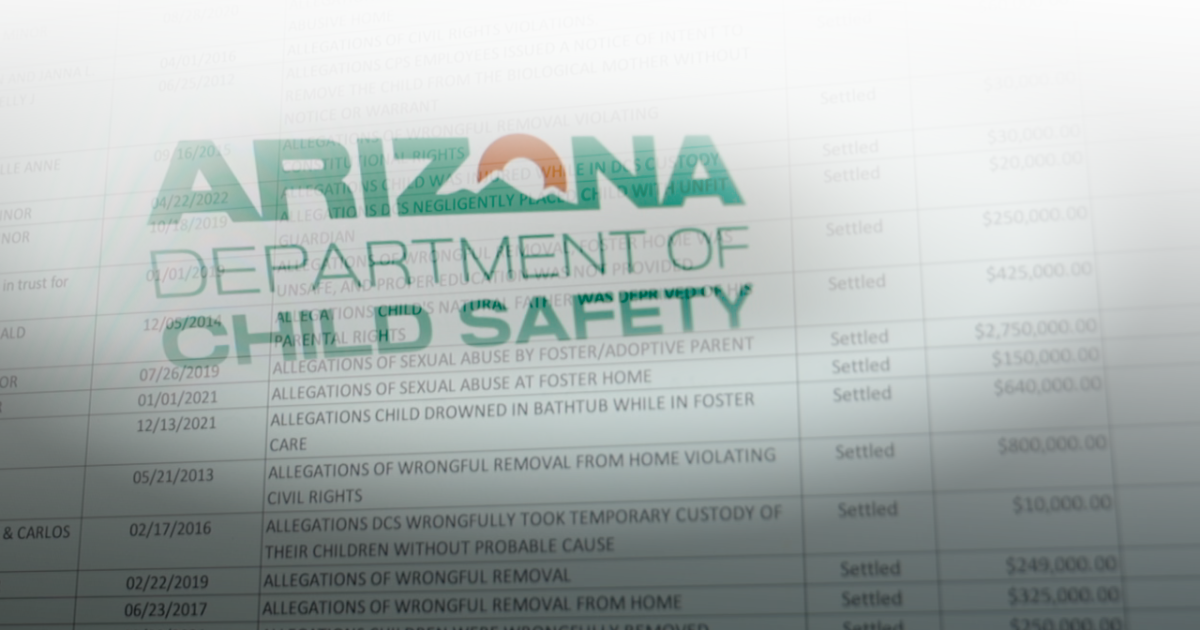
A state Senate committee passed three bills Wednesday morning aimed at reforming the Arizona Department of Child Safety.
The bills are part of a search for solutions following the murders of three girls known to Arizona’s child welfare system in 2025.
One of the bills strengthens the rules to place children with relatives or other adults they know. HB2035 would make kinship care presumptive and require a written explanation if a different placement were made.
Another bill, HB4004, encourages DCS to investigate new reports of child abuse, even if caseworkers had designated a “protective parent” who would shield the child from harm.
The third bill, HB2611, aims to improve the conditions of group homes. This includes improved building security, allowing foster children to participate in enrichment activities and live free from bullying, and randomly drug testing group home workers.
Hayden L’Heureux, who lived in foster group homes, spoke about the conditions youth face.
“For many foster youth group homes are not experienced as places of healing but as places of punishment or setback,” L’Heureux said.
Angelina Trammell also lived in foster group homes and shared her experience.
“I’ve been through things no child should ever have to go through in the hardest part. A lot of it could’ve been prevented,” Trammell said.
All three bills have already passed the state House and will move forward for consideration by the full Senate.
This story was reported on-air by a journalist and has been converted to this platform with the assistance of AI. Our editorial team verifies all reporting on all platforms for fairness and accuracy.

How to Watch No. 1 Texas Longhorns Hosting No. 15 Texas A&M in Lone Star Showdown

Utah Falls in Emotional, Physical Game Against Capitals | Utah Mammoth

46 anti-Trump No Kings protests planned in Vermont. How to go

Virginia bill targets vape shops that sell to underage buyers – WTOP News

These Wisconsin Rapids restaurants are offering Easter specials

Florida High School Football Rankings: Top 25 teams – Oct. 21

How old is Bo Nix? What to know about Oregon quarterback ahead of 2024 NFL Draft

Cleary's 21 help Le Moyne down Central Connecticut State 69-64 in OT

99th annual Pony Swim held in Virginia

Indiana Members Credit Union announced as new anchor tenant at Bottleworks District

Video: Will ICE Change Under Its New Leader?

DHS shutdown breakthrough comes at cost for Republicans as funding fights nears end

Rubio joins crucial G7 talks as Iran war set to dominate second day

A surprise resignation could open the door for an independent to win a Montana Senate seat

Video: Savannah Guthrie Says She Believes Her Mother Was Taken for Ransom
-

 Detroit, MI1 week ago
Drummer Brian Pastoria, longtime Detroit music advocate, dies at 68
-

 Science1 week ago
How a Melting Glacier in Antarctica Could Affect Tens of Millions Around the Globe
-

 Movie Reviews1 week ago
‘Youth’ Twitter review: Ken Karunaas impresses audiences; Suraj Venjaramoodu adds charm; music wins praise | – The Times of India
-
 Science1 week ago
I had to man up and get a mammogram
-

 Sports6 days ago
IOC addresses execution of 19-year-old Iranian wrestler Saleh Mohammadi
-

 New Mexico4 days ago
Clovis shooting leaves one dead, four injured
-
 Business1 week ago
Disney’s new CEO says his focus is on storytelling and creativity
-

 Texas1 week ago
How to buy Houston vs. Texas A&M 2026 March Madness tickets