Arizona
Kari Lake flips on abortion ban, but says she wants to ‘save as many babies as possible’


At a campaign rally at the University of Arizona just days after the Arizona Supreme Court allowed a near-total ban on abortions to take effect in the state, U.S. Senate candidate Kari Lake reiterated her pro-life stance and questioned the limits of a ballot proposition that is the likely next political fight over abortion in Arizona.
Lake was greeted to applause, selfies and cheers from a half-full audience of about 80 people at the campaign rally hosted by the College Republicans student group.
“Safety. Security. Freedom. That’s what’s on the ballot in November,” Lake told the crowd.
Lake, a Republican, is running to represent Arizona in the U.S. Senate seat currently held by Kyrsten Sinema, an independent who is not seeking reelection. Lake previously ran for governor in Arizona in 2022, refused to concede and disputed the election results in court.
The outcome of this Senate race could determine which party takes control of the Senate in 2025, and politicians from both parties seized on the Arizona abortion decision to try to win voters’ support.
In a video posted to Lake’s page on X, she shared her thoughts on the abortion ruling handed down on Tuesday by the Arizona Supreme Court. “We’re going to work through this,” she said.
In the video, she acknowledges that some women could choose to have an abortion because they were the victim or rape or abuse, or for financial reasons.
While running for governor, Lake called abortion a sin and said she supported abortion bans and the 1864 law. In the video Thursday, she said her mind was changed while on a summer trip to Hungary, highlighting the nation’s financial support system for mothers.
The Hungarian government added restrictions to abortion access in 2022, adding a law that a person seeking an abortion must first listen to the “fetal heartbeat.”
“As your Senator, I will oppose federal funding and federal banning of abortion,” Lake said in the video.
At the rally, Lake was faced with a tough question from an audience member about her recent change in stance from the past.
“I want to know what you say to the people who trusted you and believed you,” the audience member asked.
Lake said she is pro-life and added, “I want to save as many babies as possible.”
But she made it clear that politicians should not be imposing their view on others, and that this new ruling with no exceptions will not stand.
She said the 1864 law won’t survive the ballot initiative that could be coming to Arizona voters in November. The Arizona Abortion Access initiative would add a fundamental right to abortion to the Arizona Constitution if approved by Arizona voters.
To get on the ballot, Arizona for Abortion Access needs at least 383,923 valid signatures by the July 4 deadline. The group has been collecting signatures since September and said earlier this month that it has more than 500,000 signatures collected so far.
Backers of ballot measure to guarantee abortion rights say they’ve collected 500,000 signatures
Lake said the ballot proposition would allow abortion up to 9 months.
The language of the ballot initiative would allow an abortion “after fetal viability if a treating healthcare provider determines an abortion is needed to protect the life or physical or mental health of the patient.” And “fetal viability” means the fetus could survive outside the uterus.
This is one of the main arguments of the opposition campaign, called It Goes Too Far.
“The voters of this state will vote for that if there’s not an exception for a 10-year-old who’s a victim of incest,” Lake said about the 1864 law. “I can’t imagine any circumstance that I would choose an abortion, but I’m not in the shoes of a woman who has been brutally raped and neither are you.”
The rally drew out some loyal Kari Lake supporters, as well as some opposition voters.
One of the people in attendance in support of Lake was Janet Wittenbraker, a Republican who is running for a seat on the Pima County Board of Supervisors after running for mayor last year.
“I’m a huge Kari Lake supporter,” Wittenbraker said. “She’s a dynamic woman who has the interests of America in mind and in heart.”
Another Lake supporter in attendance was Isaac Gorski. Gorski is 31 years old and works as a long haul trucker. He used to be a student at the UA, and was a member of the Young Republicans, but left because he “couldn’t stand all the brainwashing and manipulation.”
Gorski has been a fan of Lake’s since she ran for governor in 2022.
“I’m one of those people who believe that the red wave happened and the election was stolen,” he said.
He identified himself as a “staunch conservative.” He is in favor of “abortion abolition,” he said. “I’m the father of four kids, one isn’t born yet, but I count it.” He said that Lake’s recent stance against the Arizona Supreme Court decision is part of her political strategy. “We don’t need politicians, we need statesmen,” he said, a category that includes Lake.
Citlali Montoya is an intern with the Pima County Democratic Party and she and some colleagues decided to come to the Lake rally to show their opposition.
Some hecklers in the crowd yelled to Lake while walking out the event “young voters in Arizona will reject you!”
Lake countered, saying, “by November they’ll be voting for me.”
“By November they’ll realize they don’t have free speech. By November they’ll realize they can’t afford their groceries. They’ll realize that, by November, we might be neck deep in a war,” Lake said.
At the end of her remarks, Lake said that Tucson has had better years. She said every time she is in Tucson, she sees boarded up businesses when driving around.
“This town should be thriving, this is a college town, I mean you have the Wildcats!” An audience member then cheered and said Bear Down and threw up the Wildcat sign. Lake smiled and put one up as well and continued, saying, “That’s a perfect motto for this next year. It is time to bear down to save America, and to save Arizona.”
Reporter John Washington contributed to this article.
This article first appeared on AZ Luminaria and is republished here under a Creative Commons license.



A new study has ranked Arizona as one of the worst states to move to for two years in a row, largely due to what it calls a poor quality of life.
The study conducted by Consumer Affairs analyzed the best states to move to in the United States, putting Arizona at the bottom of the list.
Before Arizonans get too defensive about the Grand Canyon State, Consumer Affairs used factors such as affordability, safety, economic strength and education to measure each state, leaving out factors like entertainment, retirement benefits and other considerations that may be important to people living here.
Popular states such as California and New York also landed at the bottom of the list due to their lack of affordability, even though they both have some of the best health care and education in the nation, Consumer Affairs noted.
Here’s why the study says you shouldn’t move to Arizona. Do you agree?
Why you shouldn’t move to Arizona
Arizona ranked No. 10 out of the worst states to move to, scoring especially poorly in quality of life.
Quality of life was measured by the state’s Social Progress Index, average air quality, weather, environmental protection and number of national parks. Due to Arizona’s extreme summers and Phoenix’s consistently poor air quality, it’s easy to see why Arizona ranked No. 44 in quality of life out of 50 states, even though the Grand Canyon is one of the most popular national parks in the nation.
However, Arizona also ranked poorly in other categories, sitting at No. 42 in health care and education, No. 41 in safety and No. 34 in affordability out of 50 states.
There was one category Arizona did impressively well in, ranking No. 5 in economic strength even as one of the youngest states in the country. Still, Arizona’s economic power wasn’t enough to boost its ranking.
Top 10 worst states to move to
Arizona wasn’t alone; some of the biggest states in the country were also considered the worst states to move to in 2026.
- New Mexico
- Louisiana
- California
- Arkansas
- Oklahoma
- Nevada
- Alaska
- Mississippi
- Oregon
- Arizona
Top 10 best states to move to
- Utah
- New Hampshire
- Idaho
- Minnesota
- Massachusetts
- Maine
- North Dakota
- Pennsylvania
- Iowa
- South Dakota
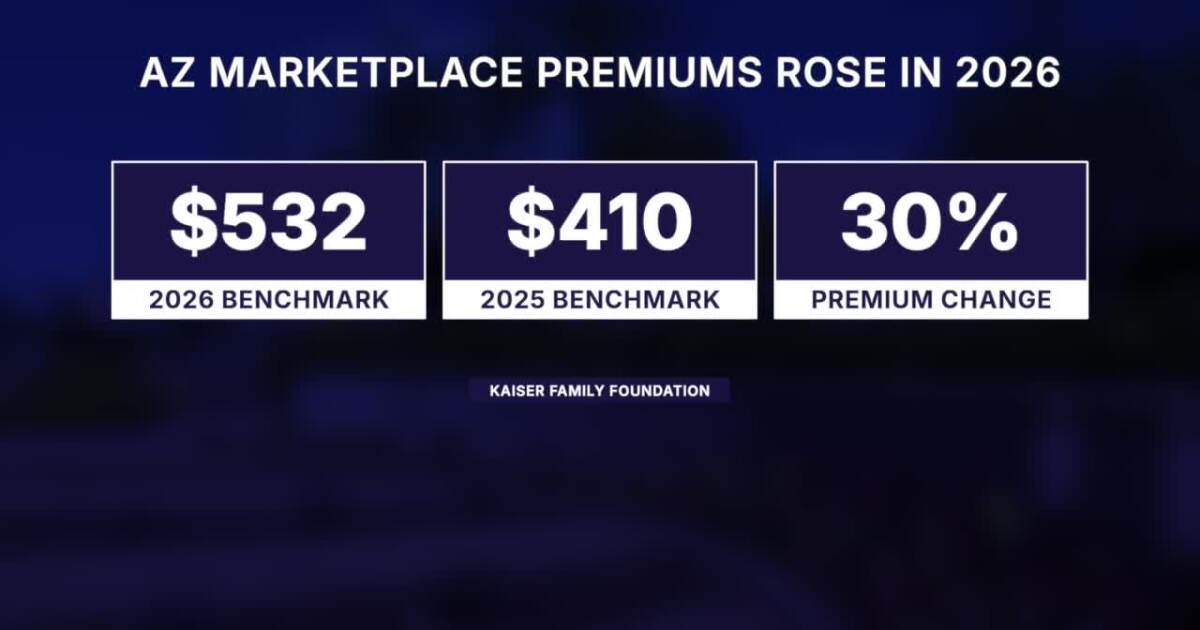
PHOENIX — Arizona’s ACA marketplace enrollment fell from 363,000 to just over 255,000 in a single year — a nearly 30% decline and the third-largest annual drop in the country.
Rising premiums and expired tax credits are driving the trend, with the average benchmark plan premium in Arizona now at $532 — up 30% from 2025.
In the player above, ABC15 Data Analyst Garrett Archer takes a look inside the numbers on how healthcare premiums are impacting health insurance enrollment.
This story was reported on-air by a journalist and has been converted to this platform with the assistance of AI. Our editorial team verifies all reporting on all platforms for fairness and accuracy.
Want more news in your community? Add ABC15 as a preferred source on Google below:

Arizona
Arizona man pleads guilty after illegally living in forest for years among ‘1,000lbs of trash’

A man in Arizona has pleaded guilty to violating federal fire restrictions and unlawfully residing in a national forest, after authorities said he spent years living at a makeshift campsite surrounded by what officials described as “approximately 1,000 pounds of trash”.
Mark Aaron Gatz was arrested on 25 June at his illegal campsite in Arizona’s Tonto national forest, according to court records. A United States Forest Service (USFS) officer wrote in documents submitted to court that Gatz had been operating an “illegal campsite” with a “hot wood burning campfire” despite fire restrictions and that he had told investigators that he had been living in the forest for about eight years.
The officer wrote that a records check found that Gatz had previously received multiple citations and was the subject of six outstanding federal arrest warrants for earlier violations, including for building fires during fire restrictions, constructing on national forest service lands, unsanitary conditions and occupying national forest as a residence.
Gatz “said that he knew about current fire restrictions but had to have fire to eat”, authorities said. The documents show that USFS officers made contact with Gatz multiple times over the last year or so, and issued him warnings as well as a violation notice for having campfires during fire restrictions.
Notes from officers’ previous encounters with Gatz earlier this year, submitted into the court docket, state that authorities observed “trash such as clothing, pans, tools, and plastic cups scattered throughout the campsite along with a structure that was four feet in height build using wood panels”.
During an encounter with Gatz in May, officers reported observing “approximately 1,000 pounds of trash” at the site, which they said included tires, plastic bags, trash bags, aluminum cans and other items. They also wrote that they found that the campfire site had been left unattended by Gatz the previous day while still hot.
In a separate report filed by law enforcement from an encounter in February, one officer wrote that “upon arrival at the camp, I was flabbergasted by the amount of debris in the area”.
Investigators said that during that encounter, the debris consisted of three ladders, six to eight totes “overfilled with debris”, five 55-gallon drums, eight tires, multiple bicycle frames, 5 gallons of motor oil, plywood and other “miscellaneous lumber”, and they wrote that trash was scattered over approximately half an acre of Forest Service land and creating what officers described as public safety concerns.
In a separate report from July 2025, officers said they observed what they described as a “large messy campsite” while patrolling the area due to complaints “from the district office abut one large messy camp”.
“There was roughly half an acre of resources ruined due to so much trash and goods on the ground for an extended period of time,” the officer wrote.
This week, after Gatz pleaded guilty, he was sentenced to time served and three years of probation, according to court records.
A representative for Gatz did not immediately respond to a request for comment.
-

 Utah6 minutes ago
Man suspected in 2006 Utah murder left suicide note in Las Vegas jail cell: police
-
 Vermont9 minutes ago
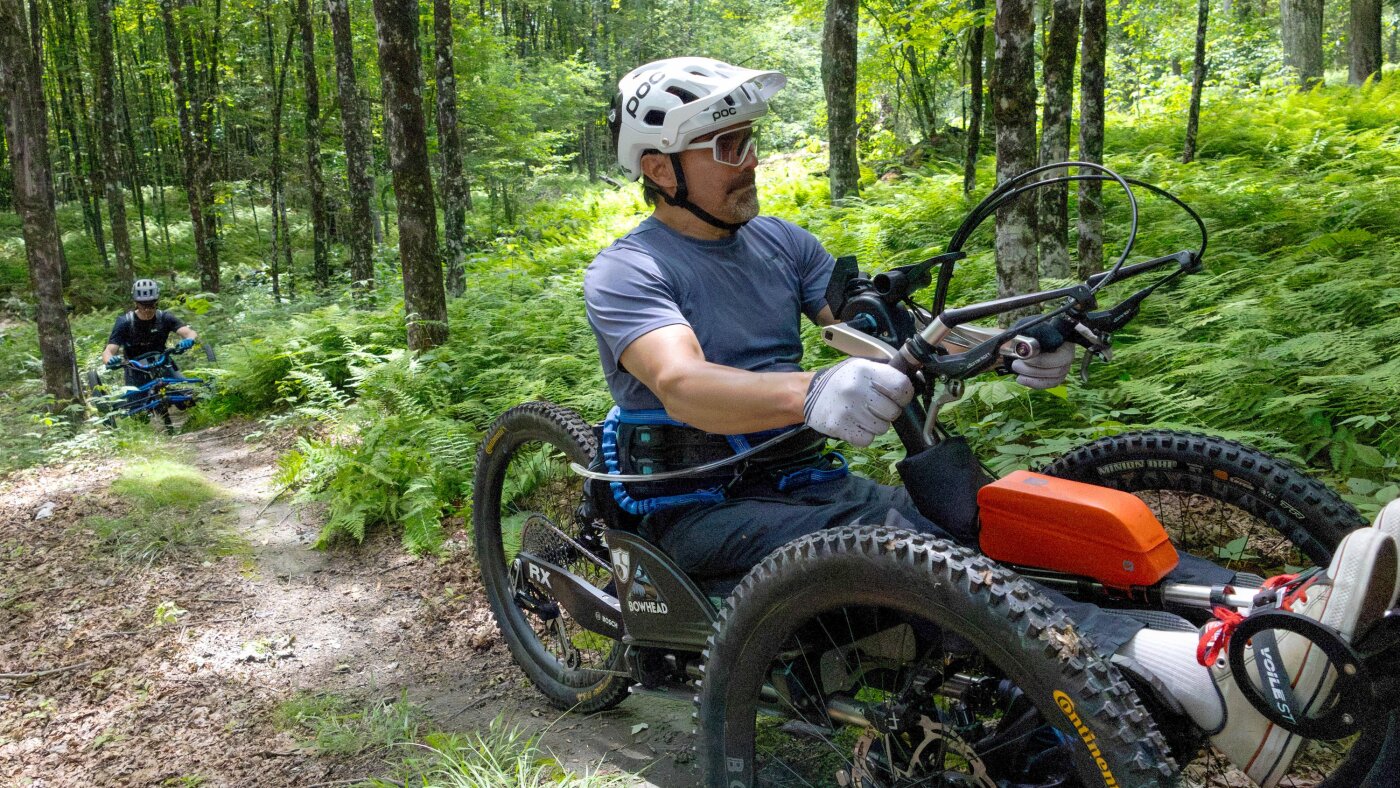
OUTDOOR ACCESS FOR DISABLED IN VERMONT
-
 Virginia14 minutes ago
4 indicted in Virginia double homicide; second victim ID’d as grandmother of 6
-

 Washington21 minutes ago
Washington Commanders are retiring Hall of Famer John Riggins’ No. 44
-

 Wisconsin24 minutes ago
Wisconsin State Patrol rides with truck and bus drivers to spot violations in five areas
-

 West Virginia29 minutes ago
West Virginia town fires entire police force after chief resigns, sergeant alleges evidence room break-in
-

 Wyoming36 minutes ago
WHP: July 5 single-vehicle rollover north of Riverton resulted in one death, one injury
-

 Crypto39 minutes ago
British Airline Jet2 Shares Jump 9% After $536M Fuel Hedge Gain Offsets Middle East Travel Fears

