Arizona
Energy bills, solar power dominate Arizona Corporation Commission candidate debate


Fossil fuels, emissions, electricity rates and other energy topics headlined a debate among candidates seeking seats on the Arizona Corporation Commission. Six contenders are vying for three openings.
Six candidates vying for three open seats on Arizona’s utility-regulatory panel sparred on Sept. 26 over the state’s long-term energy policy, with the three Democrats urging a more rapid embrace of solar power and their three Republican counterparts stressing the need for a broader mix including natural gas to ensure reliability.
Democrats including Ylenia Aguilar attacked the current Republican-dominated Arizona Corporation Commission for allowing electricity bills to increase. One of the commission’s most visible actions earlier this year was approving a rate hike for Arizona Public Service that boosted electric bills for the utility’s residential customers by around 8% on average.
“People are suffering and can’t pay their bills,” Aguilar said.
But Republicans including Lea Marquez Peterson, the only commissioner seeking re-election in the Nov. 5 vote, said the commission sliced APS’ funding request by more than $200 million from what was requested. She also stressed the need for high energy reliability, along with the investments needed to ensure it.
Arizona can’t afford temporary power disruptions that, she said, have plagued neighboring California. “If we lost power in Arizona in the summer, it would be a life-or-death issue,” Peterson said.
Fellow Republican Rene Lopez endorsed an “all-of-the-above” approach. The energy-mix debate largely focused on natural gas plants that can run well into the evening, after the Sun sets. Aguilar complained about air pollution around metro Phoenix and said the natural-gas plants aren’t desirable near any neighborhoods. But Republican Rachel Walden noted that these generating stations can be turned on quickly, at any time of day or night.
Energy policies and APS’ rate hike dominated the debate, though the discussion also veered into water availability and the struggles facing many small water utilities in rural parts of Arizona that have been hiking rates yet, in many cases, have not made necessary infrastructure improvements. Democrat Joshua Polacheck said the dire conditions of many of these companies shows the need for “change, a different approach,” at the Commission.
Candidates from both political parties spoke out in favor of solar energy, but the enthusiasm from Republicans was more measured.
“Solar doesn’t work at night, and the wind doesn’t always blow,” Peterson said.
That drew a rebuke from Democrat Jonathan Hill, who advocates for storing solar energy during low-demand periods of the day in industrial-scale battery parks for release later, as APS, Salt River Project and other utilities are doing. “Of course we know the Sun goes down at night,” Hill remarked, sarcastically.
The hour-long program sponsored by Arizona PBS and moderated by Ted Simons, host of “Arizona Horizon,” was more cantakerous, with more interruptions, than a Sept. 2 debate involving the same six candidates and sponsored by the Arizona Clean Election Commission.
Republicans hold a 4-1 edge currently on the comisssion, with Republicans Nick Myers and Kevin Thompson not up for re-election this November. Democrats urged voters to set a new course by electing candidates from their party.
Democrat Joshua Polacheck implied that Republicans on the panel are too cozy with “rapacious corporations that are picking our pockets.” Arizona residents, he said, “know their rates have been going up.”
Republican candidate Lopez said Arizonans pay the second-lowest rates in the nation, but Hill criticized that finding because it came from WalletHub, a personal finance app that, he said, “most people have never heard of.”
Walden said it’s important to embrace a broad energy mix and to let market forces dictate prices, as that will lead to the “cheapest options.” She also said it’s important for voters to realize that utilities like APS, in their rate-application cases, are largely seeking to recoup costs on investments they already have made. And because rate cases come up only every few years on average, the increases seem larger compared to more, minor adjustments along the way, she explained.
Both sides have focused on the need to keep rates affordable for consumers and businesses while ensuring that Arizona has the power-generation capacity to support population increases and economic growth. Much of that is coming from relatively new entities such as semiconductor-plant expansions and data centers, a power-intensive industry where metro Phoenix has emerged as a national leader.
The Arizona PBS date was held on the same day that SRP and NextEra Energy Resources unveiled a new wind farm on private land halfway between Flagstaff and the South Rim of the Grand Canyon. All of the clean energy from that project, enough to power around 40,000 homes, has been allocated to a new Google data center in Mesa.
Candidates from both parties largely steered clear of presidential politics, though Walden in her closing statement blamed the Biden-Harris Administration for regulations and other policies that, she said, have worsened pricing pressures in the utility industry.
Reach the writer at russ.wiles@arizonarepublic.com.



Cardinals’ Burch shares what he learned as a rookie in 2025
Arizona Cardinals second-year player Jordan Burch says his defensive line teammates have formed a bond heading into the 2026 NFL season.
Last year in early July, Cardinals edge rusher Jordan Burch was a rookie third-round draft pick out of Oregon who was looking forward to his first NFL training camp and eventual first season.
That rookie year is behind him now, and Burch has identified what he needs to improve on heading into his second season. He said he now knows what to expect and look for, and after talking with outside linebackers coach Matt Feeney, Burch built an offseason plan with which he was comfortable.
“I don’t think anything was like a surprise,” Burch said on Thursday, July 9, at the Cardinals’ Tempe headquarters. “I kind of know what to prep for, so this offseason I can look at my old plays, and then I can call my coach and tell him, from last year to this year, what does he want to see on the field.”
Burch seeks to improve his pass rush. He played in all 17 games last season and had five solo tackles with a sack, and also broke up three passes.
Much of his position was dropping into pass coverage, so Burch looks to recognize pass catchers’ routes better in 2026. He gets help from veteran Josh Sweat, who is there to answer questions about the position they share.
“Every week, every game going against somebody good,” Burch said about takeaways from last season. “The talent of the quarterbacks. We’re playing the Rams, how quickly they get the ball out.”
Burch looks forward to building a stronger bond with his teammates, having invited some of them for dinner or to watch TV. He said he was happy with his progress as a player throughout last season.
The Cardinals open training camp Wednesday, July 22, at State Farm Stadium. It’s a week earlier than most teams because Arizona plays the Carolina Panthers in the Aug. 6 Hall of Fame Game in Canton, Ohio.
Cardinals legend Larry Fitzgerald will be among those inducted into the Pro Football Hall of Fame Aug. 8.

A new study has ranked Arizona as one of the worst states to move to for two years in a row, largely due to what it calls a poor quality of life.
The study conducted by Consumer Affairs analyzed the best states to move to in the United States, putting Arizona at the bottom of the list.
Before Arizonans get too defensive about the Grand Canyon State, Consumer Affairs used factors such as affordability, safety, economic strength and education to measure each state, leaving out factors like entertainment, retirement benefits and other considerations that may be important to people living here.
Popular states such as California and New York also landed at the bottom of the list due to their lack of affordability, even though they both have some of the best health care and education in the nation, Consumer Affairs noted.
Here’s why the study says you shouldn’t move to Arizona. Do you agree?
Why you shouldn’t move to Arizona
Arizona ranked No. 10 out of the worst states to move to, scoring especially poorly in quality of life.
Quality of life was measured by the state’s Social Progress Index, average air quality, weather, environmental protection and number of national parks. Due to Arizona’s extreme summers and Phoenix’s consistently poor air quality, it’s easy to see why Arizona ranked No. 44 in quality of life out of 50 states, even though the Grand Canyon is one of the most popular national parks in the nation.
However, Arizona also ranked poorly in other categories, sitting at No. 42 in health care and education, No. 41 in safety and No. 34 in affordability out of 50 states.
There was one category Arizona did impressively well in, ranking No. 5 in economic strength even as one of the youngest states in the country. Still, Arizona’s economic power wasn’t enough to boost its ranking.
Top 10 worst states to move to
Arizona wasn’t alone; some of the biggest states in the country were also considered the worst states to move to in 2026.
- New Mexico
- Louisiana
- California
- Arkansas
- Oklahoma
- Nevada
- Alaska
- Mississippi
- Oregon
- Arizona
Top 10 best states to move to
- Utah
- New Hampshire
- Idaho
- Minnesota
- Massachusetts
- Maine
- North Dakota
- Pennsylvania
- Iowa
- South Dakota
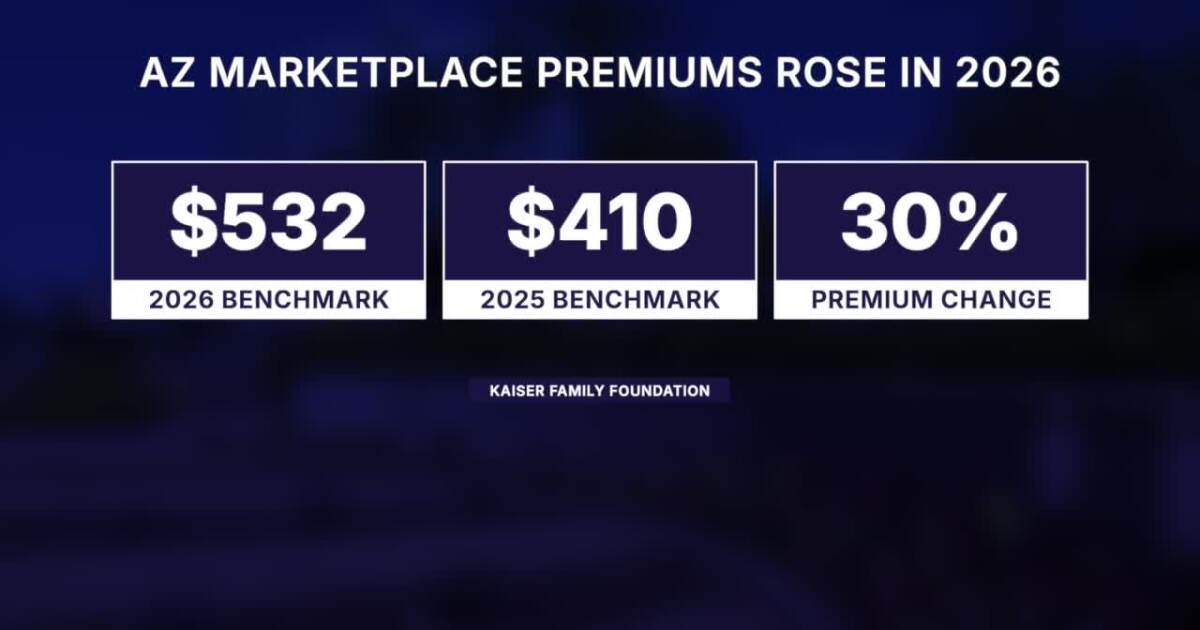
PHOENIX — Arizona’s ACA marketplace enrollment fell from 363,000 to just over 255,000 in a single year — a nearly 30% decline and the third-largest annual drop in the country.
Rising premiums and expired tax credits are driving the trend, with the average benchmark plan premium in Arizona now at $532 — up 30% from 2025.
In the player above, ABC15 Data Analyst Garrett Archer takes a look inside the numbers on how healthcare premiums are impacting health insurance enrollment.
This story was reported on-air by a journalist and has been converted to this platform with the assistance of AI. Our editorial team verifies all reporting on all platforms for fairness and accuracy.
Want more news in your community? Add ABC15 as a preferred source on Google below:

-

 Movie Reviews4 minutes ago
‘Evil Dead Burn’ Movie Review – Spotlight Report
-

 World12 minutes ago
Hoops Players’ Win Tops Big Day in NCAA Eligibility Litigation
-

 Health37 minutes ago
3 Best Peptides for Weight Loss—and the Viral One Doctors Say To Skip
-
 Lifestyle52 minutes ago
Smithsonian chief emphasizes ‘accuracy and integrity’ after White House report
-

 Technology1 hour ago
Microsoft’s carbon emissions went up 25 percent last year
-

 World1 hour ago
Jailed Catholic woman’s hunger strike highlights Iran religious persecution — US demands action
-

 Politics1 hour ago
Israel shares intelligence warning Iran plotted new assassination attempt against Trump: report
-

 Health1 hour ago
Parasitic infection causing ‘explosive’ stomach illness exceeds 1,000 cases in northern state

