Scottsdale, Arizona
CNN
—
Near the edge of the Phoenix metro’s urban sprawl, surrounded by a wide expanse of saguaro-studded scrubland, Dream City Christian School is in the midst of a major expansion.
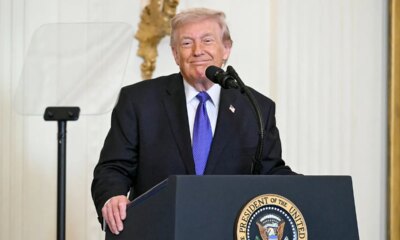
The private school, which is affiliated with a local megachurch where former President Donald Trump held a campaign rally this month, recently broke ground on a new wing that will feature modern, airy classrooms and a pickleball court. It’s a sign of growth at a school that has partnered with a Trump-aligned advocacy group, and advertises to parents by vowing to fight “liberal ideology” such as “evolutionism” and “gender identification.”
Just a few miles away, the public Paradise Valley Unified School District is shrinking, not expanding. The district shuttered three of its schools last month amid falling enrollment, a cost-saving measure that has disrupted life for hundreds of families.
One of the factors behind Dream City’s success and Paradise Valley’s struggles: In Arizona, taxpayer dollars that previously went to public schools like the ones that closed are increasingly flowing to private schools – including those that adopt a right-wing philosophy.
Arizona was the first state in the country to enact a universal “education savings account” program – a form of voucher that allows any family to take tax dollars that would have gone to their child’s public education and spend the money instead on private schooling.
A CNN investigation found that the program has cost hundreds of millions of dollars more than anticipated, disproportionately benefited richer areas, and funneled taxpayer funds to unregulated private schools that don’t face the same educational standards and antidiscrimination protections that public schools do. Since Arizona’s expanded program took effect in 2022, according to state data, it has sent nearly $2 million to Dream City and likely sapped millions of dollars from Paradise Valley’s budget.
And Arizona is hardly alone: universal voucher programs are sweeping Republican-led states, making it one of the right’s most successful efforts to rewrite state policy after decades of setbacks.
The cause has been bolstered by a small group of billionaires who have quietly spent millions of dollars on election campaigns and lobbying to push vouchers around the country. Supporters argue that the programs give families greater freedom in choosing their children’s schools, and help less affluent kids in failing public schools achieve a better education.
Critics say the problems in Arizona are a warning of potential dangers as other states follow its lead. “We’re the canary in the coal mine,” said Trevor Nelson, an education activist and a parent in the Paradise Valley district where public schools are closing. “We’re on the front lines, and what happens here is going to dictate what happens in the rest of the country.”
For decades, conservative activists and politicians have been pushing policies to make it easier for families to spend taxpayer funds on private education.
Various states passed small, targeted voucher programs for low-income students, or students with disabilities. But efforts to expand vouchers to all families, regardless of their incomes, failed again and again, defeated in voter referendums or rejected by state legislatures and courts.
That changed swiftly in recent years. Since 2021, nearly a dozen states have passed universal or near-universal school choice policies – either vouchers that directly send public dollars to private schools, or similar “education savings account” programs that give parents more flexibility on where to spend the money.
“There’s been more gains made in the last few years of the school choice movement than there were in the prior 30,” said Tommy Schultz, the CEO of the pro-voucher American Federation for Children, said in an interview. “We are basically hitting a tipping point when it comes to giving families education freedom.”
The political calculus on vouchers changed amid the impact of school closings during the coronavirus pandemic and vitriolic debates over public school teachings on race and sexuality. Pro-voucher advocates embraced those culture war fights, refocusing their efforts on red states where they painted public schools as out of step with parents’ values. Half of Republicans polled told Gallup in 2022 that they had very little or no confidence in public schools, up from 31% in 2019.
The American Federation for Children, which was previously led by Trump’s Secretary of Education Betsy DeVos, pushed vouchers in part by playing a big role in state legislative races. AFC ran ads attacking Republicans who opposed universal ESA expansion bills – often rural legislators whose constituents were more likely to rely on public schools – in states like Iowa, Tennessee, Texas and elsewhere. Schultz said the group targeted 71 incumbents around the country in 2022, and 40 of them lost their elections. This year, AFC plans to be involved in “hundreds” of races, he said.
AFC’s national political arm has spent more than $7 million since 2020 after receiving $3 million from DeVos and her husband, $2 million from TikTok investor Jeff Yass, and $1.75 million from Cleveland Browns owner Jimmy Haslam and his wife, according to IRS records. DeVos and Haslam did not respond to requests for comment, while Yass said in a statement that “school choice is the civil rights issue of our time and I’m excited to see the issue getting the attention it deserves.”
In an internal presentation obtained by the progressive watchdog group Documented and provided to CNN, AFC boasted that it had “deployed” $250 million “to advance school choice over the last 13 years,” and that that spending had led to “$25+ billion in government funding directed towards student choice.” Those numbers are now even higher, Schultz said.
Charles Siler, an Arizona political consultant who worked as a lobbyist for two pro-voucher nonprofits before coming to oppose school privatization, said the recent victories for school choice were the result of a long, methodical effort by groups like AFC.
“This isn’t an overnight success, this is decades in intentional, strategic labor,” Siler said. “At a certain point you’ll hit a tipping point where public schools cannot afford to function.”
The push for universal vouchers comes as the Supreme Court has issued a series of rulings that bolstered state funding for religious schools. In 2002, the court ruled that states could create tuition voucher programs for religious schools, opening the door to programs like Arizona’s. Two decades later, in 2022, the court expanded that decision by ruling that states that give vouchers to private schools cannot withhold them from religious schools.
Advocates for student choice argue that voucher programs lead to increases in student achievement. But several other studies have found that expansions of vouchers in some states had a negative impact on student test scores – as opposed to smaller, targeted programs.
One reason is that when voucher programs are universal or near-universal, more money goes to less academically rigorous schools, said Josh Cowen, a Michigan State University professor who’s written a book on school vouchers.
“We’re not talking about the school in ‘Dead Poets Society’ here,” Cowen said. “We’re talking about schools run out of church basements.”
Arizona has long been ground zero in the fight over public support for private schools. The Grand Canyon State first adopted its “Empowerment Scholarship Account” program in 2011 for families of students with disabilities. State leaders gradually expanded the program over the years, adding in military families, students in low-performing public schools, and other groups.
But initial efforts to allow any family in the state to take advantage of the program floundered. In 2018, nearly two-thirds of Arizona voters rejected a universal ESA bill in a referendum. And when GOP Gov. Doug Ducey pushed the policy again in 2021, three Republican members of the state house joined Democrats to block it.
Those three holdouts were targeted by YouTube ads paid for by the American Federation for Children, according to Google’s political ad database. When the legislature again considered a universal ESA bill in 2022, all three members flipped to support it, and Ducey signed it into law.
Since the new rules went into effect in September 2022, Arizona’s ESA program has grown from 12,000 students to about 75,000. Families can spend the state money their public school district would have received for their child’s education on private school or homeschooling. Most students receive about $7,000, while those with disabilities get significantly more.
Tom Horne, the Arizona superintendent of public instruction and a Republican elected official who supports the ESA program, argued that it gives families much-needed flexibility.
“It’s designed to empower parents to choose the school that best suits their child’s needs,” Horne said. “No one could rationally be against that unless they are so immersed in ideology, and it has made them coldhearted with respect to students’ academic needs.”
But unlike some other states that have adopted voucher programs, Arizona has no standards requiring private schools to be accredited or licensed by the state, or follow all but the most basic curriculum standards. That means there is no way to compare test scores in public schools to students in the ESA program.
“There’s zero accreditation, there’s zero accountability, and there’s zero transparency,” said Beth Lewis, a former teacher who leads an Arizona nonprofit that advocates against school privatization.
The state also allows families to spend the money not just on schools but on a wide variety of items that could be considered educational for homeschooled kids. Parents have been approved to use the taxpayer dollars to buy their children things like kayaks, trampolines, cowboy roping lessons and SeaWorld tickets. Horne said his office was now rejecting some purchases that would have been approved under previous administrations.
The program is costing considerably more than originally anticipated. When the bill to expand vouchers to all students passed in 2022, the legislature’s budget committee estimated that it would only cost the state $64.5 million between July 2023 and June 2024, while noting that there was uncertainty about that figure.
But far more students joined the program than projected, and the universal expansion has actually cost the state about $332 million over the last year, a report released this month by the nonpartisan Grand Canyon Institute estimated.
The cost increases come as the state has grappled with a significant budget deficit. Democratic Gov. Katie Hobbs proposed limiting voucher eligibility and mandating minimum educational standards and background checks at private schools receiving ESA money – but those proposals have gone nowhere in the GOP-controlled legislature.
One big reason why the program is costing so much: About half of the students participating never attended a public or charter school, according to the Arizona Department of Education, so the state had not been previously paying for their education. And only about a third of students in the program came directly from a public or charter school.
Wealthy communities are disproportionately benefiting, according to a CNN analysis of state education department and US Census data. Almost a third of the students whose families are receiving ESA funding live in zip codes with median household incomes of more than $100,000 – even though only a fifth of the minors in the state live in those zip codes.
“You’re enabling doctors, lawyers, bankers, management consultants who already had their children in private schools to get this subsidy that they were not entitled to before,” said Samuel E. Abrams, the director of a University of Colorado research center on school privatization. “This is costing taxpayers a lot of money that wasn’t anticipated.”
Some of the private schools that are among those receiving the most money from Arizona’s ESA program have extreme beliefs or have been accused of discriminating against students.
State records that CNN obtained through a public records request, which have not been previously reported, show that about half of the money that went to private schools through the ESA program last year went to religious schools, the vast majority of which were Christian.
Some of the Christian schools that have raked in the most taxpayer funds publish “statements of faith” on their websites mandating that teachers and staff agree to declarations such as “rejection of one’s biological sex is a rejection of the image of God within that person” and that “homosexual behavior” is “offensive to God.”
Dream City Christian School, the megachurch-affiliated school that is expanding, received more than $1.3 million in ESA funding in 2023 – 10 times what it was receiving before the universal expansion passed, and more than 95% of the private schools that received funding. The school operates a partnership with the advocacy group Turning Point USA, which works to organize conservative students on high school and college campuses. On its website, Dream City encourages applications by declaring that it will “protect our campus from the infiltration of unethical agendas by rejecting all ‘woke’ and untruthful ideologies being pushed on students.” The school did not respond to requests for comment.
Dream City is just one example of Turning Point’s efforts to build a network of conservative Christian schools. During a recent video info session, Turning Point executives described how the program was “restoring God as the foundation of our education” at a time when “exposure to all of the secular, really godless ideologies is on the rise.”
On the other side of the Phoenix metro area, the private Valley Christian Schools received nearly $1.1 million in ESA funding last year despite facing allegations of LGBTQ discrimination in federal court. Valley Christian fired high school English teacher Adam McDorman after he voiced support for a student who came out as pansexual, McDorman alleged in a 2022 lawsuit. In an email that McDorman provided to CNN, the school’s then-principal argued that the idea that it was possible to be both “homosexual or otherwise sexually deviant and also a Christian” was a “hideous lie.”
Public schools are barred from discriminating against students because of characteristics like their religion or sexuality, but no such rules cover private schools. In court documents, Valley Christian lawyers have argued that the school had the religious liberty to fire McDorman. The school declined to comment because the case is pending.
In an interview, McDorman said his former school taught creationism as a scientific fact, and “whitewashed” American history to downplay the harms of slavery. He was surprised to learn about the level of public funding it was receiving.
“That amount of money is pretty staggering,” McDorman said. “They have so much taxpayer support – and no responsibility to treat their students with equal respect.”
Even as Arizona’s voucher expansion is draining money from the state budget and diverting it to conservative religious schools, critics say one of the most damaging long-term impacts could be the impact on public schools.
More than 24,000 students have directly left public or charter schools to join the ESA program, according to state data – taking with them hundreds of millions of dollars that previously flowed to those schools each year.
Even small reductions in enrollment can destabilize school budgets in Arizona, which spends less per-student on public education than nearly any other state in the US. Fewer students means less money coming in, while many fixed costs remain the same.
“When kids leave those classrooms for private schools, bills still have to get paid, heaters have to stay on, buses have to run, teacher salaries remain present,” Cowen, the Michigan State professor, said. “So those schools do take a hit.”
The Paradise Valley district, which covers a swath of northern Phoenix and the suburb of Scottsdale, closed two elementary schools and a middle school this year, with students leaving for the final time last month. Two of the three schools had an A rating in the state’s student performance letter grades, a distinction only about a third of Arizona schools have received.
The district has seen declining enrollment for years, as rising house prices have reduced the numbers of families moving in, and new charter schools and private schools have opened in the surrounding area. Horne, the state superintendent, said that the “occasional need to close a district school due to population shifts and other natural demographic trends is a decades-old phenomenon” not related to the ESA program.
But school district officials say the expansion of universal ESA’s also played a role in reducing enrollment, along with the other factors. According to state data, 456 students have directly left Paradise Valley public schools to join the ESA program – more than the enrollment at two of the three schools that closed. In addition, there are about 2,500 other students living in the district who are in the ESA program.
The reduction in funds from students leaving for ESA’s – and the potential of more departures going forward – put the district “over the edge” of having to close three schools at once, argued Nelson, the local education activist.
While students and staff at the shuttered schools are being offered places at other schools in the district, the closings have been met with sadness and anger among some in the community. School board meetings were at times contentious, with local residents railing against the closures and parents holding rallies outside schools set to be shuttered.
Last month, dozens of former students and teachers gathered in the school gymnasium of one of the closing schools, Sunset Canyon Elementary, to say goodbye. As kids ran around and marveled at old yearbook photos, teachers exchanged hugs with students they’d taught years or decades ago.
Susie Francis, who has taught at Sunset Canyon since it first opened its doors in 1999, said it felt surreal for the school to be closing.
“This school is so much more than just a building to people, it’s a home,” Francis said, holding back tears. “So many students have touched my heart over the years.”
The closings are especially hard for students like 11-year-old Riley White, who has Down syndrome and struggles with change. Her school, Desert Springs Preparatory, is just around the block from her tidy cul-de-sac. Some staffers at the school have worked with Riley since she was a kindergartener, and she has a tight circle of friends who she calls her sisters, said her mother, Felicia White.
As Riley ran around her sun-baked backyard, White said she was considering leaving Arizona and moving her daughter somewhere with stronger backing for public schooling.
With “the lack of support that gets put into our education system,” other Arizona schools will also be forced to close in the coming years, White predicted. “Sometimes I sit and I think, why am I still trying to school her in this state – when I could go school her in a state that puts a lot more emphasis on her education?”