Arizona
Arizona bats test positive for possibly deadly fungus; wildlife agency seeks public’s help


Arizona’s Chiricahua Mountains home to variety of bats
In the Chiricahua Mountains near Portal, Arizona, where 20 or so species of bats can be found, a workshop captures and processes the animals.
Arizona Republic
Bats in southeastern Arizona have tested positive for a fungus that poses a threat to the species, prompting wildlife officials to urge the public to report any potential infections.
A bat that was part of the cave myotis species in Fort Huachuca, just west of Sierra Vista, tested positive for a fungus known as Pseudogymnoascus destructans (Pd) that can cause deadly white-nose syndrome (WNS), according to the Arizona Department of Game and Fish.
The positive sample was collected during a June 2024 surveillance when Game and Fish identified a bat with abnormal wing features linked to the disease. The agency later discovered four additional bats, including two from other species, that tested positive for trace amounts of the fungus.
Debbie Brewer, a Game and Fish biologist for the Fort Huachuca area, said monitoring for the Pd has existed in the area since 2014, with positive infections found in 2017, followed by low-level spread in 2021 and 2023.
“Though not unexpected, our 2024 high-level positive detection in cave myotis is highly concerning and should put other land managers in the Southwest on alert that habitat protections for this and other species of bat are warranted,” wrote Brewer in a news release.
White-nose syndrome
Pd, which causes white-nose syndrome, is named after the white fungal growth seen on infected bats. Since 2006, the disease has led to the deaths of millions of bats across 40 U.S. states and nine Canadian provinces, according to Game and Fish.
White-nose syndrome does not pose a risk to humans or pets, but human activity is a major concern for bringing fungal spores into cold, humid caves where bats hibernate, and where optimal growing conditions exist for the fungus.
“This disease did not exist when I first began working with bats. To see new threats to our bat populations like this is disturbing,” said Angie McIntire, a specialist on Arizona bats for Game and Fish.
A bat infected with WNS may display unusual behavior, which Game and Fish said usually appears like the bat is unable to fly or is perched low on a wall or is on the ground.
The wildlife agency asks the public to help monitor for the disease by reporting any possible cases by email to bats@azgfd.gov, sending a detailed report of the encounter, photos, location and contact information, but also reminds the public to never handle bats.
Game and Fish said since 2019, the fungus has been found in Mohave, Coconino, Yavapai and Cochise counties, and at Grand Canyon National Park. Between 2021 and 2024, a total of eight bats, including cave myotis, southwestern myotis and big brown bats, tested positive for the fungus.
Infections within the cave myotis bat species also have been found nearby in New Mexico and Texas, highlighting to researchers a possible vulnerability among the species for WNS.
Reach reporter Rey Covarrubias Jr. at rcovarrubias@gannett.com. Follow him on X, Threads and Bluesky @ReyCJrAZ.



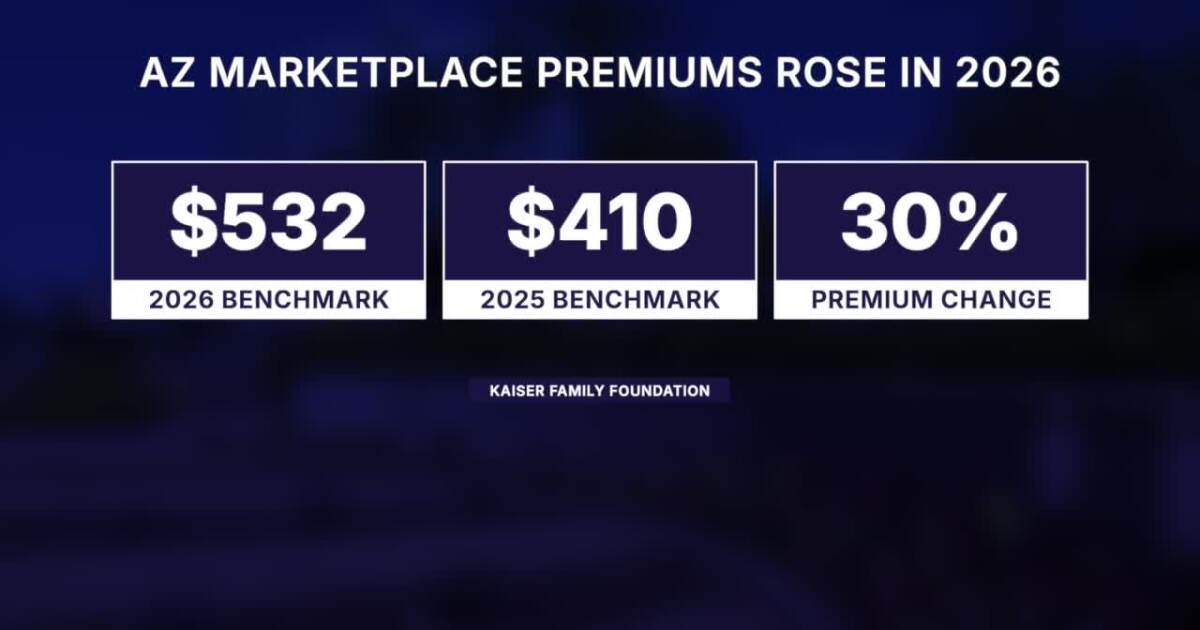
PHOENIX — Arizona’s ACA marketplace enrollment fell from 363,000 to just over 255,000 in a single year — a nearly 30% decline and the third-largest annual drop in the country.
Rising premiums and expired tax credits are driving the trend, with the average benchmark plan premium in Arizona now at $532 — up 30% from 2025.
In the player above, ABC15 Data Analyst Garrett Archer takes a look inside the numbers on how healthcare premiums are impacting health insurance enrollment.
This story was reported on-air by a journalist and has been converted to this platform with the assistance of AI. Our editorial team verifies all reporting on all platforms for fairness and accuracy.
Want more news in your community? Add ABC15 as a preferred source on Google below:

Arizona
Arizona man pleads guilty after illegally living in forest for years among ‘1,000lbs of trash’

A man in Arizona has pleaded guilty to violating federal fire restrictions and unlawfully residing in a national forest, after authorities said he spent years living at a makeshift campsite surrounded by what officials described as “approximately 1,000 pounds of trash”.
Mark Aaron Gatz was arrested on 25 June at his illegal campsite in Arizona’s Tonto national forest, according to court records. A United States Forest Service (USFS) officer wrote in documents submitted to court that Gatz had been operating an “illegal campsite” with a “hot wood burning campfire” despite fire restrictions and that he had told investigators that he had been living in the forest for about eight years.
The officer wrote that a records check found that Gatz had previously received multiple citations and was the subject of six outstanding federal arrest warrants for earlier violations, including for building fires during fire restrictions, constructing on national forest service lands, unsanitary conditions and occupying national forest as a residence.
Gatz “said that he knew about current fire restrictions but had to have fire to eat”, authorities said. The documents show that USFS officers made contact with Gatz multiple times over the last year or so, and issued him warnings as well as a violation notice for having campfires during fire restrictions.
Notes from officers’ previous encounters with Gatz earlier this year, submitted into the court docket, state that authorities observed “trash such as clothing, pans, tools, and plastic cups scattered throughout the campsite along with a structure that was four feet in height build using wood panels”.
During an encounter with Gatz in May, officers reported observing “approximately 1,000 pounds of trash” at the site, which they said included tires, plastic bags, trash bags, aluminum cans and other items. They also wrote that they found that the campfire site had been left unattended by Gatz the previous day while still hot.
In a separate report filed by law enforcement from an encounter in February, one officer wrote that “upon arrival at the camp, I was flabbergasted by the amount of debris in the area”.
Investigators said that during that encounter, the debris consisted of three ladders, six to eight totes “overfilled with debris”, five 55-gallon drums, eight tires, multiple bicycle frames, 5 gallons of motor oil, plywood and other “miscellaneous lumber”, and they wrote that trash was scattered over approximately half an acre of Forest Service land and creating what officers described as public safety concerns.
In a separate report from July 2025, officers said they observed what they described as a “large messy campsite” while patrolling the area due to complaints “from the district office abut one large messy camp”.
“There was roughly half an acre of resources ruined due to so much trash and goods on the ground for an extended period of time,” the officer wrote.
This week, after Gatz pleaded guilty, he was sentenced to time served and three years of probation, according to court records.
A representative for Gatz did not immediately respond to a request for comment.

Odds of winning the Powerball and Mega Millions are NOT in your favor
Odds of hitting the jackpot in Mega Millions or Powerball are around 1-in-292 million. Here are things that you’re more likely to land than big bucks.
The Arizona Lottery offers multiple draw games for those aiming to win big.
Here’s a look at Tuesday, July 7, 2026 results for each game:
Winning Mega Millions numbers
02-31-35-36-63, Mega Ball: 12
Check Mega Millions payouts and previous drawings here.
Winning Pick 3 Evening numbers
Evening: 4-7-2
Winning Fantasy 5 numbers
03-05-10-14-37
Check Fantasy 5 payouts and previous drawings here.
Winning Triple Twist numbers
03-06-18-23-27-32
Check Triple Twist payouts and previous drawings here.
Feeling lucky? Explore the latest lottery news and results
What time is the Powerball drawing?
Powerball drawings are at 7:59 p.m. Arizona time on Mondays, Wednesdays and Saturdays.
How much is a Powerball lottery ticket today?
In Arizona, Powerball tickets cost $2 per game, according to the Arizona Lottery.
How to play the Powerball
To play, select five numbers from 1 to 69 for the white balls, then select one number from 1 to 26 for the red Powerball.
You can choose your lucky numbers on a play slip or let the lottery terminal randomly pick your numbers.
To win, match one of the 9 Ways to Win:
- 5 white balls + 1 red Powerball = Grand prize.
- 5 white balls = $1 million.
- 4 white balls + 1 red Powerball = $50,000.
- 4 white balls = $100.
- 3 white balls + 1 red Powerball = $100.
- 3 white balls = $7.
- 2 white balls + 1 red Powerball = $7.
- 1 white ball + 1 red Powerball = $4.
- 1 red Powerball = $4.
There’s a chance to have your winnings increased two, three, four, five and 10 times through the Power Play for an additional $1 per play. Players can multiply non-jackpot wins up to 10 times when the jackpot is $150 million or less.
Are you a winner? Here’s how to claim your lottery prize
All Arizona Lottery retailers will redeem prizes up to $100 and may redeem winnings up to $599. For prizes over $599, winners can submit winning tickets through the mail or in person at Arizona Lottery offices. By mail, send a winner claim form, winning lottery ticket and a copy of a government-issued ID to P.O. Box 2913, Phoenix, AZ 85062.
To submit in person, sign the back of your ticket, fill out a winner claim form and deliver the form, along with the ticket and government-issued ID to any of these locations:
Phoenix Arizona Lottery Office: 4740 E. University Drive, Phoenix, AZ 85034, 480-921-4400. Hours: 7:30 a.m. to 5 p.m. Monday through Friday, closed holidays. This office can cash prizes of any amount.
Tucson Arizona Lottery Office: 2955 E. Grant Road, Tucson, AZ 85716, 520-628-5107. Hours: 7:30 a.m. to 5 p.m. Monday through Friday, closed holidays. This office can cash prizes of any amount.
Phoenix Sky Harbor Lottery Office: Terminal 4 Baggage Claim, 3400 E. Sky Harbor Blvd., Phoenix, AZ 85034, 480-921-4424. Hours: 8:30 a.m. to 5 p.m. Monday through Sunday, closed holidays. This office can cash prizes up to $49,999.
Kingman Arizona Lottery Office: Inside Walmart, 3396 Stockton Hill Road, Kingman, AZ 86409, 928-753-8808. Hours: 8 a.m. to 8 p.m. Monday through Friday, 8:30 a.m. to 5 p.m. Saturday and Sunday, closed holidays. This office can cash prizes up to $49,999.
Check previous winning numbers and payouts at https://www.arizonalottery.com/.
This results page was generated automatically using information from TinBu and a template written and reviewed by an Arizona Republic editor. You can send feedback using this form.
-

 Los Angeles, Ca3 minutes ago
Loved ones search for missing 34-year-old Southern California woman
-

 Detroit, MI23 minutes ago
Chickens, geese found at vacant home after nonprofit reports them stolen
-

 San Francisco, CA33 minutes ago
What’s next for San Francisco Giants as MLB trade deadline approaches?
-
 Dallas, TX38 minutes ago
Dallas millionaire files lawsuit against groundwater district
-

 Miami, FL45 minutes ago
7 more women arrested at southwest Miami-Dade massage parlors, accused of prostitution in undercover sting
-

 Boston, MA48 minutes ago
‘They’re my buddies’: 96-year-old Back Bay woman befriends French soccer team
-

 Denver, CO53 minutes ago
Denver officers cited for separate incidents, 1 fired
-

 Seattle, WA1 hour ago
Study finds dangerous chemicals in the breast milk of Seattle moms

