West
Alleged California shoplifters shocked to learn stealing now a felony: 'B—h new laws'

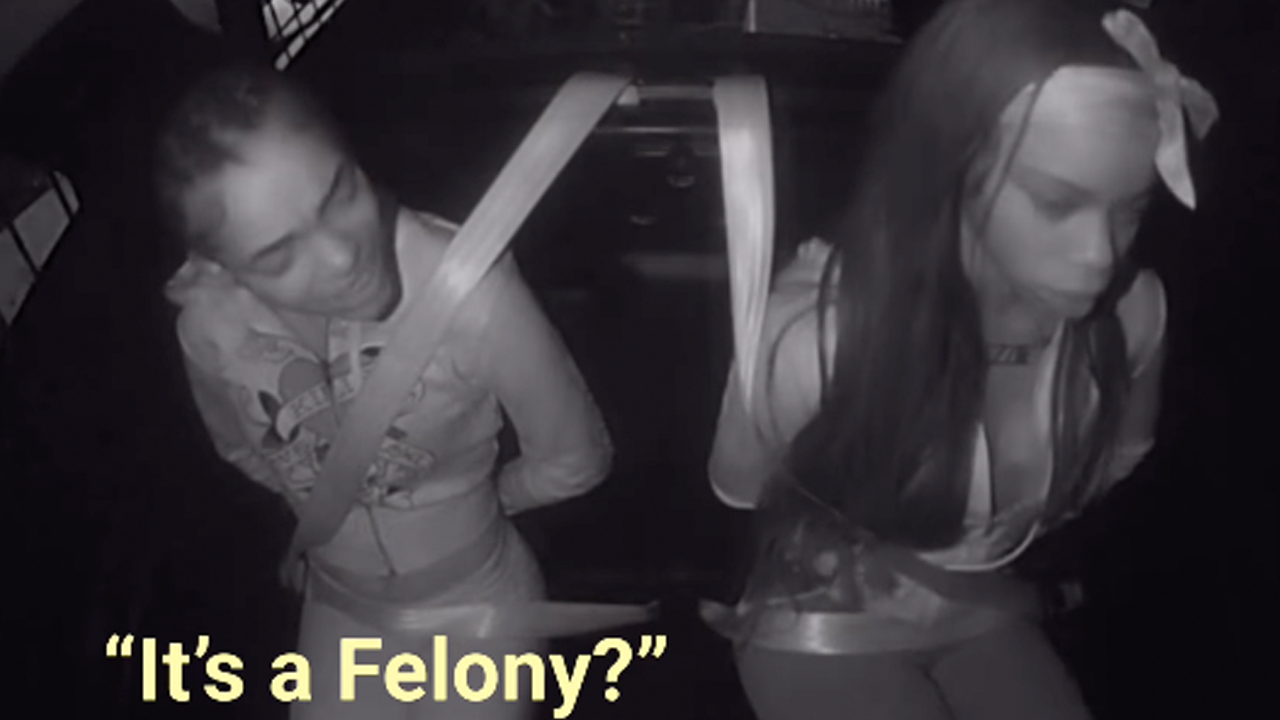
Police in California released a video of a trio of alleged shoplifters who were shocked to find out that the penalty for their crime had recently changed.
In the viral surveillance video shared by the Seal Beach Police Department on Sunday, three women can be seen walking into an Ulta Beauty store, browsing the shelves, then casually exiting the business with what police said was nearly $650 worth of stolen merchandise.
“… a friendly reminder that Proposition 36, which increases punishments for some retail theft and drug possession offenses, went into effect Wednesday morning in California,” the Seal Beach Police Department wrote in the caption of the video on their Instagram account.
The video shows the women entering a Kohls store and allegedly stealing more merchandise, totaling nearly $1,000 in stolen goods.
PRANKSTER ARRESTED AFTER REPORTEDLY FILMING HIMSELF SPRAYING FOOD AT WALMART: ‘RECKLESS’
An alleged shoplifter was shocked to find out some shoplifting offenses are now considered a felony in California. (Seal Beach Police Department)
Bodycam video then shows police officers chasing after the women and ultimately arresting them.
“It’s a felony?” one of the women asks the other in the back of the patrol car.
“B—h new laws,” the woman responds. “Stealing is a felony and this Orange County b—h. They don’t play.”
CALIFORNIA ‘SHOPLIFT WITH A COP’ BLITZ OPERATION LEADS TO DOZENS OF ARRESTS
The women were caught on camera swiping goods from several California businesses, police said. (Seal Beach Police Department)
The women were later identified by police as Destiny Bender, 24, and Deanna Hines, 24, both from Long Beach, and Michelle Pitts, 26, of Signal Hill.
All three individuals were booked into the Orange County Jail on charges of Grand Theft, Conspiracy to Commit a Crime and Resisting Arrest.
Police shared a friendly reminder along with the video.
“It undoes some of the changes voters made with a 2014 ballot measure that turned certain nonviolent felonies into misdemeanors, effectively shortening prison sentences and leading to a spike in retail theft and crime,” police said. “Here in Seal Beach we never believed in the cite and release program, but this new proposition only strengthens our commitment to combatting Organized Retail Theft. Remember folks, don’t steal in Seal.”
Proposition 36, the Homelessness, Drug Addiction and Theft Reduction Act, sought to undo portions of Proposition 47 by increasing penalties for some crimes. It was overwhelmingly passed in California, reversing some billionaire George Soros-backed soft-on-crime policies.
THIEVES STEAL 2,500 PIES IN ODD FOOD HEIST GONE WRONG: ‘SO MUCH WASTE’
The alleged thieves were shocked to learn that they could be charged with a felony for stealing. (Seal Beach Police Department)
When Proposition 47 passed in 2014, it downgraded most thefts from felonies to misdemeanors if the amount stolen was under $950, “unless the defendant had prior convictions of murder, rape, certain sex offenses, or certain gun crimes.”
Progressive Los Angeles County District Attorney George Gascón, backed by Soros, helped author Proposition 47, and lost his seat to challenger Nathan Hochman in November.
California Gov. Gavin Newsom remained adamantly opposed to the effort to undo portions of Proposition 47, saying it “takes us back to the 1980s, mass incarceration.”
Fox News Digital’s Jamie Joseph contributed to this report.
Stepheny Price is writer for Fox News Digital and Fox Business. Story tips and ideas can be sent to stepheny.price@fox.com
Read the full article from Here


PORTLAND, Ore. (KATU) — A member of Oregon’s Iranian community on Monday reacted to American and Israeli strikes in his home country and the death of Iran’s supreme leader over the weekend.
That reaction came as the conflict in the Middle East expanded into a third day. President Donald Trump indicated it could go on for several weeks.
Amin Yousefimalakabad says right now he is concerned about his family, who he says lives near military bases in Tehran, the capital of Iran.
He described businesses with shattered windows and explosions near his family’s home.
At the same time, Yousefimalakabad says he felt relief learning about the killing of the ayatollah.
He says he fled Iran four years ago after facing political persecution.
“I used to be a political prisoner in Iran. I got arrested in one of the protests that happened in Iran, and I was under torture for two weeks,” he said in an interview with KATU News. “They put me in prison for six months. I had, even when I was thinking about those days, it made my body shake from inside because I didn’t deserve that. I just wanted the first things that I can have in a foreign country like America in my country. I wanted freedom. I wanted to have freedom of speech, freedom of religion, to choose who I want to be.”
Meanwhile, Yousefimalakabad says he still can’t return to Iran, fearing he would be punished for his Christian beliefs and says although the regime could change, the ideology in Iran might not.

SALT LAKE CITY (KUTV) — The 2025-2026 winter season isn’t quite over, but it’s no secret that it’s been a rough one when it comes to snow. Right now, statewide snowpack numbers are hovering around 60% of the median.
But you don’t have to know those numbers to understand what a strange winter it’s been.
“It’s kind of good,” said Carrie Stewart, who lives in Salt Lake City. “I mean, I like it because I like a milder climate. But I realize this summer is going to be hard.”
MORE | Snowpack
“I’m not sad I’m not shoveling,” said Sally Humphreys of Salt Lake City. “But it’s definitely worrying.”
State water officials are also worried. The clock is ticking to bulk up those snowpack numbers.
“We’re running out of time to get the snowpack that we need,” said Jordan Clayton, supervisor of the Utah Snow Survey. “We have about 40 or so days until our typical snowpack peak.”
There is still some time to make up lost ground, but the odds aren’t great. Clayton estimates a 10% chance of reaching normal by the end of the season.
“Those are terrible odds,” he said.
In fact, the odds of having a record low snowpack are greater, sitting at 20%. It’s a grim reality that has officials looking toward the summer anxiously.
“I would expect to see watering restrictions outdoors for a lot of places,” said Laura Haskell, Utah’s drought coordinator.
It’s unknown what the next few weeks will bring, but if Haskell had to guess, she doesn’t see state reservoirs filling up much from where they are now.
“In the spring when that runoff hits, we do get a noticeable peak in our reservoir storage,” Haskell said. “The water just starts coming in. But this year, we don’t anticipate getting that.”
Haskell says we have enough reservoir storage to likely make it through the summer, but there are other implications to worry about.
Our autumn season was pretty wet. That led to decent soil moisture levels, which can then lead to higher vegetation growth.
“If we then have a snowpack that melts out really early, we’ll have a longer than normal summer, if you will, with forage growth that might dry out, and so that’s kind of a bad recipe for promoting fire hazard,” Clayton said.
Utahns have dealt with low snowpack levels in the past. Many Utahns are familiar with their lawn turning brown because of water restrictions.
“We’ll probably just let it go that nice, sandy, golden color that it gets in the summer in a dry climate,” said Dea Ann Kate, who lives in Cottonwood Heights.
As we wait to see what the next few weeks bring, people like Carrie Stewart are just reflecting on an unusual winter.
“It is worrying,” she said. “We need snow. We’ve only shoveled once this season, and that’s very unusual.”
Water officials are now hoping for something else unusual: climbing out of the snowpack hole that’s been created.
“But there are no times going back where the snowpack totals for the state were close to where they are right now, and we ended up actually at a normal peak,” Clayton said. “So while it’s possible, it’s very unlikely.”
_____

If you’re planning on visiting Wyoming, for a truly authentic experience, you must include at least one of the state’s awesome downtowns in your travel plans. Positioned at the southern end of the 60-mile-long valley known as Jackson Hole, the character-rich town of Jackson is one such place to consider. A wonderful place to explore on foot, Jackson’s unique downtown, with its Old West vibe, spreads out from the intersection of Broadway and Cache Street. While it consists of just a few blocks, it is jam-packed with fun things to do, no matter what time of year you visit. Its impressive elk arch makes for an excellent photo opportunity, while the charm of its Old West heritage exudes from the historic buildings, cowboy-themed bars, and art installations across town. The wild past also comes to life in Jackson during the Jackson Hole Shootout at the Town Square, a tradition that has endured since 1957.
Town Square And The Elk Antler Arches
Though Jackson’s Central Park is officially known as George Washington Memorial Park, locals and visitors alike prefer to call it Town Square. Dedicated in 1934, this centrally located public space occupies the block at Broadway and Cache and is famous for the elk antler archers set at each of its corners.
Made entirely from naturally shed elk antlers, the first arch was erected by local Boy Scouts and Rotary Club members in 1953, with the other three added a few years later. Each consists of around 2,000 antlers collected from the nearby National Elk Refuge and is among the most photographed landmarks in Wyoming.

For a truly memorable experience, try to time a visit to coincide with ELKFEST. Held in May, this community-wide celebration attracts visitors from across the country for events like the Mountain Man Rendezvous, a reenactment of the state’s early fur trading years.
The main event, though, is the highly anticipated Elk Antler Auction. Bidders from far and wide turn up at Town Square to purchase antlers, which are then used to make everything from furniture to jewelry (proceeds going back to the Elk Refuge).
Jackson’s Cowboy Heritage
From Memorial Day through Labor Day, Town Square becomes the backdrop of the famous Jackson Hole Shootout. This fun (and free) mock gunfight has been entertaining visitors since 1957 and includes several costumed outlaws and lawmen shooting it out (with blanks, of course). You can add to the experience by hopping aboard the Jackson Hole Stagecoach, a ride aboard a century-old coach that loops around downtown.
The Old West theme is evident in other spots around the downtown core, too. Steps from Town Square, the Million Dollar Cowboy Bar has been around since 1937 and is set in what was once the town’s first bank in the late 1890s. Highlights include its hand-carved bar top with silver dollars embedded in it, as well as its cool saddle barstools. Live music is regularly scheduled on the stage that has seen such legends as Willie Nelson and Hank Williams Jr. perform.
The Wort Hotel is another downtown landmark you’ll want to include in your Jackson itinerary. A local fixture since 1941, it’s here you’ll find the famous Silver Dollar Bar with its custom-made S-shaped counter inlaid with 2,032 uncirculated (and therefore rare) 1921 silver dollars. You’ll also want to check out its priceless collection of original Western art.
Other Fun Stuff To Do In Downtown Jackson
In addition to its iconic bars, downtown Jackson also boasts a world-class food scene. Highlights include Persephone Bakery, its old-fashioned stone hearth turning out delicious baked goods, including croissants and artisanal bread. Also yummy, Cafe Genevieve occupies an old log cabin and serves breakfast and lunch with a Southern-inspired menu.
Jackson’s art scene is also worth a mention. Art galleries are plentiful in the downtown area, with establishments like Astoria Fine Art and Mountain Trails Galleries, both on Town Square, featuring works by local, national, and international artists. The Center for the Arts is another cultural high point and features performance spaces, visual arts studios, and an outdoor sculpture park.
Snow King Mountain
Another unique feature of Jackson’s downtown is its proximity to some of Wyoming’s best (and certainly most accessible) ski hills. The base of Snow King Mountain is just six blocks from Town Square and has been in use since 1936, and really took off when Wyoming’s first chairlift opened here in 1946.
Dubbed the “Town Hill” by locals, Snow King now consists of 500 skiable acres, 41 named runs, three chairlifts, an eight-passenger gondola, and night skiing. In warmer months, the action shifts to a thrilling Cowboy Coaster, a zipline, a treetop adventure ropes course, and an alpine slide.
The Snow King Observatory and Planetarium is another excuse to head for the hills from downtown Jackson. Located at the summit of Snow King Mountain, in addition to its large telescope, this must-see attraction features a planetarium theater and a rooftop observation deck boasting incredible views over Jackson and the Jackson Hole Valley.
Explore Jackson’s Not-So-Wild Side
Downtown Jackson has so much to offer visitors seeking an authentic slice of Wyoming life. From its unique elk antler arches to its art galleries and cowboy culture, as well as its unique position steps from the ski hills, few towns in the USA’s Mountain Region can match the long list of fun things to do in Jackson’s downtown core.

North Carolina primary could mean Roy Cooper vs Michael Whatley in pivotal fall Senate race

Gas prices rise slightly in North Dakota amid Iran conflict

Woman dies after saving grandchild playing in driveway from out-of-control car, Ohio officials say

Oklahoma City police are investigating after a man was shot near Yukon

Iranian in Oregon says he was a political prisoner in his home country

Florida High School Football Rankings: Top 25 teams – Oct. 21

Cleary's 21 help Le Moyne down Central Connecticut State 69-64 in OT

How old is Bo Nix? What to know about Oregon quarterback ahead of 2024 NFL Draft

99th annual Pony Swim held in Virginia

Indiana Members Credit Union announced as new anchor tenant at Bottleworks District

Trump sends official notification to Congress on strikes against Iran

Unexpected birth brings hope to near-extinct Amazon tribe

Supreme Court blocks redrawing of New York congressional map, dealing a win for GOP

Map: Earthquake Shakes Central California

Gas prices could jump as Middle East tensions threaten global oil supply
-

 World5 days ago
Exclusive: DeepSeek withholds latest AI model from US chipmakers including Nvidia, sources say
-

 Massachusetts6 days ago
Mother and daughter injured in Taunton house explosion
-

 Denver, CO5 days ago
10 acres charred, 5 injured in Thornton grass fire, evacuation orders lifted
-

 Louisiana1 week ago
Wildfire near Gum Swamp Road in Livingston Parish now under control; more than 200 acres burned
-

 Technology1 week ago
YouTube TV billing scam emails are hitting inboxes
-

 Politics1 week ago
OpenAI didn’t contact police despite employees flagging mass shooter’s concerning chatbot interactions: REPORT
-

 Technology1 week ago
Stellantis is in a crisis of its own making
-

 Oregon4 days ago
2026 OSAA Oregon Wrestling State Championship Results And Brackets – FloWrestling