Alaska
Who Will Benefit From An Alaska/Hawaiian Airlines Merger?


Alaska Airlines’ acquisition of Hawaiian Airlines is progressing, albeit slowly. We were just advised that it is largely on schedule, which could mean it is still up to a year or more away. Meanwhile, others in high positions have mentioned it could conclude much sooner than that.
Most recently, the shareholders of Hawaii Airlines gave their approval. This is despite an ongoing shareholder lawsuit we were told would likely have no impact. In addition, earlier this month, the U.S. Justice Department’s Antitrust Division requested additional information and documentary material as part of its review process.
Hawaii’s four county mayors recently spoke out about the merger.
The mayors have concluded that the merger would enhance airline service for Hawaii’s communities, improve connectivity, and offer more options for residents. We’ll add that it will provide many of the same benefits for Hawaii visitors.
The mayors confirmed what we already know: for neighbor island residents, like BOH editors here on Kauai, air travel is much like a bus service. It is vital for accessing essential services like business meetings, medical appointments, seeing family and friends, and even dining out.
Not only that, but these airlines, on a daily basis, move workers between islands and small towns, including those in construction, medicine, and other fields. That is essential to keeping all business moving forward in Hawaii and in Alaska, including the travel business.
Both Alaska and Hawaii residents share significant similarities. Alaska has provided local and reliable service in that state for close to 100 years, and Hawaiian has done the same here in Hawaii.
What Hawaii’s mayors didn’t say seems clear.
They believe that allowing Hawaiian Airlines to merge with Alaska Airlines is the best path to ensure the continued health and longevity of our state’s largest airline, enabling it to serve local residents for generations to come.
The implication is there is no assurance that Hawaiian Airlines can continue in business without the pending merger. You’ll recall that Hawaiian Airlines has amassed about $1 billion in debt, which at last count, is increasing to the tune of $1 million per day.

Benefits for Alaska Airlines.
Alaska Airlines is #5 on the list of largest airlines in the US. That position isn’t expected to change. Hawaiian’s long-haul aircraft, flights, and experience, including widebody aircraft of two types (A330 and B787), should provide Alaska with a new means for long-distance expansion. That could provide more competition on routes across the Pacific and even help reduce costs.
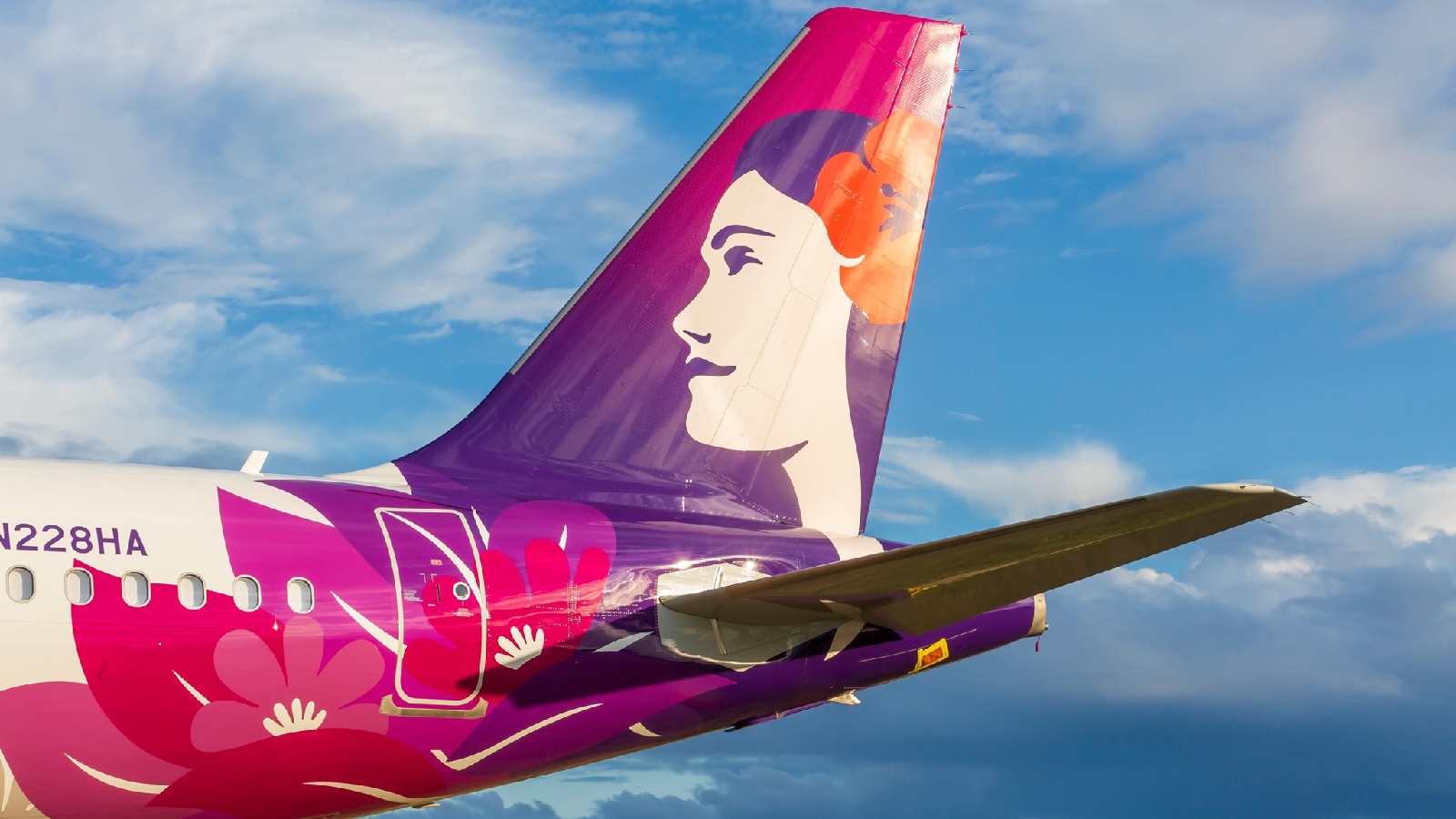
Benefits for Hawaiian Airlines.
The merger reveals improved operational efficiency and expansion opportunities at the Hawaii bellwether. With a much larger fleet, new technologies, and other resources across the board, Hawaiian will have needed economies of scale that should improve performance while driving down operating costs. It offers them the potential for many new routes.
In addition, Hawaiian has nearly 7,000 employees, most of which are based in Hawaii. The merger would result in most people, especially union ones, retaining their jobs.
But flight attendants aren’t so sure yet.
Alaska and Hawaiian Airlines flight attendants are saying that they aren’t ready to give their blessing to the planned merger of the two airlines.
The flight attendants’ unions representing Alaska Airlines and Hawaiian Airlines have now halted that merger approval. Their unions want the commitment of both airlines to handle merger concerns to their liking and preserve what they deem essential elements of their respective contracts.
Public opinion on the proposed Hawaiian/Alaska merger.
We’ve already had a range of comments on this topic. Just today, Chris said, “Listen… Alaska wants to eliminate Hawaiian. As in the past they may tacitly promise things then when they can, dump all those promises. Alaska wants Hawaiian to cease to exist along with contracts, aircraft leases, employee bases, international routes, everything. It’s all going to end.
Yet, another comment responded, saying: “The Association of Flight Attendants, the union that represents both Alaska and Hawaiian flight attendants, is powerless to stop this merger. Hawaiian shareholders voted 98% in favor of the merger last week. DOJ Anti-Trust Division is not going to have cause to stop this from happening as it did with the failed Jet Blue and Spirit. Hawaiian is in a terrible financial situation and the future looks even more bleak without this acquisition. Sorry…it’s the hard truth. Get on board with Alaska or go the way of Aloha Airlines.”
Please share your thoughts!


Up, up and away … that’s where most travel prices are going.
It’s true. Not only are our nation’s geopolitical thrusts in the Mideast affecting the cost of your fill-ups, every component of your trip from airfares to car rentals and hotel stays are subject to price hikes.
Imagine filling up a jetliner with jet fuel that’s doubled in price. It’s enough to melt your credit card, regardless of the number of points you get for every dollar spent!
Because the price of oil affects everything, higher prices are eating away at your travel budget in many ways.
Bag fees
There’s lots of press on this. All airlines are increasing their checked-bag fees because of the jump in fuel prices.
Back in 2009, Alaska Airlines instituted a $15 fee for the first checked bag and $25 for the second bag. At the time, there was no charge for the first bag and a second bag was $25.
Last week, Alaska Airlines, along with other major airlines, increased its fees to $45 for the first checked bag and $55 for the second bag. Delta Air Lines charges the same.
Even if the cost of oil comes down, I don’t expect bag fees will ever be reduced.
Travelers who live in Alaska are somewhat insulated from the new hikes because both Delta and Alaska Airlines offer two free checked bags, with conditions:
1. Alaska offers two free checked bags for travelers flying to or from Alaska who are enrolled in Club 49. This does not affect other flights on Alaska. Separately, ATMOS credit card holders can get a free checked bag. Also, elite members of the ATMOS scheme get one or two free checked bags systemwide.
2. Delta offers two free checked bags for travelers flying to or from Alaska who are SkyMiles members who live in Alaska. Again, this does not apply to other Delta flights. Separately, Delta American Express cardholders can get a free checked bag.
3. Elite-level travelers with the oneworld airline cartel, including Alaska Airlines, can get one or two checked bags on American, British Airways, Japan Airlines, Qantas or other oneworld carriers.
[Anchorage’s international airport rolls out self-driving wheelchairs]
Main Cabin vs. Basic Economy
The spread between the lowest available price, Basic Economy, and a more flexible ticket, Main Cabin, has increased. While the difference used to be $20-$30 each way when the Basic Economy scheme was introduced in 2018, the round-trip upcharge now can exceed $100.
For example, the lowest Basic fare to Portland is $337 round-trip on Alaska Airlines. The upcharge to Main Cabin, with full loyalty points, pre-assigned seats and more flexibility on changes and cancellations, is $447, a 33% upcharge.
This trend is not specifically attributable to the new Iran War. It’s just a cost that continues to rise.
New fees
I’m impressed at the creativity of airline people who dream up new fees. Here are some of my favorites from Alaska Airlines:
1. Phone reservations: $15
2. Partner award booking fee: $12.50
3. Pet travel fee: $100 in the cabin, $200 in the baggage compartment with a kennel
4. Left on board item return fee: $20
On Condor Airlines, operating the only nonstop service from Anchorage to Europe, travelers can choose from four different bundles in economy class. The least-expensive, Economy Zero, from $840 round-trip, features fees for travelers:
1. Carry-on bag fee, up to 8kg: $35; a small bag like a purse always is included for free
2. Checked bag: $75
3. Airport check-in: $30
All three of these fees are included in the next-highest fare bucket, Economy Classic, from $900 round-trip. It’s cheaper to buy the bundle than it is to buy the components a la carte. Seat assignments are additional, from $25 for economy.
Airfares on the rise
There are a few good deals available for travel to select West Coast/Intermountain destinations in May, including:
1. Anchorage-San Francisco on Alaska Airlines, from $307 round-trip. Fly May 15-28 only. Add $90 round-trip for Main cabin.
2. Anchorage-Los Angeles on Alaska Airlines, from $317 round-trip. May 15-25 only. Add $90 round-trip for Main.
3. Anchorage-Phoenix on United, Delta or Alaska, from $267-$287 round-trip. Fly May 8-June 9 only. Add $90-$100 for Main.
4. Anchorage-Denver $357 round-trip on Delta. Fly May 8-June 9 only. Add $90 round-trip for Main.
For travel to other destinations, or later in the summer, be prepared to pay more.
Flying to Hawaii? Alaska Air’s nonstop prices out at $706 round-trip between May 30 and June 6. Add $110 round-trip for Main.
Nonstop flights from Anchorage to Salt Lake City start at $669 round-trip with Delta on May 17. That’s $100 more than the cost for the same flights last month. Add $90 more for Main.
Hotel costs continue to rise, accompanied by pesky resort fees.
The Outrigger on the Beach in Waikiki is a very nice beachfront hotel. It’s not plush, or the nicest property. But it’s solid. The cost is $334 per night.
But there’s more: a $50 per night resort fee, plus a variety of taxes and charges, totaling $112.55 per night.
Down in Seattle, the Sound Hotel in the Belltown neighborhood is marketed by Hilton. The discounted rate for “Honors” members — it’s free to join — is $313.34 per night for a king room in late May. Taxes and fees add an extra $56.40 per night.
There’s no appreciable bump yet for hotel rates as a result of the oil price surge. Yet. But if these hotel rates seem high, they’re in line with hotel rates in Anchorage this summer. At the Sheraton in Anchorage in June, it’s $450 per night, plus $54 in taxes and fees, when booked at Expedia.
Car rentals are not cheap
My go-to site for car rentals is the Costco site, which compares major brands and automatically includes Costco discounts.
In Las Vegas, for a one-day rental in May, Budget charges $67 per day, which includes taxes and fees of $22.77. In Anchorage, the same kind of car, medium SUV, costs $92.97 with Alamo.
The biggest differences so far in car rental rates seems to be the bill you’ll pay when you fill up the tank before returning. There’s no appreciable jump in prices because of the new war.
When it comes to making travel arrangements for the spring and summer, it’s more risky making completely non-refundable arrangements.
I made the decision to purchase most of my summer travel plans in advance, but only after determining I would not need to change the dates. Particularly with airline tickets, it’s expensive to change your dates.
There’s lots of uncertainty regarding travel arrangements, particularly international travel. As fuel prices go up due to oil shortages, travel companies will look for ways to recoup the increased costs. In most cases, those higher costs will be borne by travelers.

ANCHORAGE, Alaska (KTUU) – The reopening of the Strait of Hormuz has led to a decrease in oil prices nationally, but Alaska’s senior senator said the state faces a different situation that could threaten rural communities.
“If you can’t produce power because you don’t have the diesel or you just can’t pay the prices, your little communities can collapse,” Sen. Lisa Murkowski, R-Alaska, said at a Friday press conference at the Arctic Encounter Summit in Anchorage.
The price of oil has been a double-edged sword for Alaska. On one hand, the increased price of North Slope oil brings more revenue to the state, but consumer prices can also rise.
North Slope oil prices were $106.36 a barrel on Thursday.
“This is a very precarious time,” Murkowski said. “Our state has enjoyed a bounty because we have benefited from the higher prices of oil that goes into our treasury, but it’s the Alaskans in … the off-road communities that are threatened to be hit most hard.”
See a spelling or grammar error? Report it to web@ktuu.com
Copyright 2026 KTUU. All rights reserved.

JUNEAU, Alaska (AP) — The U.S. government plans another oil and gas lease sale for Alaska’s Arctic National Wildlife Refuge — following two prior sales that saw no interest from major oil companies and amid ongoing litigation aimed at blocking drilling in a region seen as sacred by the indigenous Gwich’in.
The sale will be held June 5, the U.S. Bureau of Land Management announced Friday. It would be the first in the region under a law passed by Congress last year calling for four lease sales in the refuge’s coastal plain over a 10-year period. But it would be the third in the refuge overall, following one held near the end of President Donald Trump’s first term that has been tangled in litigation and another in early 2025, shortly before then-President Joe Biden left office, that yielded no bids.
Drilling supporters, including Alaska political leaders, argued last year’s sale was too meager an offering to draw interest.
The upcoming sale also would be the third federal oil and gas lease sale this year alone in Alaska under an aggressive push by the Trump administration to expand development in the state. There were no bidders in a sale last month for the aging Cook Inlet basin, while a lease sale in the National Petroleum Reserve-Alaska — where the large Willow oil project is under development — drew hundreds of bids despite pending legal challenges to the sale.
Bill Groffy, the land management agency’s acting director, in a statement said the success of last month’s petroleum reserve sale signaled a “robust and continuing demand for Alaskan energy, underscoring the need for more opportunities like the Coastal Plain sale.”
Leaders from Gwich’in villages near the arctic refuge and conservation groups vowed to continue fighting efforts to open the refuge’s coastal plain to drilling. The Gwich’in consider the coastal plain sacred, as it provides calving grounds for a caribou herd they rely on. The plain, bordering the Beaufort Sea in northeast Alaska and featuring rolling hills and tundra, also provides habitat for wildlife including muskoxen and migratory birds.
“The Trump Administration’s relentless push to auction off this sacred land despite overwhelming public opposition and industry that has already signaled they are not interested makes clear that this administration values corporate interests over the rights and lives of Indigenous peoples,” Galen Gilbert, first chief of Arctic Village Council, said in a statement. “We will continue to fight with every tool available to protect the Coastal Plain for our children and all future generations.”
Debate over drilling in the region spans decades.
Leaders of Kaktovik, an Iñupiaq community within the refuge, consider responsible development key to their region’s economic well-being and have welcomed efforts by the Trump administration to open more lands for drilling.
The Bureau of Land Management has said the coastal plain could contain 4.25 billion to 11.8 billion barrels of recoverable oil, but there is limited information about the amount and quality of oil. Meanwhile, conservation groups see the refuge as the crown jewel of the country’s refuge system and a place that should be off-limits to development. The refuge itself is the largest in the country, covering an area roughly the size of South Carolina.
Andy Moderow, senior director of policy at Alaska Wilderness League, said the planned sale “simply runs counter to common sense.”
“Any oil and gas company that is even thinking about buying these leases should know that, if they do, they will be sending a clear message to the American people that no place in Alaska is too sacred to drill in a quest for corporate profits,” he said in a statement urging companies to sit out the sale.
-

 Illinois2 minutes ago
5 tornadoes confirmed in Illinois from Friday’s storms
-

 Indiana8 minutes ago
An Indiana district turned to voters to fund more preschool seats. Here’s what happened next.
-

 Iowa14 minutes ago
Vote: Who Should be Iowa’s High School Athlete of the Week? (4/19/2026)
-

 Kansas20 minutes ago
Kansas Losing Momentum With Key Transfer Target After New Visits
-

 Kentucky26 minutes ago
Kentucky is poised to land either Donnie Freeman or Sebastian Rancik this weekend, per report
-

 Louisiana32 minutes ago
‘Growth pays for growth’: Entergy’s Fair Share Plus model to save Louisiana customers $2.8 billion
-
 Maine38 minutes ago
18 jaw-dropping views from Katahdin to help you plan for warmer weather
-

 Maryland44 minutes ago
Maryland Lottery Powerball, Pick 3 results for April 18, 2026