Alaska
Alaska Airlines 737 MAX 9 Tire Burst at Atlanta Airport


ATLANTA- An Alaska Airlines (AS) Boeing 737 MAX 9 took off from Hartsfield-Jackson Atlanta International Airport (ATL) and suffered a tire malfunction on departure. The flight continued and completed its journey to San Diego (SAN) despite tire issues.
Flight AS474 took off at around 17:30 local time on Thursday, April 3, 2025. The incident, while concerning, ended without injuries to any of the 171 people aboard.

Alaska Airlines 737 MAX 9
According to the Federal Aviation Administration (FAA), as Flight AS474 took off from runway 26L at Hartsfield-Jackson Atlanta International Airport (ATL), the right tire of the left main landing gear blew off.
Debris from the blown tire was later discovered east of Taxiway D. After assessing the situation, the flight crew determined it was safe to continue the journey to San Diego (SAN).
About 4.5 hours after departure, the aircraft landed safely at San Diego International Airport (SAN) at 19:19 local time. As a precautionary measure, the pilots declared an emergency landing to ensure additional support would be available.
An Alaska Airlines (AS) spokesperson stated that while such incidents are uncommon, pilots undergo extensive training to handle various emergencies safely.
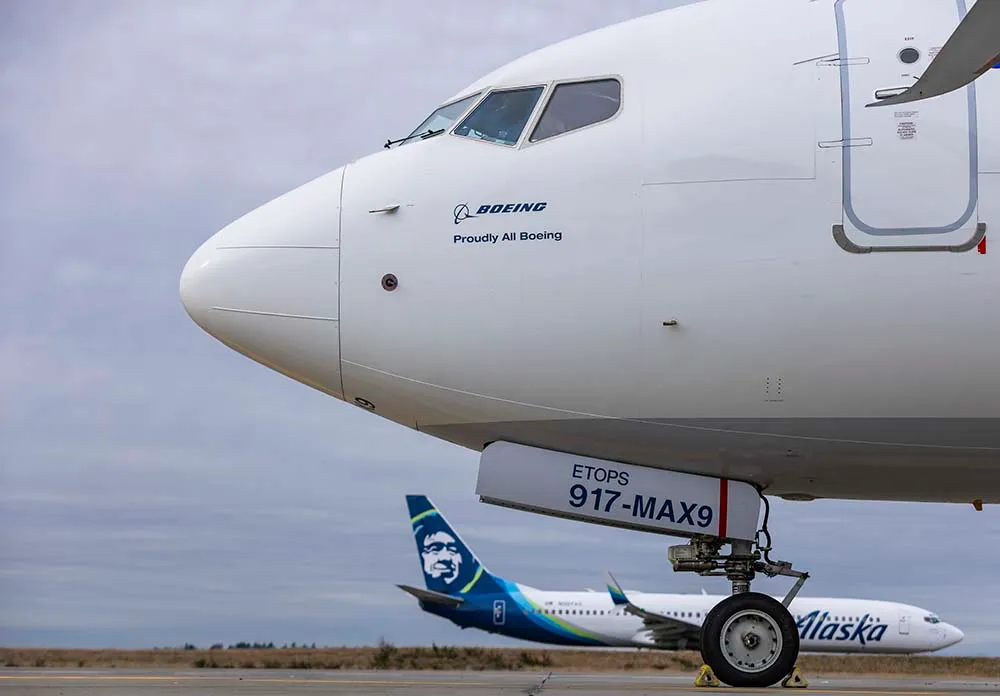

The FAA reported damage to the left engine, which was located next to the blown tire. The full extent of the damage remains under investigation. Following the incident, Alaska Airlines (AS) grounded the aircraft for maintenance.
The Boeing 737-9 MAX, registered as N967AK, remained on the ground in San Diego (SAN) as of Friday afternoon, with its next scheduled flight to Seattle (SEA) canceled.
The affected aircraft has been in service for approximately two years, having been delivered to Alaska Airlines (AS) in May 2023. It features 16 First Class seats and 162 Main Cabin seats, including 24 Premium Class seats.
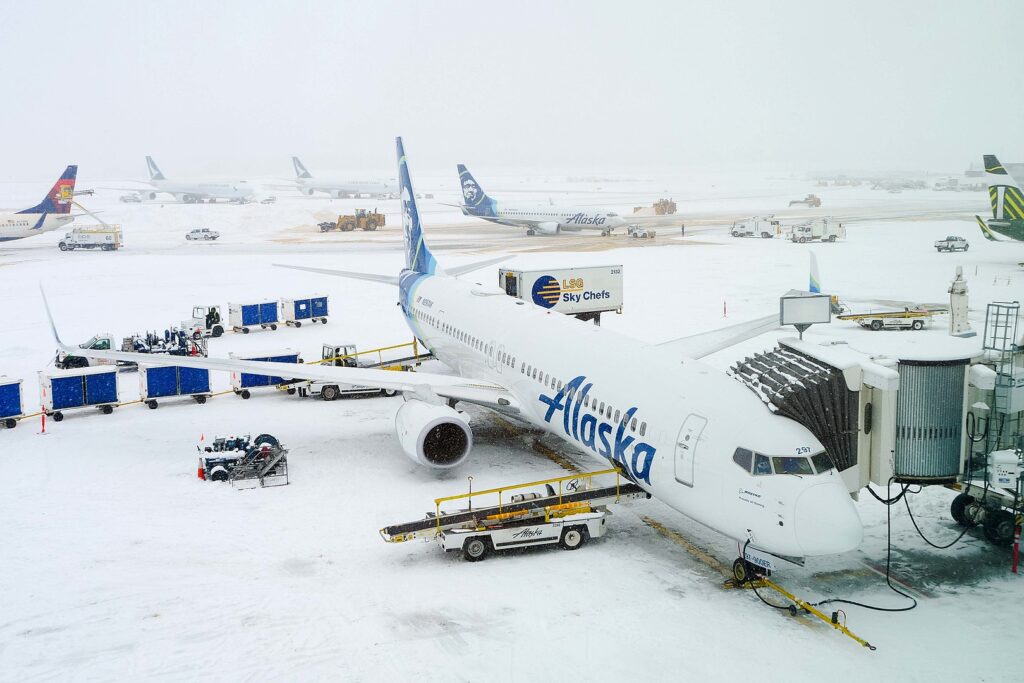

Similar Recent Incidents
This event follows several similar occurrences in the past year.
In November, another Alaska Airlines (AS) Boeing 737-900 experienced tire failure during takeoff from Washington Dulles International Airport (IAD) but completed its flight to Los Angeles (LAX) safely.
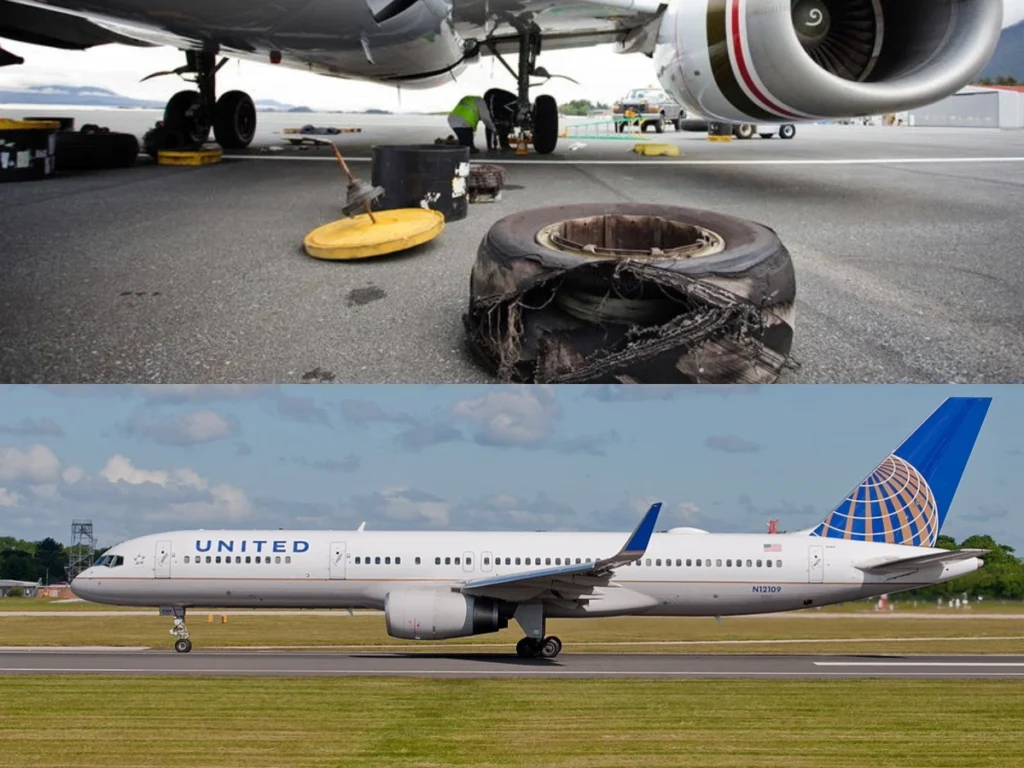
A United Airlines (UA) Boeing 757-200 lost a main gear wheel after taking off from Los Angeles (LAX), with the wheel landing in an employee parking lot.
A SkyWest (OO) CRJ-900 operating as Delta Connection (DL) safely landed in Minneapolis (MSP) after a tire blew during takeoff in Grand Rapids (GRR). Additionally, an American Airlines (AA) flight experienced a tire blowout during takeoff preparations, causing smoke and sparks on the runway before the tires caught fire as the plane stopped.

Bottom Line
Tire failures like blowouts or bursts occasionally happen despite advanced engineering and strict upkeep protocols. These incidents create substantial challenges, compromising aircraft handling, triggering additional mechanical problems, and sometimes resulting in major accidents.
Such events present serious difficulties for Pilots and ground staff while imposing considerable financial consequences on airlines.
Pilots undergo specialized training to manage such occurrences of aircraft tire failures, maintaining passenger safety through practiced protocols.
Safety during these events relies on a comprehensive approach that includes well-engineered tire construction, thorough maintenance, and skilled pilot emergency procedures that together minimize potential dangers when tire failures happen.
Stay tuned with us. Further, follow us on social media for the latest updates.
Join us on Telegram Group for the Latest Aviation Updates. Subsequently, follow us on Google News



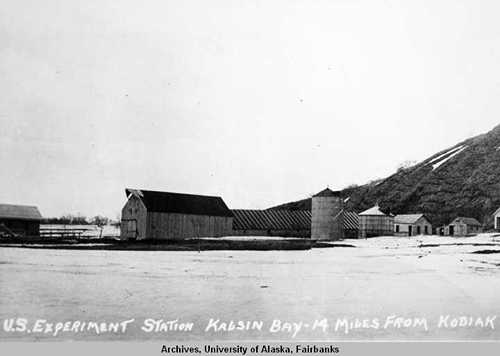 On this day in 1898, the United States Department of Agriculture would open an experimental station on Kodiak Island to experiment with cattle breeding.
The station, authorized by the 1887 Hatch Act, would open in Kalsin Bay, 14 miles to the south of present-day Kodiak
The station’s initial mission was to assess the adaptability of Galloway cattle to the island’s conditions. Different hay grains were also experimented with.
Later, Sitka Black-tailed Deer and Roosevelt Elk would be introduced to the station, deer in 1900 and elk in 1928. While initially the elk were to be released on Kodiak Island, it was determined that the possibility of competition with the cattle for winter food meant that they would instead be introduced to Afognak Island to the north.
The Kalsin Bay Station was one of several that would be established throughout Alaska.

MANLEY HOT SPRINGS — It’s so quiet in these spruce hills and tamarack swamps that 27 hours and 50 miles passed between when Forest Wagner and I said goodbye to one human being at Old Minto and hello to the next near Baker.
Space is in ample supply here on these pressed-in snow trails between towns and villages of Interior Alaska.
Forest and I are out here riding these ephemeral ribbons of blue-white moving westward, with a goal of reaching Nome.
Last Saturday, when it warmed to minus 12 degrees Fahrenheit, I lurched my loaded fat bike out of my home in Fairbanks. Saying goodbye to my wife and dogs, I rumbled eastward on a boot-packed trail that after a mile led to a plowed bike path. I then rolled through the familiar University of Alaska Fairbanks campus and onward 8 miles to Forest’s cabin.
He handed me a mug of coffee and an egg sandwich. Then we started pedaling our fat bikes down Chena Pump Road until we reached the Tanana River.

We found a trail groomed for a multi-sport winter race, turned right, and headed downstream on our home river, there half a mile wide. It was a day when the weather finally nodded toward spring. Fair-a-dise showed up with bluebird skies as the day warmed to 8 degrees Fahrenheit.
After a month of pillowy snows and crazy cold temperatures and re-telling people our new takeoff days to semi-suppressed eye rolls, we were finally unstuck from the glue of town.
If an object wasn’t hanging off our bikes, we didn’t need it. No more fiddling with the load or obsessing on the 7-day weather forecast. Just big ol’ tires humming on dry snow.
Now, five days and 145 miles later, Forest and I are digesting French toast and bacon our friend Steve O’Brien cooked for us as we wait on the dryer in the Manley washeteria. When we get a few dollar bills we will take showers.

It’s a good life here on the trail, just-add-water living at its finest. Eat everything in front of you, apply some sunblock and keep mashing on the pedals.
Steve O’Brien is one of the many people helping us move westward. In one of the most clutch moments, my wife Kristen and our friend Jen Wenrick appeared wearing headlamps on the packed snow ramp off the Tanana River in Nenana. They handed us burgers and fries from the Monderosa.
After a surprise tough day due to soft trail that had us working real hard, those burgers and Cokes were like oxygen.
There have been many other acts of kindness from Jenna and David Jonas, Steve Ketzler, Forest’s dad Joe Wagner and others. Tonic for the body and soul.

We will meet more excellent people, including some old friends, as we ratchet toward Nome.
When my satellite tracker is on, you can see our arrow creeping across the landscape here: https://share.garmin.com/NedRozell.

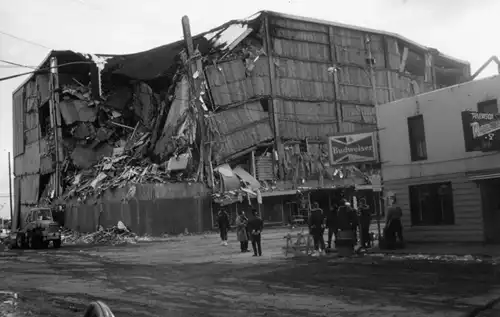
It was on this day in 1964 that a massive 9.2 earthquake in Southcentral Alaska.
The massive quake at 5:36 pm on March 27th caused much devastation throughout the region and generated a huge tsunami that inundated many communities in the region.
The quake was the largest in the history of the United States and initially killed 15 people while the resulting tsunami killed an additional 100 people in the new state and another 13 in California as well as five in Oregon.
The megathrust earthquake endured for four minutes and thirty-eight seconds and ruptured over 600 miles of fault and moved up to 60 feet in places.
The deadly quake occurred 15 and a half miles deep 40 miles west of Valdez and generated a ocean floor shift that created a wave 220 feet high.
As many as 20 other smaller tsunamis were generated by submarine landslides.

Hundreds of thousands march through London in stand against the far right

2 students killed, 7 other people injured in Tennessee bus crash during school field trip

Three Detroit Pistons Players That Have Impressed Most Without Cade Cunningham

People We Meet: Ranjit Brar’s ‘horrible’ road led him back to San Francisco

Cowboys Showing Significant Interest in Son of Philadelphia Eagles Legend

Florida High School Football Rankings: Top 25 teams – Oct. 21

How old is Bo Nix? What to know about Oregon quarterback ahead of 2024 NFL Draft

Cleary's 21 help Le Moyne down Central Connecticut State 69-64 in OT

99th annual Pony Swim held in Virginia

Indiana Members Credit Union announced as new anchor tenant at Bottleworks District
Hundreds of thousands march through London in stand against the far right
2 students killed, 7 other people injured in Tennessee bus crash during school field trip

Dem senators dodge crucial question on illegal alien accused of killing Chicago college student

EU Parliament unblocks key political hurdle in digital euro talks

Man arrested in plot to firebomb Palestinian activist’s home after undercover op
-

 Detroit, MI1 week ago
Drummer Brian Pastoria, longtime Detroit music advocate, dies at 68
-

 Movie Reviews1 week ago
‘Youth’ Twitter review: Ken Karunaas impresses audiences; Suraj Venjaramoodu adds charm; music wins praise | – The Times of India
-

 Sports1 week ago
IOC addresses execution of 19-year-old Iranian wrestler Saleh Mohammadi
-

 New Mexico6 days ago
Clovis shooting leaves one dead, four injured
-
 Business1 week ago
Disney’s new CEO says his focus is on storytelling and creativity
-

 Tennessee5 days ago
Tennessee Police Investigating Alleged Assault Involving ‘Reacher’ Star Alan Ritchson
-

 Technology6 days ago
YouTube job scam text: How to spot it fast
-

 Texas1 week ago
How to buy Houston vs. Texas A&M 2026 March Madness tickets