West
2 dead after Colorado college dorm shooting

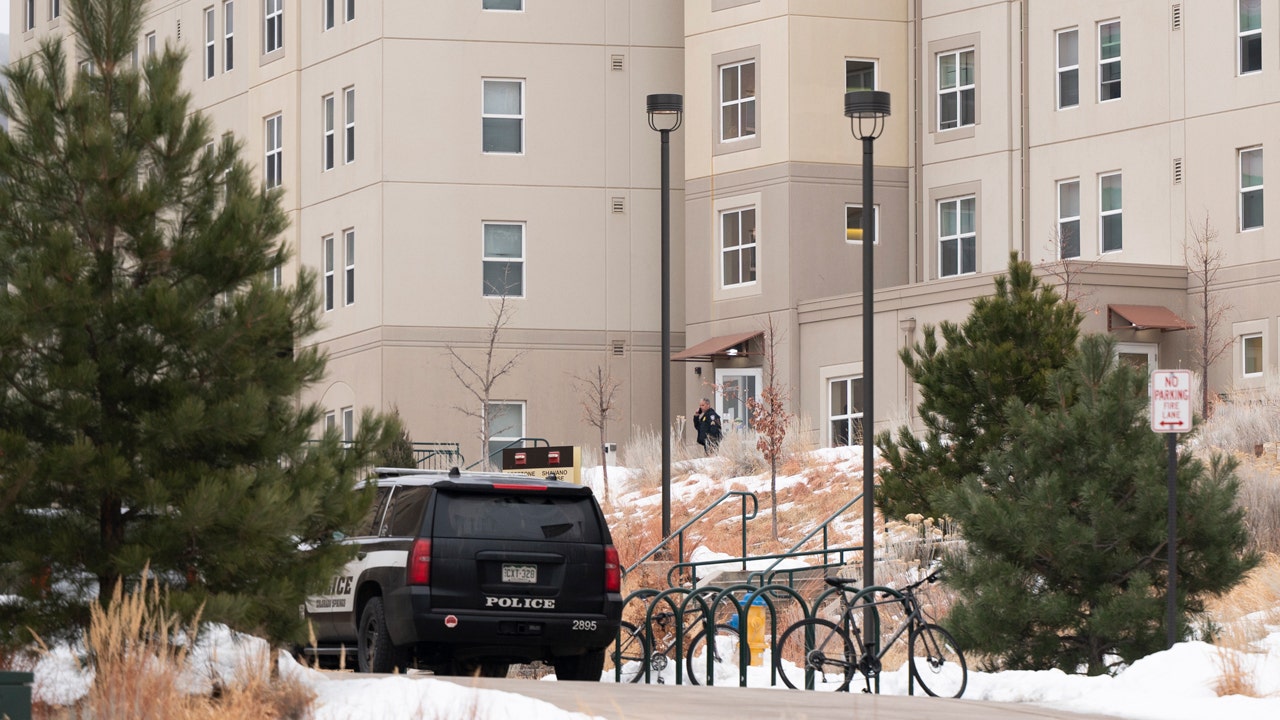
Two people who had been shot were found dead after a shooting was reported in a dorm room at a college in Colorado Springs, putting the campus on a short lockdown Friday.
Each person was shot at least once in what appeared to be an “isolated incident” at around 6 a.m. at the University of Colorado Colorado Springs, police spokesperson Ira Cronin said.
DENVER BOY, 13, CHARGED WITH MURDER IN FATAL SHOOTING OF MAN WHOSE LEG BLOCKED BUS AISLE
“We don’t believe at this point that there is any ongoing threat to the community,” he said at a briefing.
Police are seen at the University of Colorado Colorado Springs campus in Colorado Springs, Colorado, Feb. 16, 2024. (Christian Murdock/The Gazette via AP)
The coroner’s office would determine how the two people died and no other details would be released by police, who are still working to determine what happened, Cronin said.
The campus was put on a lockdown for about 1 1/2 hours after the shooting but the lockdown was later isolated to a student apartment complex on campus, school spokesperson Chris Valentine said.
That lockdown was also later lifted but the campus was closed for the day in response to the shooting at the school, which has more than 11,000 students and nearly 2,000 faculty and staff.
Read the full article from Here

Colorado
Colorado AG, environmental groups challenge Trump administration order requiring Craig coal plant to remain in operation

Dylan Anderson/Steamboat Pilot & Today archive
Colorado Attorney General Phil Weiser and a coalition of environmental groups on Wednesday asked the U.S. Department of Energy to rescind its recent order requiring a coal-burning power plant in northwest Colorado to remain operational one day before it was scheduled to close.
The aging Craig Station Unit 1 plant in Moffat County was slated to shut down at the end of 2025, but Energy Secretary Chris Wright issued an emergency order on Dec. 30 extending the plant’s life to March 30, and possibly later.
The emergency order was issued under section 202(c) of the Federal Power Act, which allows the Energy Department to keep power plants running during times of crisis, such as war or energy shortages. The move to keep the Craig plant open had been expected for weeks.
Weiser and the coalition of environmental groups, which includes the Sierra Club, Environmental Defense Fund, and Earthjustice — on behalf of GreenLatinos, Vote Solar, and Public Citizen — filed separate challenges with the department over its use of the emergency order, which both filings claim was illegal.
Wright wrote in his emergency order that Colorado and other Western states face an energy “emergency” due to a “shortage of electric energy, a shortage of facilities for the generation of electric energy, and other causes.”
The closure of coal-burning plants “could lead to the loss of power to homes,” Wright’s order states, as well as “businesses in the areas that may be affected by curtailments or power outages, presenting a risk to public health and safety.”
The Trump administration has used similar justifications under the Federal Power Act to keep open coal plants in Michigan and Washington, as well as an oil plant in Pennsylvania.
Weiser, in a press release, said there is “no evidence of an energy emergency that would require keeping Craig Unit 1 open,” adding that the decision will “result in millions of dollars of unnecessary costs that could be passed on to rural households and businesses already struggling with high electricity bills.”

In their own press release, leaders from the environmental groups said that forcing the Craig plant to stay operational will both increase utility costs and negatively impact the environment. They said the emergency order also goes against the wishes of the plant’s owners.
“Colorado communities, regulators, and utilities spent years planning a lawful, cost-effective transition away from coal,” said Vote Solar Regulatory Director for the West Kate Bowman. “Overriding that process at the eleventh hour erodes public trust and leaves families paying more for decisions made without their input.”
Craig Station Unit 1 is co-owned by Tri-State Generation and Transmission Association, a utility cooperative, alongside other energy providers, including Xcel Energy, the Platte River Power Authority and PacifiCorp.
Tri-State originally decided to close the more than 40-year-old plant by the end of 2025 as part of its move to more environmentally friendly energy sources. It plans to close Craig Station’s two other coal-burning plants by 2028.
The effort is partly driven by a state law that requires large-scale utility providers to reach 100% renewable electrical energy by 2050. Tri-State is also looking to close its plants and transition to other energy sources for economic reasons.
In a statement released in response to the emergency order in late December, Tri-State said Craig Station Unit 1 had been closed down even before the Dec. 30 order due to “a mechanical failure of a valve.”
Tri-State added that keeping the plant open “will likely require additional investments in operations, repairs, maintenance and, potentially, fuel supply, all factors increasing costs.”
Tri-State CEO Duane Highley said in a statement at the time that Tri-State ratepayers will “bear the costs of compliance with this order unless we can identify a method to share costs with those in the region. There is not a clear path for doing so, but we will continue to evaluate our options.”
Both Wesier and the coalition of environmental groups, in their filing with the Energy Department, claim the department misused the Federal Power Act when it issued its emergency order and have presented no evidence of an energy emergency.
The department must respond to the filing within 30 days. Environmental groups said they will challenge the order in court if the department declines to respond or denies their request to lift the order.
The fight over the future of the Craig power station also comes amid the backdrop of the Trump administration’s broader push to support more fossil fuel production.
The U.S. The Environmental Protection Agency earlier this month rejected Colorado’s latest air-quality plan, saying that it violated federal law by forcing the closure of coal-fired power plants without the consent of plant operators. Gov. Jared Polis and Democratic lawmakers in Congress lambasted that decision.

A Hawaii-based chef was among those killed in a crash involving a private jet chartered by a Houston-based personal injury law firm in Bangor, Maine.
Nick Mastrascusa was aboard the Bombardier Challenger 600 that flipped over and burst into flames Sunday evening while attempting to take off from Bangor International Airport amid a major winter storm, according to a GoFundMe established by his family. The jet, registered to law firm Arnold & Itkin LLP, had stopped in Bangor to refuel after departing Houston and was bound for Paris, France.
Mastrascusa is one of four victims who have been publicly identified. Previously identified were Tara Arnold, a 46-year-old Houston attorney and wife of Arnold & Itkin co-founder Kurt Arnold; Jacob Hosmer, 47, a Houston-area pilot; and Shawna Collins, a Texas-based event planner. Four passengers and two crew members were reportedly on board.
“Nick touched the lives of so many in our community through his kindness, dedication, generosity and friendship,” the GoFundMe reads. “As we grieve this unimaginable loss, our hearts are with the Mastrascusa family and all who knew and loved Nick.”
Investigators say the jet crashed under unknown circumstances shortly after takeoff Sunday night amid snowy, icy conditions from an approaching winter storm, coming to rest upside down and catching fire. The National Transportation Safety Board is examining whether ice buildup contributed; the law firm said none of its partners were aboard and has not identified all passengers.
Mastrascusa was an award-winning chef and sommelier who worked at luxury hotels, resorts and private clubs, according to his professional biography. Most recently, he served as executive chef and director of food and beverage at Discovery Land’s Kūki‘o Golf and Beach Club in Hawaii, overseeing three restaurants and a wine program.
Previously, Mastrascusa trained at Johnson & Wales University and the Culinary Institute of America, launching his career at the Biltmore Hotel in Coral Gables, Fla., before rising to executive banquet chef at The Ritz-Carlton, Palm Beach.
Mastrascusa is survived by his wife, Natalia, and three children — Analani, Mateo and Noah. As of Tuesday, the fundraiser had raised more than $125,000 to help support the family’s immediate and long-term needs.

BOISE, Idaho — A bill introduced Wednesday in the Idaho House Local Government Committee would limit what cities and counties can include in local nondiscrimination rules.
The bill, sponsored by Rep. Bruce Skaug, would stop local governments from adding protections that are not already part of state law. The Idaho Family Policy Center, a conservative advocacy group, helped draft the proposal.
More than a dozen Idaho cities and counties, including Boise and Meridian, have local rules that include protections based on sexual orientation and gender identity.
Leaders with the Idaho Family Policy Center say those rules can put business owners in conflict with their religious beliefs.
“Government officials have forced bakers, photographers, florists, graphic designers, and wedding venue operators to participate in same-sex wedding ceremonies and pride festivals,” said the center’s president, Blaine Conzatti. “And that has even taken place here in Idaho… We call on the Idaho Legislature to rein in these rogue local governments by ensuring that these local antidiscrimination ordinances align with state law.”
Rep. Steve Berch said in committee that he would not be supporting the motion, arguing that the legislation is “irreconcilable with the principle that government is best when it’s closest to the people.”
Planned Parenthood Alliance Advocates echoed Rep. Berch’s sentiment, stating in a press release that the bill would take needed power away from local leaders.
“Local communities know their people, their needs, and their values better than anyone else,” Planned Parenthood Alliance Advocates wrote. “When the state strips local leaders of the ability to respond to issues and protect their residents, it isn’t preserving neutrality – it’s government overreach at best.”
The committee voted 14-2 to formally introduce the bill, which will occur at a later date.
This story has been, in part, converted to this platform with the assistance of AI. Our editorial team verifies all reporting on all platforms for fairness and accuracy.

Arkansas trustees debate over resolution that adds $15 million to athletics | Whole Hog Sports

Colorado AG, environmental groups challenge Trump administration order requiring Craig coal plant to remain in operation

Connecticut Democrats to bring back legislation giving parents control over social media

A bomb cyclone may develop this weekend. How will it impact Delaware?

South Florida celebrates Bad Bunny ahead of Super Bowl Halftime performance

Florida High School Football Rankings: Top 25 teams – Oct. 21

Cleary's 21 help Le Moyne down Central Connecticut State 69-64 in OT

How old is Bo Nix? What to know about Oregon quarterback ahead of 2024 NFL Draft

99th annual Pony Swim held in Virginia

Indiana Members Credit Union announced as new anchor tenant at Bottleworks District

Video: Their Mother Was Detained. Now a Minneapolis Family Lives in Fear.

Trump return to Iowa likely ahead of high-stakes midterms, GOP gubernatorial candidate says

Free trade or fair play? MEPs go head-to-head on Mercosur in The Ring
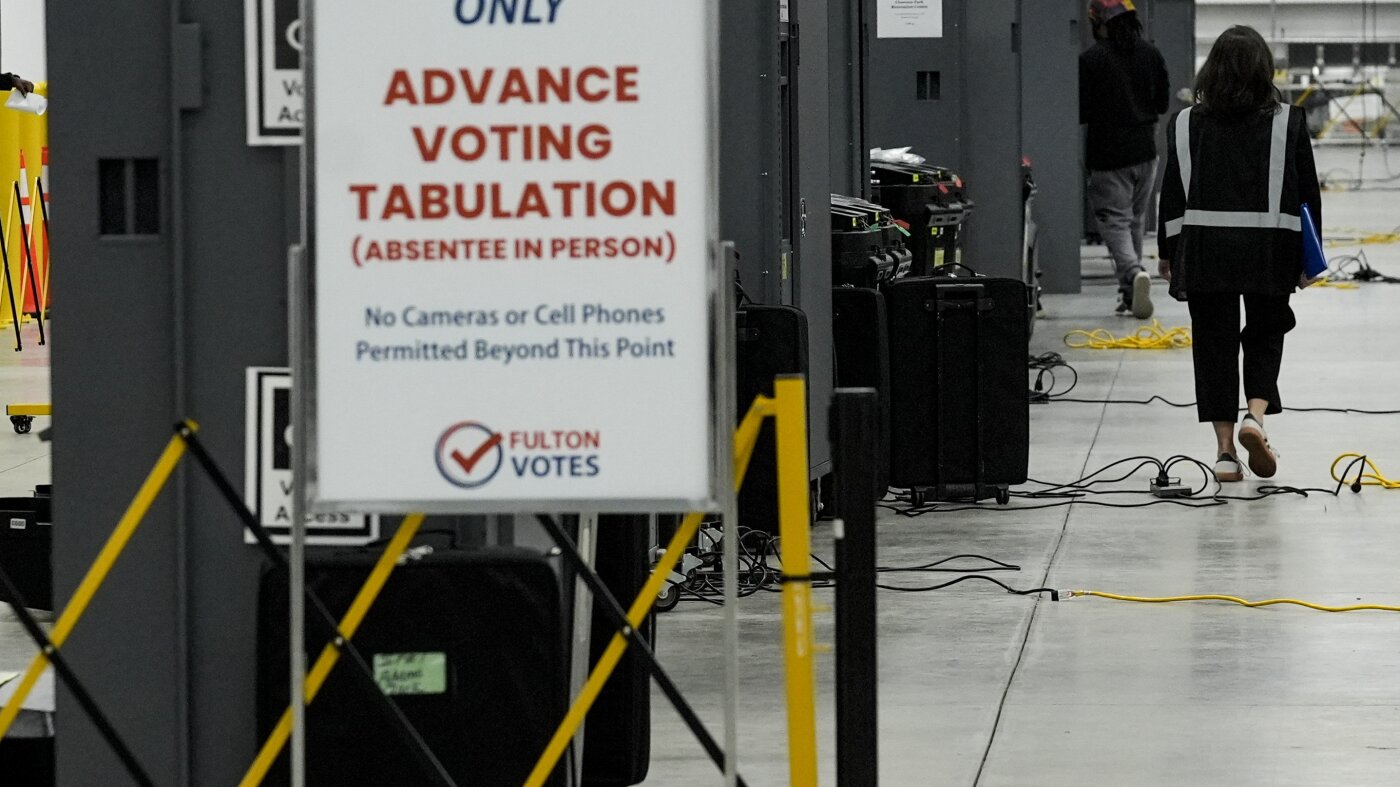
The FBI conducts a search at the Fulton County election office in Georgia

Graham pushes back on Tillis’ criticism of Noem, Miller for labeling man killed by Border Patrol a ‘terrorist’
-

 Illinois7 days ago
Illinois school closings tomorrow: How to check if your school is closed due to extreme cold
-

 Pittsburg, PA1 week ago
Sean McDermott Should Be Steelers Next Head Coach
-

 Pennsylvania3 days ago
Rare ‘avalanche’ blocks Pennsylvania road during major snowstorm
-

 Lifestyle1 week ago
Nick Fuentes & Andrew Tate Party to Kanye’s Banned ‘Heil Hitler’
-

 Sports1 week ago
Miami star throws punch at Indiana player after national championship loss
-

 Technology6 days ago
Ring claims it’s not giving ICE access to its cameras
-
 Science1 week ago
Contributor: New food pyramid is a recipe for health disasters
-
 Politics3 days ago
Trump’s playbook falters in crisis response to Minneapolis shooting