Technology
Samsung’s inexpensive Tab A9 Plus is now on sale in the US

/cdn.vox-cdn.com/uploads/chorus_asset/file/25222880/Galaxy_Tab_A9_A9_dl1_wider.jpg?ssl=1 "Samsung’s inexpensive Tab A9 Plus is now on sale in the US")
The A9 Plus offers an 11-inch screen with a smooth 90Hz refresh rate — a rare feature at this price and definitely something you won’t find on an entry-level iPad. It has a 5-megapixel front-facing camera, an 8-megapixel rear camera, and comes with a 7,040mAh battery. The Wi-Fi version comes with either 4GB RAM / 64GB storage or 8GB RAM / 128GB of storage; the 5G version is just offered in the 4GB / 64GB configuration.
For well under $300, that’s an attractive deal on paper, but the A-series tablet misses out on a couple of notable features: S Pen stylus compatibility and an IP rating for water and dust resistance. You’ll have to step up to the Tab S9 series, which starts at $449, if you want either of those things.
There’s one more thing the A-series is missing, too: color. The A9 Plus is available in a very straight-laced navy, graphite, or silver. If you’re looking for mint or lavender, well, you’ll have to pay up.


Netflix’s prices just went up, with its cheapest, ad-supported tier now reaching $8.99 / month (up from $7.99 / month), according to an updated support page spotted earlier by Android Authority. The standard and premium plans are also getting a hike, going from $17.99 to $19.99 / month and $24.99 to $26.99 / month, respectively.
Netflix didn’t share its reasoning for the price hike this time around, as it last cited delivering “more value for our customers.” It’s also unclear when the price hike will go into effect for existing subscribers. The Verge reached out to Netflix with a request for comment but didn’t immediately hear back.

NEWYou can now listen to Fox News articles!
If you’ve ever wondered how platforms keep up with millions of users at once, this is where things get real. Roblox has over 144 million daily users. That scale creates a massive challenge. Harmful content does not always show up in obvious ways. Sometimes, it is the combination of things that creates the problem. Now, the company is rolling out a new system designed to catch exactly that. But first, it helps to understand what Roblox actually is.
Sign up for my FREE CyberGuy Report
Get my best tech tips, urgent security alerts, and exclusive deals delivered straight to your inbox. Plus, you’ll get instant access to my Ultimate Scam Survival Guide – free when you join my CYBERGUY.COM newsletter
MEXICAN ILLEGAL ALIEN ALLEGEDLY USED ROBLOX CURRENCY TO SOLICIT EXPLICIT CONTENT FROM KIDS UNDER 10
Roblox rolls out a new AI system that analyzes entire scenes in real time to detect harmful content across its platform. (Brent Lewin/Bloomberg via Getty Images)
What is Roblox
Roblox is an online platform where people can create, share and play games built by other users. Instead of being a single game, it is a massive ecosystem of user-generated experiences that range from simple obstacle courses to complex virtual worlds.
What makes Roblox different is how much control users have. Players are not just consuming content. They are constantly creating it in real time through avatars, text and interactive environments. That constant creation is exactly what makes moderation more complex.
A smarter way to spot harmful content
Most moderation tools look at one thing at a time. A message. An image. An avatar. That approach can miss the bigger picture. Speaking exclusively with CyberGuy, Matt Kaufman, Roblox’s chief safety officer, explained the shift clearly:
“We already moderate all of the objects in a virtual world, but how they come together and interact has long been a challenge. Our new real-time multimodal moderation system looks at an entire scene simultaneously from the user’s point of view – including 3D objects, avatars, and text – capturing all of these elements together in a specific moment to assess whether the combination of content types breaks our rules.”
This is called multimodal moderation. Instead of analyzing pieces in isolation, it looks at everything together in real time.
Why older systems were missing the problem
Here is the issue platforms have faced for years. Something can look harmless on its own. But when combined with other elements, it can become harmful or violate rules.
Kaufman puts it this way: “Traditional AI moderation systems, which moderate one object at a time, can lack context and miss combinations that could be problematic in ways that the individual items are not. This model understands the relationship between different objects and how they come together to catch nuanced violations that standard filters may miss.”
That missing context is exactly what bad actors have been exploiting.
What this new AI actually catches
This system focuses on scenarios that previously slipped through. Think about games where users can draw freely or customize avatars. A drawing alone might seem fine. An avatar alone might seem fine. But together, they could create something inappropriate.
Kaufman explains how the system handles that: “The system can detect combinations of objects that may violate our community standards. For example, some games allow free-form drawing. This real-time multimodal moderation system would look at the drawing, avatar, and 3D setting together and assess it holistically, in order to catch and shut down servers with violating content.”
Right now, the rollout is already targeting problematic avatars and inappropriate drawings.
LOUISIANA SUES ONLINE GAMING PLATFORM ROBLOX FOR ALLEGEDLY ENABLING CHILD PREDATORS
Roblox officials say the new system aims to proactively protect children while maintaining gameplay for compliant users. (Riccardo Milani/Hans Lucas/AFP via Getty Images)
The scale is bigger than you think
This is not a small tweak. It is operating at a massive scale. Roblox says it is already shutting down about 5,000 servers per day for violations.
Kaufman says that reflects the reality of the platform: “With 144 million users connecting and creating on Roblox every single day, our safety systems must be as agile and dynamic as our creators themselves.”
He also adds an important reality check: “No system is foolproof against bad actors, so we are committed to doing our best to stay ahead of those attempting to bypass safety protocols, and we are working to scale this new multimodal system to capture and monitor 100% of playtime.”
What changes for everyday Roblox users
If you or your kids use Roblox, this system will likely work in the background without you noticing. But it changes how quickly harmful behavior gets stopped.
“When problematic behavior repeatedly occurs in a single game instance, this new system is designed to automatically detect and shut down those specific servers in real time, greatly reducing the number of users who might be exposed to that behavior.”
That last part matters. Instead of shutting down an entire game, it targets only the problem.
“By targeting only the violating server rather than the entire experience, we can help prevent violations from reaching more users while allowing well-intentioned players to continue their sessions uninterrupted.”
What this means for parents
For parents, this is a big shift toward proactive safety. Instead of waiting for reports, the system acts in real time.
Kaufman explains: “We want parents to know that we aren’t just reacting to reports – we are proactively building some of the most sophisticated AI moderation systems in the world to help protect their children in real time.”
There is also an important layer of protection during gameplay: “We can now evaluate a combination of problematic text, 3D drawings, or avatar movements in real-time and shut down that specific server immediately – often before a child ever encounters it.”
Still, Roblox stresses that technology alone is not enough. “No system is perfect, and we encourage parents to talk to their children about online safety.”
Ways parents can help keep kids safe
Even with advanced AI moderation, a few simple steps can help you stay one step ahead and keep your child safer online.
1) Talk about what your child is doing online
Ask what games they play and who they interact with so you stay involved.
2) Encourage reporting anything that feels off
Remind your child to report behavior that seems inappropriate or uncomfortable.
3) Check privacy and safety settings together
Review account settings to limit who can chat or interact with your child.
4) Set clear boundaries for gameplay
Agree on rules around screen time and which types of experiences are allowed.
ROBLOX CEO RESPONDS TO SCRUTINY OVER CHILD SAFETY: ESTABLISHING THE ‘GOLD STANDARD’ FOR SAFETY
Roblox targets nuanced rule-breaking by analyzing avatars, text and environments together instead of in isolation. (JasonDoiy/Getty Images)
How Roblox avoids false positives
One concern with any AI system is getting it wrong. Roblox says it is actively working to improve accuracy over time.
“We have a continuous evaluation loop set up to measure false positives from the multimodal moderation system, and we are training the system with that feedback to help it catch those types of examples in the future.”
User feedback also plays a role. “Our creators and users are often the ones to spot new trends emerging… This type of reporting is the most effective way for users to help protect the community.”
AI plus human oversight still matters
Even with automation, humans are still involved.”We already use a combination of AI and a team of safety experts to review content uploaded to the platform before it is ever shown to users.”
The new system adds another layer, not a replacement. “This real-time multimodal moderation system is an additional layer and is fully automated in its evaluation of the entire scene.”
What about privacy and fairness?
Any system this powerful raises questions about privacy and overreach. Roblox says it is limiting how data is used: “Our systems and processes are designed so that data collected for safety is used only for safety purposes.”
On fairness, the company points to ongoing training and transparency: “We are focused on ensuring our safety systems are both highly effective and fair.”
They are also giving creators more visibility: “We have introduced a new chart in the creator dashboard that allows developers to see exactly how many of their game’s servers have been shut down.”
Where this is heading next
This system is just getting started. One future focus is detecting recreations of real-world events that may cross the line.
Kaufman explains why context matters here: “Standard filters might see a specific building or a line of text in isolation and not recognize a violation. However, real-time multimodal moderation can understand the relationship between an environment, the way avatars are interacting within it, and the accompanying chat.”
There is also a push to go beyond shutting down servers: “We’re working on ways to identify specific bad actors so we can remove them without disrupting the experience for the vast majority of our well-intentioned players.”
Kurt’s key takeaways
This is a major shift in how online platforms approach safety. Instead of reacting after something goes wrong, Roblox is trying to stop harmful behavior before most users ever see it. That is a big promise, especially at this scale. At the same time, it highlights a deeper question about the future of online spaces. As AI becomes more involved in moderating behavior, the balance between safety, fairness and freedom will only get more complicated.
So here is the question worth thinking about: If AI is now deciding what crosses the line in real time, how much control are we comfortable handing over to it? Let us know by writing to us at Cyberguy.com
CLICK HERE TO DOWNLOAD THE FOX NEWS APP
Sign up for my FREE CyberGuy Report
Get my best tech tips, urgent security alerts, and exclusive deals delivered straight to your inbox. Plus, you’ll get instant access to my Ultimate Scam Survival Guide – free when you join my CYBERGUY.COM newsletter
Copyright 2026 CyberGuy.com. All rights reserved.
Technology
Intel and LG Display may have beaten Apple and Qualcomm with the best laptop battery life ever

Just how little power might it consume? Notebookcheck has tested a version of the laptop with that LG Display screen and a new Intel Panther Lake chip — and it appears to be the most efficient laptop that’s ever gone through its Wi-Fi web browsing test. At idle, the Core Ultra 325 laptop drew as little as 1.5 watts, and lasted nearly 27 hours of web browsing despite only housing a 70 watt-hour pack. That’s well shy of the 99.5Wh Dell has sometimes crammed into its 16-inch models.
That’s more battery life than Notebookcheck has gotten out of any MacBook or MacBook Pro, and apparently more than all but two other laptops since it started running this test in 2014. And of those two laptops, one relied on a Qualcomm Snapdragon X Plus chip, a larger 84Wh battery, and a mere 60Hz screen — while the other had two batteries for a total of 149Wh and a 60Hz screen as well.
I should caution you that we typically see much less battery life in an actual workday than we do in fixed battery life tests. But compared to other laptops, this Dell + Intel + LG Display combo seems like the new battery life champ. Note that Dell also sells it with a higher-res tandem OLED screen, though. To get the best battery life, you’ll need to settle for 1920 x 1200, no OLED, and no touchscreen.
While Dell may deserve a lot of credit as the system integrator, this tech may not be exclusive to Dell for long. LG Display announced that it’s become the first in the world to mass-produce a 1–120Hz laptop LCD panel (which it’s branding as Oxide 1Hz), and plans to mass-produce an OLED version in 2027. Intel, too, isn’t just working with one display vendor: last October, it announced it was working with Chinese panel maker BOE on 1Hz refresh rate computers too.
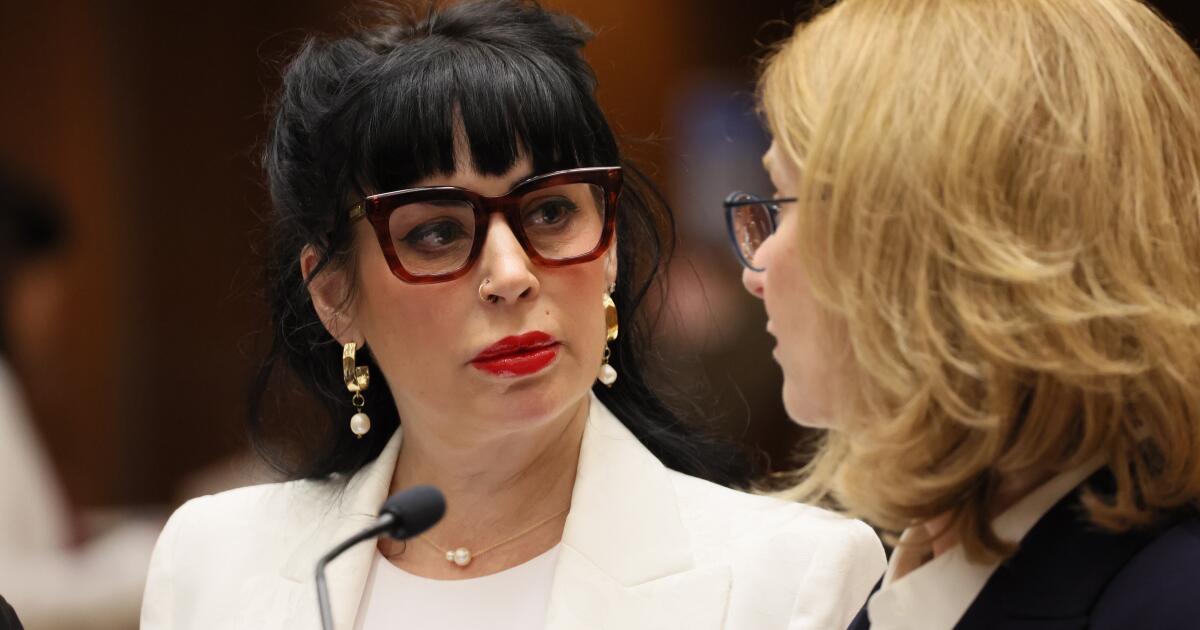
LAPD chief backed cops who shot at author, Weezer bassist’s ex; commission overruled him

What European Luxury Can Learn From American Fashion

Bill Maher on getting the Mark Twain Prize for humor: ‘Like an Emmy, except I win’

Prep sports roundup: Redondo Union takes down No. 1 Mira Costa in boys volleyball

Rubio joins crucial G7 talks as Iran war set to dominate second day

Florida High School Football Rankings: Top 25 teams – Oct. 21

How old is Bo Nix? What to know about Oregon quarterback ahead of 2024 NFL Draft

Cleary's 21 help Le Moyne down Central Connecticut State 69-64 in OT

99th annual Pony Swim held in Virginia

Indiana Members Credit Union announced as new anchor tenant at Bottleworks District
Rubio joins crucial G7 talks as Iran war set to dominate second day

A surprise resignation could open the door for an independent to win a Montana Senate seat

Video: Savannah Guthrie Says She Believes Her Mother Was Taken for Ransom

Stefanik grills University of Michigan leader on lack of audit after string of Chinese national arrests

Photos: More than one million displaced by Israel’s evacuations in Lebanon
-

 Detroit, MI1 week ago
Drummer Brian Pastoria, longtime Detroit music advocate, dies at 68
-

 Science1 week ago
How a Melting Glacier in Antarctica Could Affect Tens of Millions Around the Globe
-

 Movie Reviews1 week ago
‘Youth’ Twitter review: Ken Karunaas impresses audiences; Suraj Venjaramoodu adds charm; music wins praise | – The Times of India
-
 Science1 week ago
I had to man up and get a mammogram
-

 Sports6 days ago
IOC addresses execution of 19-year-old Iranian wrestler Saleh Mohammadi
-

 New Mexico4 days ago
Clovis shooting leaves one dead, four injured
-

 Texas7 days ago
How to buy Houston vs. Texas A&M 2026 March Madness tickets
-

 Tennessee3 days ago
Tennessee Police Investigating Alleged Assault Involving ‘Reacher’ Star Alan Ritchson