Technology
Roku is looking into complaints about washed-out HDR streams


Roku is investigating user reports of washed-out colors when streaming HDR content from Disney Plus, according to a thread on the Roku issue tracking board. However, the issue seems to go beyond that, affecting almost any app for Roku TVs, suggest user comments on the thread over the last week. The problem appears to be tied to a recent Roku software update.
A community moderator called RokuEmmanuel-D writes in an update from Thursday that the company is “investigating the Disney Plus HDR content that was washed out after the recent update,” and asks for community members to share examples and details about what content is being affected, which model of TV they have, and what software version they’re on.
The first several comments only report the problem in Disney Plus, and only on TCL TVs, with users saying that app menus and that colors are okay in non-HDR content. But as one user shows in the above images of Disney Plus show Andor taken from two different TVs, normally vibrant colors have instead taken on a grayish pall.
Later comments report the same problems with YouTube TV, Netflix, Apple TV Plus, Amazon Prime Video, and others. One said they saw the issue with their Hisense-branded Roku TV, rather than a TCL model. The same person reported HDR working fine over HDMI from their PS5, while another said the signal from their 4K Blu-Ray player looked good, implying the issue is limited to Roku streaming, rather than any deeper TV firmware issues. People in the thread said their TVs — Hisense and TCL — were on Roku software version 14.5.
Washed-out or flat colors can already be an issue when watching HDR content on a TV that’s not bright enough to produce a good HDR image — that was the reason I turned the feature off the old, cheap TCL Roku TV I once owned. But these reports describe something beyond that, with Roku producing desaturated, almost black-and-white images when HDR is on. It’s unclear how widespread the problem is, but there are recent Reddit threads that seem to fit the bill, mentioning grayish or black-and-white picture that doesn’t affect streaming app menus.
Roku didn’t immediately respond to The Verge’s request for comment.



Google general counsel explains AI-powered phishing rise
Halimah Delaine Prado, Google General Counsel, reveals the rise of AI-powered phishing scams originating from China’s ‘outsider enterprise.’ She explains how these criminals use artificial intelligence to create highly convincing fake websites, impersonating trusted brands like T-Mobile to defraud hundreds of thousands of Americans, causing millions in losses. Prado highlights Google’s strategy to combat these evolving threats.
NEWYou can now listen to Fox News articles!
There are few emails that make your stomach drop faster than one about “new privacy settings.” That usually means a company has moved another data switch, renamed a control or tucked a new choice inside an account menu you rarely visit. Google is now rolling out one of those changes for Search services. The setting is called Search Services History. It controls whether Google saves your activity from Search services when you are signed into your Google Account.
That may sound routine at first. Most of us already know Google can save search history. However, this update goes beyond the old idea of typed searches in a box. Google says Search Services History can include images you upload, files you ask about, voice searches, Search Live recordings, Translate speaking practice audio and other interactions with Search services.
The part that should make you pause is the Save Media setting. When it is turned on, Google can save media from your Search services interactions. That saved media may be used to improve Google’s AI models and technologies. In other words, the random photo you searched with Google Lens or the voice recording you used in a Search feature may help improve Google’s AI.
GOOGLE TURNS OLD PHONES INTO CLOUD SERVERS
Google’s new Search services pop-up tells you media from your searches may now be saved in your history. (Harun Ozalp/Anadolu via Getty Images)
Free live CyberGuy class: Sick of Spam? Join us July 22
Join us Wednesday, July 22, at 1 PM ET for a free CyberGuy Live class that will help you cut down on robocalls, spam texts, junk email and other unwanted messages. Kurt “CyberGuy” Knutsson will walk you step by step through simple ways to filter spam, clean up your inbox and recognize the messages that could put your personal information at risk. No technical experience is needed. You’ll also receive our spam-stopping checklist, and every registrant will get a link to the class recording afterward.
Reserve your free spot today at CyberGuyLive.com.
APPLE AI SECURITY UPDATE PROVES HACKERS MOVE FAST
What Google’s Search Services History can save
Google says Search Services History may include your searches, results you view, AI Mode responses, voice search recordings, Search Live transcripts, Google Lens images, uploaded files and some information tied to your activity.
Maybe you used Google Lens to identify a plant. Perhaps you uploaded an image to search for a product. You might have used Translate to practice before a trip. Or maybe you asked a question by voice because your hands were full. All of that can feel harmless in the moment. Still, the bigger issue is where that data can go after it is saved.
Google says saved media may help you revisit past visual searches or continue a Search Live conversation. That can be useful. However, Google also says saved media may help develop and improve AI models and technologies. That is the trade-off. You may get more personalized features. Google may get more personal inputs from the tools you already use.
CHRIS HANSEN URGES PARENTS TO TEACH CHILDREN ABOUT ONLINE PREDATORS BEFORE ALLOWING INTERNET ACCESS
Why this Google AI setting deserves your attention
This is the kind of privacy change that can slide right past you. The language sounds helpful. The setting lives inside account controls. The rollout happens gradually, so you may not see it right away. That is exactly why you should check.
Google says the new settings are based on your prior choices for Web & App Activity and Search Personalization. If those were on, the new Search Services History setting may also be on. If your prior settings were off, the new one should be off too. That sounds fair enough, but it still puts the work on you.
Also, turning off Save Media does not automatically wipe everything that was already saved. Google says previously saved media may continue to be used to improve its technologies unless you delete it from your account. If saved media has already been selected to train AI models, Google says it is no longer connected to your account and may be kept for up to four years.
That is the part I would not ignore. Once your media moves into that AI-training pipeline, deleting the original activity may not pull it back.
The Search Services History setting appears inside Google’s My Activity page, where you can review what Google saves. (AP Photo/Seth Wenig, File)
How to opt out of Google’s Search AI data training setting
You can check this from a phone or computer, but I recommend using a computer if you can. The account settings are easier to read.
- Open a browser and go to myactivity.google.com.
- Make sure you are signed into the account you use for Search, Gmail, YouTube or Android. If you have more than one Google Account, repeat these steps for each one.
- Look for the Search Services History section. If you do not see it yet, Google says the new settings are still rolling out. In that case, your Search history may still be controlled by Web & App Activity.
- If Search Services History is turned on, you should see a Save Media subsetting.
- Uncheck the box next to Save Media if you do not want Google saving media from your Search services interactions.
- If you want to go further, turn Search Services History off. Google says you can choose Turn off or Turn off and delete activity.
- To remove older items, go back to Search Services History and select View and delete saved history. Review what appears there, then delete activity you do not want saved.
- If Search Services History has not reached your account yet, go to My Activity and review Web & App Activity. That may still control some Search services history until the rollout reaches you.
- Google also has a Personalized Recommendations setting for Search services. This can affect how Search services personalize results, feeds and AI responses based on your activity. You can review it in your Google Account under Data & privacy, then Personalization settings.
What happens after you turn Save Media off
Turning off Save Media stops Google from saving media from future Search services interactions as part of Search Services History. However, it does not shut down every kind of Search history. Text-based activity, transcripts and some AI responses may still be saved if Search Services History remains on.
Also, Google says media from your future interactions can still be used to respond to you and help keep services safe. The key difference is that future media should not be used to train Google’s generative AI models unless you provide feedback. That is a meaningful distinction, but it isn’t the same as using Google with no data collection at all.
You should also know that Save Media does not control everything across Google. It does not cover separate activity settings for Gemini Apps, YouTube, NotebookLM or Google Voice. Those services have their own controls.
Kurt’s key takeaways
Google’s new Search Services History setting is worth checking now, especially if you use Lens, voice search, Translate or AI Mode. The Save Media box is the one I would look for first. If you do not want your images, files, audio or video saved for future AI improvement, turn it off. Then go one step further and review old activity. Turning off a setting usually protects future data, but past items may still sit in your account unless you delete them. Finally, repeat the process for every Google Account you use. Many of us have a personal account, a work account or an old account still signed in somewhere.
The Save Media checkbox is the key setting to turn off if you do not want images, files, audio and video saved for AI training. (Kurt “CyberGuy” Knutsson)
Would you keep using Google Lens the same way if you knew your image searches could help train AI for years? Let us know by writing to us at Cyberguy.com
CLICK HERE TO DOWNLOAD THE FOX NEWS APP
Sign up for my FREE CyberGuy Report
- Get my best tech tips, urgent security alerts and exclusive deals delivered straight to your inbox.
- For simple, real-world ways to spot scams early and stay protected, visit CyberGuy.com – trusted by millions who watch CyberGuy on TV daily.
- Plus, you’ll get instant access to my Ultimate Scam Survival Guide free when you join.
Copyright 2026 CyberGuy.com. All rights reserved.

Apple’s self-driving car program never really got off the ground, but it may have been what made the company’s chips the powerful AI performers they are. Early in the development of the self-driving platform, Apple realized that it would need powerful on-device AI processing. While the car processor was never finished, as Mark Gurman details in his latest Power On newsletter, it did lead to the development of the Neural Engine, the backbone of Apple’s on-device AI processing.
The Neural Engine made its debut with the iPhone X and the A11 Bionic. In those early days, it was primarily used for computer vision, powering FaceID, Animoji, and augmented reality features. But by laying the groundwork for on-device AI processing, Apple established itself as an early leader by bringing the Neural Engine to desktops with the M-series chips. While Apple’s AI software efforts have lagged behind the rest of the industry, its hardware has been impressive. It’s also what has allowed Apple to tout its privacy features, since less data is sent to the cloud.
Apple is making its AI hardware a cornerstone of its strategy going forward. According to Gurman, the company is skipping the Pro, Max, and Ultra versions of its upcoming M6 chip. Instead, it’s accelerating development of the M7, which should arrive in the first half of 2027 with significant Neural Engine upgrades. The M7 Ultra is expected to be the basis for a new server product from Apple as well, with support for up to 1.5TB of RAM.

NEWYou can now listen to Fox News articles!
A cockroach in a tiny scuba suit sounds like something you would run from, not something you would send into a disaster zone. Yet scientists say this strange little setup could one day help rescue teams search places people and larger robots cannot safely reach.
Researchers from NTU Singapore and Waseda University have developed a flexible diving suit for cyborg cockroaches. The suit lets the insects survive and move underwater, as well as through low-oxygen spaces, for up to three hours.
The study was published in Nature Communications. The goal is to expand how cyborg insects could help after floods, earthquakes or other disasters where rubble, drains and tight spaces can block access.
US MILITARY DEPLOYS MTVRS, AIRLIFTS AID TO VENEZUELA FOLLOWING DEADLY EARTHQUAKES
The tiny diving suit delivers oxygen to the cyborg cockroach, helping it move underwater for up to three hours. (NTU Singapore)
Free live CyberGuy class: Sick of Spam? Join us July 22
Join us Wednesday, July 22, at 1 PM ET for a free CyberGuy Live class that will help you cut down on robocalls, spam texts, junk email and other unwanted messages. Kurt “CyberGuy” Knutsson will walk you step by step through simple ways to filter spam, clean up your inbox and recognize the messages that could put your personal information at risk. No technical experience is needed. You’ll also receive our spam-stopping checklist, and every registrant will get a link to the class recording afterward.
Reserve your free spot today at CyberGuyLive.com.
How the cyborg cockroach diving suit works
A cyborg cockroach is a living insect fitted with tiny electronics that can guide its movement. Unlike a small artificial robot, it uses its own muscles to walk. That means it needs far less battery power than a robot that depends on motors. However, cockroaches still need air. They breathe through small openings called spiracles. Once submerged, they cannot pull oxygen from water.
That is where the cyborg cockroach diving suit comes in. The suit has an oxygen-generation tank, a flexible waterproof shell and four silicone oxygen tubes. Together, those parts keep water out while sending oxygen directly to the cockroach’s breathing openings.
The oxygen tank is 3D-printed from a clear plastic-like resin. Inside, researchers placed a sponge treated with manganese dioxide. They then added a small amount of diluted hydrogen peroxide. That chemical reaction slowly releases oxygen. From there, the oxygen travels through the suit and into tubes attached to the cockroach’s spiracles. In other words, the insect gets its own tiny oxygen system. The researchers compare it to the tank used by human divers.
SPEND LESS TIME CLEANING YOUR POOL THIS SUMMER WITH BEATBOT ROBOT CLEANERS — UP TO 36% OFF
Why scientists turned a cockroach into a rescue robot
The team tested the suit on the Madagascar hissing cockroach. That species is often used in cyborg insect research because it is large, sturdy and wingless. The suit turns the cyborg insect from a land-based crawler into an amphibious rescue robot that can move across dry and wet terrain.
That could help in places where normal robots struggle. A disaster site may include collapsed concrete, standing water, blocked drains and narrow gaps. A small insect-guided system could move through those spaces while future versions carry sensors or cameras. The idea may make your skin crawl. Still, the engineering is impressive. Researchers are using the cockroach’s natural movement and adding a way for it to keep breathing underwater.
The tiny onboard controller receives computer commands that help guide the cyborg cockroach’s movement during testing. (NTU Singapore)
What happened when cyborg cockroaches went underwater
With the diving suit, the cyborg cockroaches stayed active underwater for up to three hours. Without the suit, a control cockroach suffocated within about two minutes during testing. The researchers also tested the insects in plastic tunnels that simulated tough rescue conditions. One setup included a carbon dioxide-filled section followed by a water-filled section. The cyborg cockroaches wearing the suit made it through.
The team also tested narrow underwater gaps. With implanted electronics instead of a bulky backpack, the cyborg cockroach moved through a 2-centimeter-high crevice. That is the kind of space where many small robots could get stuck.
How cyborg insects could help search and rescue teams
The biggest takeaway is that rescue robots may not always look like machines. In some cases, they may use a living insect’s body and add technology around it. A cyborg cockroach can crawl through debris, squeeze into tight spaces and use very little power. Add underwater movement, and it becomes more useful in flooded disaster zones.
That could help after heavy rain, earthquakes or infrastructure failures. Future versions could inspect flooded pipes, drains, tunnels or damaged buildings. The researchers are still improving the system. They want to test it in more disaster-style environments, make the suit more durable and add sensors and navigation tools for field use.
What this means to you
You probably will not see cyborg cockroaches crawling around your neighborhood anytime soon. This is still research, not a rescue tool ready for everyday emergency crews.
However, it shows where search technology may be heading. Rescue teams need tools that can reach places humans cannot safely enter. If a small living insect can carry electronics, move through rubble and keep going underwater, it could become part of a larger rescue system.
That could eventually mean faster inspections after floods, better access inside damaged buildings and more options when every minute counts.
Kurt’s key takeaways
A cyborg cockroach in a diving suit sounds wild, but the reason behind it is serious. Disaster zones can be full of tight spaces, toxic air and standing water. Those conditions can stop people, drones and many small robots. This research gives scientists a new way to think about rescue technology. Instead of building every part from scratch, they are using the cockroach’s natural movement and adding the missing piece: underwater breathing. To me, the big question is what happens when this kind of technology gets sensors, cameras and better navigation. That could turn a creepy little crawler into a tool that helps save lives.
Would you be comfortable with cyborg insects being used in search-and-rescue missions if they could help find people faster? Let us know by writing to us at Cyberguy.com
Rescuers work at the site of a collapsed building complex in the aftermath of earthquakes, in La Guaira, Venezuela, on Friday. (Reuters/Ricardo Arduengo)
CLICK HERE TO DOWNLOAD THE FOX NEWS APP
Sign up for my FREE CyberGuy Report
- Get my best tech tips, urgent security alerts and exclusive deals delivered straight to your inbox.
- For simple, real-world ways to spot scams early and stay protected, visit CyberGuy.com – trusted by millions who watch CyberGuy on TV daily.
- Plus, you’ll get instant access to my Ultimate Scam Survival Guide free when you join.
Copyright 2026 CyberGuy.com. All rights reserved.
-

 Health6 minutes ago
Terminally ill man marries longtime love in hospital as final wish comes true
-

 Sports12 minutes ago
Stefon Diggs, still seeking new NFL home, insists no team has a better No 2 receiver ‘than me’
-

 Technology18 minutes ago
Google may use your photos and voice to train AI
-
 Business24 minutes ago
‘Moana’ loses its way at the box office with a $43-million domestic opening
-
 Entertainment30 minutes ago
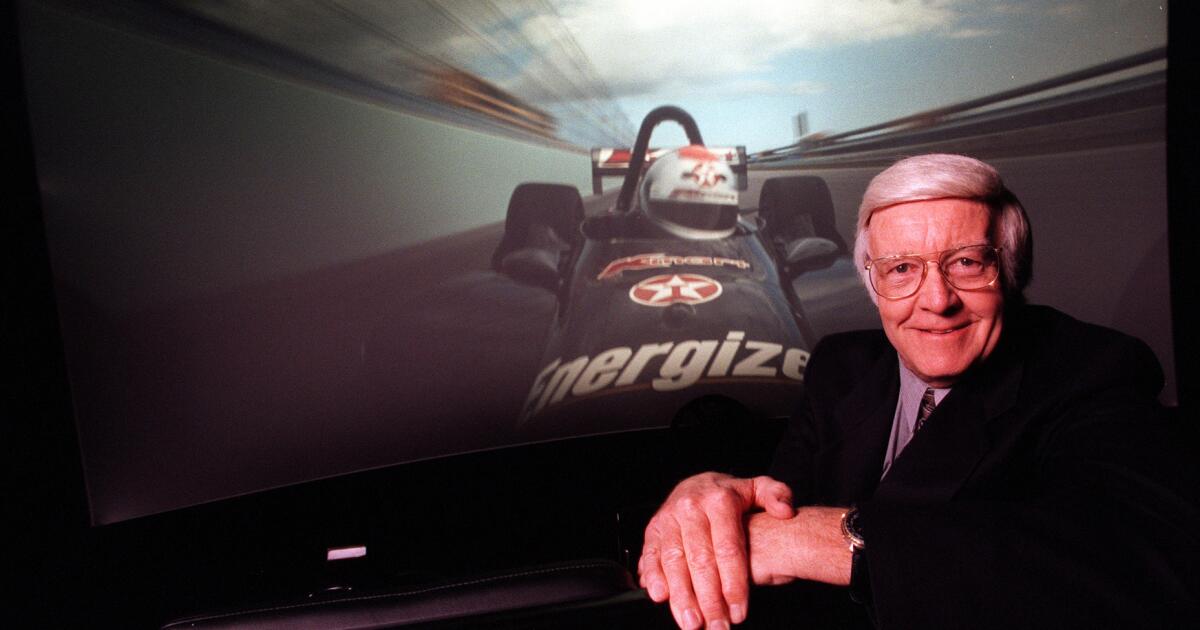
Academy Award-winning special effects pioneer Don Iwerks dies at 96
-
 Lifestyle36 minutes ago
Burbank’s airport to get new $1.3-billion terminal soon (but you’ll still walk on tarmac)
-
 Politics42 minutes ago
State lawmakers cry foul over new cap placed on film tax credits
-
 Sports54 minutes ago
Dodgers swept by Diamondbacks in first winless series of season as they stagger into All-Star break

