Technology
All the places I used my Trump Mobile wireless service this week


As I sat down at the bookstore cafe with a cortado and an oat bar, I panicked just a little bit when I turned on my phone’s hotspot. What if my hotspot network gave me away? Would it say ALLISON’S TRUMP PHONE? Would someone smart sitting next to me, sipping matcha, catch sight of it? What would they think of me?
That’s not what happened, of course. The default network name was “Allison’s S25,” reflecting the Samsung Galaxy phone I was using, not the network. But the experience sums up a weird feeling I can only describe as “icky” as I texted, talked, and scrolled through my day using my Trump Wireless plan.
Honestly, I was surprised the service even identified itself as Trump and not Liberty Mobile, the MVNO that the Trump Organization’s MVNO service rides on. But there they were, those five letters staring back at me under my SIM settings once I installed the card. They were at the top of the status bar every time I swiped down to check a notification, too.
I didn’t really go out of my way to do a bunch of things while testing Trump Mobile that seem antithetical to the whole Trump ethos — that’s just kinda how it worked out. I used the service to check on a hold at my public library. I used it on public transportation. I used it while shopping at a local grocery oo-op. I used it to find my way to an indie bookstore. It worked just fine. It still felt icky doing this all with that Trump network indicator in the corner of the screen.
I have a number of complaints about the values that the Trump Organization and the Trump name represent. But the wireless service? Fine, I guess. My Galaxy S25 proudly displays a 5G badge most of the time. Trump Mobile runs on T-Mobile, and T-Mobile coverage is quite good here in Seattle, where it happens to be headquartered. In fact, I got better download speeds on the S25 using Trump Mobile than I did using my own Verizon plan on an S25 Plus. I pay way more for my Verizon service than the $51.99 that the Trump service costs. Side note: the plan’s official price is $47.45, which is a cute nod to Trump’s presidencies, albeit out of order presumably to charge a couple extra bucks. But when you add tax, you end up at $51.99.
There are little red flags here and there suggesting that maybe Trump Mobile doesn’t have it all together
As it is wont to, the Trump Organization has slapped its name on a product that was already well established — in this case, T-Mobile wireless service. To be fair, that’s basically how an MVNO works, so it’s not surprising that the network part of the product works quite well. Everything else, though, has been a little hit-and-miss. There was the case of my missing SIM card, which was not great. But the problem was resolved by some kind customer service folks, and once I had the card in hand, I was able to get service started on my own, by putting the card in my phone, logging into my account, and typing in some numbers in the right place.
But there are little red flags here and there suggesting that maybe Trump Mobile doesn’t have it all together. The hours given for the customer service line listed on the SIM kit I got differ from what’s on the website, which is different from the actual hours given when you call. The instructions on the SIM packaging tell you to go to TrumpMobile.com/activate, but that page throws a 404 error. The instructional video that tells you how to install a SIM card looks suspiciously AI-generated (and I swear to god that voice-over sounds like Dieter). It all feels slapped together and inconsistent. Icky, indeed.



Not only is it the first release to support the upcoming Steam Machine living room gaming PC, it comes with long-awaited features for Valve’s handhelds and more support for other companies’ handhelds than we’ve seen to date — including Microsoft and Asus’ Xbox Ally series, the Lenovo Legion Go 2, the OneXPlayer X1, and additional support for MSI, GPD, Anbernic, OrangePi, and Zotac.
The one that excites me most: Valve is adding genuine hibernation and “memory power down” modes to the Steam Deck — though just the LCD model to start — which should help extend battery life when you hit the power button or leave them idle. Some Windows machines currently last longer than the Steam Deck when asleep, because they self-hibernate to save power, while the Steam Deck has an instant-on sleep mode.
Plus, Valve has finally added a setting in its gaming mode to let you use your Bluetooth headset microphones — something I’ve been asking for since the beginning. (Valve did add it to the Linux desktop mode last year.) And the Steam Deck LCD is finally getting Bluetooth Wake re-enabled, so you can turn on your TV-connected Deck with a wireless controller from your couch.
The update comes with all sorts of improvements for the Linux desktop modes that sound like they’ll come in handy on a Steam Machine plugged into a TV or monitor, too, including desktop HDR, VRR display support, per-display scaling, “improved windowing behavior for games running in Proton,” and an upgrade to KDE Plasma 6.4.3 among other things.
And for a Steam Machine or Steam handheld plugged into a home entertainment system, they can now detect how many audio channels you have over HDMI to enable surround sound. (I believe surround sound was already a thing, so perhaps this is just a different and better automatic implementation.)
There’s also a new Arch system base and an updated graphics driver.
Perhaps most surprisingly, the “Non-Deck” section of the changelog is huge. Valve says long-pressing your power button should work “across a wide variety of devices” to power off, restart, or switch to the desktop mode. You should be able to change your processor’s power modes on the Xbox Ally now, and night mode and screen color settings should work on AMD Z2 Extreme handhelds in general.
There’s also “Greatly improved video memory management with discrete GPU platforms,” you can limit how far the battery charges in any of the Lenovo Legion Go handhelds (in desktop mode), and it should fix “washed out colors for Zotac and OneXPlayer handhelds with OLED.”
There’s a lot in this update, and it’s possible I missed a feature you care about, so check out the whole changelog here and below.

Under the five-year contract, Gecko will begin work on 18 ships in the U.S. Pacific Fleet, with the initial award valued at up to $54 million. The contract vehicle is structured to allow other military services to access the technology as well. (Gecko Robotics )
NEWYou can now listen to Fox News articles!
Welcome to Fox News’ Artificial Intelligence newsletter with the latest AI technology advancements.
IN TODAY’S NEWSLETTER:
– WATCH: Wall-climbing robot swarms crawl US Navy warships as China’s fleet surges
– OPINION: AI comes with a hefty charge, and you are the one who gets stuck with the bill
– Dell workforce shrinks 10% for third consecutive year
Swarms of wall-climbing robots will soon be crawling across U.S. Navy warships in a $71 million effort to slash repair delays and boost fleet readiness as China continues expanding its naval power. (Gecko Robotics )
TECH AT SEA: WATCH: wall-climbing robot swarms crawl US Navy warships as China’s fleet surges – Fox News Digital reports on a new development in naval technology, featuring wall-climbing robot swarms that are crawling on U.S. Navy warships. This advancement comes at a critical time in defense politics as China’s naval fleet continues to surge in size and capability.
WALLET SHOCK: OPINION: AI comes with a hefty charge, and you are the one who gets stuck with the bill – In this opinion piece, the author discusses the economic implications of the growing artificial intelligence industry. The article argues that the hefty costs associated with AI development and its massive energy infrastructure will ultimately be passed down, leaving everyday consumers to foot the bill.
Dell Technologies headquarters in Round Rock, Texas, US, on Sunday, Nov. 26, 2023. (Sergio Flores/Bloomberg via Getty Images)
COST CRUNCH: Dell workforce shrinks 10% for third consecutive year – Fox Business reports that Dell’s workforce has shrunk by ten percent. This marks the third consecutive year of workforce reductions for the major technology company amid shifting economic conditions and corporate restructuring.
AIMING HIGH: FULL AUTONOMY: AI pilot technology advances towards military capability – Merlin CEO Matt George details how the company is using artificial intelligence to enable military and commercial aircraft to operate fully autonomously on Fox Business’ ‘The Claman Countdown.’
Single family homes in a residential neighborhood in San Marcos, Texas, US, on Tuesday, March 12, 2024. (Photographer: Jordan Vonderhaar/Bloomberg via Getty Images)
SHOULD I BUY?: Homebuyers, sellers turning to AI chatbots for advice – Prairie Operating Co.’s Lou Basenese and real estate broker Kirsten Jordan discuss how artificial intelligence is impacting homebuyers and sellers on ‘Fox Business In Depth.’
DISRUPTION IS HERE: Charles Payne: AI disruption is here – Fox Business host Charles Payne discusses the economic impact of the rise in artificial intelligence on ‘Making Money.’
BUILDING HER BUSINESS: How Angie Hicks turned Angi into a home services giant and AI player – Angi co-founder Angie Hicks discusses entrepreneurship, company growth and how she built out her business on ‘Mornings with Maria.’
FOLLOW FOX NEWS ON SOCIAL MEDIA
Facebook
Instagram
YouTube
X
LinkedIn
SIGN UP FOR OUR OTHER NEWSLETTERS
Fox News First
Fox News Opinion
Fox News Lifestyle
Fox News Health
DOWNLOAD OUR APPS
Fox News
Fox Business
Fox Weather
Fox Sports
Tubi
WATCH FOX NEWS ONLINE
Fox News Go
STREAM FOX NATION
Fox Nation
Stay up to date on the latest AI technology advancements, and learn about the challenges and opportunities AI presents now and for the future with Fox News here.

For almost two hours last week, Meta employees had unauthorized access to company and user data thanks to an AI agent that gave an employee inaccurate technical advice, as previously reported by The Information. Meta spokesperson Tracy Clayton said in a statement to The Verge that “no user data was mishandled” during the incident.
A Meta engineer was using an internal AI agent, which Clayton described as “similar in nature to OpenClaw within a secure development environment,” to analyze a technical question another employee posted on an internal company forum. But the agent also independently publicly replied to the question after analyzing it, without getting approval first. The reply was only meant to be shown to the employee who requested it, not posted publicly.
An employee then acted on the AI’s advice, which “provided inaccurate information” that led to a “SEV1” level security incident, the second-highest severity rating Meta uses. The incident temporarily allowed employees to access sensitive data they were not authorized to view, but the issue has since been resolved.
According to Clayton, the AI agent involved didn’t take any technical action itself, beyond posting inaccurate technical advice, something a human could have also done. A human, however, might have done further testing and made a more complete judgment call before sharing the information — and it’s not clear whether the employee who originally prompted the answer planned to post it publicly.
“The employee interacting with the system was fully aware that they were communicating with an automated bot. This was indicated by a disclaimer noted in the footer and by the employee’s own reply on that thread,” Clayton commented to The Verge. “The agent took no action aside from providing a response to a question. Had the engineer that acted on that known better, or did other checks, this would have been avoided.”
Last month, an AI agent from open source platform OpenClaw went more directly rogue at Meta when an employee asked it to sort through emails in her inbox, deleting emails without permission. The whole idea behind agents like OpenClaw is that they can take action on their own, but like any other AI model, they don’t always interpret prompts and instructions correctly or give accurate responses, a fact Meta employees have now discovered twice.
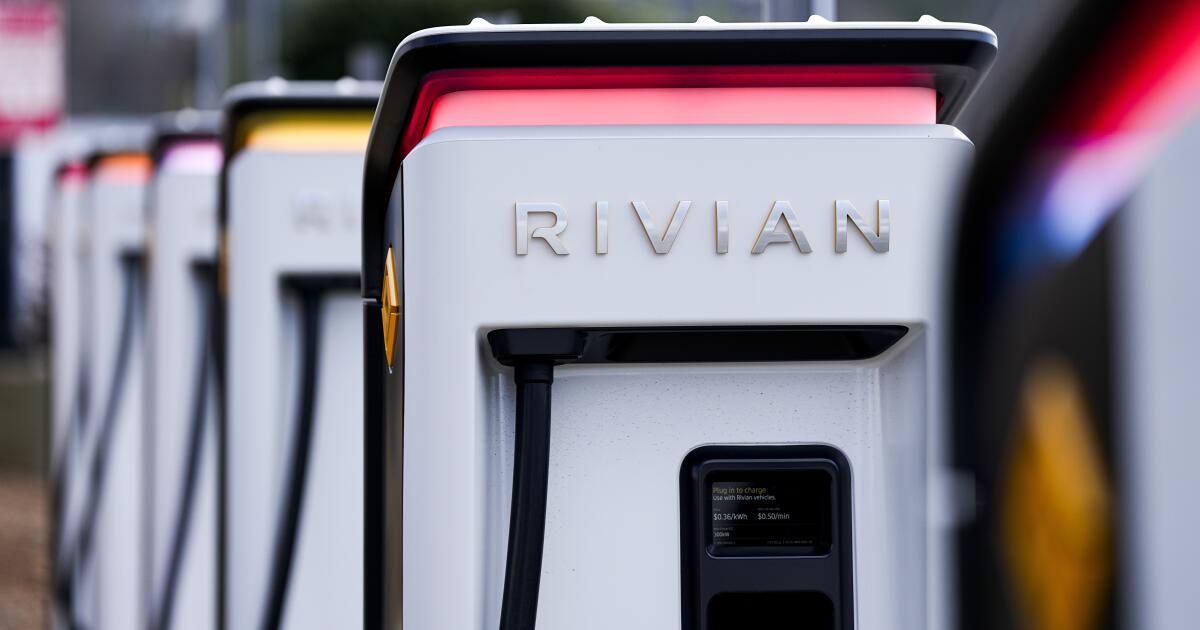
Uber and Rivian plan to bring robotaxis to California

Where to watch Michigan State vs. Colorado State in March Madness First Round: Time, TV Channel

SCORE Events And Webinars For Western Connecticut

Delaware County crossing guard resigns after attack in Darby Borough, Pennsylvania

Central Florida man arrested after Miami Beach hit-and-run crash leaves 2 pedestrians dead, police say

Florida High School Football Rankings: Top 25 teams – Oct. 21

How old is Bo Nix? What to know about Oregon quarterback ahead of 2024 NFL Draft

Cleary's 21 help Le Moyne down Central Connecticut State 69-64 in OT

99th annual Pony Swim held in Virginia

Indiana Members Credit Union announced as new anchor tenant at Bottleworks District

Meet the longtime biz partner of Ilhan Omar’s husband as questions swirl over her skyrocketing net worth

‘Nobody can blackmail us’: Leaders excoriate Orbán’s veto

Trump is dismantling democracy at ‘unprecedented’ speed, global report finds

4 House Dems vote against Women’s History Museum bill over biological women-only amendment, Republican claims

Iran attacks cut 17% of Qatar’s LNG capacity for up to 5 years: QatarEnergy
-

 Oklahoma6 days ago
Family rallies around Oklahoma father after head-on crash
-

 Detroit, MI1 day ago
Drummer Brian Pastoria, longtime Detroit music advocate, dies at 68
-

 Nebraska1 week ago
Wildfire forces immediate evacuation order for Farnam residents
-

 Georgia4 days ago
How ICE plans for a detention warehouse pushed a Georgia town to fight back | CNN Politics
-

 Massachusetts1 week ago
Massachusetts community colleges to launch apprenticeship degree programs – The Boston Globe
-

 Alaska5 days ago
Police looking for man considered ‘armed and dangerous’
-

 Colorado1 week ago
‘It’s Not a Penalty’: Bednar Rips Officials For MacKinnon Ejection | Colorado Hockey Now
-

 Southwest1 week ago
Talarico reportedly knew Colbert interview wouldn’t air on TV before he left to film it