Sports
Why Olympic distance runners might be flocking to Flagstaff ahead of L.A. Games

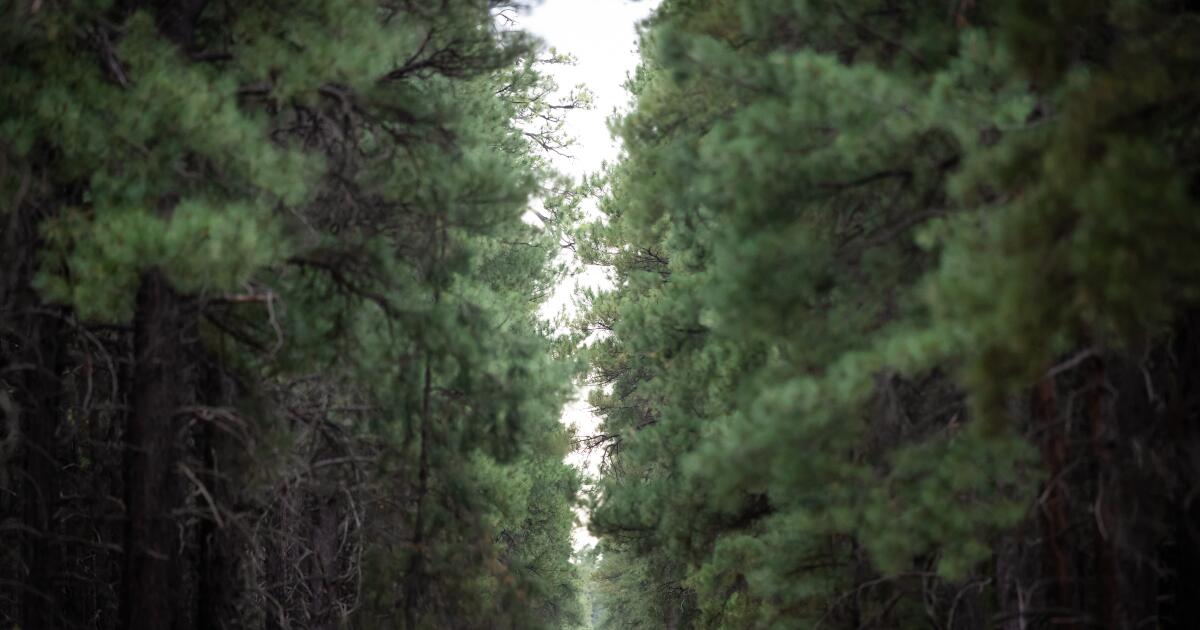
For centuries the snow-capped San Francisco Peaks, which tower over the high desert of northern Arizona, have held sacred meaning for more than a dozen Native American tribes.
To the Navajo “the summit that never melts” was a place where deities lived. For the Hopi, the mountains provided life-giving rain and spiritual sustenance while the Havasupai’s creation story is centered on the four peaks, which they believed were at the center of the earth.
The mountain tops are no less divine to some who live in their shadows today. For decades, endurance athletes have been making the pilgrimage to Flagstaff, at the southern edge of the Colorado Plateau, to live and train in the rarefied air more than a mile and a quarter above sea level. And the results have been breathtaking.
“For a distance runner, there’s no place in the world like Flagstaff,” said Matt Baxter, who broke New Zealand’s national indoor record at 5,000 meters after moving to Arizona.
More than 240 Olympians and Paralympians made the winding two-hour drive up Interstate-17 from Phoenix to Flagstaff to train at altitude on their way to the Tokyo Games three years ago. Among them were Norway’s brash 1,500-meter champion Jakob Ingebrigtsen; American marathon medalist Molly Seidel; Zac Stubblety-Cook, the only Australian male to win a gold medal in swimming; and French triathlon medalist Vincent Luis.
2024 Paris Summer Olympic Games
That doesn’t include the four dozen or so world-class athletes who live and train in Flagstaff for much or part of the year. And the number of Olympians who either lived or trained in Flagstaff before going to Paris this month — a list that includes U.S. distance runners Nico Young, Grant Fisher and Woody Kincaid plus Guatemalan national record-holder Luis Grijalva — could be even larger.
“It’s been the busiest year ever,” said Dan Bergland, a sports physiologist with HYPO2, a sports management organization that helps arrange training camps in Flagstaff for national teams and individual international athletes.
Sitting at a table inside a Whole Foods near the Northern Arizona University campus, a space he considers his office, Bergland ticked off a list of visitors during what was just an average spring week.
“I have Norwegian athletics. I have Canadian athletics, Canadian triathlon,” he said. “Israel and Hong Kong swimming just left two days ago. Olympians from Belgium, Austria, just all over the place.”
That has given the sleepy college town of 75,000, once known primarily as the gateway to the Grand Canyon, a hand in producing what is probably the highest number of Olympic athletes per capita of any city in the world. The secret is in Flagstaff’s thin air, which carries less oxygen. That forces the body to adapt by producing more oxygen-rich red blood cells, cells the athletes take with them when they return to lower levels, boosting performance by 1% to 2%.
Altitude training can improve an athlete’s maximal oxygen consumption, or VO2 max, and lessen the effects of fatigue.
“For athletes who don’t want to cheat, altitude training is one of the unique ways to enhance a training response and improve the blood volume and red cell mass in particular,” said Dr. Benjamin Levine, professor of internal medicine at UT Southwestern and director of Texas Health Dallas’ Institute for Exercise and Environmental Medicine. “When the difference between winning a gold medal and even making the final is fractions of a percent, that can make a difference.”
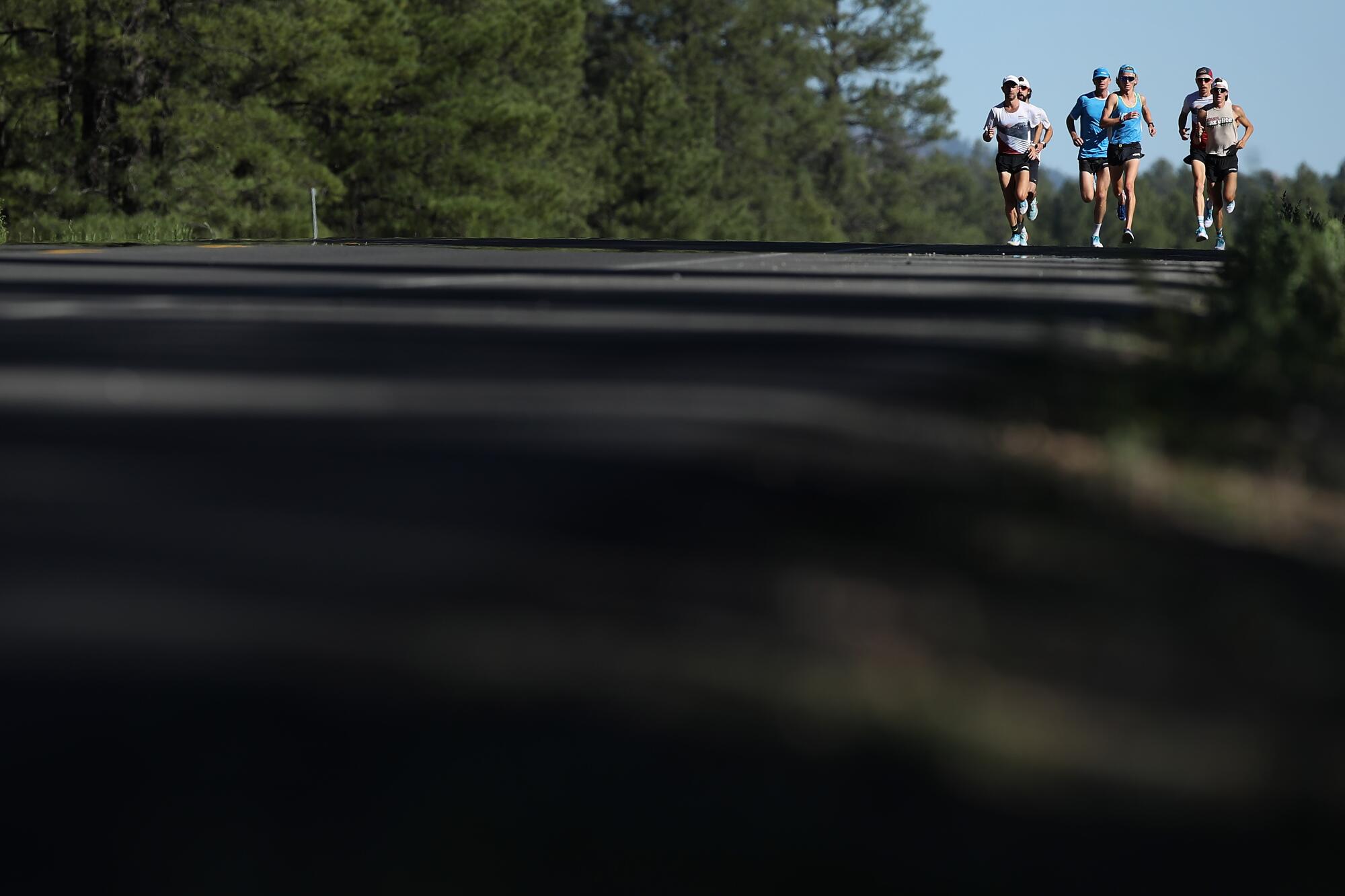
A group of runners from New Zealand train on a road in Flagstaff.
(Christian Petersen / Getty Images)
The effects of altitude training have been known for decades and have been among the factors credited for the success of East African distance runners, who hold every major world record from the 3,000-meter steeplechase through the marathon. And at 7,000 feet, Flagstaff is smack dab in the middle of the physiological sweet spot, high enough to reap the benefits of living at altitude but not high enough to produce adverse side effects such as headaches, nausea, dizziness and sleep problems that can occur above 9,000 feet.
And here’s the best part: You don’t even have to break a sweat to take advantage of that.
“The whole reason you’re at altitude is to produce those extra red blood cells,” said Ben Rosario, executive director and former coach of the HOKA Northern Arizona Elite running team, which is squeezed into a nondescript Flagstaff strip mall between a financial services office and a company that books whitewater rafting trips.
“The actual training you do, the actual time that you’re running, is not what makes altitude so special,” he said. “Your body increases its aerobic capacity just by living at altitude.”
Long, low-intensity runs can certainly aid in that process. Yet even world-class athletes are unable to run fast at altitude, which is where Flagstaff’s other geographic benefit becomes a factor.
The city sits on the Mogollon Rim, at the southern edge of the Colorado Plateau, which drops off as rapidly as it rises. The winding two-lane road out of the city drops nearly 2,700 feet in 30 miles before reaching Sedona; take I-17 another 30 miles to Cottonwood or Camp Verde, and the altitude is less than half that of Flagstaff.
That’s important because it allows athletes to live high and train low, maximizing the physiological effects of living at altitude but allowing them to do the kind of high-intensity workouts in Sedona and Cottonwood that would be impossible at Flagstaff.
Mount Elden just outside Flagstaff offers runners the chance to train on trails that reach close to 9,000 feet in elevation.
“If you’re doing everything at 7,000 feet, you have to go at a slower pace just because you’re at altitude,” said Baxter, who literally wrote the book on running in Flagstaff with “Running Up the Mountain: Northern Arizona Altitude, Lumberjack Attitude and the Building of a Distance Dynasty,” a detailed, quirky and entertaining look at people who made the sport flower in the desert.
A runner’s leg turnover is different at altitude, Baxter said. Even with the cardiovascular benefits of altitude, it becomes difficult to run fast there, with marathoners typically running 10 to 15 seconds a mile slower in the thin air than at sea level. It also takes longer to recover at 7,000 feet, which can turn an easy run into a grueling, stressful one for a runner’s body.
So if going up the mountain can help build stamina, going go down the mountain can help build speed.
“I’ll go down to sea level to race a 5K and the first mile feels all out. Although my lungs and everything are good, my legs are not used to running that fast for that long,” Baxter said. “Going down to Sedona or Cottonwood to do some of those faster workouts helps get you ready for when you actually race.”
A study Levine conducted with James Stray-Gundersen and Robert Chapman proved that, showing that living high and training low — the so-called “HiLo paradigm” — improved sea level running performance even in elite athletes by 1.1% after just 27 days.
“That was the novel twist,” said Levine, who 10 years ago spoke at the American College of Sports Medicine’s D.B. Dill Historical Lecture on the topic. “You could get the best of both worlds. You could acquire the acclimatization response [but go] down the hill to train.”
Added Rosario: “The value of learning to run fast at 7,000 feet, I can’t speak to the physiology of it. But at least mentally, when you go down for a race, you feel on top of the world.”
The locals refer to the trip from Phoenix to Flagstaff as “going up the mountain” since the road rises more than a mile in altitude as it winds through red rock canyons, past saguaros, junipers and wildflowers, in an ecosystem that is home to more than three dozen species of butterflies.
It’s a breathtakingly unique, sometimes other-worldly environment — so much so that NASA used it as a stand-in for the moon. Beginning in 1967, at a heavily guarded site among the cinder fields at Sunset Crater, about half an hour north of Flagstaff, Apollo astronauts simulated moon walks, tested equipment, drove the moon buggy over the spiky lava fields and took a crash course in geology. All 12 men who have walked on the moon trained first outside Flagstaff.
It was the arrival of four other men a year later that put the city on the Olympic map.
For George Young, Jim Ryun, Billy Mills and Conrad Nightingale, northern Arizona was also the perfect place to train for the Olympics since the 1968 Summer Games would be the first held higher than 500 feet above sea level.
“There are those that will die,” Swedish coach Onnie Niskanen warned when the IOC awarded the Olympics to Mexico City.
The Mexican capital is 349 feet higher than Flagstaff and physiologist Jack Daniels convinced the four men that northern Arizona was the best place to both test out Niskanen’s theory and explore the effects of thin air on runners.
It wasn’t as if the negative impact was unknown. In 1925, A.V. Hill, a Nobel Prize-winning physiologist coined the term “oxygen debt” to describe what happens when individuals exercise with an inadequate supply of oxygen. Because the thin air at altitude did not allow enough oxygen to be absorbed by the body, lactic acid was produced earlier, and at slower speeds, leading to poor muscular recovery.
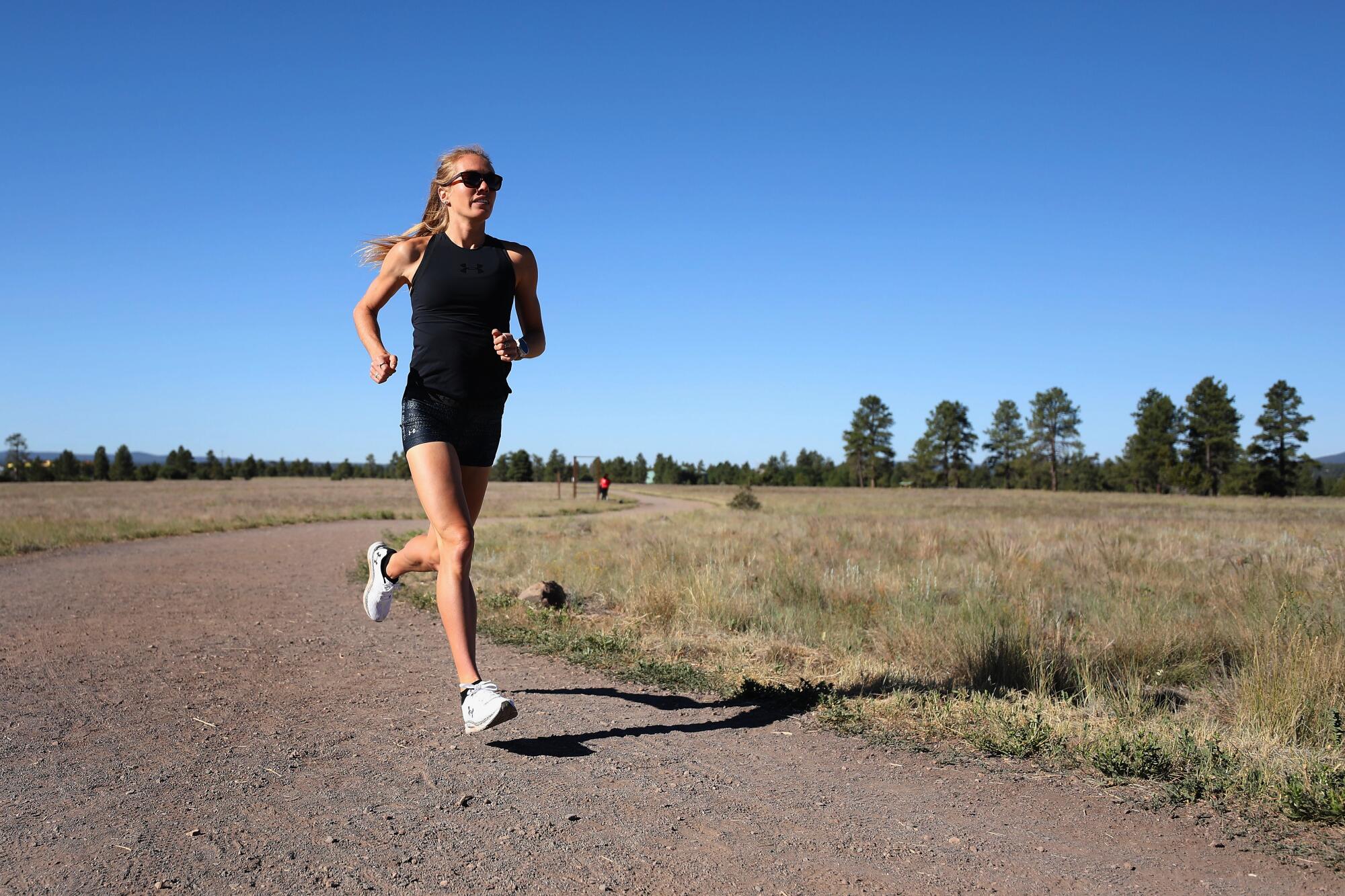
Tokyo Olympics distance runner Rachel Schneider trains at Buffalo Park in Flagstaff in July 2020.
(Christian Petersen / Getty Images)
Thirty-five years later, another researcher, Bruno Balke, theorized that athletes should acclimate to altitude before competing there. But it wasn’t until Daniels came to Flagstaff ahead of the Mexico City Olympics that physiologists began to understand that training in an oxygen-born environment could have beneficial results by forcing the body to produce extra red blood cells.
As Baxter describes in his book, the runners alternated between easy runs on the dirt trails that wound through the largest Ponderosa Pine forest in the world and punishing track workouts in the mountain air. Daniels used crude methods to monitor the athletes. At one point, he sat on the hood of a car that drove alongside Ryun, whose mouth was covered by a tube connected to a pipe held by Daniels. The expired air samples, collected in rubber bags, marked a novel attempt to measure the impact of altitude on endurance athletes.
“We were totally naive,” Mills said. “No knowledge on how to do it.”
The presence of Ryun, the fastest miler in history at the time, Mills, the reigning Olympic champion at 10,000 meters, and Young, the U.S. record-holder in the steeplechase, raised Flagstaff’s profile. Two months before the Mexico City Games opened, more than 130 Olympians from four countries descended on the city for a track meet.
Nobody, as it turned out, died while competing in Mexico City. Yet the effects of altitude and the studies taken to understand the impact of thin air on human performance leading into those Games — among them, Daniels’ rudimentary yet revolutionary research — changed the way athletes and coaches approached training.
But it fell to former UCLA coach Bob Larsen and Joe Vigil, who coached distance runners for the U.S. Olympic team, to push that science forward when they took their athletes to the 7,900-foot altitude of Mammoth Lakes ahead of the 2004 Athens Olympics. In the previous 16 years, only one American had medaled in an Olympic event longer than 800 meters, but after living at altitude in Mammoth and training down the hill in Bishop, Meb Keflezighi broke the American record at 10,000 meters, then finished second in the men’s marathon, and Deena Kastor broke the American record in the women’s 10,000 and was third in the Athens marathon.
No other country won two medals in the marathon that summer.
“We did some things that got everybody’s attention,” said Larsen, a member of the national track and field Hall of Fame. “Everybody had kind of given up that they were going to be able to catch [the Africans].”
A template had been set and in the four Olympics that followed Athens, Americans won nine medals in the distance events. Now most of the world’s distance runners do high-low training at least part of each year.
“If your event lasts longer than two minutes, if you’re in the Olympics, probably 95% of your competitors are trying it out at some point,” Bergland, the HYPO2 physiologist, said.
Abby Nichols is no stranger to altitude, having won three Pac-12 Conference championships while at Colorado (elevation: 5,430 feet). Boulder, she found, drew a lot of world-class runners, as does Mammoth, Park City, Utah, and Santa Fe, N.M., places where it’s easy to live high and train low. So it wasn’t the geography or the thin air that lured her to Flagstaff when she turned pro.
It was everything else she found there.
“When I first visited, I really liked how it was more clean and quiet. I liked how rustic and mountainy it was,” said Nichols, a finalist at 5,000 meters in last month’s Olympic trials and one of 19 runners on Rosario’s storefront team. “And then here there’s way more people to run with. It feels more like a community.”
With its trendy coffee shops, gastro pubs, diverse arts scene and outdoors lifestyle, the former railroad town now home to a world-class university has become an attractive city for young people, with a median age less than 26.
“The town itself is starting to be the attraction,” said Rosario, 44, who came to Flagstaff from St. Louis a dozen years ago. “It’s big enough that you can go out and have a nice meal, but it’s small enough that you’re not overwhelmed.
“A lot of those things came together. It’s just really snowballed and now it’s the place to be.”
Runners are also drawn by the more than 700 miles of scenic hiking/biking/running trails and plentiful training partners. Then there’s the fact it’s socially acceptable for a 26-year-old to go to bed at 9 or 10 p.m. to get up early the next morning to run.
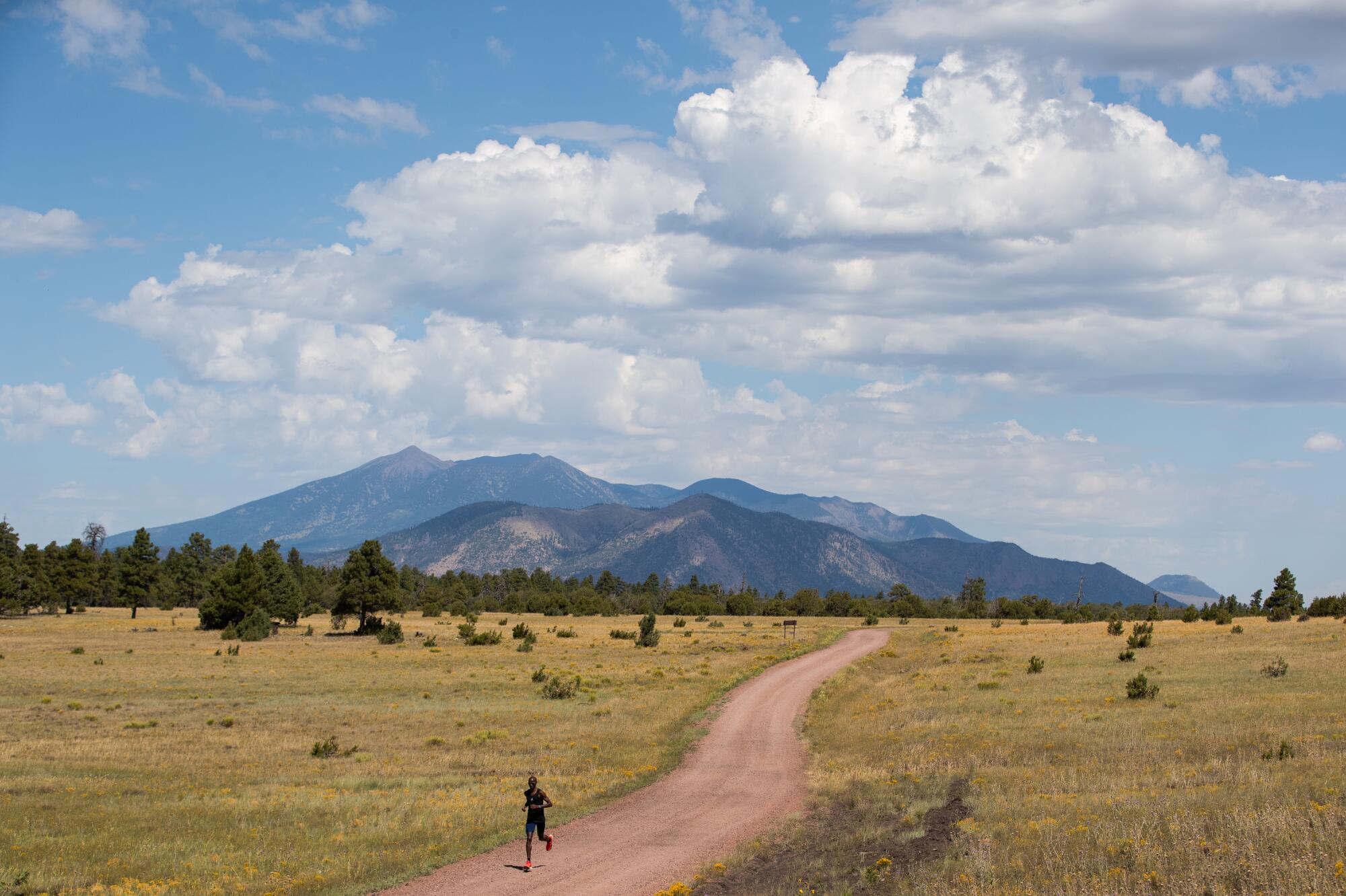
Distance runner Mo Farah takes part in a training session near Flagstaff in August 2019.
(Michael Steele / Getty Images)
“There’s just such a great overlap,” Baxter said. “You have the college program, which is the best distance program in the country. You have all these elite professional athletes in town, you have all these teams come in. So you have times where you have hundreds of really high-quality athletes in town.
“Then you have the community side as well.”
Like the Thursday morning summer bagel runs, for which up to 100 runners — from beginning joggers to Olympic hopefuls — gather at a bagel shop downtown for a trail run.
“It’s just the comprehensive package,” Rosario said. “The fact that so many people have come here and have had success, you want to add your name to the growing list of people from Flagstaff that have won medals, won marathons, won national titles. That becomes part of it as well.”
From his makeshift office outside Whole Foods, Bergland, a former competitive triathlete, struggled to keep up with the number of Olympians and Olympic hopefuls wanting to come to Flagstaff ahead of the Paris Games, which begin next week. In addition to runners, HYPO2 has been arranging training visits to Flagstaff for swimmers, cyclists, triathletes — anyone who can benefit from working out in the thin air — for the last 15 years.
“Hosting Olympic athletes from around the world is a huge point of pride for Flagstaff,” said Ryan Randazzo, the media relations and marketing project manager for Discover Flagstaff, part of the city’s economic vitality division.
Randazzo said he was unaware of economic-impact figures for Olympic training alone but, he said, tourism brings in more than $750 million and is responsible for about one in 10 jobs in Flagstaff.
“Olympic teams traveling here not only stay for weeks at a time, but also travel with trainers, coaches and other staff,” he said. “They visit local attractions like the Grand Canyon, stay in local accommodations and enjoy the restaurants in the city, so it’s safe to say their economic benefit is substantial.”
Many of the visiting athletes eventually wind up using the synthetic track or the 10-lane pool at NAU, the highest-elevation 50-meter swim facility in North America and a place where visitors are greeted with a sign that reads, “Welcome to 7,000 feet. Catch Your Breath.”
There have been times the pool is in such demand, Bergland has been forced to limit countries to one lane at a time. Often, swimmers from different countries wind up racing one another.
“I watched the world championships for swimming and a lot of them had just been here,” Bergland said of the swimmers. “It kind of brings a lot of different people together, moreso probably than other places.”
And it’s only going to grow. In 2028, the Olympics will be in Los Angeles, a 90-minute flight from Flagstaff. That means athletes will not only be able to train there in the lead-up to the Games, but those who are competing in more than one event will have the ability to fly back to Flagstaff between races.
Some teams have already made reservations to train in the city ahead of and during the L.A. Games.
“Flagstaff is going to be crazy. There’s no reason why you would go anywhere else in the world, “ Baxter said. “It’s going to be the place to go for athletes who are getting ready for those L.A. Games.
“And I think Flagstaff is going to thrive off of that.”


NEWYou can now listen to Fox News articles!
For the first time at a FIFA World Cup, finishing third in your group does not necessarily mean going home.
With 48 teams competing in 2026, FIFA expanded the field to include the eight best third-place finishers across all 12 groups. The top two teams in each group advance automatically, and the remaining eight spots in the 32-team knockout bracket go to the highest-ranked third-place teams, determined by points, goal difference, goals scored and other tiebreakers.
That means 12 teams will be competing for eight spots, and the race to stay in the top eight is one of the most compelling subplots of the final days of the group stage.
Here’s where the third-place standings sit heading into the final round of group stage matches on June 24.
Third-Place World Cup Standings
| Rank | GP | Points | Goal Diff. | |
| 1 | Bosnia & Herz. | 3 | 4 | -1 |
| 2 | Sweden | 2 | 3 | 0 |
| 3 | Scotland | 2 | 3 | 0 |
| 4 | Croatia | 2 | 3 | -1 |
| 5 | Algeria | 2 | 3 | -2 |
| 6 | Paraguay | 2 | 3 | -2 |
| 7 | Cape Verde | 2 | 2 | 0 |
| 8 | Belgium | 2 | 2 | 0 |
| Cutline | ||||
| 9 | Czechia | 2 | 1 | -1 |
| 10 | DR Congo | 2 | 1 | -1 |
| 11 | Ecuador | 2 | 1 | -1 |
| 12 | Senegal | 2 | 0 | -3 |
The third-place standings will shift considerably over the next two days as the final round of group stage matches is played. Follow the live standings at FOXSports.com and watch every match on FOX and FS1, streaming live on FOX One.
Standings as of the end of Bosnia and Herzegovina vs. Qatar and Canada vs. Switzerland on Wednesday.

2026 FIFA World Cup Standings Rules
How Do Points Work? How Do Tiebreakers Work?
In a group, a team will earn three points for a win, one point for a draw, and no points for a loss. That could mean some teams are equal on points at the end of the three-game group stage. That leads us to tiebreakers.
If two or more teams finish equal on group-stage points, here is the order of who finishes on top:
1. Most points obtained in the head-to-head matches played between the tied teams;
2. Superior goal difference in the head-to-head matches played between the tied teams;
3. Most goals scored in the head-to-head matches played between the tied teams;
There are even more tiebreakers if any teams remained locked after all that. From there, ties are broken by these rules:
4. Superior goal difference in all group matches
5. Most goals scored in all group matches
6. Highest team conduct score in all group matches (taking into account yellow cards and red cards)
7. FIFA World Ranking
Which Third-Place Teams Will Advance?
To fill out the World Cup knockout bracket, the best eight third-place teams out of the possible 12 in the tournament will advance. The criteria for those teams are based on:
1. Points
2. Goal difference
3. Goals scored
4. Highest team conduct score in all group matches (taking into account yellow cards and red cards)
5. FIFA World Ranking

Until Tuesday night, only one Mexican-born player had been an NBA draft pick. Eduardo Nájera was selected 38th overall in the second round by the Houston Rockets in 2000 and enjoyed a 12-year career as a backup forward with five teams.
Karim López joined him when the Detroit Pistons snapped him up at No. 21, making him the first Mexican-born first-round draft selection.
Lopez donned the Pistons’ cap handed to him by NBA commissioner Adam Silver, then was immediately traded to the Memphis Grizzlies.
López, a 19-year-old 6-foot-9 forward, became emotional when Silver announced the pick. He sobbed beneath the cap.
“It’s just super special,” he said. “I’m blessed. I mean, I have no words.”
Born in Hermosillo in the Mexican state of Sonora, López joined the prestigious Joventut Badalona youth academy in Badalona, Spain, at age 14 to accelerate his development. The academy counts former NBA players Ricky Rubio, Rudy Fernández and Raül López among its alumni.
During his post-draft television interview, he displayed a custom design inside his suit jacket: Mexico’s tricolor flag.
“I just wanted to represent my culture, represent where I’m from, represent my faith, and just represent myself, basically,” López said. “Show who I am.”
Memphis clearly targeted López while adroitly obtaining five second-round picks in the process. They received three picks from the Pistons and two from the Oklahoma City Thunder in return for moving back from the No. 16 draft position.
Whether López fulfills his potential and becomes the fifth Mexican-born player to take the court with an NBA team remains to be seen. Reviews are mixed.
Draft experts John Hollinger and Sam Vecenie of the Athletic differed in their evaluation, with Hollinger giving the pick a thumbs-up while Vecenie expressed reservations.
“I had Karim López rated quite a bit higher than [the No. 21 pick] and was surprised to see him slide this far,” Hollinger wrote, giving the pick an “A” grade partially because the Grizzlies also collected the five second-round picks.
Vecenie pointed out that López doesn’t shoot well and has defensive deficiencies, saying that his game might be better suited for European leagues than the NBA.
“I’m not sure how he gets on an NBA court early in his career,” he wrote. “I love his frame and physicality. I love that he rebounds and attacks with aggression. But I’m not sure he’s good enough without the ball to make an early impact in the NBA.”
Should López make the Grizzlies’ roster, he would join Horacio Llamas, Gustavo Ayón, Jorge Gutiérrez and Nájera as the only NBA players born in Mexico.
“It means a lot to me,” Lopez said. “It’s just a great opportunity for me and my country to have this platform and have this opportunity. So super blessed and definitely take it with a lot of pride.”
Noteworthy NBA players of Mexican descent born in the United States include former UCLA standout Jaime Jaquez Jr. and former Lakers reserve Juan Toscano-Anderson.
Jaquez averaged 15.4 points a game in 2025-2026, his third season with the Miami Heat. Toscano-Anderson played five seasons in the NBA — including winning a championship with the Golden State Warriors in 2022 — and now is with Pallacanestro Trieste of the top Italian league.
López is already a veteran of international basketball, having spent the last two seasons with the New Zealand Breakers in Australia’s top pro league. He averaged 11.9 points and 6.1 rebounds last season.
He will join No. 3 overall pick Cameron Boozer with the Grizzlies, who are rebuilding after finishing 25-57 and 13th in the Western Conference last season.
“A goal of mine is to hopefully reach young people in Mexico,” Lopez told ESPN in March when he declared for the draft. “Trying to grow the sport and inspire athletes and people in general to follow their dreams. Show people that it doesn’t matter where you’re from.”

NEWYou can now listen to Fox News articles!
The 2026 NBA Draft finally saw the top college prospects get chosen along with some friendly fire among ESPN and basketball analysts on Tuesday night.
Jay Williams, Richard Jefferson and Kenny Smith were among those covering the draft and offering their analysis during the event. One exchange among the three former NBA players went awry and led to an awkward moment.
ZERO BS. JUST DAKICH. TAKE THE DON’T @ ME PODCAST ON THE ROAD. DOWNLOAD NOW!
Jay Williams of the Chicago Bulls and Tony Parker of the San Antonio Spurs share a laugh during the 2003 got milk? Rookie Challenge Game at Phillips Arena in Atlanta, Georgia, on Feb. 8, 2003. (Nathaniel S. Butler/NBAE)
ESPN recalled the moments each former player was drafted. Smith went No. 6 overall in 1987 to the Sacramento Kings, Richard Jefferson was selected at No. 13 by the Houston Rockets before being traded to the New Jersey Nets in 2001 and Williams was chosen No. 2 overall by the Chicago Bulls in 2001. Williams’ career was cut short due to a motorcycle crash.
ESPN’s Kevin Negandhi asked why Williams received a big ovation. Williams explained that most people who had gone to Duke were from the New York or New Jersey area.
“They also didn’t see the future coming, so they were cheering,” Jefferson said.
Williams responded, “Wow.”
TNT basketball analyst Kenny Smith appears on air before the NCAA Men’s Basketball Tournament Final Four semifinal game between the Purdue Boilermakers and the North Carolina State Wolfpack at State Farm Stadium in Glendale, Ariz., on April 6, 2024. (Mitchell Layton/Getty Images)
Smith admitted that Williams was an “unbelievable talent” but “his career trajectory would’ve been a lot different if he didn’t like motorcycles.”
Williams tried to brush it off, saying all of what Smith was saying was “on record” and that he “wrote a book about it.”
“I guess everybody that goes to Duke isn’t that smart,” Jefferson quipped. “What? He wrote a book about it. I’m agreeing with him.”
The awkwardness filled the air after that as the Toronto Raptors were getting ready to make a selection.
Williams’ incident occurred in June 2003. He suffered a fractured pelvis, three torn ligaments in his knee and he severed a nerve in his leg. Williams violated the terms of his contract by riding the motorcycle in the first place.
Referee Richard Jefferson watches the game between the New York Knicks and Portland Trail Blazers during the 2022 Las Vegas Summer League at the Thomas & Mack Center in Las Vegas, Nev., on July 11, 2022. (Garrett Ellwood/NBAE via Getty Images)
CLICK HERE TO DOWNLOAD THE FOX NEWS APP
He tried to make his way back into the NBA through the G League but never got there. He played 75 games for the Bulls in his rookie season and averaged 9.5 points per game.
-

 Technology1 minute ago
A new paper argues Microsoft exaggerated its quantum claims a year ago
-

 World6 minutes ago
Colombia’s ‘El Tigre’ secures presidency as leftist rival finally concedes defeat
-

 Politics14 minutes ago
Comer probes alleged Biden collusion with gun control activists in Glock lawsuit
-

 Sports22 minutes ago
2026 World Cup Third-Place Standings: Who’s In, Who’s On The Bubble
-

 Technology28 minutes ago
FCC phone ID plan could end burner phones
-
 Business32 minutes ago
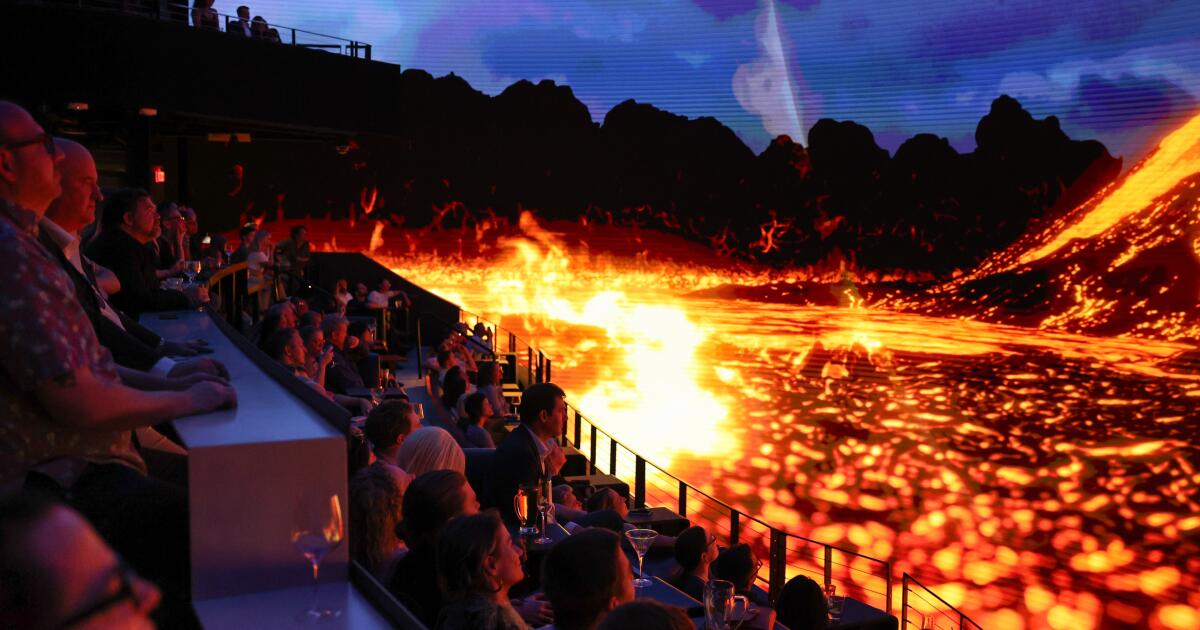
Sony Pictures invests $100 million in virtual reality venue Cosm
-
 Entertainment37 minutes ago
Culture Clash knows the end is near. It wants to go out with a bang
-
 Politics46 minutes ago
Vice President JD Vance’s visit gives ‘The View’ a ratings boost

