Sports
The 'humbling experience' of trying to shoot over Victor Wembanyama


Pat Connaughton knows what an open shot feels like. As a nine-year veteran of the league, he’s taken hundreds of them, developing a sense for space and when there’s enough of it.
In early January, when Connaughton’s Milwaukee Bucks played the San Antonio Spurs, Connaughton got that familiar feeling again. With about eight minutes remaining in the fourth quarter, Giannis Antetokounmpo drew a double team and found Brook Lopez alone on the right wing. San Antonio’s Julian Champagnie, Connaughton’s defender, scrambled to cover him.
As Lopez caught Antetokounmpo’s pass, the Spurs player responsible for covering Champagnie’s rotation was 27 feet away, one foot in the paint and the other on the floor’s other side. Connaughton knew the swing-swing pass from Lopez would come and he usually only needs two or three feet of separation from a defender to get off his shot. In other words, Connaughton was open. The ball left his hands two seconds later.
Then, it suddenly died in the air.
“I wouldn’t have shot it if I thought he was going to be able to get it,” Connaughton said later.
Victor Wembanyama, the 7-foot-4 rookie phenom who had made the rotation from the corner, met the ball 12 feet and seven inches into the air.
“Every second counts when you’re playing against him, right? So the swing-swings have to be quicker, and when you think you’ve got enough space, you really don’t,” Connaughton said. “We talked about it after the game, it was impressive stuff.”
Wembanyama isn’t just breaking basketball, but the very perception of openness — of basketball physics — within the NBA. He has blocked seven 3s this season, far from the league’s lead, but what stands out is the manner in which he has disrupted the inevitability defenders used to feel.
“Have I had guys tell me this?” Wembanyama said when asked about his long closeouts. “Yeah, all the time. Sometimes during the game, sometimes after. But it happens.”
The NBA’s modern era is the result of an evolved understanding and war over space. There’s always been more of it out past the 3-point line than inside, but over the last decade, teams and players have started using that territory exponentially more than before. It’s been long enough since the beginning of Stephen Curry’s rise for player development and norms to adapt to the game’s massive upheaval.
Yet while players have extended the horizontal plane to create space, the vertical one has remained constant. At this level, every player knows what an open shot looks and feels like.
At least they did before Wembanyama.
“He’s taking that space back, for sure,” Spurs teammate Tre Jones said.
Phoenix Suns guard Grayson Allen, the league’s 3-point percentage leader, fell victim to Wembanyama in the season’s opening week. He felt like Wembanyama was between him and another defender, not fully committed to guarding him. But Wembanyama reached Allen’s shot anyway, something that has only happened one other time in Allen’s 421 attempts from behind the arc this season.
“He’s one of probably two guys in the NBA that can block it from where he was,” Allen said.
Allen’s right. Connaughton’s jumper was labeled “wide open,” which the league’s tracking metrics use to identify shots taken when the nearest defender is more than six feet away. Wembanyama is one of just two players — the other is Minnesota’s Rudy Gobert — who have blocked three such shots this season, said the Synergy Sports product designer who provided tracking data for this story, Todd Whitehead.
“Part of my job is to figure out what those labels should be,” Whitehead said. “So to have Wemby come and throw a wrench into what I’m trying to do, making something happen that seems like it’s physically impossible — it doesn’t really frustrate me, but it makes the data point seem like (it’s) wrong because he’s so unusual.”
According to Synergy data, 86 percent of the 3-pointers that Wembanyama has contested fall into that “wide open” label, one of the “worst” rates in the league. In other words, when opposing players take shots, he’s rarely considered “close” enough to them to affect them. But the league is shooting slightly less than 36 percent on “wide open” 3s that he has contested, noticeably lower than the 39.2 percent league average. In other words, a “wide open” 3 isn’t wide open when Wembanyama contests it.
Teams are, of course, aware of Wembanyama. Before the Dallas Mavericks faced San Antonio in the 2023-24 season opener, assistant coach God Shammgod strapped padded extensions to his arms in an amusing attempt to simulate the impossibly long-limbed French defender.
It’s official: Mavs are prepping for the Spurs, specifically 7-4 rookie Victor Wembanyama, with God Shammgod playing the role of Wemby. “Wemby! Wemby” he hollered while going out to defend Irving with his artificial Wemby length. pic.twitter.com/cKmgnP0M1n
— Brad Townsend (@townbrad) October 21, 2023
And yet on the team’s opening possession, the first official shot attempted against Wembanyama came from Kyrie Irving, who pulled up for a 17-foot midrange jumper that was promptly blocked by the San Antonio debutant.
“I don’t mind that,” Irving said later, amused he was the first official victim of a Wembanyama block. “The right side of history.”
And that lesson, at least, stuck with Irving for the remainder of the game and consecutive matchups against the Spurs this season. Last month, he had a signature highlight finish over the lengthy big man.
What Irving learned in October was what Wembanyama’s teammates realized even sooner. Jones, the Spurs’ starting point guard, got a crash course in one of the team’s first open gym runs long before the season began. “I felt like I had an open look,” he said. “When we’re open, we pretty much know it.”
Dominick Barlow, the Spurs’ backup center, described the feeling of shooting near Wembanyama as a “humbling experience.”
“We’ve taken hundreds and thousands of open shots in our lives,” he said.
Barlow and Jones face an odd phenomenon: They try not to overadjust to Wembanyama’s presence, because being his teammate means they won’t have to face him in an actual game. Still, Wembanyama is an unavoidable presence in their minds whenever he’s wearing the other color of their scrimmage jerseys.
“The red light in your head goes off,” Jones said. “You definitely have the awareness when he’s around and know where he is at all times.”
Opponents aren’t so lucky. Irving said he passed up a shot similar to the blocked pull-up jumper later in the game to instead find a shooter nowhere near Wembanyama. Allen said he might just back up further. Connaughton thinks it might even require him to shoot differently.
“You got to take the Steph Curry moon ball,” he said.
Wembanyama’s shot blocking mostly happens at the rim, but these are the league’s best shooters all conveying a similar fear. Like many of the league’s best rim protectors, Wembanyama doesn’t only block shots, but also deters opponents from even attempting them. Yet Wembanyama is also doing the same thing on 3-point shots.
“When you get out there with him,” Irving said, “you’re a little bit more aware of his positioning.”
Over the past decade, as offensive players took up more and more of the floor’s space and used it to their advantage, defenders haven’t had much recourse. Jump shots have always held air superiority, using the space far above defenders’ reaches to avoid them.
But Wembanyama hasn’t only entered the league; he’s also launched himself to literal heights previously unreachable. And now, he’s at least one player fighting back.
“(He’s defying physics) as I did understand them,” Connaughton said. “Now I’m recalibrating.”
You can buy tickets to every NBA game here.
(Photos: Mark Blinch, Ronald Cortes / Getty Images. Illustration by John Bradford / The Athletic)



NEWYou can now listen to Fox News articles!
Max Verstappen snatched the torch from Lewis Hamilton and became one of the most unstoppable Formula 1 drivers in the sport from 2021 to 2024.
The 2025 and 2026 seasons have been a struggle for the Red Bull racer. He finished second to McLaren’s Lando Norris in the drivers’ standings last season, ending his streak of world championships, and has yet to finish in the top five this year.
Red Bull driver Max Verstappen of the Netherlands steers his car during the Japanese Formula One Grand Prix at Suzuka in central Japan, Sunday, March 29, 2026. (AP Photo/Hiro Komae)
After finishing eighth in the Japanese Grand Prix, Verstappen suggested he was contemplating retirement at the age of 28.
“Privately I’m very happy,” Verstappen told the BBC. “You also wait for 24 races. This time it’s 22. But normally 24. And then you just think about is it worth it? Or do I enjoy being more at home with my family? Seeing my friends more when you’re not enjoying your sport?”
He made clear he was suggesting that 2026 could be his final season.
“I want to be here to have fun and have a great time and enjoy myself. At the moment that’s not really the case,” he said. “Of course I do enjoy certain aspects. I enjoy working with my team. It’s like a second family. But once I sit in the car it’s not the most enjoyable unfortunately. I’m trying. I keep telling myself every day to try and enjoy it. It’s just very hard.”
ISRAELI RACING STAR ‘NERVOUS’ AS FAMILY DEALS WITH IRAN’S RETALIATORY STRIKES, EXPRESSES HOPE FOR REGION
Red Bull driver Max Verstappen, right, of the Netherlands and Mercedes driver Kimi Antonelli of Italy talk during the drivers parade ahead of the Japanese Formula One Grand Prix at Suzuka in central Japan, Sunday, March 29, 2026. (AP Photo/Eugene Hoshiko)
Part of the struggles for Verstappen has been trying to get acclimated to the regulation changes.
“I can easily accept to be in P7 or P8 where I am,” he said. “Because I also know that you can’t be dominating or be first or second or whatever, fighting for a podium every time. I’m very realistic in that and I’ve been there before. I’ve not only been winning in F1.
“But at the same time when you are in P7 or P8 and you are not enjoying the whole formula behind it, it doesn’t feel natural to a racing driver,” he continued. “Of course I try to adapt to it, but it’s not nice the way you have to race. It’s really anti-driving. Then at one point, yeah, it’s just not what I want to do.”
Maybe a break in the schedule will help clear Verstappen’s head.
Formula 1 will have a few weeks off as two races that were set for April in Bahrain and Saudi Arabia were canceled because of military operations in Iran.
Red Bull driver Max Verstappen of the Netherlands leaves during the qualifying session of the Japanese Formula One Grand Prix at the Suzuka Circuit in Suzuka, Japan, Saturday, March 28, 2026. (Franck Robichon/Pool Photo via AP)
CLICK HERE TO DOWNLOAD THE FOX NEWS APP
The next race is set for May 3 in Miami.
The Associated Press contributed to this report.
Follow Fox News Digital’s sports coverage on X and subscribe to the Fox News Sports Huddle newsletter.
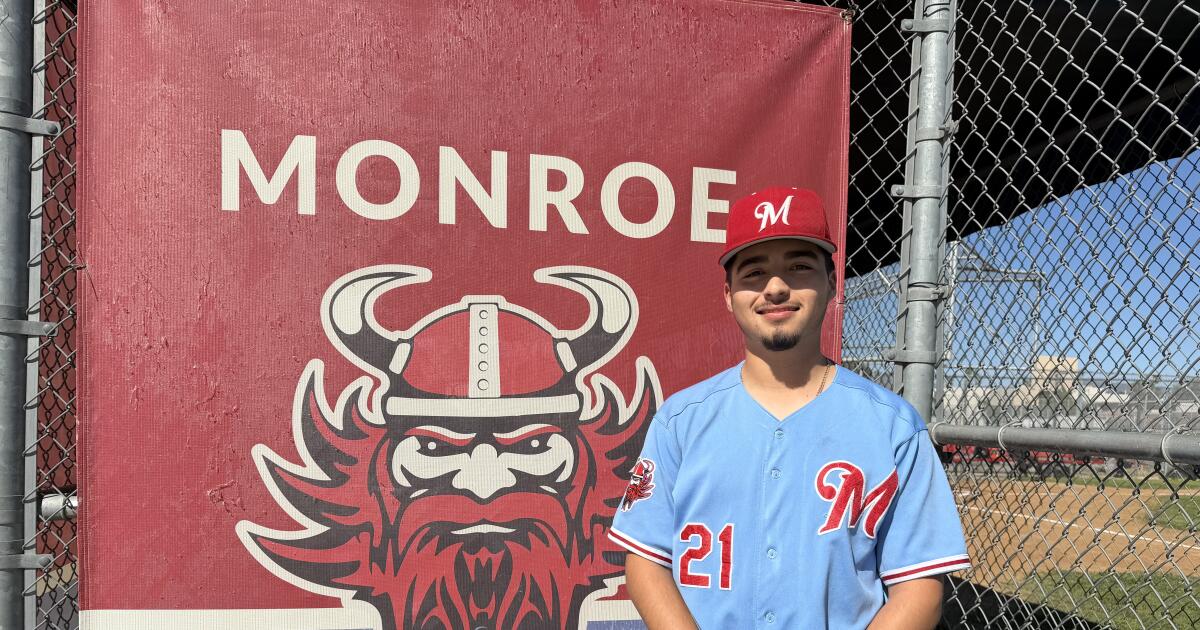
It’s an hour before Monroe High’s baseball team takes infield practice. In the dugout dressed in his uniform, Miguel Gonzalez has his scissors out giving a free haircut to a teammate.
“Ten out of 10,” infielder Alexander Hernandez said when describing Gonzalez’s barber skills.
His pitching skills aren’t bad either. He struck out 12 in six innings in his season debut. He’s 5-0 with a 0.69 ERA. He’s a four-year varsity player for the surprising Vikings, who are 13-1 to start this season under second-year coach Eddie Alcantar.
The fact that Gonzalez is still playing might come as the biggest surprise if you knew all the responsibilities he faces as an 18-year-old.
Alcantar was getting worried last January when Gonzalez didn’t show up for winter workouts.
“I have a rule if you don’t show up for practice, you don’t play,” Alcantar said.
They finally met and Gonzalez revealed he’s been too busy working as a barber. And then came the big news: He’s going to become a father in July.
The Monroe High baseball team is off to an 13-1 start.
(Eric Sondheimer / Los Angeles Times)
It’s a delicate balancing act between work, school, baseball and the seriousness of being a parent as a teenager.
“I’ve been able to figure scheduling little by little,” Gonzalez said. “I do sleep. Maybe five hours.”
Gonzalez said he worked seven days a week as a barber during the summer. He’s been saving for his future while also making sure he did not have to ask his parents for money. He works weekends and sometimes has to leave practice after an hour for work.
As far as baseball, he added a slider this season, picked up some velocity and tries to throw three pitches for strikes.
Against Eagle Rock, he struck out 10 and gave up two hits in a 3-1 win. Against Arleta, he struck out 10 in six innings during a 6-1 victory with one walk. Against Westchester, he got two outs — both strikeouts — in a 3-1 win. Against Vaughn, he gave up two hits in six innings of a 2-0 victory..
Monroe, which used to be a City Section powerhouse in the 1970s when Denny Holt was head coach, also has received a strong season from junior Luis Martinez, who has 21 hits and is batting .500.

Pitcher Miguel Gonzalez has helped Monroe to an 13-1 start with a 5-0 record and 0.69 ERA.
(Eric Sondheimer / Los Angeles Times)
He said his parents have been supportive: “They have told me it’s a really big responsibility.”
After high school, he plans to go to an occupational school to learn more about being a barber. He’d love to continue playing baseball, but that will depend on his development and his priorities. So far, his balancing act is keeping him levelheaded and determined.
He’s been working since he was 5 when he helped his father in landscaping. He switched to cutting hair and loves it. His clients swear by him.
“He’s a good kid,” Alcantar said.

NEWYou can now listen to Fox News articles!
For the first time in more than two decades, the Illinois men’s basketball team will still be dancing when the Final Four tips off.
Iowa’s underdog run in the NCAA Tournament ended Saturday with a 71-59 loss to a dominant Illinois team. Before Illinois could cut down the nets at Houston’s Toyota Center, a buzzer malfunction caused a loud, roughly 10-minute delay.
The buzzer initially sounded signaling the end of a media timeout with just under eight minutes remaining in the first half. The horn continued blaring for about another seven minutes.
A referee talks with the scorer’s table during an official’s timeout due to a broken shot clock horn during the first half of an Elite Eight game between Iowa and Illinois in the NCAA Tournament Saturday, March 28, 2026, in Houston, Texas. (AP Photo/Ashley Landis)
Players stood on the court ready to play for a couple of minutes before both teams started to warm up as the buzzer continued to sound.
It was finally silenced, to cheers from the crowd, but then the main scoreboard and video screen that hangs over the middle of the court went dark.
The game ultimately resumed with the big scoreboard still off. Two smaller scoreboards at each end of the arena were working.
Freshman guard Keaton Wagler scored 25 points to help secure Illinois’ first Final Four berth since 2005.
Keaton Wagler (23) of the Illinois Fighting Illini dribbles against Isaia Howard (23) of the Iowa Hawkeyes during the first half in the Elite Eight of the 2026 NCAA Tournament at Toyota Center March 28, 2026, in Houston, Texas. (Alex Slitz/Getty Images)
This will be the sixth overall trip to the Final Four for Illinois, which has never won a national title. The Fighting Illini will face either Duke or UConn next week in Indianapolis.
The Associated Press contributed to this report.
Follow Fox News Digital’s sports coverage on X, and subscribe to the Fox News Sports Huddle newsletter.

Boston Celtics Star Jayson Tatum Made History In Hornets Game

Game Thread: Denver Nuggets vs Golden State Warriors. March 29th, 2026. – Denver Stiffs

Trio helps Ottawa beat Seattle 2-0, spoiling return of Torrent captain Hilary Knight

Home damaged by fire in Carmel Valley
![[*LIVE*] Los Angeles Lakers vs Milwaukee Bucks Live Free Streams On Sport’sTvl 30 March 2026](https://i3.wp.com/encrypted-tbn0.gstatic.com/images?q=tbn:ANd9GcReQZPBURuIIuh0fPF6YTAqOY-y1_BeWJWzPA&s&w=80&resize=80,80&ssl=1 "[*LIVE*] Los Angeles Lakers vs Milwaukee Bucks Live Free Streams On Sport’sTvl 30 March 2026")
[*LIVE*] Los Angeles Lakers vs Milwaukee Bucks Live Free Streams On Sport’sTvl 30 March 2026

Florida High School Football Rankings: Top 25 teams – Oct. 21

How old is Bo Nix? What to know about Oregon quarterback ahead of 2024 NFL Draft

Cleary's 21 help Le Moyne down Central Connecticut State 69-64 in OT

99th annual Pony Swim held in Virginia

Indiana Members Credit Union announced as new anchor tenant at Bottleworks District

Scathing report claims nation’s oldest labor union ‘betrayed’ MAGA members through ‘shocking’ spending

Republican US lawmaker demands Congress vote on any Iran troop deployment

So you went to a No Kings protest. Now what?

JD Vance says he was ‘obsessed’ with UFOs, believes aliens are actually ‘demons’
The EU's recipe for trade deals : easy on beef, tough on wine
-

 Sports1 week ago
IOC addresses execution of 19-year-old Iranian wrestler Saleh Mohammadi
-

 New Mexico1 week ago
Clovis shooting leaves one dead, four injured
-

 Miami, FL4 days ago
Jannik Sinner’s Girlfriend Laila Hasanovic Stuns in Ab-Revealing Post Amid Miami Open
-

 Tennessee6 days ago
Tennessee Police Investigating Alleged Assault Involving ‘Reacher’ Star Alan Ritchson
-

 Minneapolis, MN4 days ago
Boy who shielded classmate during school shooting receives Medal of Honor
-

 Politics1 week ago
Schumer gambit fails as DHS shutdown hits 36 days and airport lines grow
-

 Science1 week ago
Record Heat Meets a Major Snow Drought Across the West
-

 Technology1 week ago
YouTube job scam text: How to spot it fast