Sports
How did curling become a Winter Olympics sensation? Inside the sports’ unique history

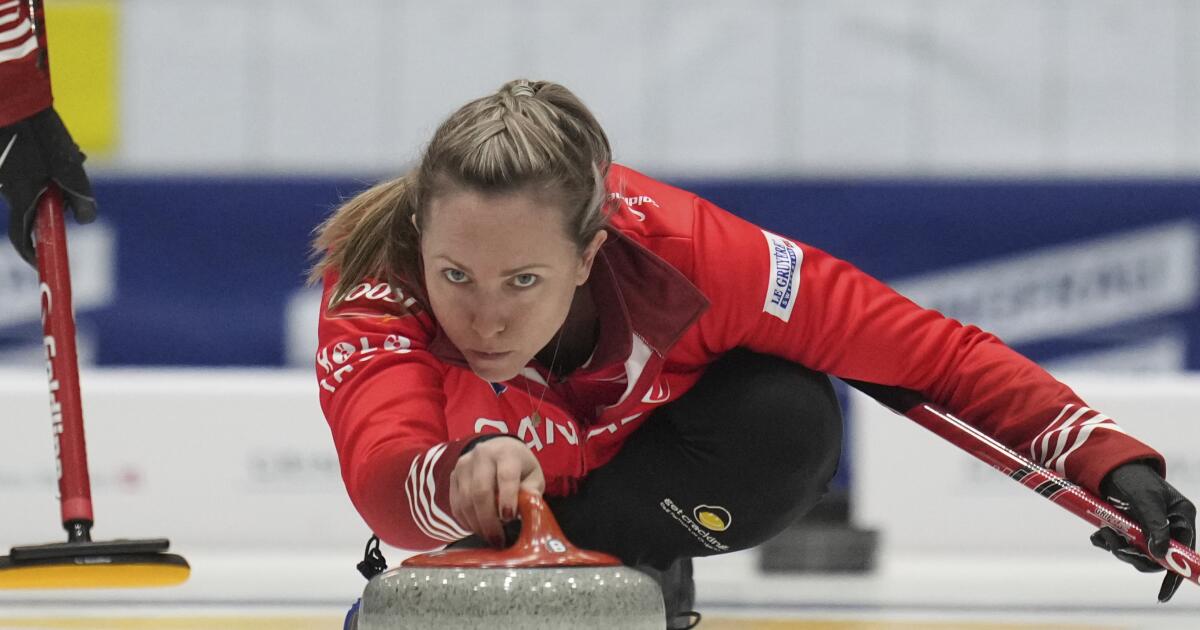
EDMONTON, Canada — Jason Hills grew up in a rural hamlet in southern Alberta so small there were no traffic lights. Which wasn’t a problem because there wasn’t any traffic either.
But there was a curling rink.
“There was nothing else really to do,” Hills said. “So if you weren’t curling you’d go hang out at the curling rink. It’s a community thing. It’s like everyone gets together.”
In much of the world curling is a curiosity, a sport which, like luge or the biathlon, surfaces every four years at the Winter Olympics — as it will do in February in Cortina D’Ampezzo, Italy — then quickly fades from view.
Canada’s Tracy Fleury (R) releases the stone during a gold medal match against Switzerland at the World Women’s Curling Championship in Uijeongbu on March 23.
(JUNG YEON-JE/AFP via Getty Images)
In Canada, however, it’s as much a part of the culture as poutine and maple syrup.
More than 2.3 million people — or one of every 18 Canadians — participate in the sport annually. That’s about 100 times the level of participation in the U.S. And more than 11 million Canadians watched the sport on TV in 2024, according to estimates from Curling Canada, the national governing body for the sport.
“It’s just embedded in the fabric of Canada,” said Elaine Dagg-Jackson, an Olympic bronze medalist and now one of Canada’s top curling coaches. “Canadians have a real identity with what curling is and what it stands for. It’s a gracious sport where people are being polite. They shake hands before and after the game.
“The curling rink was just a really good place to be in Canada. And still is. It just really suits the culture.”
The objectives of the sport are simple: Teams of two to four players slide 44-pound granite stones, also known as rocks, down a narrow 150-foot-long sheet of ice toward a target area called the house, aiming to get their stone closest to the center of the house. One or two players from the throwing team use carbon-fiber brooms to sweep the ice in front of the moving stone, influencing its path and speed.
A round of play ends when each team has thrown eight stones; in Olympic curling, a match consists of 10 ends, eight in mixed curling, with games typically lasting two to three hours.
The simplicity of the sport is both its charm and its curse. Because there is no running, jumping or lifting of heavy objects, everyone from young children to octogenarians can, and do, compete in amateur curling in Canada.
“It’s relatively inexpensive and it’s relatively accessible,” said Heather Mair, an associate professor at the University of Waterloo. “It’s not a hard sport to play and have fun at. It’s hugely entertaining. And you can really play your whole life.
“I don’t know too many sports you could go out with your grandfather and participate. It can be really family-oriented as a sport.”
But while it looks easy, to excel at the highest levels, where millimeters separate winners from losers in competitions that can stretch for as long as seven hours over multiple days, the sport requires surprising strength, stamina, precision and agility.

Canada’s Brett Gallant curls the stone during the 2022 Winter Olympics in Beijing on Feb. 17, 2022.
(LILLIAN SUWANRUMPHA/AFP via Getty Images)
“It definitely takes a toll on your body,” Rachel Homan, a three-time Canadian Olympian and three-time world champion, said during a break in training on a bright Edmonton morning. “That part of the game is maybe overlooked; the physical toll it takes. It’s definitely demanding.”
The curling events at February’s Winter Olympics will be held at the Cortina Olympic Stadium in Cortina D’Ampezzo, one of four event clusters in and around Milan. Canada, which has medaled in curling in every Olympics in the modern era, winning a record six golds, will send a dozen athletes — including Homan, the reigning world champion — to Italy to compete in the men’s, women’s and mixed doubles.
The U.S., which has won two Olympic curling medals, both in the men’s competition, will also have a dozen curlers in Italy competing in all three events. But if the sport is a national pastime in Canada, one that competes with hockey for fans and media attention, it remains something of an oddity in the U.S., where it draws huge TV audiences every four years during the Olympics, then fades from view until the next Winter Games.
“It’s so frustrating to see curling become the next best thing to sliced bread for a month and then it comes off the radar for four years,” said Korey Dropkin, a five-time U.S. champion and a 2023 world champion in mixed doubles. “I want to see something that’s on national television in the U.S. every week. I want to be able to expose our amazing sport to the U.S. audience day in, day out.
“I hope that in the near future we’ll be able to create more opportunities for exposure for curling.”
Curling was born in Scotland in the early 16th century but grew up centuries later on the Canadian prairies, where the severe weather, rural landscape and boredom provided fertile ground.
“In many parts of the country there’s long, long winters,” Dagg-Jackson said. “The farmers would be busy all summer, but in the winter they were looking for something to do. So the old adage in Canada is you could go to any town in rural Canada and find a grain elevator and a curling rink.”

Members of the Highland Curling Club, formed in 1898, play on flooded sheets of ice on Jan. 11 in Inverness, Scotland.
(Jeff J Mitchell / Getty Images)
The sport, which predates hockey by several decades, was brought to Montreal by Scottish emigrants during the colonial period, more than a half-century before Canada became a country. It then moved west as settlers pushed into what would become the central provinces, where the game was played on ponds and lakes before coming indoors.
In many ways the sport and the harsh conditions in which it thrived embodied the traditional values and traits — resilience, community, politeness, resourcefulness — that have come to define Canada’s unique “northern character.”
Mair, the Waterloo professor, has studied the role curling played in creating social and inter-generational connections and found the sport may have been more important from a mental perspective than from a physical one.
“I don’t know if you can appreciate what a Canadian winter is like, but anything that gets us out of our homes and talking to one another is really, really important,” she said. “We know how necessary it is that we spend time socializing with one another, especially in the dark winter days.”
As a result, it quickly became hugely popular, but for reasons that went beyond sport. Most curling rinks, Mair said, provide social spaces where players can visit with the people they’re competing against.
“So you’re sitting there for half an hour with people that you might never run into in any other part of your life and you start to build social relationships,” she said. “In really small rural communities, those are pretty essential. That’s kind of how it started.”

Aksarban Curling Club president Steve Taylor demonstrates how to push off the hack to deliver a stone in front of an all-ages group learning about the sport in Omaha, Neb., in 2018.
(Nati Harnik / Associated Press)
It’s also why the flat lands of Saskatchewan, Manitoba and Alberta became the earliest hotbeds of curling, which aligned well with the farming season. But the sport didn’t stay there. Curling clubs soon sprung up on Army bases and in fishing communities, in big cities and small towns, where it was taught in schools and played in retirement homes. (Curling has taken a different path in the U.S., where it has become popular in nontraditional winter-sports areas such as North Carolina, Florida, Texas and the San Francisco Bay area.)
“There were entire generations, for the most part, who really had a sense of the game,” Mair said. “The[re] were plumbers and carpenters and teachers, they had regular day jobs and yet they were these really talented athletes who would take the sport to these elite levels.
“So you could come from a teeny, tiny club and you might know someone who’s playing in the national championship.”
That romanticism inspired a radio play and novella by W.O. Mitchell, a writer and broadcaster who chronicled life on the Canadian prairies in the mid 20th century. In “The Black Bonspiel of Willie MacCrimmon,” which was also adapted for television, a cobbler from a small town in rural Alberta strikes a deal with the devil to trade his soul for curling success.

American John Shuster watches Matt Hamilton, center, and Colin Hufman, left, sweep his throw during a match against Canada at the Beijing Winter Olympics in 2022.
(Brynn Anderson / Associated Press)
But as curling moved from the prairies to the cities, the object lessons the sport taught changed as well. If Mitchell’s tale is a decades-old take on the timeless tug of war between good and evil, “The New Canadian Curling Club,” a 2018 comedy by playwright Mark Crawford in which four immigrants show up for a learn-to-curl class, is a modern exploration of multiculturalism and acceptance.
What the immigrants share, however, is a belief that understanding Canada starts with understanding curling.
“It’s weird and wonderful. And like all good things, it takes a little time to appreciate,” Mair, who teaches in the department of recreation and leisure studies at Waterloo, said of the sport. “At first glance you’re not totally sure what’s going on. And then as the layers start to kind of unfold, you realize just how interesting and complicated and engaging it can be.
“It’s fun. It really is. It’s quirky and fun. And I think we need more of that.”
But, she added, much of that has changed since curling entered the Olympics.
“We’re at a bit of a crossroads,” she said. “Elite sport is doing just fine in a lot of ways. [But] we need to have a different conversation about community sport. It’s not about a pathway to Olympic gold. It’s about rebuilding our communities and providing safe and accessible sports for everything. And curling is just so special in that way.”
Curling debuted in the Winter Games in 1924 with just three countries taking part; Great Britain, which fielded a team of Scottish curlers, won the gold medal. But the sport didn’t return to the official Olympic program for another 74 years and when it did, the exposure fueled interest in winter sports powerhouses such as China, Japan and South Korea, but also in Afghanistan, Andorra, Bolivia, the Virgin Islands, Kuwait and Mexico, which are all among the 67 members of the World Curling Assn.
“There’s a little bit of perception from America that curling is small potatoes. And it probably is compared to the big four sports,” said Marc Kennedy, a world and Olympic champion from Canada who will be competing in his fourth Olympics in Italy. “But it’s a big deal. Arguably one of the fastest-growing sports internationally. It’s massive in Asia. Some of our most popular athletes are from Japan.”
That added competitiveness — 30 countries attempted to qualify for this year’s Olympic tournament — has not only raised the stakes and professionalized the sport, it also threatens to crush curling’s gracious and polite traditions in a stampede for the top of the medal podium. In last spring’s world championship in Canada, for example, Chinese athletes were accused of touching a stone with a broom, kicking a stone and illegal sweeping — all forbidden acts.
In most other sports, that would have been considered gamesmanship. In curling, the accusations alone were an affront to the sport’s tradition and dignity.

Team Shuster’s Chris Plys throws the rock during the U.S. Olympic curling team trials in Omaha, Neb., on Nov. 20, 2021.
(Rebecca S. Gratz / Associated Press)
“In curling you always divulge that you broke a rule … and apologize,” said Dagg-Jackson, the former Olympian turned coach.
“It’s supposed to be a gentleman’s game. You’re supposed to call your own fouls,” added Chris Plys, a three-time U.S. Olympian. “Now we’re starting to see people doing questionable things.
“It’s sad because the best part of the game is just how honest everything is. And there’s people out there 1766935687 that are willing to do whatever it takes to win.”
Those athletes certainly aren’t cheating for the money since curlers, even at the highest level, have often had to work regular jobs to pay the bills. That could change this spring with the launch of the Rock League, the sport’s first professional competition, which will begin play shortly after the Milan-Cortina Olympics.
“The Rock League is going to be a huge new chapter to the sport,” said Dropkin, the Olympian who will captain the U.S. Rock League team. “That is going to present a whole lot of opportunities to curlers. Curlers now, curlers [in] the pipeline. They can actually make a living.”
The five-week circuit will feature six teams of five men and five women — one from the Asian-Pacific, two from Canada, two from Europe and one representing the U.S. — playing a variety of formats during stops in the U.S. and Canada. Competitors will not just earn money based on performance, but will receive salaries as well.
Historically the sport has relied heavily on prize money, which doesn’t go far. Kennedy’s winning five-man team at the 2025 Brier, the annual Canadian men’s championships, split $108,000 of the tournament’s $300,000 purse last March, which didn’t leave much after paying for travel and housing at the 10-day event.
The Dodgers will pay Shohei Ohtani more than that every time he comes to the plate over the next 10 seasons.
“I don’t think any of us get into curling with the idea of making millions of dollars,” said Kennedy, 43, a father of two who sold his frozen-food franchise 14 years ago to support his curling career. “You’ve got a lot of curlers out there that still play for the love of the game and for the opportunity to represent Canada at the Olympics or World Championships.
“If money was your motivation, then you’re probably in the wrong sport.”

Rachel Homan throws a rock during Canadian Olympic curling trials in Halifax, Nova Scotia, Canada, on Nov. 25.
(Darren Calabrese / Associated Press)
For Homan, 36, a mother of three young children who has traditionally relied on sponsorships, stipends from the national federation and winnings from underfunded tours such as the Grand Slam of Curling to make ends meet, the Rock League has the potential to change not only her life, but her legacy as well.
“In this league, being a part of it, might not mean anything for me financially right now. But it’s more about what you’re leaving behind and what you’re helping create,” said Homan, who will captain one of the league’s two Canadian teams.
Financing a professional league isn’t the only challenge curling will face coming out of the Milan-Cortina Games, though. Because while the Olympics may help the sport gather viewers, it has done little to reverse a steady decline in participation at the grassroots level, which is robbing the sport of its future athletes.
“It’s just hard to get young kids introduced to it and have access to it,” Kennedy said. “Back in the ‘50s, ‘60s, ‘70s and ‘80s it was the community center. Everybody kind of learned curling, especially out west. That’s what was driving a huge part of our sport for a long time.”
Not any more. Canada, like the U.S., has seen millions of people flee rural areas for big cities over the last several decades and as a result the local curling rink is no longer the civic hub it was when Jason Hills was growing up on the frigid plains of central Alberta. And what investment there is in the sport is now being directed to events such as the Olympics, the Grand Slam of Curling or the fledgling Rock League, not to building more community rinks.
“Curling had to pivot a bit,” said Dagg-Jackson, who takes her five grandchildren curling. “It used to be all about membership, about the thousands and thousands of curlers across the country. Now those few competitive curlers that shine in the spotlight are known to all Canadians because they’re on television all the time and they draw attention to the sport.
“Fifty years ago you just waited at the rink and people showed up because it was the place to be. Big events, Olympics, pro leagues, that’s the future of curling. But the culture and the lore, the history of curling, it’ll always be there.”

Sports
Thunder lose star Jalen Williams for Western Conference Finals Game 7 as hamstring injury lingers

Spurs force Game 7 vs. Thunder, SGA struggles, Will Wemby carry this momentum? | The Herd
Victor Wembanyama scored 28 points and 10 rebounds in the San Antonio Spurs’ 118-91 win over the Oklahoma City Thunder in Game 6 of the WCF. Jason McIntyre says that Wemby showed up in the biggest moments, and asks if he can carry this momentum into Game 7. Plus, he discusses Shai Gilgeous-Alexander’s struggles and asks if he will cost the Thunder the series.
NEWYou can now listen to Fox News articles!
The Oklahoma City Thunder will be shorthanded in Saturday’s pivotal Game 7, as one of Oklahoma’s key contributors has been sidelined with an injury.
OKC guard Jalen Williams has been ruled out for Game 7 with a hamstring issue, ESPN reported on Friday. Williams appeared to aggravate his left hamstring during the Thunder’s 122-113 victory in Game 2. He missed the next three games before returning for Game 6, but logged just 10 minutes off the bench in Oklahoma City’s loss to the San Antonio Spurs on Thursday, which forced a winner-take-all Game 7.
“He’s obviously not 100%,” Mark Daigneault, the head coach of the Thunder, said.
Oklahoma City Thunder guard Jalen Williams watches during the fourth quarter against the San Antonio Spurs in Game One of the NBA Western Conference Finals at Paycom Center in Oklahoma City, Oklahoma on May 18, 2026. (Alex Slitz/Getty Images)
Daigneault applauded Williams for fighting through the injury and doing everything he could to help Oklahoma City.
“He didn’t know what to expect. I didn’t know what to expect. So, it was a matter of getting him out there in kind of an insulated role and see what he can bring to the team. He’s an All-Star player, he’s an All-NBA player. He hasn’t done a full return to play [protocol] like he would if this was the regular season, and yet, he just wants to do whatever he can to try to contribute whatever he can to the team.”
BLOCKBUSTER GAME 7 SHOWDOWN: FOUR BEST BETS FOR SAN ANTONIO SPURS AT OKLAHOMA CITY THUNDER
“I give him a lot of credit to get himself out there. He did the best he could. He’s certainly not the reason we lost.”
Oklahoma City Thunder forward Jalen Williams reacts to a shot by forward Luguentz Dort in the third quarter against the San Antonio Spurs during game one of the Western Conference finals for the 2026 NBA playoffs at Paycom Center in Oklahoma City, Oklahoma, on May 18, 2026. (Alonzo Adams/Imagn Images)
Williams did not talk to reporters after Thursday’s game in San Antonio.
Williams underwent surgery last offseason to repair a wrist injury but still played a key role in the Thunder’s run to the NBA Finals last season. He appeared in just 33 regular-season games before this year’s playoffs.
Oklahoma City Thunder guard Jalen Williams drives into the paint during the first quarter of Game Two of the NBA Western Conference Finals against the San Antonio Spurs at Paycom Center in Oklahoma City, Oklahoma on May 20, 2026. (Alex Slitz/Getty Images)
CLICK HERE TO DOWNLOAD THE FOX NEWS APP
The winner of Saturday’s Game 7 will advance to the NBA Finals to face the New York Knicks. New York snapped a nearly three-decade Finals drought by sweeping the Cleveland Cavaliers in the Eastern Conference finals.
Follow Fox News Digital’s sports coverage on X, and subscribe to the Fox News Sports Huddle newsletter.

CLOVIS — Cool conditions produced a bunch of fast times Friday at the CIF state track and field championships.
Rosary Academy sprint coach Jon Gilmer was worried 4×100-meter relayers Tra’via Flournoy, Justine Wilson, Pfeiffer Lee and Maliyah Collins might get complacent at prelims, but the Royals were the top qualifiers in 45.13 seconds — nearly a full second faster than Canyon Country Canyon (46.07) — at Buchanan High School.
“It’s different not having Calabasas here,” Gilmer said. “Now we’ve got to push ourselves.”
Rosary set a state record (44.23) at the Arcadia Invitational on April 11, but lost to the Coyotes one week later at the Mt. SAC Relays. However, the anticipated state finals clash was not to be as Calabasas dropped the baton in the Southern Section finals and failed to advance.
Collins had a huge lead by the time she received the stick for the anchor leg Friday.
“This is maybe our fourth- or fifth-fastest time but we just wanted to make finals,” said Wilson, who ran the second leg before handing off to Lee. “We want to run faster tomorrow when we go for a PR, the meet and the state record.”
Calabasas might be out of the relay, but three Coyotes remain in contention in the 100, led by Malia Rainey (the top qualifier in 11.54), Marley Scoggins (11.63) and Olivia Kirk (11.63).
Calabasas sprinter Marley Scoggins, center, wins her 100-meter heat at the CIF state track and field preliminaries on Friday.
(Steve Galluzzo / For The Times)
Collins won her heat in 11.62, the third-fastest time.
Servite won the first heat in the boys 4×100 relay in 40.29 — two hundredths off its winning time at last year’s state finals — and is primed to defend its title in the event. Concord De La Salle (40.81) was the second-fastest qualifier, followed by the other heat winners, Rancho Cucamonga (40.87) and Loyola (40.93).
“We got the stick around pretty good today,” said Jorden Wells, who ran the first leg Friday instead of his customary second leg, which was run by Jaelen Hunter. “Did it feel different? Not really, I’ve done it before.”
Wells said his twin brother Jace will run the first leg Saturday, he will run the second while Kamil Pelovello and Benjamin Harris will stay in the third and fourth positions.
Harris, the favorite to win the 100 meters, won his heat in a wind-legal 10.36, but three others were fractions faster in wind-aided times — Elk Grove’s Cy Lugo (10.20), Will Wood’s Deshawn Seymour (10.34) and De La Salle’s Damari Dean (10.34). Newbury Park’s Jaden Griffin won the last heat in 10.37, setting the stage for an exciting finals sprint as all nine qualifiers ran under 10.48.
Harris put himself in position for a Saturday double by winning his 200 heat in 21.10 but as he did in the 100, Lugo (the Sac-Joaquin Section record holder) had the fastest time (20.73), followed by Seymour (20.88), Camren Hughes (20.93) of Palos Verdes and Jace Wells (21.02). Jordan Wells (21.11) also made the cut.

Newbury Park’s Jaden Griffin, center, shouts after winning his heat in the 100 meters at the CIF state track and field preliminaries on Friday.
(Steve Galluzzo / For The Times)
Servite (3:15.43) had the second-fastest qualifying time in the 4×400-meter relay behind only El Cerrito (3:14.96) of the North Coast Section.
Coming off a state-record 3:33.83 at the Masters Meet in Moorpark, Long Beach Wilson’s 4×400 girls relay had the fourth-fastest qualifying time (3:46.73) without two out of its best runners (Clara Adams and Saniah Varnado), taking second in the first heat behind San Luis Obispo (3:45.85) and safely advancing to the finals along with Heat 2 runner-up Rosary (3:45.08) and Heat 3 winner Canyon Country Canyon (3:46.77).
Having broken the Southern Section record in the 400 meters six days earlier in 51.98, Adams put it in cruise control to win her heat in 53.53, the fastest qualifying mark. Joining her in the final will be her three relay teammates Varnado (54.42), Wilson (54.57) and Fowler (54.62). Adams later won her 200 heat in 23.60, a tenth of a second behind fastest qualifier Naiaja Sizemore of Vanden.
San Jacinto Valley Academy’s Kaahliyah Lacy ran a wind-legal 13.59 for the top qualifying spot in the girls 100 hurdles and Varnado (40.85) was the top qualifier in the 300 hurdles.
Another showdown is brewing in the boys 400, where Loyola’s Ejam Yohannes (47.08) and Hunter (47.21) won their heats in the two fastest times Friday. Hunter clocked 46.32 to set a California freshman record last spring, but lost to Yohannes by 11 hundredths of a second at the Masters Meet.
City Section champion Jayden Rendon showed good form in his bid to defend the state 300 hurdles crown, posting the fastest prelims time (36.80). He also advanced to the finals in the 110 hurdles with a 13.83 effort. Moorpark’s Davis Benson (14.03) nabbed the last spot.

Corona Santiago’s Braelyn Combe, right, wins the first heat of the 800 meters at the CIF state track and field preliminaries on Friday.
(Steve Galluzzo / For The Times)
Corona Santiago senior Braelyn Combe won her 1,600 heat in 4:46.88 and is set for a four-lap battle with San Diego Section champion Chiara Dailey of La Jolla, who won the second heat in 4:46.00. Combe is the defending champion, having edged Hanne Thomsen of Santa Rosa Montgomery by five hundredths of a second in the finals last year.
“I just wanted to advance with as little effort as possible,” Combe said. “It was not as hard as I expected. I don’t want to leave any regrets. I’m taking it one race at a time.”
Combe also had the fastest time (2:08:25) of three heats in the 800 meters.
Venice senior Lawrence Kensinger, who set the City Section shot put record with a state-leading throw of 65 feet 11 inches last week, had the third-best mark at prelims (59-6¾) and easily advanced to the finals. Defending state high jump champion JJ Harel of Sherman Oaks Notre Dame tied nine others for the second-best mark (6-6) heading into the second day.
Aliso Niguel senior Jaslene Massey had the top marks in the girls shot put (51-3¾) and discus (175-6) and transgender athlete AB Hernandez from Jurupa Valley was the leading qualifier in the girls long jump (20-5½) and triple jump (41-8½) and was one of 13 qualifiers in the high jump.

AB Hernandez competes at the CIF state track and field preliminaries at Buchanan High School on Friday.
(Tomas Ovalle / For The Times)

NEWYou can now listen to Fox News articles!
We’re approaching the biggest sporting event North America has ever hosted.
The 2026 FIFA World Cup takes place across the USA, Canada and Mexico in 13 days.
Bettors and fans already have their sights set on the global spectacle, which will kick off on June 11. The World Cup final will be held at New Jersey’s MetLife Stadium on July 19, 2026.
After the World Cup groups were announced in December, Spain opened as the favorite at +450, followed by England (+550) and France (+750).
Now, with less than two weeks to go, Spain has slightly drifted to +475, with both France and England making up ground on the oddsboard.
Let’s dive into the odds via DraftKings Sportsbook as of May 29.
This page may contain affiliate links to legal sports betting partners. If you sign up or place a wager, FOX Sports may be compensated. Read more about Sports Betting on FOX Sports.
2026 World Cup winner odds
Spain: +475 (bet $10 to win $57.5 total)
France: +500 (bet $10 to win $60 total)
England: +650 (bet $10 to win $75 total)
Brazil: +850 (bet $10 to win $95 total)
Argentina: +900 (bet $10 to win $100 total)
Portugal: +1000 (bet $10 to win $110 total)
Germany: +1400 (bet $10 to win $150 total)
Netherlands: +2200 (bet $10 to win $230 total)
Norway: +3500 (bet $10 to win $360 total)
Belgium: +3500 (bet $10 to win $360 total)
Colombia: +4000 (bet $10 to win $410 total)
Morocco: +5000 (bet $10 to win $510 total)
Uruguay: +5000 (bet $10 to win $510 total)
United States: +6000 (bet $10 to win $610 total)
Switzerland: +6500 (bet $10 to win $660 total)
Japan: +6500 (bet $10 to win $660 total)
Mexico: +8000 (bet $10 to win $810 total)
Croatia: +8000 (bet $10 to win $810 total)
Ecuador: +8000 (bet $10 to win $810 total)
Senegal: +9000 (bet $10 to win $910 total)
Sweden: +10000 (bet $10 to win $1,010 total)
HOST NATIONS
United States
The United States is led by Christian Pulisic, Weston McKennie, Tyler Adams, and Chris Richards, with several players competing in Europe’s top leagues. The U.S. has appeared in 11 previous World Cups, with its best finish coming in 1930 when the team reached the semifinals.
Canada
Canada’s key players include Alphonso Davies and Jonathan David, giving the squad top-tier pace and goal-scoring ability. Canada has made two previous World Cup appearances, and is still looking for its first win ever in the tournament.
Mexico
Mexico’s top contributors include Raul Giménez and Edson Álvarez, forming a strong mix of attacking talent and midfield stability. Mexico has played in 17 previous World Cups and reached the quarterfinals twice, in 1970 and 1986.
UEFA TEAMS TO KNOW
Spain
Spain’s top talents include Pedri, Lamine Yamal and Rodri, forming a core that blends elite playmaking with scoring depth. Spain has appeared in 16 previous World Cups and won the tournament once, lifting the trophy in 2010. The team also won the 2024 Euros.
France
France enters with Kylian Mbappé as the star player, with the 26-year-old just five goals shy of passing Miroslav Klose (16) for the most career goals at the World Cup. France has made 16 previous World Cup appearances and won the title twice, in 1998 and 2018.
England
England’s key players include Harry Kane, Jude Bellingham and Declan Rice, forming one of the nation’s strongest generations in decades. England has reached 16 previous World Cups and won the trophy once, in 1966.
Germany
Germany features Florian Wirtz, Jamal Musiala and Joshua Kimmich as central figures in a talented squad. Germany has participated in 20 previous World Cups and won four titles, most recently in 2014.
Portugal
Portugal’s top group includes Bruno Fernandes, Vitinha, with Cristiano Ronaldo still involved as the team’s all-time leading scorer and cap leader. Portugal has competed in eight previous World Cups and recorded its best finish in 2006, reaching the semifinals.
Netherlands
The Netherlands features top players such as Virgil van Dijk, Ryan Gravenberch and Denzel Dumfries, forming a core built around elite defending and midfield control. Memphis Depay should also be on the team, the country’s all-time leading goalscorer. The Netherlands has appeared in 11 previous World Cups and finished as runner-up three times, in 1974, 1978 and 2010.
CONMEBOL TEAMS TO KNOW
Argentina
Argentina is anchored by Lionel Messi, with Julián Álvarez, Enzo Fernández and Lautaro Martínez— headlining one of the most talented rosters in the tournament. Argentina has played in 18 previous World Cups and won three, including the most recent tournament in 2022.
Brazil
Brazil’s roster is led by Vinícius Júnior, Raphinha and Marquinhos, giving the team elite attacking and defensive quality. Brazil has appeared in every World Cup and holds a record five titles, with its most recent one coming in 2002.
Uruguay
Uruguay’s leading players include Federico Valverde, Darwin Núñez and Ronald Araújo, forming a core with elite midfield range and speed. Uruguay has appeared in 14 previous World Cups and won the tournament twice, in 1930 and 1950.
Colombia
Colombia is headlined by Luis Díaz and James Rodríguez, with the former playing for Bayern Munich and the latter having a decorated World Cup résumé. Colombia has made six previous World Cupsand recorded its best finish in 2014, reaching the quarterfinals.
CAF TEAMS TO KNOW
Morocco
Morocco’s key contributors include Achraf Hakimi, Noussair Mazaroui and Brahm Díaz, each with major European club experience. Morocco has appeared in six previous World Cups and achieved its historic best finish in 2022, reaching the semifinals.
Senegal
Senegal’s top players include Sadio Mané, Kalidou Koulibaly and Idrissa Gueye, forming one of Africa’s most experienced cores. Senegal has appeared in three World Cups and reached its best finish in 2002, advancing to the quarterfinals.
Ghana
Ghana is led by Mohammed Kudus, Antoine Semenyo and Inaki Williams, giving the squad strong playmaking and midfield presence. Ghana has competed in four previous World Cups and reached its best result in 2010, making the quarterfinals.
AFC TEAMS TO KNOW
South Korea
South Korea is headlined by Son Heung-min, supported by key players such as Kim Min-jae and Lee Kang-in. South Korea has played in 11 previous World Cups and reached its best finish in 2002, advancing to the semifinals as co-host.
Japan
Japan features Takefusa Kubo and Kaoru Mitoma as its leading players, blending top European experience with emerging talent. Japan has appeared in seven previous World Cups and reached the Round of 16 four times, its best result to date.
Australia
Australia’s top players include Jackson Irvine and keeper Mathew Ryan as its most experienced members. Australia has competed in six previous World Cups and reached the round of 16 twice, in 2006 and 2022.
OFC TEAMS TO KNOW
New Zealand
New Zealand is led by all-time leading scorer Chris Wood, with 45 international goals to his name. New Zealand has appeared in two previous World Cups (1982, 2010), and did not advance from the group stage in either appearance.
-

 South Dakota6 minutes ago
How to watch South Dakota State vs. Arizona State baseball today, time
-

 Tennessee9 minutes ago
What channel is Tennessee softball vs Texas Tech on today? Time, TV schedule to watch WCWS game
-
 Texas14 minutes ago
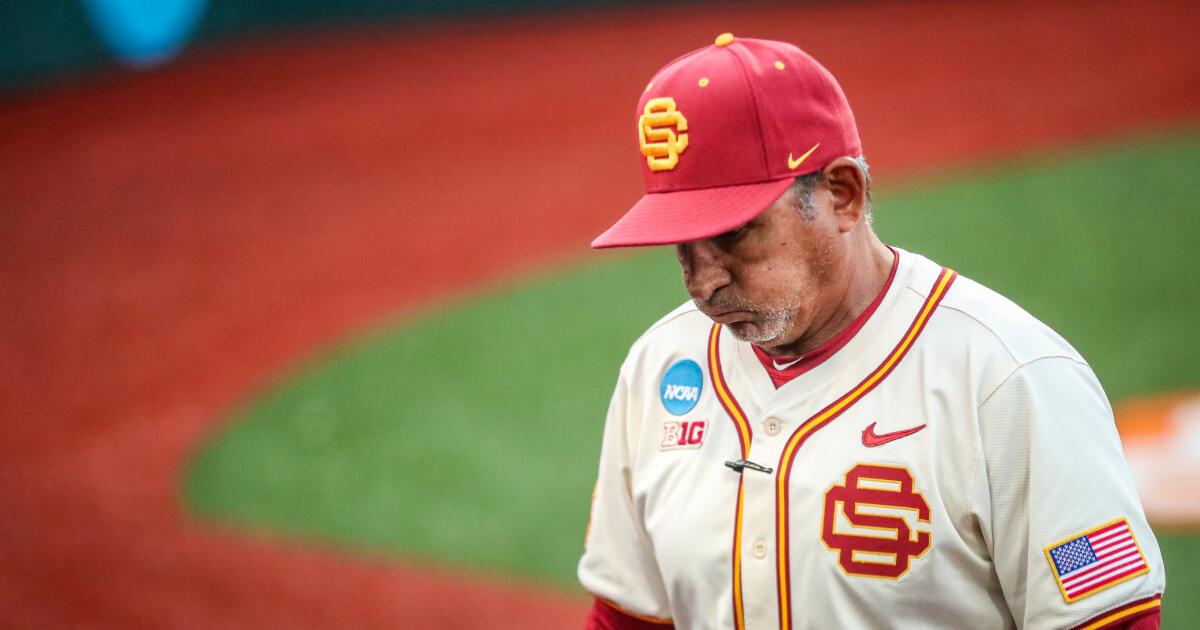
USC squanders late lead, falls to Texas State in NCAA regional opener
-

 Utah21 minutes ago
DHHS issues emergency actions against Utah behavioral school attended by Paris Hilton
-

 Vermont24 minutes ago
Vermont’s only theme park opened in the 50s. How Santa’s Land got its start
-

 Virginia29 minutes ago
‘I didn’t know I could go that fast’: Virginia pizza maker breaks record – WTOP News
-
Washington36 minutes ago
Washington Lottery Mega Millions, Cash Pop results for May 29, 2026
-

 Wisconsin39 minutes ago
Wisconsin Lottery Mega Millions, Pick 3 results for May 29, 2026

