Sports
How a cold, 'lonely' winter turned Kristaps Porziņģis into the Celtics' key to success


BOSTON — Before his new team had even seen the court, Kristaps Porziņģis was already competing.
At media day, players are shuttled through a circuit of interviews, news conferences and photoshoots. It’s a complicated operation that’s held up if one of the many moving parts stalls.
When the new guy, Porziņģis, came across a Ping-Pong table, he decided nobody could continue to the next stop until they beat him.
“I would say I’m a level above legendary,” Porziņģis told The Athletic with a laugh. “No, I’m decent. But I have some holes in my game that I need to improve. My backhand is a little suspect. My forehand is super dangerous, but I need to get my backhand better.”
In the past, Porziņģis’ confidence and competitiveness were often conflated with ego. When things fell apart in Dallas, where he played from January 2019 to February 2022, the perception that he was a bad teammate made its way around the league.
“I think every player has ego, right?” Porziņģis said. “You have to have it. It just needs to be under control. I think the older you are, the easier it is to understand the whole picture.”
After he turned his career around over a season-plus in Washington, Boston took a gamble he could join its locker room dynamic and embrace it. In Dallas, things never quite clicked with Luka Dončić. So, Porziņģis made it a point to start on the right foot with Jaylen Brown and Jayson Tatum.
“They were open to me here. There was not any kind of tension,” Porziņģis said. “I told them from Day 1, I’m coming in here to help you guys win. That’s all I’m here for and whatever it takes. If it takes me sitting on the bench or coming off the bench or whatever, then I’m here for it.”
Early in his career, Porziņģis was on a trajectory toward stardom. Then he went to Dallas, where things didn’t go as planned thanks to injuries and fit, and he had to start over.
His stint with the Wizards helped him find his identity. Boston gave him a chance for a renaissance.
“As a basketball player, I’m coming in pretty ready, entering my prime. But definitely, as a person, this year has been an interesting year for me outside of basketball,” said Porziņģis, 28. “But I think it was necessary. You always learn something, right? You’re like, ‘Oh, man, the way I was thinking two years ago.’ And it’s always evolving as a person.”
He wanted to try something different. He had previously lived with his brother, Janis, or his partner each season. But when he moved to Boston, he was solo.
“This is my first year where I’m completely alone. The winter is dark. It was just a long winter,” Porziņģis said. “Now that the weather is better and your friends are visiting, it’s different. But that (winter) came with a lot of time to just think about my own stuff. So this was a lonely season for me in a way.”
But with that loneliness came a focus on the team. Porziņģis formed an instant bond with his neighbor Brown, who lives in the same building.
“I think my experience helped us get on track right away to have a pretty smooth start,” Porziņģis said. “You saw early in the year, me and JB, we clicked right away (on the court) on a lot of those like back doors and then two-man games.”
Porziņģis said he studied Brown’s and Tatum’s games and spent time working with them to learn their spots on the floor. He soon understood where to set their screens, how to roll and then where to find them once the defense had to respond.
It was apparent early in the season that Porziņģis would be taking fewer shots than at any point since his rookie season. He leaned into it and the Celtics took off.
“A lot of the big guys may be stuck in their ways doing what makes them comfortable,” Tatum said. “He got outside his comfort zone a little bit and it made us a better team.”
Porziņģis wanted to win a playoff series, something he had never done. The Celtics’ goal was clear: Banner No. 18 or bust.
After a relatively healthy season, Porziņģis suffered a soleus strain in his right calf muscle in Game 4 against Miami and still has not taken the floor beyond the first round.
But as he plans to return for the NBA Finals against Dallas, which begins Thursday in Boston, he’ll have to revisit his past to complete his journey.
Kristaps Porziņģis’ journey will come full circle against Luka Dončić and the Mavericks in the NBA Finals. (Glenn James / NBAE via Getty Images)
Before Porziņģis got to Dallas, his ascension in New York made him the face of the Knicks once Carmelo Anthony was gone. Even as the team struggled to win and he struggled to stay healthy, it felt like the Knicks were becoming his team.
“Obviously coming from New York, the younger you are, the more I think you make it about yourself. Kind of like, this is who I am and this is how it needs to be or whatever,” Porziņģis said. “And then on top of that, you have that big city like New York build you up even more, right? Like, everybody that plays in New York feels like they’re bigger than they actually are. It’s that hype of the city, right?”
But then he tore his ACL, the Knicks traded him to Dallas, and he was no longer the guy. Both Porziņģis and the Mavs were betting he would return to form and become the partner Dončić needed to lift the team to contention. Even though Dallas gave him a five-year max deal, he had to fit with the nascent superstar.
Coach Rick Carlisle wanted to build a five-out system that spaced Porziņģis to the corners, but his game was based on the post up until that point. As Porziņģis’ injuries continued and Dallas needed a consistent offensive identity, Carlisle publicly declared it mathematically did not make sense to post him up.
“So it was just kind of like, boom, we’re not going to do this, it’s not effective. But maybe if Rick knew that I could be this effective, he would have had more patience,” Porziņģis said. “So I just really improved my game in the post and probably if I were the player that I am right now (when I went) to Dallas, Rick would look at it differently. I take responsibility for that and Luka was playing out of his mind. So, of course, we wanted to play through Luka and I was just there to support him.”
Their teammates in Dallas maintained that Dončić and Porziņģis got along fine off the court, but that the timing of Dončić being in his early 20s and Porziņģis constantly being hurt strained the on-court chemistry.
“I think if another person could have delivered the message to get them to play well, it would have worked out,” former Mavs teammate Dorian Finney-Smith said. “But where they both was at in their career, it was just rough.”
After being built up as a star in New York, Porziņģis accepted it would be Dončić’s team. But it was hard to embrace being away from the action.
“Coming from being the guy in New York when I was with him, he went to Dallas and they didn’t know how to mesh, I guess,” said Mavs wing Tim Hardaway Jr., who came to Dallas in the trade with Porziņģis. “Once you embrace that and realize that and accept your role, then everything will take care of itself and that’s what he’s done.”
Porziņģis said he understood quickly that while they could make it work, “it was just not going to work.” Once Dallas sent him to Washington in February 2022, he was determined to have things go right this time.
Some of his Wizards teammates expected he would bring ego to a team mired in mediocrity. While Porziņģis had come up short in Dallas, Washington hadn’t had a winning record since 2017-18.
“He came into the locker room the first day and it was clear that a lot of those things that were said about him about how he was not a great teammate, everything was totally the opposite,” former Wizards teammate Anthony Gill said. “He was one of the greatest teammates we’ve had here. He was unbelievable, man.”
Porziņģis would frequently get dinner with Gill and Deni Avdija on road trips, discussing life outside of basketball. Gill was surprised to learn that while Porziņģis was one of the most competitive players on the team, he also was childish and goofy.
“One thing he always did tell us is that I couldn’t fall into that trap of believing the narrative that’s always put out about players,” Gill said. “Because it can be the total opposite once you get to meet them.”

Porziņģis was able to reinvent himself and his game in Washington. (Rich Storry / USA Today)
When Porziņģis arrived in Boston, he and Celtics head coach Joe Mazzulla talked. The coach wanted him to be open about new roles and strategies. Mazzulla wanted to hone a system influenced by soccer that was more responsive to the opponent.
Open-mindedness would become a heuristic for processing everything, from expectations coming into a game down to reading the defense. Mazzulla wanted Porziņģis to see everything he did as part of creating an advantage.
“KP is (open-minded) because he’s European, so he watches (soccer), he watches UFC, he watches European basketball,” Mazzulla told The Athletic. “Those principles, he has learned really his whole life.”
In Dallas, he struggled to get deep post position and score over bigs. No problem. That was no longer a part of his job description.
The Celtics needed him to post up when he had a clear advantage, but they would help create those for him. The big man learned in Washington he could now effectively post up small defenders who switched and be a hub for Bradley Beal and others cutting around him. Porziņģis had enough of a base to shoot on balance with defenders underneath him. The fadeaways were gone, making it easier to link up with Beal once the ball was in his hands.
“KP’s special. That type of size, touch and versatility, I’m using that,” Beal said. “Even let him handle a little in those mini brush screens for him to come off and get going. So it was easy for me. He definitely revived himself last year with us, just being aggressive, finding his niche.”
The Celtics wanted to build a versatile team that could revolve around Porziņģis in the middle. They had guards who could post up, protect the rim or even live in the dunker spot behind the hoop. Once they replaced Robert Williams III and Malcolm Brogdon with Jrue Holiday, every player in their core rotation was a knockdown 3-point shooter.
His objective on offense was to force teams to switch, catch the ball at the free-throw line, and then shoot or pass over however many bodies were in front of him. His decision-making became easier because Boston surrounded him with so much talent and he was willing to sacrifice shots to keep the offense moving. As long as he could see the basket from his 7-foot-2 perch above the fray, defenses struggled to deter him.
Even though Porziņģis had never won a playoff series, Boston thought he could be the key to winning. After years of the Celtics’ crunchtime leads vanishing with the season on the line in the playoffs, Porziņģis was going to be their panacea.
“To me, it was more about the end game at the critical moments in the playoffs,” Mazzulla said. “Teams are going to switch, so how can we be ready to combat that?”
Boston had trouble maintaining its offense when playoff defenses ramped up to championship levels. Tatum and Brown struggled to find open lanes and clean looks when they couldn’t beat their man and the opposition knew how it wanted to help. Disrupting the Celtics’ rhythm was the key, which Miami and Golden State figured out and executed.
Mazzulla designed the offense to mimic late-game execution with a mantra to think fast and play slow. Whether they got a stop on defense, they would push the ball up the floor quickly, scope out a crossmatch and then get Porziņģis involved to punish it.
“We didn’t know going into the season how teams were going to guard him, so we were pretty open-minded to just seeing how that goes,” Mazzulla said. “But we knew the endgame was end of a game, end of a series, switching, how do we incorporate him into that?”
Most of the Celtics’ playbook is formations with an initial action, with various permutations improvised based on how the defense covers it. Mazzulla often scans the floor to see the matchups when his team gets the possession and will call out a play.
It didn’t take long for him to get a feel for how to use Porziņģis to maximize that leverage. Some teams would just switch and accept Porziņģis was getting a cross-match. Others would run a standard drop coverage and wait until the last second to veer him, which is a delayed switch.
Either way, Porziņģis often got to that spot at the nail where he could put the ball over his head and read the floor. As a result, Boston’s clutch net rating jumped from 4.6 last regular season to 15.4 in 2023-24, per NBA Stats.
Porziņģis became the focal point of one of Boston’s go-to plays, “Octagon.” It’s a play where he sets a screen for a ballhandler on the elbow with the other three Celtics spaced around the other side of the floor.
Because Porziņģis is screening a defender against the sideline with no help close by, it makes it easy for him to force the switch. From there, the defense either doubles so he can pass out, or he can work on a smaller defender.
“We have so many weapons that are so clutch, that all five of us can make something happen,” Porziņģis said. “It’s a nightmare for the other team, to be honest.”
As he prepares to make his NBA Finals debut, he’ll be the only player in the Celtics rotation who hasn’t been there before. But Mazzulla insists that for this team, the playoffs are the same as the regular season. Their system was designed, through Porziņģis, based on that principle.
“At this point in my career, I’m not chasing another contract, I don’t have these crazy expectations,” Porziņģis said. “I’m settling into who I am as a person, as a basketball player. I have my contract signed. It’s like the perfect situation for us to just go and win. And those things adding up at the right time, these guys entering their prime, it’s a perfect storm.”
Porziņģis recognizes that for the first time in his career he is not one of the franchise cornerstones. Brown and Tatum will lead, while Porziņģis plans to do what he’s done all season and embrace his role.
Just like his forehand, Porziņģis honed his game in the post to be “super dangerous.” The backhand was everything else that came with being talented in the NBA and not always getting your way.
Now he has his contract and a role he enjoys. He can be secure in who he is and how his career is going. Now there is only one thing left for him to chase.
“Those two guys (Tatum and Brown) leading us, we were a tough team to start and our record speaks for itself,” Porziņģis said. “But it won’t mean much if we don’t go all the way and that is our goal.”
(Top photo: Maddie Meyer / Getty Images)



Sports
Knicks miraculously overcome 29-point deficit to take commanding 3-1 lead in NBA Finals over Spurs

NEWYou can now listen to Fox News articles!
NEW YORK – The New York Knicks do not die.
After trailing by as many as 29, the Knicks had yet another comeback — this one perhaps the greatest of all-time, to steal a 107-106 win over the San Antonio Spurs and take a 3-1 lead in the NBA Finals.
The winning moment came at the fingertip of OG Anunoby, whose tip-in off a missed Jalen Brunson three-pointer put Madison Square Garden in an absolute frenzy.
But it sure was a grind to get to that point.
New York Knicks PG Jalen Brunson shoots over San Antonio Spurs PG De’aaron Fox in Game 3 of the 2026 NBA Finals at Madison Square Garden. (Vincent Carchietta/Imagn Images)
Karl-Anthony Towns was hit with two fouls in just the first 62 seconds of the game, one which the Knicks faithful were not happy with. And while there was plenty of ball left after that, the game changed from that moment.
The refs certainly did not help the case, but the Spurs opened the game on a 41-20 run, mostly while Towns was off the floor. Combine that with the team knocking down 54% of its three-pointers in the first half, and you have a 76-49 Spurs lead at halftime, and they got up to a 29-point lead.
But we’ve learned to never count out New York. As they cut the deficit to 15 to close out the third quarter, the crowd that was dying to pounce was finally alive. A slow start to the fourth put San Antonio up 20, but the Knicks went on a 13-2 run to cut it to just nine with a little less than seven minutes to go. And then it was seven with 5:15 to go.
Members of the New York Knicks celebrate their 107-106 victory against the San Antonio Spurs in Game 4 of the 2026 NBA Finals at Madison Square Garden in New York City, New York on June 10, 2026. (Dustin Satloff/Getty Images)
KNICKS OWNER, MAMDANI TRADE BARBS OVER CANCELED KNICKS WATCH PARTY OUTSIDE MSG: ‘DON’T WANT THE CELEBRATION’
And then it was four with 4:32 to go.
Then one with two minutes.
And then the lead with just 90 seconds left.
Pandemonium.
The Spurs hit two free throws to regain the lead with 30.3 seconds left. Yet again — it’s the Knicks.
New York Knicks guard Jalen Brunson reacts after making a three-point basket against the San Antonio Spurs during the fourth quarter of Game Four in the 2026 NBA Finals at Madison Square Garden in New York City, New York on June 10, 2026. (Al Bello/Getty Images)
Then came what head coach Mike Brown dubbed the greatest play in the history of Knicks basketball.
San Antonio was unable to get a shot off the inbound, and Madison Square Garden was the loudest it may have ever been, as the greatest comeback in NBA Finals history was complete.
After the game, head coach Mike Brown dubbed Anunoby’s tip-in the biggest play in the history of Knicks basketball.
The Knicks outscored the Spurs 58-30.
Follow Fox News Digital’s sports coverage on X, and subscribe to the Fox News Sports Huddle newsletter.
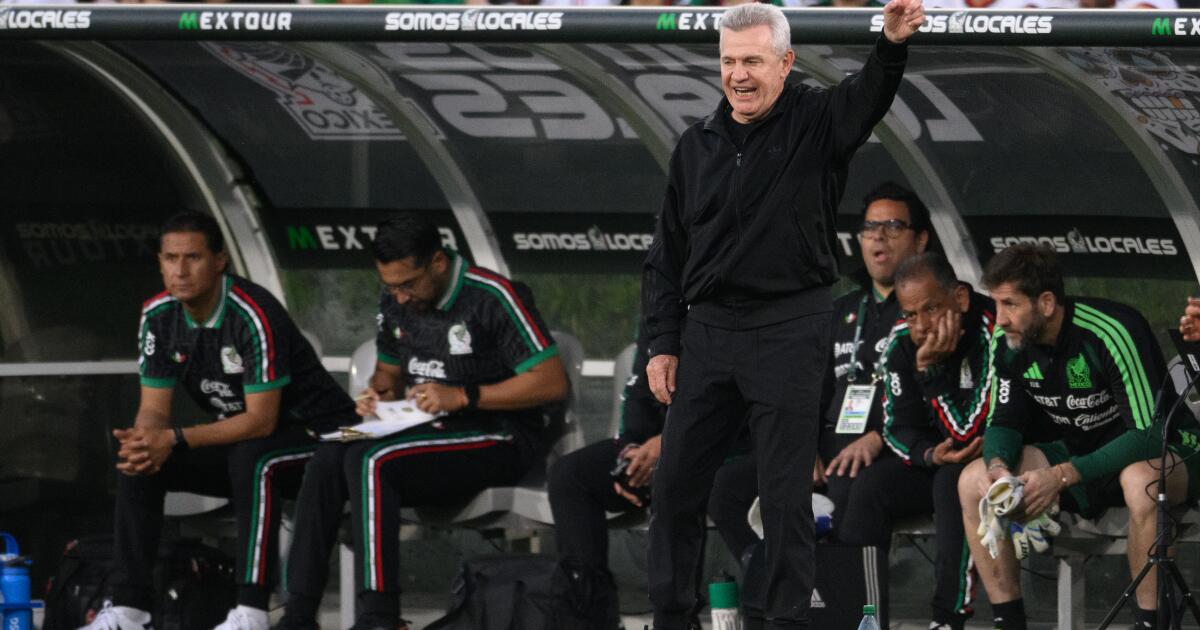
MEXICO CITY — The Mexican national team will kick off the 2026 World Cup against South Africa on Thursday with the weight of entertaining 83,000 at iconic Azteca Stadium and soccer fans around the globe.
The match at the venue known as Mexico City Stadium during the World Cup will kick off at noon PDT and air on Fox and Telemundo.
Once the ball starts rolling, the stadium’s altitude — 7,216 feet above sea level — will be one of the biggest assets for the Mexican lineup led by coach Javier Aguirre.
It will be Mexico’s eighth opening match in a World Cup, and El Tri carries a historical burden. It has never won a tournament opener, with a record of 0-5-2, including a 1-1 draw against South Africa in the opening match of the 2010 World Cup in Johannesburg.
Mexico coach Javier Aguirre directs his players during a friendly against Australia on May 30 at the Rose Bowl.
(Kyusung Gong / Ap Photo/kyusung Gong)
Aguirre will likely deploy the 4-3-3 formation he used during Mexico’s final warm-up match against Serbia.
“We’re ready; we’ve been working for 22 months,” said Aguirre, 67, who took the reins of the national team on Aug. 1, 2024, following Jaime Lozano’s failure at that year’s Copa América, when Mexico was knocked out in the group stage.
Since his arrival, Aguirre has led the team to its first Concacaf Nations League title and the Gold Cup. Mexico enters the tournament on an eight-game unbeaten streak, though several of those results came against lower tier opponents and at home. The two most encouraging highlights of that streak were the draws against Belgium and Portugal.
“If my teams are known for anything, it’s for their character,” Aguirre said. “My team is just like me.”
The starting goalkeeper position remains a topic of debate, but it appears Aguirre has already made his decision. Guillermo Ochoa, who will be playing in his sixth World Cup with Mexico, is considered by many to be the ideal experienced goalkeeper to use during the opener, when nerves are sure to be high. However, Raúl Rangel has been the starting goalkeeper during Mexico’s past three warm-up matches, playing the full 90 minutes each time.
Rangel, who was 10 years old when Mexico tied South Africa in the opening match of the 2010 World Cup and who fondly remembers El Tri’s victory over France that tournament, is confident between the posts.

Mexico could turn to veteran goalkeeper Guillermo Ochoa to calm nerves during the World Cup opener on Thursday.
(Ronaldo Bolanos/Los Angeles Times)
“We’re in great shape; we proved it against Portugal and Belgium, two teams that are among the world’s elite,” said Rangel, who noted that Ochoa has instilled a sense of calm in the team.
“I do believe we can be champions. We have to start keeping that in mind and believe that it’s possible. Not everyone can boast that they played in a World Cup on home soil.”
The Mexican team’s lack of elite club experience, however, is obvious and could be a problem. El Tri has few players in top-tier leagues and lacks game-changers on the wings, as Diego Lainez, Uriel Antuna and Hirving Lozano were left off the final roster. Offensive output is a cause for concern. In tight matches, goals have come mainly from defenders, with César Montes and Johan Vásquez being the primary threats on set pieces.
The commitment to youth appears to be a key factor in Aguirre’s approach to building the roster. Mexican American Brian Gutiérrez brings freshness and dynamism to the midfield, alongside Erik Lira’s energy. As an option off the bench, Aguirre could turn to 17-year-old Gilberto Mora, the youngest player in the tournament, who is sure to draw cheers from the crowd.
For his part, South Africa’s 74-year-old head coach, Hugo Broos, knows the Azteca Stadium well, having marked Maradona during the 1986 World Cup semifinals. To acclimate his players to the altitude, he held training camp in Pachuca, at an elevation of 7,979 feet.
“This game is special. I’ve played in European championships, but there’s nothing like a World Cup. And we’re going to play at the Azteca Stadium — it’s incredible that this is going to happen,” Broos said.

South Africa coach Hugo Broo talks with Nigeria’s players during a World Cup qualifying match against Nigeria in Bloemfontein, South Africa, on Sept. 9.
(Themba Hadebe / Associated Press)
He expects to be challenged by Mexico.
“They’re a very well-rounded team, with great mobility and teamwork,” Broos said of El Tri. “You can tell they want to be world champions.”
South Africa will pose a real threat with Mbekezeli Mokoena driving the midfield and the speed of Oswin Appollis and Relebohile Mofokeng on the wings. The team’s main weakness lies in finishing, as Lyle Foster is their only striker, and if he doesn’t perform well, the South African side will suffer.
“We can’t say we don’t have a chance against Mexico, because that’s not true,” said Broos about his team, which is ranked 60th in FIFA rankings and will tangle with a Mexican squad ranked No. 14.
Pregame entertainment will kick off at 10:30 a.m. PDT with performances by Shakira, Burna Boy, Maná, J Balvin, and Alejandro Fernández. As a new ceremonial feature, all 26 players from each team — starters and substitutes — will participate in the ceremony by lining up around the tournament’s central emblem on the field, rather than in the traditional pregame formation.
The match is expected to be played in the rain. Protests are expected around the stadium throughout the day, including demonstrations by the teachers’ union and groups representing the families of missing persons.

NEWYou can now listen to Fox News articles!
The 2026 FIFA World Cup is almost here, and fans stateside are starting to feel the excitement.
For the next month, some of the best soccer players and teams the world has to offer will duke it out on North American soil for the right to hoist the World Cup.
The U.S. Men’s National Team in particular is an exciting young soccer squad that is looking to make some noise on their home turf, and their road to the knockout stage couldn’t have been much easier (with all due respect to their fellow group members).
Folarin Balogun #20 of United States celebrates with teammates after scoring during the second half of the international friendly match between United States and Senegal at Bank of America Stadium on May 31, 2026 in Charlotte, North Carolina. (Cory Knowlton/ISI Photos/ISI Photos via Getty Images)
The Stars and Stripes will begin their quest for a World Cup on Friday, June 12, at 9 p.m. Eastern against Paraguay in Los Angeles.
US MEN’S NATIONAL TEAM GETS FAVORABLE GROUP MATCHUPS AT WORLD CUP DRAW
The Paraguayans will be making their return to the World Cup stage for the first time since 2010, and have been giant killers throughout their qualifying rounds, taking down the likes of South American heavyweights Uruguay, Argentina and Brazil.
Next on the docket, the U.S. will face off against Australia on Friday, June 19, at 3 p.m. Eastern in Seattle.
The Socceroos will try their best to muck it up and play a very defensive brand of soccer against America, while also boasting a great goalkeeper in Matthew Ryan.
SEATTLE, VANCOUVER COORDINATE CROSS-BORDER PLANNING FOR 2026 WORLD CUP TOURISM
Tyler Adams of the United States looks on before the FIFA World Cup Qatar 2022 Round of 16 match between the Netherlands and the United States at Khalifa International Stadium in Doha on Dec. 3, 2022. (Maddie Meyer/FIFA/Getty Images)
Goals will be at a premium for anyone who plays Australia in this tournament.
To conclude group play, the United States will play Turkey on Thursday, June 25, at 10 p.m. Eastern back in Los Angeles.
Fresh off a quarterfinals appearance in Euro 2024, this is a very talented Turkey who may not have the star power of a France or Brazil, but will be a very dangerous out for anyone in the World Cup.
ZERO BS. JUST DAKICH. TAKE THE DON’T @ ME PODCAST ON THE ROAD. DOWNLOAD NOW!
Team USA fans celebrate with a flag during the soccer game between the United States and Panama at Mercedes-Benz Stadium in Atlanta, Ga., on June 27, 2024. (David J. Griffin/Icon Sportswire)
Though the subject of who moves on may already be decided when Türkiye and the United States square off, these are the two heavyweights of Group D and should make for an exciting conclusion to group play.
All three games will be streaming on Fox Sports and Fox One, with both the Australia and Paraguay matchups available on Fox (blackout restrictions may apply).
CLICK HERE TO DOWNLOAD THE FOX NEWS APP
Additionally, the U.S.-Paraguay matchup will be available for free on Tubi.
Happy World Cup, everyone, and go, go USA!
-

 World2 minutes ago
Trump says US will ‘be taking’ Kharg Island in latest Iran war threat
-
 News25 minutes ago
We Keep Us Safe: The Standoff : Embedded
-

 New York2 hours ago
Video: Knicks Fans Rejoice After Game 4 Victory
-

 Los Angeles, Ca2 hours ago
Police chase suspected DUI driver in Los Angeles County
-
Detroit, MI2 hours ago
Opening of Canada-US bridge in Detroit that Trump threatened to block is delayed
-

 San Francisco, CA2 hours ago
Going to San Francisco Pride 2026? Parade Times, Maps, Street Closures and Safety Advice | KQED
-

 Dallas, TX2 hours ago
Woman arrested in Dallas food delivery turned ambush shooting in March, officials say
-

 Miami, FL2 hours ago
2026 Miami Football Early Opponent Preview, Game 2: Florida A&M


