Sports
Fact checking 'Clipped,' a series about the Clippers' Donald Sterling scandal

The new Hulu series “Clipped” offers a dramatic look back at the Donald Sterling scandal, during which recordings by V. Stiviano exposed the former Clippers owner’s racist remarks and triggered explosive fallout.
Times writers Ben Bolch, Bill Plaschke and Dan Woike covered the Sterling saga and help us fact check the new show. Plaschke had a brief cameo in the show, which was based on Ramona Shelburne’s ESPN podcast series.
Ed O’Neill, who is well known for his roles on “Married With Children” and “Modern Family,” tackled the role of Donald Sterling during the series. Did he deliver a reasonably accurate version of the Sterling you saw while covering the Clippers?
Bolch: Sterling had a more firm, menacing presence — you felt uncomfortable just being in the same room with him. O’Neill captures the buffoonery to a large extent but seems a touch more jovial than the man he portrays. Writers missed the opportunity to add another layer to his character by failing to dedicate one of the show’s flashbacks — probably the best part of the series — to a young Sterling to demonstrate what went into making him such a hateful person. O’Neill doesn’t make Sterling as unlikeable as he is in real life, which is troublesome given that he’s the show’s primary antagonist.
Jacki Weaver as Shelley Sterling, from left; Ed O’Neill as Donald Sterling; and Cleopatra Coleman as V Stiviano in “Clipped.”
(Kelsey McNeal/FX)
Plaschke: Ed O’Neill is terrific as Donald Sterling. Eccentric, bombastic, sleazy, completely unaware of how the world viewed him. I actually attended the White Party that was so vividly portrayed in the first episode, and it perfectly captured the way he ruled over his kingdom of young women and business sycophants. I brought my then-girlfriend to the party and Sterling hit on her. Seriously. After she pulled herself away from him, she was like, “At least that man has good taste!” This scene was so well filmed, I was transported back to that moment, and once again I felt, like, ick.
Woike: O’Neill’s version is more pointed and focused, maybe a little less eccentric, than the version of the man I remember being around the team at this stage. Sterling never carried himself as acerbic in my dealings with him. There was more feebleness. This portrait is sharper with the gross stuff turned up to 11. But at the core of this, there’s a person who cares about himself and his position more than others — people of different races, different classes, his players, his employees, his wife etc. — and O’Neill certainly captures that. The real guy is just so weird – in addition to all the hatefulness.
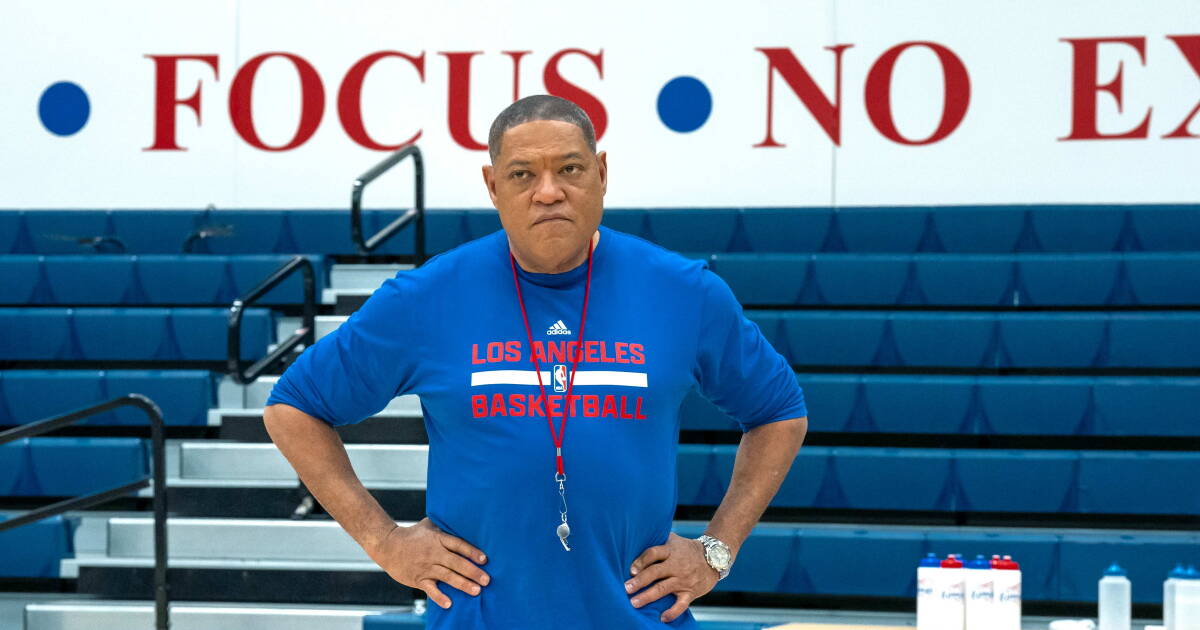
No character portrayed in the series has spent more time on television than Doc Rivers. Laurence Fishburne has a different body type than Rivers, but did he reasonably capture the former Clippers coach’s personality and reaction to the Sterling scandal?
Woike: In the aftermath of the Sterling tapes, Doc Rivers moved even more to the foreground — in basketball, in the organization. He handled the situation as well as someone could’ve and I think that comes through in the show. He was built for it, and that’s here. It’s a strong performance.
Bolch: The most authentic, nuanced performance in the series belongs to Fishburne. He captured Rivers’ essence down to the fit of his dress shirts, his facial expressions and his sandpapery voice. Fishburne also replicated Rivers’ ability to shepherd the Clippers through the scandal — as well as the toll it took on him — in convincing fashion, especially during the ballroom meeting with the players as they decided whether to keep playing. His commanding presence and ability to vacillate between one-liners and earnest remarks also reminded me a lot of the way Rivers conducted himself.
Plaschke: Like O’Neill, Fishburne is great. He has Doc’s look, Doc’s walk, Doc’s voice. And it’s amazing because, in meeting Fishburne on the set while I shot my brief scene, it became clear he knew nothing about Doc Rivers, knew nothing about the Clippers, couldn’t even name more than a couple of them. He apologized to me for not being a sports fan, but I was so impressed he wasn’t a sports fan yet still tackled this role. And he tackled it brilliantly.
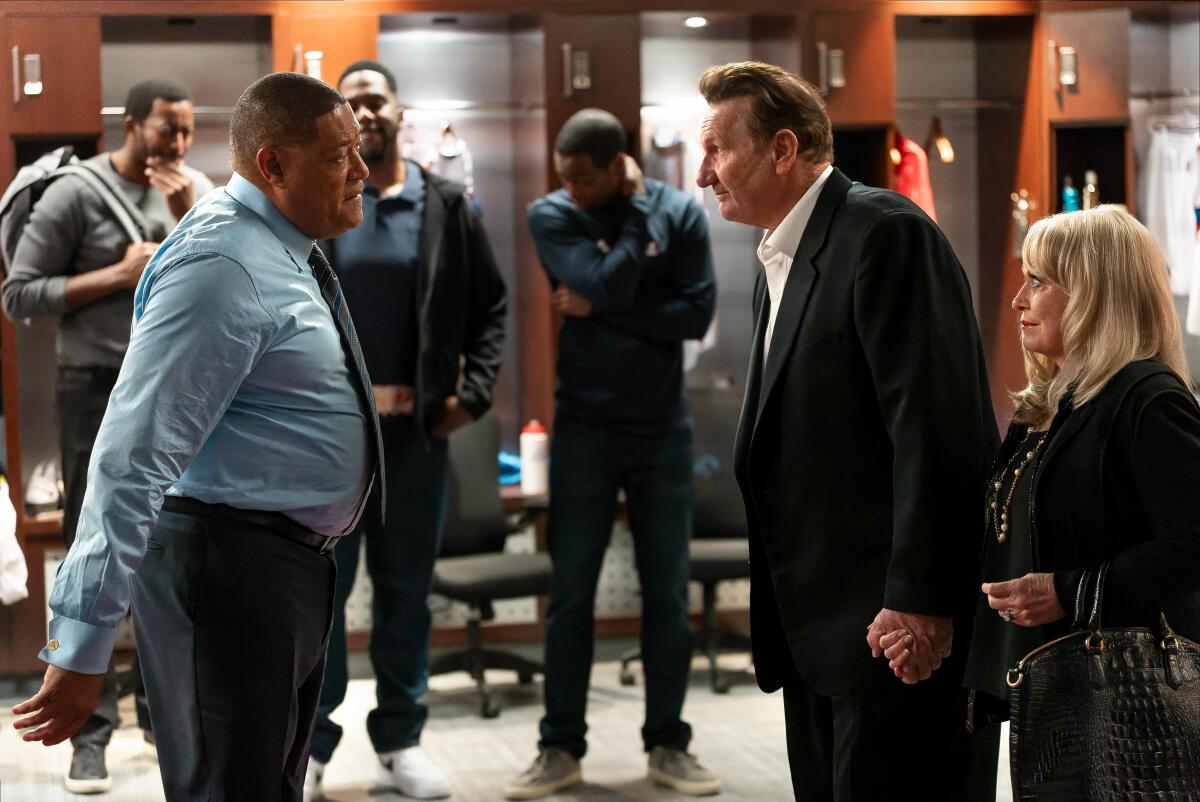
Laurence Fishburne as Doc Rivers, from left, looks at Ed O’Neill as Donald Sterling and Jacki Weaver as Shelley Sterling during the Hulu series “Clipped.”
(Kelsey McNeal/FX)
What was the atmosphere like immediately after the audio recordings of Sterling’s racist comments were first released and did the show capture that moment well?
Plaschke: It was an off day in the series and I was visiting my brother in Napa Valley and my brief respite became a total nightmare, everybody in L.A. going crazy, everybody in the NBA going crazy, I’m typing a column on a folding table on a porch in wine country and then rushing back to the Bay Area for the madness.
Woike: Chaos. Total chaos. You went from covering a basketball series to covering one of America’s greatest shames — its racist past and present.
Bolch: It was complete mayhem. The media horde waiting to get into the Clippers’ practice at the University of San Francisco was eager to hear what Rivers and the players had to say about Sterlings’ remarks. Rivers decided he would be the only one to talk — and spoke emphatically about the team’s collective disdain for what was said. It was one of his most impressive moments during the whole ordeal, showing his ability to navigate pressure on the fly. This scene was oddly left out of the show, which amounts to a huge opportunity lost.
Did anything stand out in the first few episodes as inaccurate compared to your experience covering the Clippers scandal?
Bolch: The show captured the essence of the scandal but doesn’t really hit its stride until the last three episodes, where the character backstories are revealed and new ground is covered that may not be known to those who casually followed the ordeal. This was the most compelling part of the series and some viewers may not make it there given the earlier episodes are more uneven. If you are the slightest bit intrigued by what you’ve seen by the end of Episode 3, keep watching.
Plaschke: The show has two main drawbacks … first, Blake Griffin is NOT Blake Griffin. He doesn’t look like him, doesn’t sound like him, doesn’t act like him, not even close. I remember seeing the actor on the set and wondering, who is he playing? When somebody told me he was Blake, I was like, they must do a heckuva job on him with props and costumes and makeup. Well, they didn’t. He’s a fine actor, he’s just badly miscast. The second mistake is a lack of attention to the basketball scenes. They were so good in “Winning Time,” maybe we’re spoiled, but at least in the early episodes, the basketball play is chopped up and hard to follow and pretty awful.
Woike: The portrayal of Blake Griffin seems way off to me — someone who I never viewed as a selfish teammate or as a Sterling lapdog. Seems totally fabricated to me. Especially the introductions. Also, V. Stiviano comes across as maybe a little too normal here than any of us around at the time thought.
The general ickiness of this is pretty on point. The basketball/casting stuff is what it is, the show having the misfortune of airing this closely to the doppelganger work “Winning Time” did in its two seasons. I think, generally, it’s close enough. Some character traits are turned up too loud. Any heroism assigned to Shelly Sterling also doesn’t sit great with me. Not a lot of heroes in this story.
Did anything you saw during the series surprise you? Was there anything you wished would have been handled differently to better reflect that period of the Clippers era?
Plaschke: Chris Paul versus the rest of the team should have been highlighted. That was the theme that eventually brought down Lob City. And CP3 actually looks and sounds like CP3. I would have also liked more of Seth Burton. The public relations guru is played by a great actor, and I wanted to see more of Burton’s incredible tight-rope walking as he handled this craziness.
Bolch: Tensions between Chris Paul and the rest of the team were alluded to in the first episode but never developed. That could have been another thread in the show that heightened the drama and revealed more behind-the-scenes dissension that prevented the Clippers from maximizing their potential. J. Alphonse Nicholson’s portrayal of Paul is good enough to warrant more screen time.
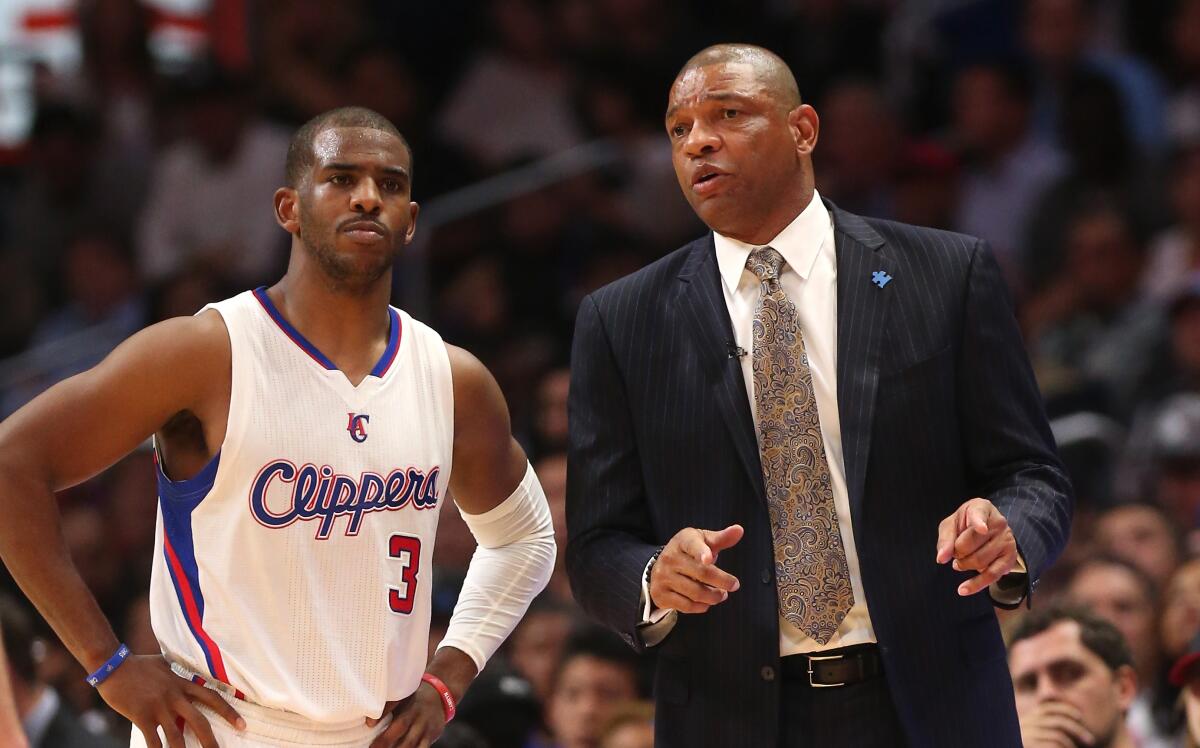
Clippers coach Doc Rivers talks to point guard Chris Paul on the court during the 2015 NBA season.
(Getty Images)
Woike: I think just how “normal” Donald Sterling, Shelly Sterling and V. Stiviano all seem — which probably speaks to just how strange those people. For the people who were around them, it’s just so hard to explain how strange they all were.
This remains a dramatization of the Sterling scandal and the creators never promised the audience a documentary. Still, the real saga was salacious enough to capture a lot of attention. Overall, how would you grade the show’s accuracy?
Bolch: The accuracy as far as the scandal’s timeline goes is spot on, but I’m not sure the well-known plot or the characters — besides Fishburne as Rivers — make this dramedy all that riveting. Most of the scenes involving V. Stiviano and Donald Sterling feel like whimsical caricatures compared to the gripping tension whenever Rivers takes center stage. The writers might have been better served to fully commit to a send up or go the other way and make the Sterlings more abominable figures that you can’t stop watching because you need the relief of their forced sale of the team. As it stands, “Clipped” is sort of like the team it portrays — never quite reaching the intended destination.
Plaschke: With the exception of Blake Griffin, it feels pretty accurate. I love the way it uncovers the real V, I think Shelly Sterling’s character is spectacularly spot-on and Ed O’Neill does a remarkable job pulling back the curtain on the real Donald. And the main takeaway for all Los Angeles sports fans should be obvious. Think about it, for the first time ever, THE CLIPPERS ARE ON TV IN JUNE!
Woike: If the story is about the key factors in play, the firestorm it caused, the public airing of Sterling’s plantation mentality and Doc Rivers and the Clippers players resolve through this mess, it’s a hit. But the dramatized parts — the way some employees were made to seem like bumbling morons, the way Griffin was portrayed (he’s going to have some of the biggest gripes) — don’t land for me as someone who was there every day. In this case, the truth — and the work done by people on that front — is more compelling than the fiction.


NEWYou can now listen to Fox News articles!
After the World Cup group stage, things go from intense to do-or-die.
In previous years, the Round of 16 was the first knockout stage match, but with an expanded field of 48 teams— it is now the second.
Following the conclusion of the group stage, we now know all 16 Round of 32 matchups. As Brazil- Japan, Netherlands-Morocco and Portugal-Croatia are set to meet in powerhouse showdowns, other nations like Argentina (vs. Cape Verde) and England (vs. DR Congo) have much more favorable draws.
With that, let’s check out the odds for which countries are favored to win at least one knockout stage game and make it to the Round of 16, at FanDuel Sportsbook as of June 28.
This page may contain affiliate links to legal sports betting partners. If you sign up or place a wager, FOX Sports may be compensated. Read more about Sports Betting on FOX Sports.
To Reach Round of 16
Argentina: -1500 (bet $10 to win $10.67 total)
France: -750 (bet $10 to win $11.33 total)
England: -650 (bet $10 to win $11.54 total)
USA: -600 (bet $10 to win $11.67 total)
Spain: -550 (bet $10 to win $11.82 total)
Germany: -500 (bet $10 to win $12 total)
Brazil: -310 (bet $10 to win $13.23 total)
Canada: -300 (bet $10 to win $13.33 total)
Colombia: -250 (bet $10 to win $14 total)
Portugal: -230 (bet $10 to win $14.35 total)
Norway: -210 (bet $10 to win $14.76 total)
Switzerland: -210 (bet $10 to win $14.76 total)
Belgium: -195 (bet $10 to win $15.13 total)
Netherlands: -180 (bet $10 to win $15.56 total)
Mexico: -165 (bet $10 to win $16.06 total)
Egypt: -165 (bet $10 to win $16.06 total)
Australia: +100 (bet $10 to win $20 total)
Ecuador: +125 (bet $10 to win $22.50 total)
Morocco: +130 (bet $10 to win $23 total)
Ivory Coast: +130 (bet $10 to win $23 total)
France currently -750 to make the Round of 16 (Getty Images).
Here’s what to know about this oddsboard.
The Favorites: France and Spain are favored to win the tournament, making them heavy favorites to at least reach the second round of the knockout stage. In 2014, France made it to the quarterfinals, followed by a championship in 2018 and a runner-up finish in 2022. The last time it failed to make it out of the group stage was back in 2010. For Spain, it lost in the Round of 16 in both 2022 and 2018, and failed to make it out of the group stage in 2014, after winning the World Cup in 2010. However, in this betting market, Argentina is the heavily favored to make it to the Round of 16 as sportsbooks believe Cape Verde has an extremely small chance of upsetting the defending champions.
The Host Nations: The USA and Mexico are in great shape to win their Round of 32 matchups after winning their respective groups. Mexico officially won Group A after sweeping its group, while the U.S. clinched Group D after its win over Australia and Türkiye’s loss to Paraguay. And lastly, after its first-ever World Cup win, Canada will advance after finishing second in Group B.
Mexico has a familiar relationship with the Round of 16, having lost in that round every tournament from 1994 to 2018 — seven straight tournaments. In 2022, Mexico didn’t make it out of group play. As for the USA, it made the Round of 16 in 2022, did not qualify for the tournament in 2018, and made the Round of 16 in 2014 and 2010. Canada will play in its first knockout game ever.
Canada will face South Africa on Sunday, Mexico has drawn Ecuador on Tuesday, and the U.S. will play Bosnia and Herzegovina on Wednesday.

SAN DIEGO — One after another, Kyle Tucker and Dalton Rushing broke up their offensive slumps with home runs.
The Dodgers’ sixth-inning rally, en route to a 15-3 victory against the Padres at Petco Park Saturday, featured blasts from the two hitters who needed individual victories at the plate.
Tucker, who entered Saturday with just a .700 OPS, had gone four straight games without a hit. Rushing went hitless in the previous five, in a rough seven-week stretch.
“It’s tough,” Tucker said of his uncharacteristically slow offensive start. “You just have to try and stay positive as much as you can. … We’re going to enjoy the win, but you’ve got another game tomorrow, and you’ve gotta move on to that. Anything that happened yesterday, you’ve got to move on, do your best at that, move on to the next game, and try to improve and try to help your team win.”
Tucker and Rushing’s home runs started the sunflower seed showers in a nine-run inning, which included a home run by Mookie Betts. Four of the runs scored in the sixth were unearned.
The Dodgers’ Dalton Rushing celebrates with Alex Freeland after hitting a home run against the Padres Saturday in San Diego.
(Tony Ding / Ap Photo/tony Ding)
The Dodgers took full advantage of the Padres’ defensive mistakes to jump-start their offense.
In the second inning, Max Muncy hit a line drive into the corner, and Padres right fielder Fernando Tatis Jr. dove after it. But he missed the catch, and the ball bounced behind him. Muncy legged out a triple. And that put him in position to score easily on Tommy Edman’s double to the center-field warning track for the first run of the game.
The Padres evened the score with a Gavin Sheets’ solo home run off Dodgers starter Yoshinobu Yamamoto, who’d go on to limit the Padres to two runs through six innings.
Shaky defense, however, came back to haunt the Padres the next inning.
With Freddie Freeman standing on second base, after a leadoff double against Padres right-hander Randy Vásquez, Muncy hit a sharp grounder to second baseman Will Wagner, who muffed the play. Freeman raced around the bases, scoring on a close play at the plate.
Then Edman, who’s been swinging a hot bat since making his season debut last week, tripled to drive in Muncy.
That’s when Tucker, who went three for five with four RBIs Saturday, stepped up to the plate. He won a nine-pitch battle, sending a cutter over the right-field fence.
“Kind of been looking for it all year,” Tucker said. “I just kind of caught the ball at the right point of contact. I didn’t really stay through it great, but I put a decent enough swing on it, got it to work out.”
Rushing was next, and also went long in a two-strike count.
The Dodgers kept extending the inning, with two walks and three more hits, including Betts’ three-run homer off Padres reliever Ron Marinaccio. It was Betts’ third home run in as many games.
The Padres chipped away at the lead with an RBI single from Sheets off Yamamoto in the sixth and another run against Dodgers reliever Kyle Hurt, who gave up two hits and issued two walks in one-third of an inning.
But the lead the Dodgers compiled in the sixth inning, plus the four runs they tacked on in the eighth with Muncy’s infield single, Edman’s bases-loaded groundout, and Tucker’s opposite-field single, was too steep to overcome.
By the ninth inning, both teams had position players pitching.
Injury update
The Dodgers hope to activate Teoscar Hernández (strained left hamstring) from the 10-day injured list on Monday, manager Dave Roberts said before Saturday’s game.
Hernández homered in all three of his triple-A rehab games, entering Saturday.
“Triple-A pitching is not comparative to big league pitching, I think we all know that,” Roberts said. “But if he’s healthy, he’s an easy guy to bet on.”
Catcher Will Smith, on the other hand, has not returned to baseball activities since receiving an injection to address his neck injury.
“I think we’re all surprised how long it’s taken,” Roberts said. “I hope he’s back before the All-Star break. But the more time he’s off, he’s going to have to play some [rehab] games. So that kind of cuts into the time of return to us. So I don’t really know. I don’t want to add any pressure to him. I want him to be healthy and then once he’s healthy we can have that conversation.”
Sports
Knicks hand Mamdani-backed candidate cease and desist letter for using team’s logo in campaign: report

NEWYou can now listen to Fox News articles!
A New York Senate candidate who has been backed by New York City Mayor Zohran Mamdani has reportedly been issued a cease-and-desist letter by the New York Knicks for using the championship team’s logo as part of her campaign.
Promotional stickers read, “I voted for Aber Kawas,” using the Knicks logo, with the team’s name replaced with “Kawas.”
According to the New York Post, the Knicks demanded that the campaign “immediately remove all promotional materials incorporating Knicks Intellectual Property, including but not limited to the unauthorized Advertisements, and cease any further use of Knicks Intellectual Property.”
Aber Kawas, Youth Activities Director for the Arab-American Association of New York, speaks at a rally in Columbus Circle protesting proposals to restrict Muslim arrivals to the United States. (Andy Katz/Corbis)
“Neither the Knicks nor NBA [Properties] have authorized the Campaign to use Knicks Intellectual Property in any way, including the Unauthorized Advertisements, which are likely to mislead the public into believing that the Campaign is affiliated with, sponsored or endorsed by, or in some way connected with the Knicks,” Brian N. Warner, senior vice president and head of legal for Madison Square Garden Sports, said in the letter, according to the outlet.
“The Campaign’s activities in this regard constitute, among other things, trademark infringement, trademark dilution, false advertising, false association, and unfair competition.”
The Knicks and Mamdani have had beef that began last year when Mamdani’s mayoral campaign also used the Knicks logo in a similar fashion to Kawas. Mamdani was given a cease-and-desist letter, and the Knicks made it clear they were not endorsing anyone in the race, which Mamdani won.
The White House then used the Knicks logo in a post shortly after last year’s election to say, “Trump Is Your President.” The Knicks reached out to the White House, which then removed the post.
New York City Mayor Zohran Mamdani gives New York Knicks player Jalen Brunson the keys to the city during the Knicks’ championship ticker tape parade in New York City on June 18, 2026. (Kevin Mazur/Getty Images)
NYC CANCELS KNICKS NBA FINALS WATCH PARTY OVER TRUMP VISIT AS MSG FIRES BACK
Knicks owner James Dolan and Mamdani also had a back-and-forth earlier this month about Knicks watch parties during the team’s championship run. The two came face-to-face at the championship celebration last week at City Hall, when Mamdani name-dropped Knicks legend-turned-Dolan rival Charles Oakley during a reminiscent speech about the Knicks, while Dolan took one final parting shot at the mayor and stiffed him in a photo op.
“I don’t need your vote. I don’t need to quote to you what happened. If you’re real Knick fans you know it already,” Dolan said.
Dolan did announce that the Knicks would go to the White House to visit President Donald Trump, who attended Game 3 of the NBA Finals. The Knicks would be the first NBA team to visit Trump.
Kawas, the Muslim daughter of illegal immigrants, is now the Democrat nominee for New York’s Senate District 12 and is also a socialist. She recently came under fire for rejecting the notion that Muslim Americans need to apologize for 9/11, an attack “a couple of people did.”
Aber Kawas, a Palestinian American community organizer and democratic socialist running for New York State Assembly District 34, and Rep. Claire Valdez attend a demonstration in New York City demanding a rent freeze on rent-stabilized apartments in Long Island City on May 7, 2026. (Selcuk Acar/Anadolu)
CLICK HERE TO DOWNLOAD THE FOX NEWS APP
“I’ve always been outspoken about the wrongful scapegoating of Muslim Americans, both before and after 9/11, and in this interview I was speaking about the harmful notion that Muslims should have to apologize for an act of violence they have nothing to do with,” Kawas told Fox News Digital Thursday morning.
Fox News’ Peter D’Abrosca contributed to this report.
Follow Fox News Digital’s sports coverage on X, and subscribe to the Fox News Sports Huddle newsletter.
-

 Connecticut3 minutes ago
CT Lottery Powerball, Cash 5 winning numbers for June 27, 2026
-

 Delaware10 minutes ago
LGBTQ+ advocates look to open Wilmington visitor center, museum
-

 Florida13 minutes ago
Winner and Loser of the Week in Florida politics — Week of 6.21.26
-

 Georgia18 minutes ago
First Alert Forecast: Heat advisory issued for parts of east Georgia amidst building heat wave
-

 Hawaii25 minutes ago
Volcano Watch: A hui hou to a giant of volcanology – West Hawaii Today
-

 Idaho28 minutes ago
Idaho celebrates grand opening of first new state park in over 2 decades – East Idaho News
-

 Illinois33 minutes ago
Southern Illinois Airport Authority celebrates 76 years with ‘Big Bang Birthday Bash’
-
 Indiana40 minutes ago
Sparks make dubious WNBA history in defensive collapse against Indiana

