West Virginia
Gutting Medicaid will take health care away from hardworking West Virginia families • West Virginia Watch


As the largest health insurance program in the country, providing health care to more than 70 million people, Medicaid is an essential pillar of our health care system.
The Affordable Care Act expanded Medicaid to cover more working Americans who do not make enough to afford private coverage. Now, 40 states, both red and blue, have expanded it, saving lives, keeping hospitals open, saving states money and improving the well-being of countless Americans.
Medicaid is jointly funded by the federal government and the states, and it is supported by 76% of Americans. It covers one in five Americans, including kids, moms, seniors, people of color, rural Americans and people with disabilities.
Every family knows someone who relies on Medicaid.
In West Virginia, 516,500 of our friends, family members and neighbors are covered by Medicaid — that includes:
- 49,000 seniors
- 196,000 children
- 86,000 people with disabilities
So, why are Republicans in Congress planning to slash trillions from Medicaid to hand out $4.6 trillion in tax breaks to the wealthy?
Republicans in Congress are submitting three proposals that would dramatically reduce federal funding for Medicaid: block grants, per capita caps and reducing Medicaid matching rates. Currently, the federal government pays between 50% and 77% of enrollees’ Medicaid costs, and more for certain high-value services.
These proposals would blow at least a $235 million hole in West Virginia’s state budget and leave tens of thousands of people uninsured.
Medicaid also helps fund rural hospitals by ensuring more patients can pay for their care. Rural hospitals in Medicaid expansion states, like West Virginia, are 62% less likely to close. In 2023, over 600 rural hospitals were at risk of closing, almost all of which were within non-expansion states. If Congress cuts Medicaid expansion, more rural hospitals will be forced to close their doors.
Medicaid is the single largest payer for long-term care, maternity care and mental health services. Nearly a third of adults have received maternity care, home health care, or nursing home care through Medicaid. Nearly one in five adults nationwide struggling with mental illness have access to care through Medicaid. If Congress has its way, millions of Americans will lose access to essential care.
Congress is also considering imposing so-called work requirements; however, research shows that work reporting requirements cost states money and do not improve people’s ability to find work.
A large majority of adult Medicaid beneficiaries who can work already do. According to a 2024 analysis, over 80% of working-age adults on Medicaid were working, acting as family caregivers or attending school.
Proposals that require individuals to regularly document and report hours worked or in school cause eligible people to fall through the cracks. Arkansas, the only state to implement Medicaid work reporting requirements on Medicaid beneficiaries, saw one in four of those subjected to the reporting requirement lose health coverage within six months.
Researchers found that this loss of coverage was generally not because people were unable to comply with the work requirement, but that they found the reporting process itself — the bureaucratic red tape — to be confusing and difficult to comply with, or they were unaware of the requirements altogether. Of those who lost their health coverage due to the work reporting requirements in Arkansas, half reported serious problems paying medical bills, 56% delayed addressing health care needs due to cost, and 64% delayed receiving needed medications.
So, what does all this mean? Fewer dollars mean fewer resources for low-income families, people with disabilities, pregnant women and others who rely on Medicaid for health coverage. The state’s going to lose funding for all those people who lose coverage. Even though these poorer states spend less per resident on Medicaid, their federal reimbursement rate is relatively high, and so the impact of federal cuts is large.
Gutting Medicaid will take health care away from hardworking families across West Virginia, instead of helping them — they deserve better, and it is within our power to do so.
GET THE MORNING HEADLINES.



Trump says soaring college football costs are hitting sports
U.S. President Donald Trump on Friday (March 6) said the soaring cost of paying for football at colleges was harming school sports in general and the problem would need to be addressed by legislation, adding he might sign an executive order about it.
FRISCO, TX − West Virginia football coach Rich Rodriguez made a public plea for some reason and logic to return to major college football after decades of conference expansion, contraction and realignment from coast to coast.
He made his pitch at his news conference at the annual Big 12 Conference media days here Wednesday, July 8. Rodriguez proposes about 60 teams to come together, share their money and divide themselves into regional sections, sort of like how college football used to be with the former Big East, Pac-12, Big 12, Southeastern and Atlantic Coast Conferences.
“Can’t we all come together and shake hands and give each other a group hug and then have an Eastern regional and a South regional and a North regional, and then everybody share the money?” Rodriguez said. “And, you know, with this money for everybody, we all can get along, like 60 of us or so. I think that would be great. I don’t know. Did anybody else say that? Probably not. They might be afraid. Hell, I don’t care.”
PRESEASON COACHES RANKINGS: Big Ten | SEC | ACC
Rodriguez, 63, made his comments in the context of his team not playing rival Pittsburgh in the Backyard Brawl again until 2029. They used to play regularly as independents and then members of the Big East before Pitt left to join the ACC in 2013. Since then, realignment has ripped apart regional leagues such as the Pac-12, which saw four marquee West Coast teams depart in 2024 to pursue more money in the Big Ten while others left for the Big 12 and ACC.
Meanwhile, Congress is considering a bill, the Protect College Sports Act, that would allow the pooling of television rights between more than 100 schools. It aims to spread the wealth more beyond just two dominant leagues.
“I’m not speaking for anybody other than Coach Rod, that he would love for all the Power Four teams to come together, shake hands, and then, hey, let’s pick the biggest TV package in the history of TV packages,” Rodriguez said. “And then we could have Pitt, Virginia Tech and Penn State and Maryland and Cincinnati and maybe Virginia or North Carolina, one of those, all right there. And our fans could drive to it. You know, we have a rivalry every year, and everybody makes money. Nobody gets fired. Players did good.”
Rodriguez noted his pitch might not fly in today’s world but wanted to throw it out there before it’s too late. He previously served as head coach at Michigan and Arizona.
“Wouldn’t that be fun?” he asked. “Can we put that together? I got all the (athletic directors) out there shaking their head like I’m nuts. I’m just, I mean, this is, you know, I got more time, a lot more time behind me than ahead of me. I want to just get this thing right before I leave.”
Follow reporter Brent Schrotenboer @Schrotenboer. Email: bschrotenb@usatoday.com
West Virginia
West Virginia town’s entire police force fired after ex-sergeant claims evidence room was broken into

A tiny West Virginia town has been left without a police department after every officer was fired following a dispute over an apparent break-in at the department’s evidence room.
The Barrackville Police Department announced in a Facebook post Tuesday that, effective immediately, every member of the department had been relieved of duty by the Barrackville Town Council and Mayor Tom Straight.
A former sergeant, identified only as Sgt. Hunt, told 12 News he arrived at the department Tuesday morning and found the evidence room had been broken into.
Hunt said he immediately called a meeting with Straight and the town council.
According to Hunt, council members had previously said they wanted to inventory the department without any officers present.
He also claimed a council member admitted to taking a set of police keys.
After accusing members of the town government of breaking into the evidence room, Hunt said he and the department’s only other officer were immediately removed from active duty.
Hunt said the department’s police clerk also resigned, leaving the town with no police staff. He said he informed the mayor and council that he would be seeking whistleblower protection.
The mass firing came less than a week after Barrackville Police Chief Zachary Freeburn resigned. Hunt said the chief quit over what he described as repeated clashes with the town council over how much control it had over the department.

Marion County Sheriff Roger Cunningham told the station that deputies will continue responding to calls in Barrackville while the town of 1,288 people is without a police department.
Resident Isabella Pham said she hopes the turmoil comes to an end.
“I just think that the town right now is in a little bit of a mess,” Pham told the West Virginian Times.
“We’ve gone through a lot of different people, and I’m just hoping that at the end of this, we can get a little bit of stability, transparency and security, and get back to having a stronger community versus a town of pitchforks and torches.”
-
Politics1 minute ago
Column: Trump decries ‘communism’ while his government takes ownership of companies
-
 Science4 minutes ago
‘I’d rather my house burn down than get cancer’: Herbicide use upends California’s fight to save forests
-
 Sports9 minutes ago
Dodgers scheduled to visit White House in late July to celebrate 2025 World Series win
-

 World19 minutes ago
Former US Olympian pleads not guilty in DC reflecting pool vandalism case
-
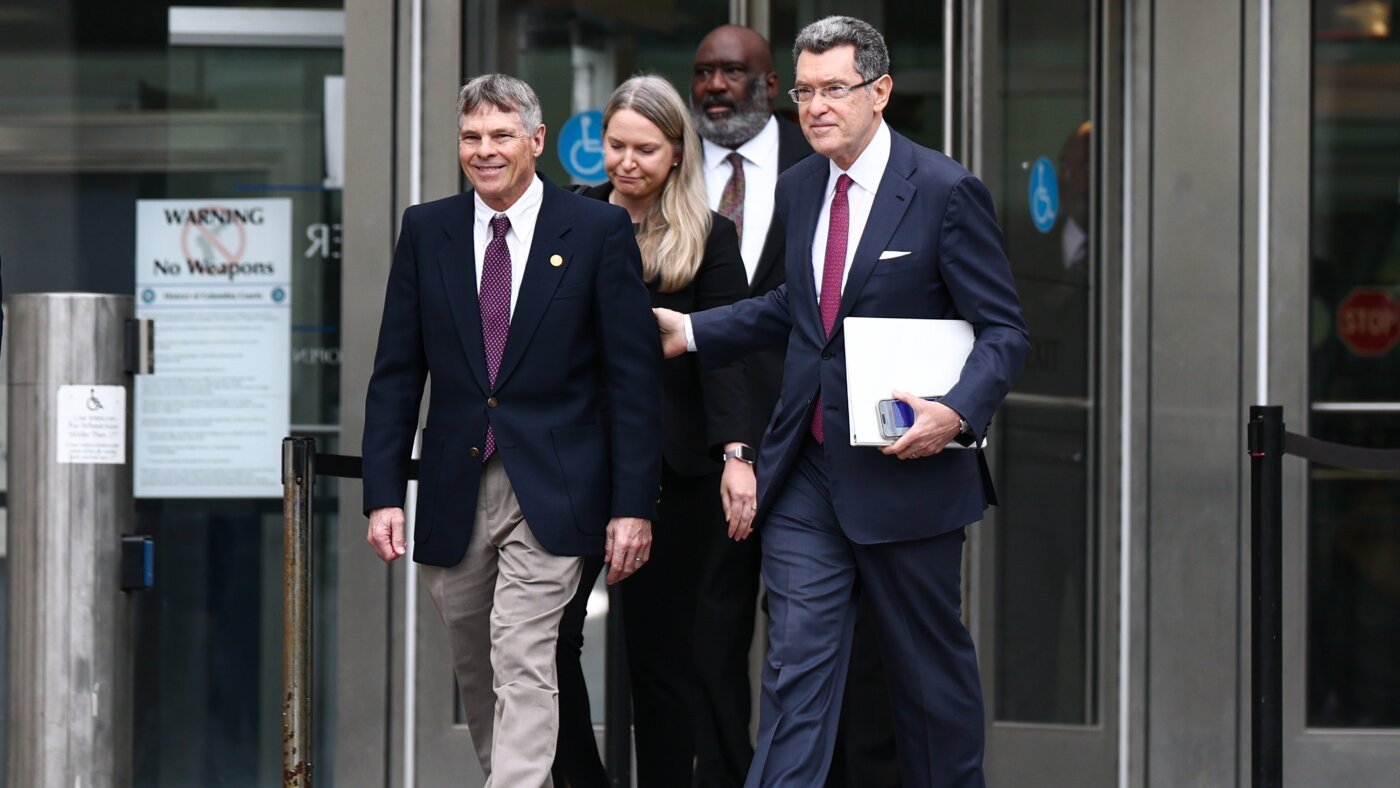 News46 minutes ago
Former Olympian pleads not guilty in reflecting pool vandalism charges
-

 Los Angeles, Ca2 hours ago
Heat advisory, beach hazards in effect as Southern California sizzles
-

 Detroit, MI2 hours ago
Teen on moped hit by car after cruising through stop sign in Detroit
-

 San Francisco, CA3 hours ago
Flight of fancy: San Francisco moves to build private luxury airport terminal


