Washington, D.C
The Ultimate Guide to Fun in DC Without Booze


Non Alcoholic Wine and Non Alcoholic Drinks in DC
Non-Alcoholic Wine Pairings
Various Locations
Once known to many as being overly sweet, mocktails have really upped their sophistication and profiles in recent years. So too have NA wines, and there are some memorable spots around the city calling to you to pair a fabulous meal with some alcohol-free varietals. Irregardless, the H Street wine-focused restaurant pours non-alcoholic Riesling (Leitz’s Eins Zwei Zero) by the glass, but you would be forgiven for ordering an entire bottle. The elegant and unpretentious French dishes at Lutèce in Georgetown pair beautifully with a glass of NA sparkling rosé from Germany. And to really splash out, the opulent tasting menu at José Andrés’ Minibar can be complemented by a “virtue tasting” of NA wines.
H Street
Binge Bar, H Street’s hip, subterranean bar exclusively serves NA beverages, so if you haven’t been, make this your month (or season, or year) to stop in. The spot has planned a diverse and exciting line-up of sober events this January, like a happy hour networking event for women (January 11), a NA bottomless brunch (January 20), and a guided meditation workshop (January 28).
Non-Alcoholic Cocktails
Multiple Locations
NA cocktails have come a long way in recent years, so whether you’re looking to recreate the taste of a perfect martini sans vodka, or perhaps something that just whets your whistle, there’s plenty to choose from. Restaurants around the DMV tend to add more NA options in January when more people are cutting back from booze. We love the grape and date Jallab at Yasmine in Union Market, the tropical-themed Storm Brewing at Michelle’s, the matcha coladas at Nama Ko, and the NA gin-based cocktail, Frostbite at Wilson’s Hardware.
U Street Corridor, $50
Looking to manifest a fabulous year and intrigued by picking up a new creative outlet? Consider making a vision board this winter. Essentially a collage of hopes, goals, dreams, and aspirations, vision boards have gained somewhat of a devoted following. It’s not just about pretty pictures, there’s some solid psychology behind this craft, like the self-efficacy theory, which posits that those who believe in and envision their goals, are more likely to achieve them. In honor of National Vision Board Day (January 13) head to El Secreto de Rosita. The Peruvian and Pan-Latin restaurant will be hosting a brunch focused on manifesting your big and small dreams for 2024. Reserve a spot for unlimited brunch dishes and guided vision board creation in a welcoming and positive atmosphere surrounded by other goal-seekers.
Coffee
Multiple Locations
Winter is definitely the best time to bring a book or a friend to a coffee shop and tuck in for some caffeine and coziness. The city is teeming with options and some of our favorites include the Blue Bottle in Georgetown, Sidamo on H Street, Big Bear Café in Bloomingdale, and Ellē in Mount Pleasant.
Brunch
Various Locations
Waking up for an early (or earlyish) brunch is decidedly easier when you haven’t been sipping cocktails the night before (iykyk). Take advantage of your new take on mornings by treating yourself to brunch. Bistro Du Jour in the new Hotel Sonesta is a fresh take on a classic French brasserie; Unconventional Diner serves creative spins on morning favorites; Yard Bird satisfies with mouth-watering comfort food; Stable transports you to the après-life of the Swiss Alps; and Yellow will have you dreaming of pastries until the foreseeable future.
Your Apartment
Three of the city’s top-tier restaurants: Little Pearl, Rose’s Luxury, and Pineapple & Pearls, have teamed up to help you up your dinner party game this winter. The in-home dinners are designed to serve between 8 and 12 guests and come with all the things you could possibly need: the dishes and glassware, linens, food (duh), a dinner playlist, and even the chef who prepares everything to perfection onsite. These dinner parties will set you back a pretty penny (dinners start at $300 per person), but you can save on drinks by curating your own home NA beverage menu.



WASHINGTON – Metro riders are seeing changes Thursday morning as WMATA adjusts its shuttle bus system following concerns about long lines and confusion tied to the Red Line summer shutdown.
Express shuttles to North Bethesda will now only pick up on Wisconsin Avenue near the Trader Joe’s. Local shuttles serving Bethesda, Medical Center and Grosvenor have been moved to the Friendship Heights Metro station, while some regular Metrobus routes are picking up on Western Avenue.
Red Line Shuttle Service Updates
• Local shuttle boarding will be relocated to Bus Bay K – the current C83/D96 bus stop on Wisconsin Ave.
• C83 and D96 buses will be relocated to the bus shelter on Western Ave near Wisconsin Ave.
• Express shuttle boarding will remain in the 5300 block of Wisconsin Ave NW.
What we know:
FOX 5’s Melanie Alnwick says Red Line riders say the shutdown has added time to their commute, though many are trying to stay positive. The shuttles connect North Bethesda and Friendship Heights through September 6, when Purple Line construction is expected to wrap up.
Metro Red Line summer shutdown leads to long shuttle lines
Metro Red Line Summer Shutdown: Changes to shuttle bus service after concerns
The workaround relies on dedicated shuttle bus lanes along northbound and southbound Wisconsin Avenue/355 and up to Rockville Pike. But truck drivers, delivery drivers and passenger vehicles have been stopping or parking in those lanes, forcing shuttles to go around and slowing traffic.
Metro and Montgomery County police have increased enforcement to keep the lanes clear. Metro Transit Police say they asked more than 60 drivers to move out of the bus lanes in the first days of the shutdown.
Metro is also adding about 100 parking spaces at Friendship Heights in the former Lord & Taylor garage. Some Montgomery County riders are opting for the MARC train downtown instead.
Metro’s Red Line shutdown is now in full effect: Here’s what you need to know
Metro Red Line Summer Shutdown: Changes to shuttle bus service after concerns
The Source: Information in this article comes from WMATA and previous FOX 5 reporting.

Washington D.C. police are searching for a vandal who was caught on surveillance video slashing the tires of multiple vehicles in a Georgetown alley on Tuesday afternoon. The suspect, who fled the scene on a red bicycle, targeted a Chevy Suburban and a Ford Escape on the 1700 block of 35th Street Northwest.
Washington, D.C
Reflecting Pool being drained – again – as Trump administration tries once more to fix DC landmark – WTOP News

Crews began draining the Lincoln Memorial Reflecting Pool on Sunday, according to Interior Secretary Doug Burgum, for the second time in three months.
(CNN) — Crews began draining the Lincoln Memorial Reflecting Pool on Sunday, according to Interior Secretary Doug Burgum, for the second time in three months.
In an interview released Tuesday with Katie Miller, a conservative podcaster and wife of President Trump’s deputy chief of staff Stephen Miller, Burgum said they started draining the pool as planned after the July Fourth fireworks show, noting some of the fireworks debris was still in the water.
Asked about the schedule for this round of renovations, he gave no specifics beyond a broad overview.
“Drain the water. Clean up the fireworks stuff. Repair the vandalism that was done. Fill it back up again,” Burgum said.
As of Tuesday evening, there was still water in the pool, and it was unclear if it will be drained further. Burgum indicated over the weekend that it may only need to be partially drained.
The move comes after weeks of problems – algae blooms, green-hued water, a chipping bottom and allegations of vandalism – have plagued the iconic landmark, making its woes the subject of a national fixation.
Members of the Trump administration, including President Donald Trump, have said vandals caused damage to the Reflecting Pool by gashing the lining, though they have not provided evidence to support that claim. In late June, the president said the pool would be drained after the July Fourth holiday to fix it.
The administration will use the same contractor, Virginia-based Atlantic Industrial Coatings, for this next round of repairs. Previously, the company landed a no-bid contract worth more than $14 million for their part of the work – sealing the pool and painting the bottom “American Flag- blue.”
Asked about the timeline for his part of the repairs, Eddie Gross, owner of Atlantic Industrial Coatings told CNN that “nothing has been set yet.” He declined to answer questions about his contract and the cost of additional repairs.
The Department of Interior did not respond to questions about the timeline for this round of repairs.
Burgum, in an interview on CNN’s “State of the Union” Sunday, suggested the repairs could happen with the pool only being partially drained. He sought to portray the costs as minor.
“It’s going to be a small number because the majority of the work was related to the labor and the materials for the liner,” Burgum said.
“We’ll use the same company, because they did a fantastic job,” he said.
Burgum also said the government could “absolutely” prove the damage was caused by vandals, and that there are photographs supporting the claim. But he dodged a question about whether those photographs show anyone damaging the pool.
The secretary also denied that Trump having his motorcade drive through the pool mid-renovation in May did any damage to the site.
“No, I was with him when we came that night … We were driving in a Cadillac Escalade. It is one of the presidential fleet of cars,” Burgum said, adding that the vehicle Trump took on the ride was “substantially lighter” than the armored presidential limousine known as “The Beast.”
“The whole base level of this industrial rubber layer was not yet completed, and so there was no damage that night whatsoever,” he said. “That was one of the questions we asked before we even brought the presidential motorcade there, but not a chance.”
The other contractor involved in the project, Greenwater Services, previously told CNN that when the pool is drained it will not affect their system, which is up and running.
Chas Antinone, the president of Greenwater Services, told CNN the company can shut down and then restart the so-called ozone nanobubbler, as necessary.
Companies involved in the renovation have found themselves at the center of national news as Reflecting Pool issues continued.
The-CNN-Wire
™ & © 2026 Cable News Network, Inc., a Warner Bros. Discovery Company. All rights reserved.
-
 Science2 minutes ago
‘I’d rather my house burn down than get cancer’: Herbicide use upends California’s fight to save forests
-
 Sports7 minutes ago
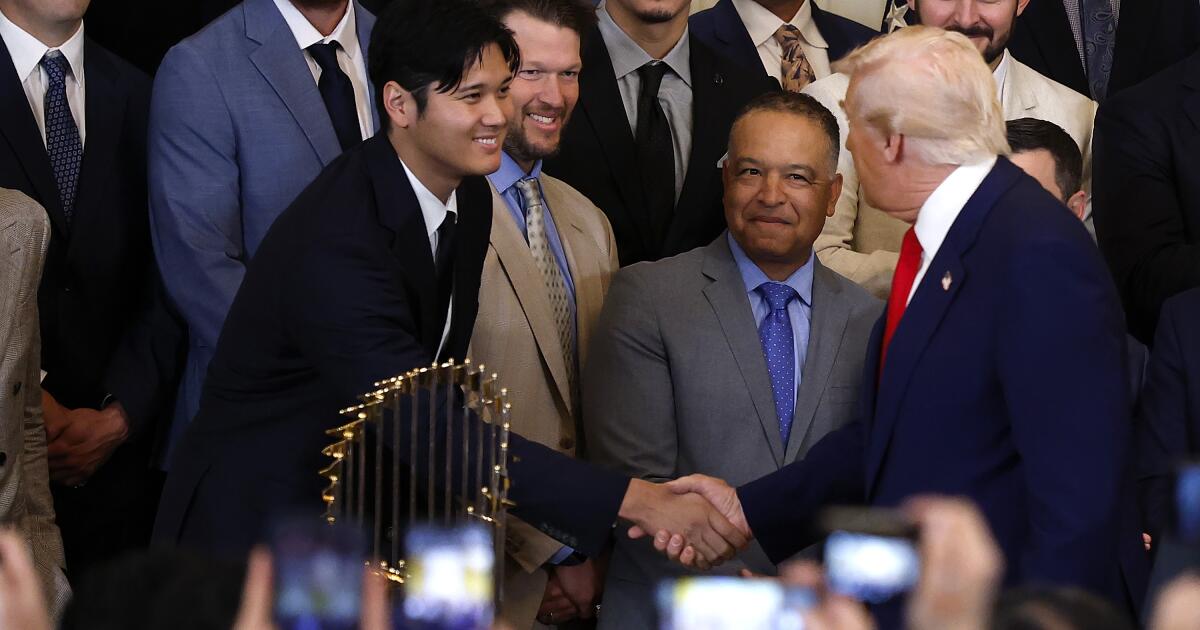
Dodgers scheduled to visit White House in late July to celebrate 2025 World Series win
-

 World17 minutes ago
Former US Olympian pleads not guilty in DC reflecting pool vandalism case
-
 News44 minutes ago
Former Olympian pleads not guilty in reflecting pool vandalism charges
-

 Los Angeles, Ca2 hours ago
Heat advisory, beach hazards in effect as Southern California sizzles
-

 Detroit, MI2 hours ago
Teen on moped hit by car after cruising through stop sign in Detroit
-

 San Francisco, CA3 hours ago
Flight of fancy: San Francisco moves to build private luxury airport terminal
-

 Dallas, TX3 hours ago
Dallas’ digital creator economy is booming. Burnout is too.

