Washington, D.C
Councilwoman sends MPD letter seeking clarity on crime data, federal cooperation


D.C. Councilmember Brooke Pinto sent the Metropolitan Police Department a letter Tuesday pressing for answers regarding its alleged misclassification of crimes and its cooperation with federal agencies.
As the chair of the Council’s Committee on Judiciary and Public Safety, Pinto says she conducts oversight of the MPD every day. Every member of the D.C. Council cosigned the six-page letter after a public safety hearing earlier this month. At the 12-hour meeting, more than 100 residents spoke to their experience with federal agencies during their occupation in D.C. The letter is also a result of the Department of Justice and the House Oversight Committee releasing reports accusing MPD of manipulating crime data.
The points the Council seeks clarity about include: joint patrols between MPD and federal agencies, what power and accountability is given to federal agents in D.C., how MPD crime data is classified and reported, what MPD’s general requirements and instructions are, and other specific incidents.
An executive order issued in August gave MPD the authorization to alert federal immigration enforcement agencies of people not in MPD custody and to assist Immigration and Customs Enforcement in the transportation of detained suspects. The Council is pressing MPD on whether this ruling is still in effect, and if so, why.
“District law is clear that MPD cannot coordinate with immigration enforcement officials,” Pinto said.
She explained to News4 that despite that law, she has seen video of and heard reports of MPD officers with different federal agencies handling immigration functions.
“As unusual as it is to have this administration step in and declare an emergency and send troops in … we are still a city and a country of laws, and those laws need to be followed by everyone,” Pinto said.
“Everyone,” Pinto said, includes D.C.’s government and local law enforcement.
Regarding specific incidents, Pinto references two Homeland Security Investigations agent shootings in the past four months. Both took place on Benning Road NE and resulted in no injuries. In the first, on Oct. 17, when an HSI agent shot at a man who tried to flee a traffic stop, the bullet ended up passing through the man’s jacket. The officer was told by his superior at the time not to include any details of the shooting in the arrest report, News4 reported.
“The more these incidents happen, not only are they extremely dangerous, but without resolution, it undermines trust in our public safety ecosystem,” Pinto told News4, “and that cannot happen. We have had years and years of effort to rebuild trust with our police department and our community.”
The Council requested an update to both shooting investigations.
The recent allegations of false crime records within the police department, accuse MPD of downgrading hundreds of crimes systematically to show a decrease. Pinto’s letter urges MPD to advise further on their classifications.
“While I question the political motivations and timing of these reports, and believe that our police department is the best in the country, and there are lots of layers of review, it is still important on behalf of the public to ensure that everybody is on the same page about how classifications of crimes do happen,” Pinto said.
Specifically, the letter in part seeks more information on the data reported in citywide year-to-date crime comparisons published by MPD, and how that data is classified. A main argument by Pinto is that accuracy in crime data is necessary to maintain public trust and assess current public safety intervention.
“It’s not just around accountability for what has gone on, which is very important, but it’s also to inform our strategy moving forward,” she said. “We’re heading into a new year.”
Pinto and the Council set a deadline for MPD’s response as Jan. 9. Pinto said a performance oversight hearing will be held several weeks later. The full letter can be read on Pinto’s website.



Washington, D.C
‘Strong smell’ shuts down flights at major DC-area airports for the second time this month

Check out what’s clicking on FoxBusiness.com.
A reported “strong smell” at a key air traffic control center disrupted flights Friday evening at major airports across the Washington, D.C., region for the second time in two weeks.
The Federal Aviation Administration (FAA) temporarily halted flights at Ronald Reagan Washington National Airport (DCA), Washington Dulles International Airport (IAD), Baltimore/Washington International Airport (BWI), Charlottesville–Albemarle Airport (CHO) and Richmond International Airport (RIC), the agency told FOX Business in an email.
The FAA said the disruptions were due to a “strong smell” at the Potomac Terminal Radar Approach Control (TRACON) center, which manages airspace in the region.
GROUND STOP LIFTED AT MAJOR DC-AREA AIRPORTS AFTER CHEMICAL ODOR DISRUPTS AIR TRAFFIC CONTROL
An FAA air traffic control tower at Ronald Reagan Washington National Airport in Arlington, Va. (Samuel Corum/Bloomberg via Getty Images / Getty Images)
It was not immediately clear what caused the smell.
Ground stops at Dulles, Reagan National and BWI remained in effect until around 8 p.m. ET before being lifted, according to the FAA’s website.
NEWARK AIR TRAFFIC CONTROLLERS LOST RADAR, RADIO COMMUNICATIONS WITH PLANES FOR OVER A MINUTE, SPARKING CHAOS
The FAA said the disruption was due to a “strong smell” at the Potomac Terminal Radar Approach Control (TRACON) center. (Flightradar24)
As of 8:30 p.m., Reagan National was experiencing ground delays, while BWI continued to see departure delays.
Earlier this month, a ground stop was similarly issued at several airports in the Washington, D.C., region after a chemical odor was detected at the TRACON center.
FATAL LAGUARDIA COLLISION RENEWS FOCUS ON RUNWAY INCURSION RISKS ACROSS US
Transportation Secretary Sean P. Duffy speaks at a news conference at Ronald Reagan Washington National Airport. (Heather Diehl/Getty Images / Getty Images)
GET FOX BUSINESS ON THE GO BY CLICKING HERE
The temporary ground stop March 13 similarly affected DCA, IAD, BWI and RIC, Transportation Secretary Sean Duffy said at the time.
Duffy said the smell came from an overheated circuit board, which has since been replaced.

One family, four generations with DC Metro
As Metro celebrates 50 years of service, one D.C. family is marking the milestone with a legacy of their own — four generations who have all worked on the system, helping keep the region moving for decades.
WASHINGTON – D.C. residents got on their first Metro train 50 years ago on March 27, 1976. Here’s a look back at the beginning.

Connecticut Avenue; NW; looking south. evening traffic-jams are aggravated by metro subway construction in Washington D.C. ca. 1973 (Photo by: HUM Images/Universal Images Group via Getty Images)
View of the Metro Center subway station (at 13th and G Streets NW) during its construction, Washington DC, November 16, 1973. (Photo by Warren K Leffler/PhotoQuest/Getty Images)
Standing in the cavernous tunnel, planners wearing hard hats discuss the construction progress of the Metro Center subway station at the intersection of 13th and G Streets in Washington, DC, November 16, 1973. (Photo by Leffler/Library of Congress/In
WASHINGTON, DC – NOVEMBER 07: FILE, Metro construction miners and blasters on a jumbo drill outside the hole they are working on at Rock Creek Parkway and Cathedral Ave NW in Washington, DC on November 7, 1973. (Photo by James K.W Atherton/The Washin
WASHINGTON, DC – MARCH 4: FILE, View of the Post Office at North Capital and Mass Avenue NE, and 1st NE where subway tunnels were being constructed in Washington, DC on March 4, 1974. (Photo by Joe Heiberger/The Washington Post via Getty Images)
WASHINGTON, DC – AUGUST 29: FILE, Workers rig a pipe at the entrance to the Rosslyn Metro Station in Washington DC on August 29, 1974 (Photo by Larry Morris/The Washington Post via Getty Images)
WASHINGTON, DC – MARCH 27: FILE, The crowd at Rhode Island Station on opening day of the Washington Metro on March 27, 1976. (Photo by James A. Parcell/The Washington Post via Getty Images)
WASHINGTON, DC – MARCH 28: FILE, Reverend Leslie E. Smith of the Episcopal Church, right, and George Docherty of New York Avenue Presbyterian church hold a joint service at the new Metro Center station in Washington, DC on March 28, 1976. (Photo by D
WASHINGTON, DC – JULY 1: FILE, An aerial view of metro construction where it crosses the Washington Channel. The Potomac River, the Pentagon and Northern Virginia can be seen in the distance. (Photo by Ken Feil/The Washington Post via Getty Images)
WASHINGTON, DC – JANUARY 27: FILE, A packed train of commuters on the Silver Spring metro on the Red Line on January 27, 1987. (Photo by Dudley M. Brooks/The Washington Post via Getty Images)
WASHINGTON, DC – JULY 4: FILE, Thousands of people press their way into the Smithsonian Subway station after the Independence Day fireworks in Washington, DC on July 4, 1979. (Photo by Lucian Perkins/The Washington Post via Getty Images)

Among the liquor store, barber shop and dry cleaners at the Watergate Complex’s retail plaza, there is a new pop-up museum dedicated to the scene of the crime that toppled Richard Nixon’s presidency.
Among the liquor store, barber shop and dry cleaners at the Watergate Complex’s retail plaza, there is a new pop-up museum dedicated to the scene of the crime that toppled Richard Nixon’s presidency.
The temporary exhibit features the work of artist Laurie Munn — portraits of members of the Nixon administration and those connected to the Watergate break-in. The exhibit features members of Congress, the media and some who were on Nixon’s enemies list.
Keith Krom, chair of the Board of Directors of the Watergate Museum, told WTOP the exhibit was first featured in the gallery in 2012 for the 40th anniversary of the break-in at the Democratic National Committee.
“When she (Munn) learned about our museum effort, she offered to reassemble them as a way for us to expand awareness of the museum,” Krom said.
Krom, who lives in the Watergate, said his favorite portrait is of one of the special prosecutors, whose firing sparked the “Saturday Night Massacre” in 1973.
“I had the pleasure of being a student of Archibald Cox,” Krom said. “He served as my mentor for my third-year writing project.”
Krom said during this time, at the Boston University School of Law, he spent a great deal of time with him.
“I didn’t realize how much he must have gone through. Here he was, this one man, who was challenging the president of the United States over something pretty serious,” Krom said.
The pop-up opened in October and was recently extended to stay open until April 25. Krom said the hope is to find it a permanent location within the Watergate Complex, where they can “present the history of Watergate, but with two perspectives.”
The first would be on the building’s “architectural significance to D.C.,” he said.
“You may not like the design, you actually may hate it,” Krom said. “But you cannot deny that it changed D.C.’s skyline.”
The secondary focus would, of course, be on the mother of all presidential scandals that changed the course of American history.
“That’s where that suffix ‘-gate’ started and continues to be used for almost every scandal that comes out today,” Krom said.
The inspiration for the museum spawned from an interaction from a tourist outside the Watergate.
“He says, ‘This is the Watergate, right?’ And I was like, ‘Yeah, it’s one of the buildings,’” Krom recalled.
The tourist then asked Krom, “So where’s the museum?”
“I was like, ‘Oh, we don’t have a museum.’ And he literally just looked at me and said, ‘That’s so sad.’ And he got on his bike and rode away,” Krom said.
While the self-proclaimed political history nerd said he “still gets goose bumps” when he drives by the Capitol at night, Krom hopes that when people leave the museum, “they’ll walk away with a new appreciation for how our government works, the guardrails that are in place.”
“Maybe an understanding that those guardrails themselves are kind of frail, and they probably need our collective help in making sure they last — that’s what we hope to accomplish,” Krom said.
Get breaking news and daily headlines delivered to your email inbox by signing up here.
© 2026 WTOP. All Rights Reserved. This website is not intended for users located within the European Economic Area.

‘Look, it’s a lawsuit!’ Lion King composer sues comedian for $27 million over song translation

Don’t want to miss the bloom? This L.A. scientist created a poppy forecast
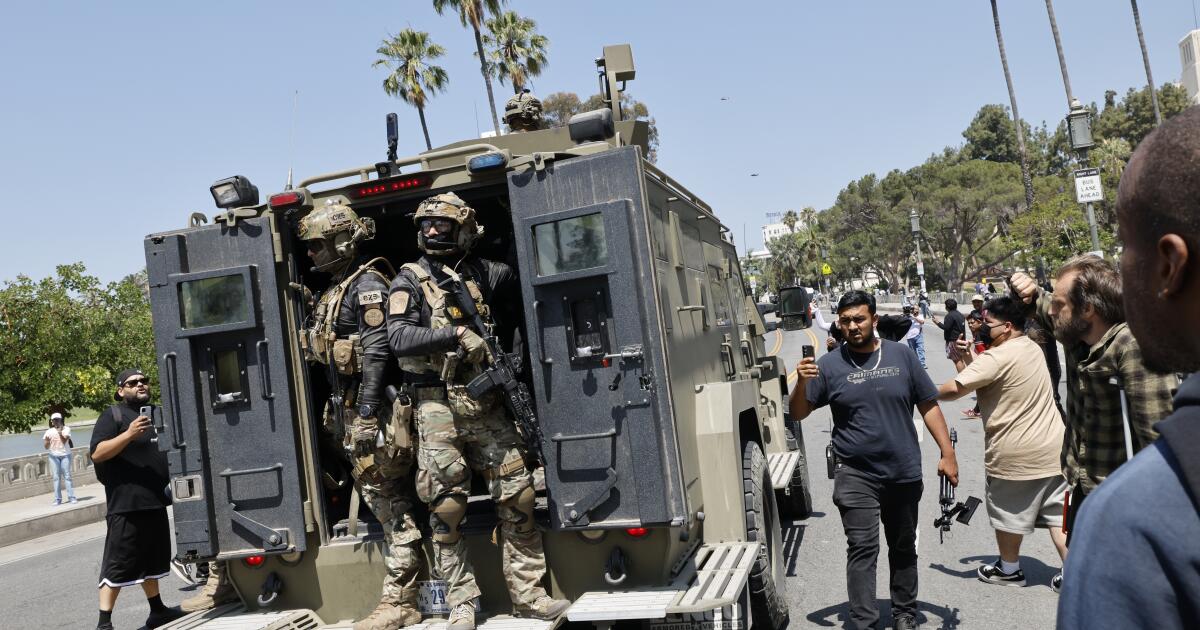
DHS attorney said agents in Los Angeles should have ‘started hitting’ protesters, emails show
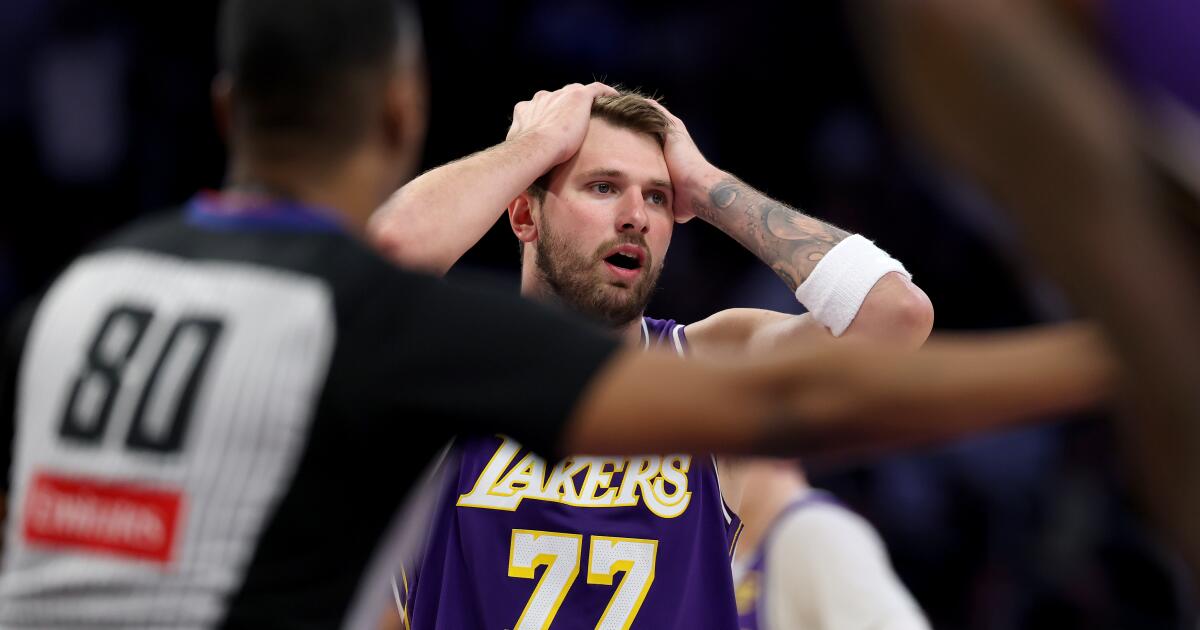
Lakers beat Nets, but Luka Doncic is facing suspension again after 16th technical

EU Parliament unblocks key political hurdle in digital euro talks

Florida High School Football Rankings: Top 25 teams – Oct. 21

How old is Bo Nix? What to know about Oregon quarterback ahead of 2024 NFL Draft

Cleary's 21 help Le Moyne down Central Connecticut State 69-64 in OT

99th annual Pony Swim held in Virginia

Indiana Members Credit Union announced as new anchor tenant at Bottleworks District
EU Parliament unblocks key political hurdle in digital euro talks

Man arrested in plot to firebomb Palestinian activist’s home after undercover op

WATCH: Senate hearing goes silent after Angel Father confronts top Dem over daughter’s death

US diplomat Marco Rubio denounces settler violence, tolls in Hormuz strait

Iran-linked hackers have breached FBI Director Kash Patel’s personal emails | CNN Politics
-

 Detroit, MI1 week ago
Drummer Brian Pastoria, longtime Detroit music advocate, dies at 68
-

 Movie Reviews1 week ago
‘Youth’ Twitter review: Ken Karunaas impresses audiences; Suraj Venjaramoodu adds charm; music wins praise | – The Times of India
-

 Sports7 days ago
IOC addresses execution of 19-year-old Iranian wrestler Saleh Mohammadi
-

 New Mexico5 days ago
Clovis shooting leaves one dead, four injured
-
 Business1 week ago
Disney’s new CEO says his focus is on storytelling and creativity
-

 Technology6 days ago
YouTube job scam text: How to spot it fast
-

 Tennessee4 days ago
Tennessee Police Investigating Alleged Assault Involving ‘Reacher’ Star Alan Ritchson
-

 Texas1 week ago
How to buy Houston vs. Texas A&M 2026 March Madness tickets