Virginia
More than 125 arrested at four Virginia universities amid nationwide protest over Israel-Hamas war • Virginia Mercury


Following the strong reaction to the Israel-Hamas war across the country, some Virginia colleges and universities are still responding to last week’s series of on-campus demonstrations that resulted in dozens of students’ arrests and lingering questions about upcoming graduation ceremonies.
Youngkin says no encampments on Virginia campuses; supports ‘peaceful’ protests
Some of the most notable Virginia protests that led to arrests occurred at the University of Mary Washington, Virginia Commonwealth University, Virginia Tech and, most recently, the University of Virginia.
Virginia Attorney General Jason Miyares said in a Sunday appearance on Fox News that protesters at UVA — where 25 people were arrested Saturday after Virginia State Police deployed pepper spray to clear an encampment that several staff and students described as peaceful — ignored multiple warnings to leave the area and “blocked and surrounded” campus officers, and “that’s when they had to ask for state police to intervene.”
On Friday, May 3, Virginia Gov. Glenn Youngkin said during an interview with Bloomberg TV that his administration determined that nonstudents are causing “real problems” and inciting hate speech, antisemitism and violence during demonstrations.
“If they’re peaceful, then of course, that’s part of our constitutional right and part of the American fabric, but we can’t allow hate speech, antisemitism and most importantly, violence and disruption and threats,” said Youngkin.
According to media reports, multiple arrests have been made on Virginia’s college campuses as the world waits for a resolution in the war between Palestine and Israel that has lasted for over six months, following the Palestinian militant group Hamas’s assault on Israel near the Gaza Strip.
Demonstrators across the country are calling for a cease-fire, for America to reject forms of hate and for universities to divest from companies with ties to Israel, which they see makes them complicit in the war.
This weekend, some state colleges and universities will hold their commencement ceremonies, hosting graduates’ families and other guests on campuses. On May 11, Youngkin will speak at VCU’s commencement ceremony at the university’s convention center. 13 people were arrested during last week’s demonstration on VCU’s campus.
“Commencement is an official university event and disruptions will not be tolerated,” said Brian McNeill, a spokesman for VCU. “We expect our graduates and their guests will celebrate with behavior that allows everyone to enjoy this milestone occasion. But anyone who engages in a prolonged disruption may be asked to leave the ceremony or could be removed from the Convention Center.”
According to Michael Stowe, a spokesman for Virginia Tech, where more than 80 protesters were arrested last week, no changes are being made to any commencement activities in Blacksburg. He said any updates will be posted on the university’s commencement webpage.
Demonstrations
On Saturday afternoon, 25 protesters were arrested at the University of Virginia, the culmination of a nearly week-long demonstration that University President Jim Ryan said in a statement started as “a peaceful public demonstration” near the university’s chapel Tuesday. It is not clear how many of those arrested were UVA students.
“We hoped and tried to handle this locally,” Ryan’s statement read in reference to the efforts of UVA Police Chief Tim Longo to allow protests to continue on campus for most of the week.”But when UPD’s attempts to resolve the situation were met with physical confrontation and attempted assault, it became necessary to rely on assistance from the Virginia State Police,” Ryan wrote, noting that people unaffiliated with UVA presented safety concerns at Saturday’s protest.
“The reality is that what you had at UVA is students that were warned repeatedly they were violating both the student code of conduct, that it was an unlawful assembly, there was trespassing, there were outsiders that were there,” Miyares said on Fox News Sunday after Saturday’s incidents at UVA. “One thing I want to stress is Virginia is not New York; you have a very different governor, you have a very different AG and we’re not gonna tolerate that.”
24 members of the school’s history department faculty released a statement Saturday afternoon on X as the events on campus continued unfolding, condemning “the repression of a peaceful protest of our students by armed state police in riot gear.” The statement said university staff, students, and administrators had been collaborating since April 30 to ensure the protests stayed nonviolent so the educators were “stunned” by the university’s decision to call in state police.
Beginning in the evening on Saturday, April 27 protesters in Fredericksburg, including college students, were arrested by law enforcement amid demonstrations at the University of Mary Washington. Combined with those taken into custody at Virginia Tech and VCU, a total of 107 people were arrested, 68 of them students, at all three campuses.
In Richmond, demonstrators set up encampment structures that VCU said in an April 30 statement impacted campus operations and safety, and violated the university’s Reservation and Use of Space policy.
After law enforcement and university staff asked demonstrators “respectfully and repeatedly” to comply with policies throughout the day, including ones that bar the setting up of tents and other structures, the university said officers provided four mass warnings to individuals who chose not to leave the encampment before declaring an unlawful assembly.
Some demonstrators who chose not to leave threw objects at officers and sprayed them with unknown chemicals. Law enforcement officials responded using pepper spray to disperse the crowd. VCU Police report that officers did not use other chemical agents, such as tear gas.
VCU said 13 individuals were arrested and charged with unlawful assembly and trespassing. Six of those arrested were students; these students will proceed normally through the university’s student conduct process.
“VCU will enforce its directive that prohibits encampments, including the installation of structures and stockpiling items that could be used to build a structure or aid an encampment,” the university said in a statement. “This will be done to comply with our policies and to support allowing students, faculty and staff to complete the semester successfully.”
In Fredericksburg, law enforcement arrested 12 demonstrators, including nine students, for trespassing, according to a letter from University President Troy Paino.
Paino wrote that demonstrators were allowed to protest at Jefferson Square, according to the university’s policy on expressive activity. But by the late afternoon on April 26, a threat assessment taken by officials determined the encampment was prohibited and tents were not permitted.
Against the guidelines, demonstrators put the tents back up on April 27, leading officials to cancel the remainder of the event.
Paino said attendees were instructed to leave, but some remained, resulting in 12 being arrested for trespassing.
“Events that do not follow instructions, attempt to disrupt classes or activities, or endanger the health, safety, and security of our campus community will not be allowed,” Palino wrote in a letter to the university community.
In Blacksburg, Virginia Tech reported that 82 individuals, including 53 current Virginia Tech students, were arrested and all were charged with trespassing.
Reaction from legislature
In the aftermath of arrests at Mary Washington, Virginia Tech, VCU and UVA, leaders and lawmakers have reacted to the protests, with most asserting that they value free speech, but responding differently on how to demand change.
Democrats have leaned on President Joe Biden’s message that states “peaceful protest is protected” in the United States and “violent protest is not protected. It’s against the law.”
Biden backs peaceful protest, denounces campus ‘chaos’ over Gaza
Sen. Creigh Deeds, D-Charlottesville, said Friday on X that UVA’s protests had been peaceful and questioned the police’s reaction to the demonstrations.
“I’m not sure what change provoked this sort of response by the police. Violence is unnecessary. I will be interested in knowing whether the change in tactics was decided in Charlottesville or Richmond.”
Others have taken a stance to condemn the policing of the First Amendment, according to a joint statement signed by five Democratic lawmakers: Sen. Saddam Azlan Salaim, D-Fairfax, and Dels. Rozia Henson Jr., D-Prince William, Adele McClure, D-Arlington, Joshua Cole, D-Fredericksburg, and Nadarius Clark, D-Suffolk.
“Freedom of speech and the right to protest are rights protected by the United States Constitution. Full stop,” said Henson. “Arresting students for exercising their constitutionally protected rights to peacefully assemble and protest violence erodes confidence in our own governmental institutions and must be closely scrutinized.”
The group of lawmakers also urged colleges and universities that have arrested their own students for “participating in constitutionally protected protesting to de-escalate tensions,” to reconsider their actions and re-engage with students to “facilitate a more peaceful path forward.”
House Minority Leader Todd Gilbert, R-Shenandoah, said his colleagues referenced in the joint statement fail to recognize the “unlawful nature” of some of these protests and associated themselves with the “worst of the bigoted messages” from demonstrators.
“As long as these protests remain inside the rules of these universities, they have a right to happen, no matter how nauseating and odious the views on display,” Gilbert said in a statement applauding the governor, Attorney General Jason Miyares and law enforcement for the “even-handed way” they have handled the demonstrations.
He added that if demonstrations turn into intimidating Jewish students, trespassing, or other illegal activity, they can be shut down.
“Virginia’s colleges are not preschools where petulant children need to learn basic rules and manners,” Gilbert said. “Campus officials and law enforcement officers told these young adults the rules. They broke the rules, and now they’ll face the consequences.”
Mercury editor Samantha Willis contributed to this report.
GET THE MORNING HEADLINES DELIVERED TO YOUR INBOX



Virginia
West Virginia Lottery results: See winning numbers for Powerball, Lotto America on March 28, 2026
The results are in for the West Virginia Lottery’s draw games on Saturday, March 28, 2026.
Here’s a look at winning numbers for each game on March 28.
Winning Powerball numbers from March 28 drawing
11-42-43-59-61, Powerball: 25, Power Play: 4
Check Powerball payouts and previous drawings here.
Winning Lotto America numbers from March 28 drawing
15-29-30-32-35, Star Ball: 09, ASB: 05
Check Lotto America payouts and previous drawings here.
Winning Daily 3 numbers from March 28 drawing
0-7-1
Check Daily 3 payouts and previous drawings here.
Winning Daily 4 numbers from March 28 drawing
2-7-3-5
Check Daily 4 payouts and previous drawings here.
Feeling lucky? Explore the latest lottery news & results
When are the West Virginia Lottery drawings held?
- Powerball: 11 p.m. ET on Monday, Wednesday and Saturday.
- Mega Millions: 10:59 p.m. ET Tuesday and Friday.
- Lotto America: 10:15 p.m. ET on Monday, Wednesday and Saturday.
- Daily 3, 4: 6:59 p.m. ET Monday through Saturday.
- Cash 25: 6:59 p.m. ET Monday, Tuesday, Thursday, and Friday.
This results page was generated automatically using information from TinBu and a template written and reviewed by a USA Today editor. You can send feedback using this form.
Virginia
WRIC ABC 8News wins awards at AP Broadcasters awards for continuous coverage, special program

RICHMOND, Va. (WRIC) — At Virginia’s Associated Press (AP) Broadcasters awards on Saturday, 8News received seven awards, including three first-place awards. Our team was recognized for our coverage on the Waverly Two and special programs during Black History Month.
On Saturday, March 28, 8News attended the 2026 Virginia AP Broadcasters Award, which recognizes broadcast news operations in Virginia and West Virginia.
News anchor Deanna Allbrittin and Digital Producer Ryan Nadeau were honored for their continuous coverage of the Waverly Two, two men who were found not guilty but were still sentenced to life in prison.
We were also awarded first place in the Best Special Stream category for “Riverfront Rhythm” and Excellence in Diversity, Equity and Inclusion for “What is Black?“, a special program during Black History Month from 8New’s Lindsey West.
Additionally, MaryCatherine Price received second place for Best Daily Stream for her podcast, “The Rundown.” It is a podcast that gives viewers an inside look into the newsroom.
Our Taking Action team was also a finalist for Best Multi-Platform Story for our continuous coverage of “Homeowner Horrors” throughout Central Virginia. We were also a finalist for Best News Promo on the “Richmond Tax Delinquency.”
Lastly, our very own Nolan Knight earned second place for Best Sports Anchor for his groundbreaking coverage on local sports in Virginia. He was also recognized at the 2025 AP Broadcast Awards for his coverage of Virginia sports.


Players to watch in the 2026 Women’s NCAA March Madness Tournament
USAT’s Sam Cardona-Norberg and Meghan Hall give a few of their favorite players they will be keeping an eye on in the women’s March Madness tournament.
Sports Seriously
The NCAA Women’s Tournament Sweet 16 round continues Saturday, March 28, with a matchup between No. 3-seed TCU and No. 10-seed Virginia at Golden 1 Center in Sacramento, California.
The game tips off at 4:30 p.m. PT (7:30 p.m. ET, ABC).
No. 3 TCU is fresh from a nail-biting victory against No. 6-seed Washington in a final score, 62-59, during the Women’s NCAA Tournament Round of 32 on March 22.
The Horned Frogs were led behind a near triple-double from senior guard Olivia Miles who posted 18 points, 10 rebounds and eight assists. Clara Silva chipped in with 16 points and eight rebounds for TCU. Taylor Bigby added 15.
No. 10 Virginia is still riding momentum from their second round upset, a win against No. 2-seed Iowa, 83-75, on March 23.
The Cavaliers were paced by junior guard Kymora Johnson, who posted a game-high 28 points. Johnson and senior guard Paris Clark provided the bulk of scoring for Virginia. Clark could hardly miss as she added 20, herself. She shot 70% from the field, including 3-of-4 from three.
No. 10 Virginia will take on No. 3 TCU in the Sweet 16 round of the NCAA women’s basketball tournament on Saturday, March 28. Here’s how to watch the Women’s March Madness action.
What time is the TCU vs. Virginia women’s Sweet 16 game?
- Date: Saturday, March 28
- Time: 7:30 p.m. ET (4:30 p.m. PT)
- Location: Golden 1 Center, Sacramento, California
The No. 3-seed TCU Horned Frogs will play the No. 10-seed Virginia Cavaliers in the NCAA Women’s Sweet 16 round at 7:30 p.m. ET (4:30 p.m. PT) Saturday, March 28, at Golden 1 Center in Sacramento, California.
No. 10 Virginia vs. No. 3 TCU: TV, streaming

Scouting Future Saints: Missouri edge rusher Zion Young

Al Manuel Invite: Montana State’s Tilde Bjerager shatters mark; Montana breaks 5 records

No. 24 Nebraska wins slugfest over Indiana

Thousands without power in Henderson neighborhood after mylar balloon causes outage

Pakistan hosts diplomatic discussions on ending war

Florida High School Football Rankings: Top 25 teams – Oct. 21

How old is Bo Nix? What to know about Oregon quarterback ahead of 2024 NFL Draft

Cleary's 21 help Le Moyne down Central Connecticut State 69-64 in OT

99th annual Pony Swim held in Virginia

Indiana Members Credit Union announced as new anchor tenant at Bottleworks District

JD Vance says he was ‘obsessed’ with UFOs, believes aliens are actually ‘demons’
The EU's recipe for trade deals : easy on beef, tough on wine
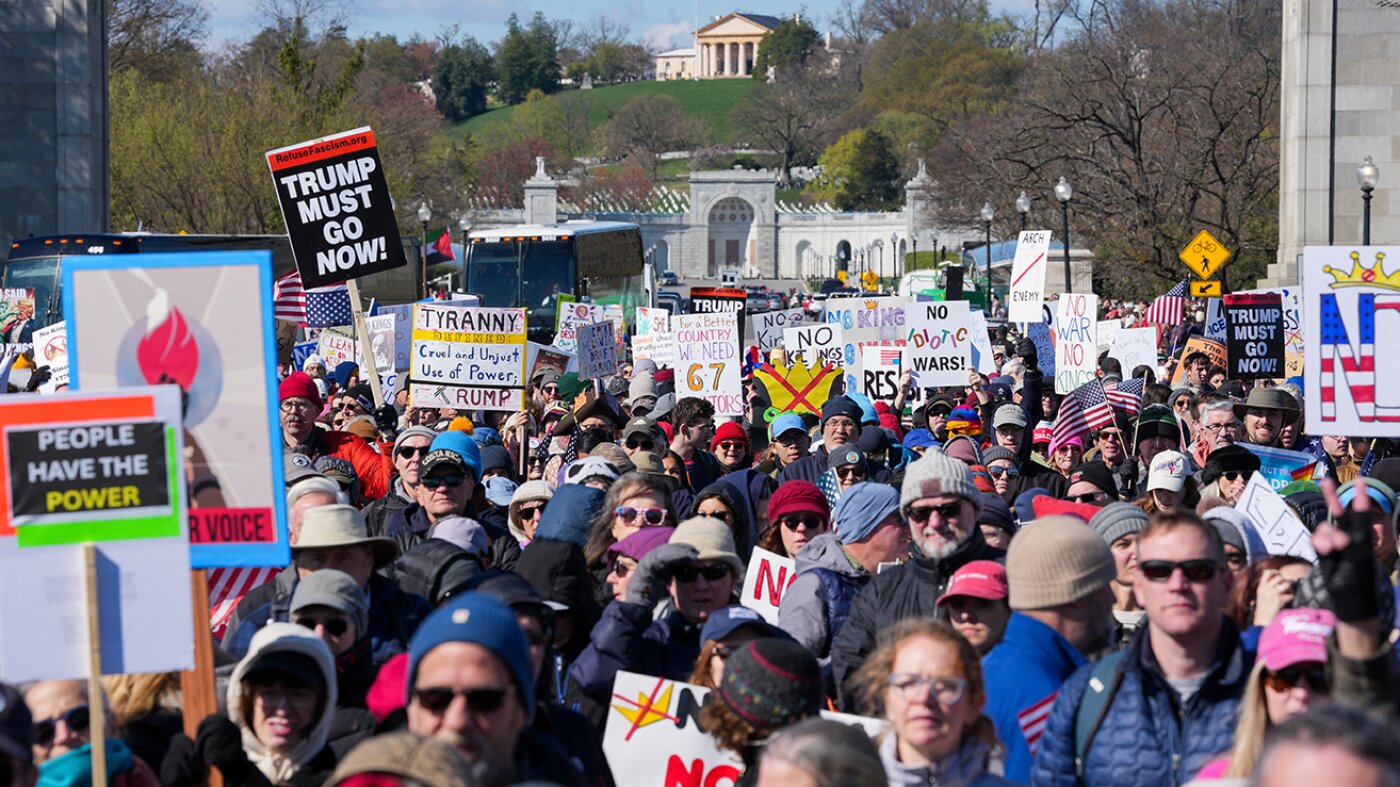
Photos: ‘No Kings’ protests across the country

Jeffries declines to break with indicted Democrat after ethics panel’s guilty verdict

Hundreds of thousands march through London in stand against the far right
-

 Sports1 week ago
IOC addresses execution of 19-year-old Iranian wrestler Saleh Mohammadi
-

 New Mexico7 days ago
Clovis shooting leaves one dead, four injured
-

 Tennessee6 days ago
Tennessee Police Investigating Alleged Assault Involving ‘Reacher’ Star Alan Ritchson
-

 Technology7 days ago
YouTube job scam text: How to spot it fast
-

 Minneapolis, MN3 days ago
Boy who shielded classmate during school shooting receives Medal of Honor
-

 Science1 week ago
Record Heat Meets a Major Snow Drought Across the West
-

 Politics1 week ago
Schumer gambit fails as DHS shutdown hits 36 days and airport lines grow
-

 Texas1 week ago
How to buy Houston vs. Texas A&M 2026 March Madness tickets