Texas
Texas mayor starts charity to help Christians suffering attacks in Nigeria


Nigeria continues to face anti-Christian violence that began nearly a decade ago in Africa’s most populous country.
Open Doors UK says Christians in Nigeria continue to be terrorized with devastating impunity by Islamic militants and armed “bandits” – particularly in the north and central regions of the country.

Nigeria has around 230 million people, almost evenly divided by Christians and Muslims.
Open Doors UK says more Christians are killed for their faith in Nigeria each year than everywhere else in the world combined, and notes men and boys are often specifically targeted, with women and girls often abduction and sexually assaulted.
Most of the attacks against Christians come from Boko Haram – an Islamist militant group in the predominantly Muslim north of the country – and Islamic Fulani militants primarily located in the middle of the country, which is more mixed between Christians and Muslims.
Mike Arnold, the mayor of the Texas city of Blanco, visits Nigeria quite often, supporting the Christian communities in the African nation.
Currently, there are over 2.2 million internally displaced persons (IDP’s) in the country fleeing anti-Christian attacks.
Arnold just recently returned from a visit to Nigeria, where he has established the Africa Arise charity to support the education of the internally displaced children.
“From my experience and observation, most IDPs are women and children, widows and orphans. Literally countless numbers of these live in abject squalor due to no fault of their own. Many are highly educated and qualified professionals but are stuck in impoverished camps with seemingly no way out,” the Texas mayor told Crux.
“Incredibly, the children who live as IDPs today are the lucky ones, who escaped massacre, sex slavery and the harsh elements to survive. These are divided into two primary groups, those who were made orphans by Boko Haram and saw their parents brutally slaughtered, and now a multitude who were born and are growing up displaced,” Arnold said.
2Many know nothing about this world other than the sub-human encampments they were born into. Yet everywhere I visit with IDPs in Nigeria, I find them to be faithful, bright, hopeful, and dedicated to doing their part to make things better,” he added.
What follows is the full interview by Crux with Arnold.
Crux: Can you tell us something about the displaced Christians in Nigeria?
Arnold: Nigeria’s internal displacement crisis began in 2013 with the genocidal onslaught of Boko Haram, and it persists to this day due to regional unrest which drives the ongoing massacre and displace primarily of Christians.
Estimates from international organizations say today there are anywhere from 3-5 million IDPs [Internally Displaced Persons] in Nigeria. Some informed observers say it could be two or three times that. From first-hand experience, I know of numerous camps whose existence is denied by the government, so I tend to think the larger estimates are more accurate.
Only a fraction live in formal, recognized camps. (Many refuse invitations to these camps because they believe they will be required to convert to Islam to eventually leave them.) Nobody knows for sure the number of informal encampments that are scattered all over the country. Many live as homeless, and others are taken in by family, or churches. Some eventually find footing to start a new life, while for the majority mere survival is all they can achieve.
From my experience and observation, most IDPs are women and children, widows and orphans. Literally countless numbers of these live in abject squalor due to no fault of their own. Many are highly educated and qualified professionals but are stuck in impoverished camps with seemingly no way out.

Incredibly, the children who live as IDPs today are the lucky ones, who escaped massacre, sex slavery and the harsh elements to survive. These are divided into two primary groups, those who were made orphans by Boko Haram and saw their parents brutally slaughtered, and now a multitude who were born and are growing up displaced. Many know nothing about this world other than the sub-human encampments they were born into.
Yet everywhere I visit with IDPs in Nigeria, I find them to be faithful, bright, hopeful, and dedicated to doing their part to make things better.
Which areas are most affected?
Boko Haram and the continued unrest are centered in the far North and Northeast regions of Nigeria, which have been under Sharia law for nearly a thousand years.
That said, the IDP crisis affects the entire nation. IDP camps, informal encampments, and homeless are all over the country. The drain on resources is felt by all. The economy is hurt by the removal from the labor force of such a number of capable people. And in the big picture, this ongoing injustice undermines the peace, unity and spiritual environment of everyone in Nigeria.
Why should Americans particularly care about what is going on there? And do you think the U.S. government could do more to help?
Americans should care for a number of reasons.
Practically speaking, most don’t know that Nigerian Americans are the wealthiest and best educated segment of our population. By and large, Nigerian people are bright, entrepreneurial, faithful and uphold the highest values and integrity. Nigeria is the sixth largest nation on earth by population, the largest economy in Africa, and contains nearly a quarter of the population of the entire continent. It is one of the top 5 nations in OPEC, rich with natural resources of all kinds. They have great potential to rise in global prominence, and this is a good thing.
Spiritually, Nigerian Christians have unashamedly and without wavering held the line on upholding traditional, Biblical theology. In the face of unimaginable hardship, they live a life of vibrant, sincere Christian faith. They are an example and inspiration.
Culturally, we’re not so different. English is the official language of the nation. I’ve found Nigerians of all ages easy to communicate with and relate to personally.
Nigeria is around half Christian – but there are many denominations. Is the current anti-Christian violence help bring Christians together?
In a practical sense, yes, I find Nigerian Christians united across denominations unified in their practice of true and pure religion, which is selfless service to humanity. In the field, as we serve together, pray together, and worship together, nobody ever bothers asking what church you go to. We who are many form one Body as we focus on Christ and the work He called us to.
And yes, those in threatened communities, and living displaced, seem to have put aside all denominations and nuanced theological disputes, as they are pressed together by shared tribulation.
Years ago, under selfless leadership, including a term by John Cardinal Onaiyekan, the Christian Association of Nigeria was a broad-based and influential group. Unfortunately, it has drifted into being largely irrelevant due to political infighting and perhaps misguided motivations.
You are a Texan, but have been involved in Nigeria for years – what initially brought you there, and why do you keep going back?
In 2010, a good friend of mine was invited to keynote a large, 20th annual international ministry leadership conference in Nigeria, organized by the inter-denominational group Unity for Africa. My friend invited me along as a traveling companion… and then, at the last minute he had to back out! The organizers were stuck, and I was unexpectedly thrust into that position. Something must have clicked, because they invited me back to do it again the next year, and I was eager to return.

Through that, I was blessed to be closely mentored for several years by an amazing man of God, the late Prof. John Ofoegbu, the founder of Unity for Africa. We lived in the same hometown in the U.S. and traveled Nigeria together extensively till his untimely passing.
He helped me discover a deep spiritual connection to the nation and its people, and a compelling vision of its potential to advance the Kingdom of God. I believe that what man has long called the Dark Continent, God is bringing forth as the Continent of Light in this generation. I often beg them to send missionaries to us!
There are times I feel more at home there than I do here. At first I felt sorry for them because of what they lack that we take for granted. Things like stable electricity, orderly traffic, air conditioning, drinkable tap water, public sanitation, and such. But after awhile, that sentiment has shifted 180 degrees. Now I feel sorry for us, for things we lack but they take for granted. Like family, integrity, faith-centered life, hard work, honor. To me, these are what matter most in a community, and I at home when I’m surrounded by people like that.
Ultimately, I keep going back because I feel called by God to do so. I believe God has a bright future in store for Nigeria, and I want to be part of what He is doing. He has gripped me with a vision and passion for these people and their amazing potential. My dearest, deepest friends in the world are in Nigeria, as are the people I most admire and respect. And God has given me access and favor at the highest levels there, as I’ve pursued my calling.
Can you tell us more about the Africa Arise charity?
Africa Arise is comprised of a 501c3 charity in the U.S., with a sister entity in Nigeria. It was founded in 2019 by me and my covenant brother Pastor Jed D’Grace in Abuja, Nigeria. We started out primarily focused on evangelism and leadership development, until a series of unexpected events led us to discover the New Kuchingoro IDP camp, right in the nation’s capital.
The people in this camp were displaced by the Gwoza Massacre, nearly 500 miles away in far Northeast Nigeria, surviving horrific trauma and hardship. For dark political reasons, the camp itself is officially denied by their government as well as the UN. The IDPs, including numerous college graduates, are forced to live in shanties they built themselves, with no sanitation, water, electricity, or any formal of support.
When I asked a woman in camp how we could help, she didn’t ask for food, water, money, housing, healthcare, or anything else they obviously lack. Instead, she asked us to help teach the children of the camp. She said with an education, they will have strength of character, vision for the future, and a path out of the camp.
In the summer of 2020, we founded the Arise Academy to serve youth stuck in IDP camps, starting in the Abuja area. Today we employ 15 full-time teachers and provide a free, high-quality education to some 520 IDP children. We have schools running in two camps, have broken ground for a school in a new camp. We are able to do this through donations from individuals, civic organizations, and church mission boards.
We have identified numerous other camps in the area which need schools, and know there are countless more around the country. We aim to keep growing to meet the needs until all Nigeria IDPs are able to go home in peace.
Presently we are working on a documentary film of the highest caliber, to bring this story to the world’s attention. We have launched an online petition at www.change.org/idpjustice, and are engaging top Nigerian Christian influencers to spread the word. Also, we are working with the dean of Nigerian Gospel music, Panam Percy Paul, and others to produce a series of large, music-based outreach events across Nigeria this fall, to raise awareness and funds for IDP restoration.
Follow Charles Collins on X: @CharlesinRome



Texas has reported 48 cases of Cyclospora, a foodborne illness caused by a parasite that health experts say can lead to severe gastrointestinal symptoms.
Dr. David Winter, an internal medicine physician with Baylor Scott & White, said cyclospora infections typically increase during the summer. However, he said the current increase affecting several states could become the worst in years.
At least 20 people nationwide have been hospitalized with symptoms that can last for weeks.
“It’s really bad disease right now and sometimes you get in your intestines and that gives you these horrible cramps and gurgling and then diarrhea. In fact, the diarrhea is so bad, they call it explosive diarrhea,” Winter said.
Cyclospora is caused by a parasite rather than a virus or bacteria. Winter said the parasite multiplies inside the intestines, contributing to recurring symptoms.
“It’s a parasite. It’s not a virus, it is not bacteria. So the parasite, once it gets in your intestine, it starts to multiply. And then when it builds up a certain amount, then it comes out with this explosion, and then it starts multiply again,” Winter said.
The illness spreads through food or water contaminated with infected feces and is rarely transmitted from person to person.
The source of the current outbreak is unknown. Previous outbreaks have been linked to fresh fruits and vegetables, including basil, cilantro, raspberries and snow peas.
Doctors recommend thoroughly washing fresh produce before eating it to help reduce the risk of infection.
For many people, symptoms can be managed at home, and antibiotics are also effective, according to Winter.
He said patients with severe diarrhea should let their doctor know about their symptoms because many routine stool tests do not automatically screen for cyclospora.
“Most stool tests in laboratories don’t look for this. So you want to be sure and tell your doctor, I’ve got this, quote, explosive diarrhea. I’m cramping, I feel like hell, I have all this fatigue,” Winter said.
While the infection is uncommon, Winter said it can be especially difficult for those who become sick.
“It’s rare, but boy when you get it, it is tough,” Winter said.
This story was originally reported for broadcast by NBC DFW. AI tools helped convert the story into a digital article, and an NBC DFW journalist edited it again before publication.

Published On 8 Jul 2026
The family of a man killed by an Immigration and Customs Enforcement (ICE) agent in Texas has called for an investigation into the incident.
The appeal on Wednesday came a day after the ICE agent fatally shot Lorenzo Salgado Araujo in Houston during a traffic stop, the most recent high-profile killing by immigration enforcement agents amid the administration of US President Donald Trump’s mass deportation drive.
list of 3 itemsend of listRecommended Stories
Salgado Araujo’s family said he was working at the time he was killed, driving a crew to a home build in the area. They said he may have been scared that the individuals in the unmarked vehicles that stopped him were trying to steal his tools.
They further said the Mexican national had lived in the US for 35 years and was working towards getting legal status. He had no criminal record and worked tirelessly to support his three US sons, all US citizens.
“He did not deserve to die. He did not deserve to be reduced to a headline of ‘Mexican man shot and killed by ICE’,” son Ronaldo Salgado said during a news conference.
“He deserved to live a quiet life as Lorenzo Salgado Araujo, a husband, a father and a job creator for dozens of men who also wanted the American dream,” he said.
The US Department of Homeland Security (DHS) has said Salgado Araujo attempted to ram an ICE agent, who opened fire in response. Prior to that, they said Salgado Araujo’s car had struck an ICE vehicle.
No video or images of the incident have been released, although a bystander recorded its aftermath.
DHS said Salgado Araujo had been targeted by the agents because he was living in the US without documentation.
While the Trump administration had initially said it would only target criminals in its mass deportation push, it quickly said that it considered anyone in the US without documentation a criminal. Irregularly entering the US is a civil, not a criminal, violation.
Rights groups have accused immigration agents of using “dragnet” techniques under pressure to meet detainment quotas. The Trump administration has denied such quotas exist.
Speaking at the news conference on Wednesday, League of United Latin American Citizens President Roman Palomares said the immigration crackdown has created a country where it is “open season on Latinos” by officers who think they can “shoot and explain later”.
The initial details of the Texas killing resemble the killing of Renee Nicole Good in Minneapolis, Minnesota in January. DHS officials initially said that Good, a US citizen, was attempting to ram an ICE agent when she was fatally shot, although video appeared to show her steering around the agent, who opened fire after stepping to the side of her vehicle.
Just days later, 37-year-old Alex Pretti was fatally shot by a Border Patrol agent and a Customs and Border Protection officer as he sought to document immigration enforcement actions in Minneapolis.
Little has emerged from federal probes into the killings, which came amid an enforcement surge in the city. In a rare move, the Department of Justice declined a separate civil-rights probe into Nicole Good’s killing.
‘Working to give us the American dream’
Speaking at the news conference on Wednesday, Ronaldo Salgado recounted frantically looking for his father at his job site after his mother had been told something bad had happened.
At some point during the search, he was shown the video of his fatally wounded father.
“I recognised him, not from his appearance but from his voice crying for help as he lay on the street,” Salgado said.
“After nearly 35 years of working to give us the American dream, he made the choice to begin the process of obtaining his American dream through a work permit,” Salgado said.
“We dotted every I, crossed every T, filled every document, and attended every appointment. He was close to obtaining his legal status.”
Mexico’s President Claudia Sheinbaum also condemned the killing, saying she was considering legal measures or an appeal to the United Nations.
“There has been another tragic death of one of our compatriots in the United States due to detention issues, even though their only ‘offence’ is not yet having proper documentation,” Sheinbaum said.
The shooting was at least the eighth known death during an encounter with federal immigration officers since the start of the Trump administration’s immigration crackdown.


Dallas weather: July 8 morning forecast
High pressure starts to build back into North Texas, which lowers our rain chances and brings triple digit temperatures to parts of the region. Expect partly to mostly sunny skies today, with highs near 100.
DALLAS – A building system of high pressure is bringing triple-digit temperatures back to North Texas, though the intense heat will be short-lived before a weekend weather shift brings relief and renewed chances of rain.
Wednesday forecast
We expect partly to mostly sunny skies Wednesday, with high temperatures reaching near 100 degrees across much of the region. While hot and dry conditions will dominate, a low chance of scattered rain showers remains possible, primarily in areas east of the Dallas-Fort Worth metroplex.
The heat is expected to solidify Thursday as the upper-level ridge settles firmly over the area. We have removed all chances of precipitation from Thursday’s forecast, locking in dry conditions and an afternoon high temperature of 100 degrees.
However, relief is on the horizon for the upcoming weekend. The high-pressure ridge will lose its grip on North Texas as it begins to shift westward toward the desert southwest.
Weekend forecast
By late Saturday and continuing into Sunday, the atmospheric shift will establish a northerly flow aloft. This pattern change is expected to funnel a series of weather disturbances into the region, triggering a return of widespread rain and thunderstorm opportunities.
The unsettled weather pattern is forecast to linger well into next week. The persistent cloud cover and moisture associated with the continuing rain chances will successfully suppress the heat, keeping afternoon highs closer to historical norms for this time of year.
7-Day forecast
The Source: Information in this article is from the FOX 4 weather team.
-
Culture22 minutes ago
Which Version of the ‘Odyssey’ Should You Read?
-
 Lifestyle25 minutes ago
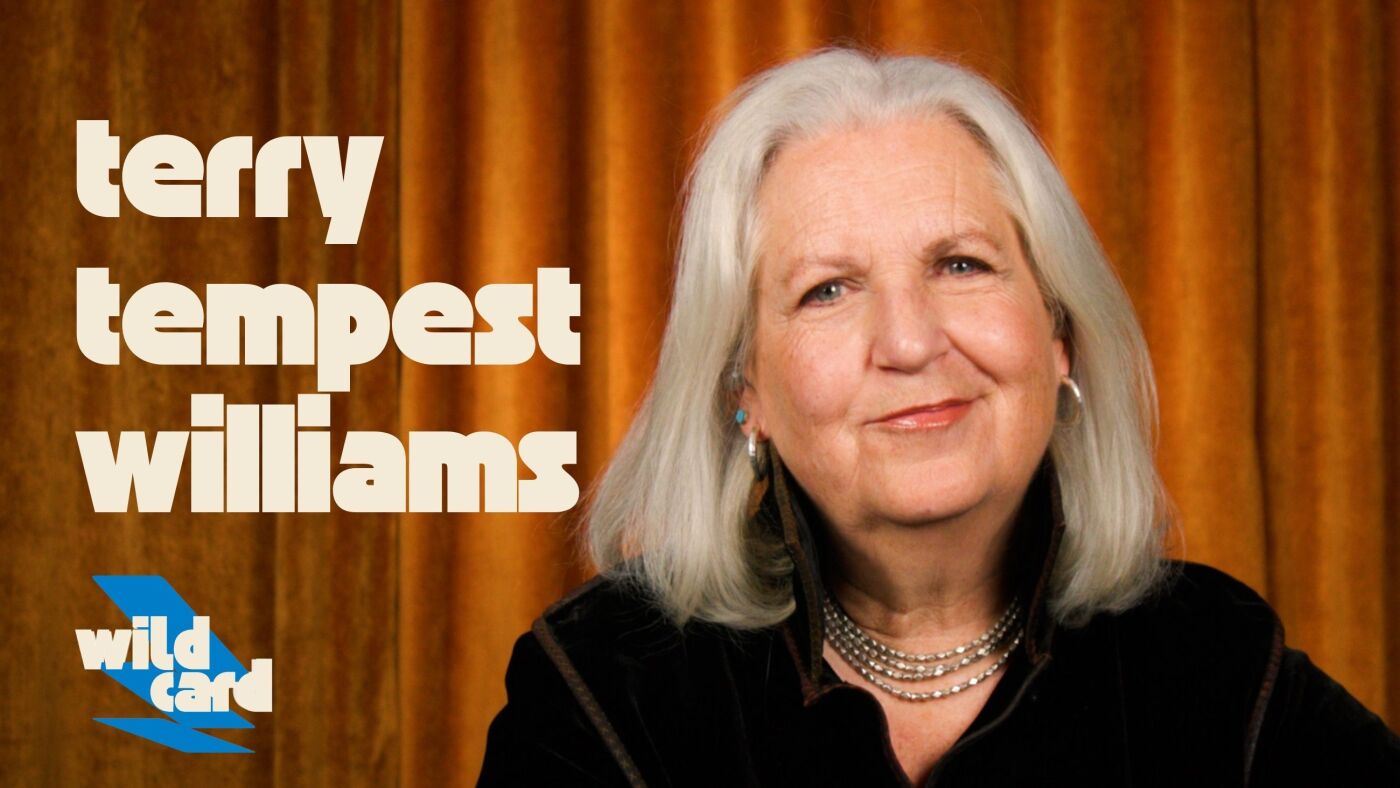
Terry Tempest Williams on why women with big ideas get labeled ‘crazy’ : Wild Card with Rachel Martin
-

 Technology37 minutes ago
Google’s Nest Thermostat has hit its best price of the year
-

 World40 minutes ago
Argentinian flight instructor jumps to death from plane, 22-year-old student forced to land alone
-

 Politics45 minutes ago
Omar’s disclosures erased millions, leaving her with potential negative net worth. She won’t explain why.
-

 Health52 minutes ago
Dr Oz links obesity to chronic disease surge, says GLP-1s can ‘jumpstart’ better health
-

 Sports55 minutes ago
Pirates star pitcher makes unfortunate history after being taken out in middle of perfect game bid
-

 Technology1 hour ago
Medical identity theft follows you into the doctor’s office

