Oklahoma
‘Up in the Air’: Oklahoma Families in Limbo as Courts Decide on Religious Charter


Get stories like these delivered straight to your inbox. Sign up for The 74 Newsletter
At the nation’s first religious charter school — an Oklahoma virtual K-12 named for the patron saint of the internet — student registration and staff recruitment are in full swing for an August opening.
“If you love the Lord and you are excited about teaching … we would love to talk to you,” Misty Smith, principal of St. Isidore of Seville Catholic Virtual School, says in a video to prospective educators.
But with the school’s future still tied up in court, and legal disputes likely to continue, it’s unclear whether taxpayers will be picking up the cost this fall. Church leaders are having an “ongoing conversation” about whether to launch the online program as a private school if a court blocks it from receiving state funds, said Brett Farley, executive director of the Catholic Conference of Oklahoma, a public policy organization.
Opponents argue that the charter, approved a year ago by a state board, violates both Oklahoma and federal laws against the government funding of religion. As the principal said in another video, the school plans to provide education through “a Catholic lens.” With rulings in two separate cases against the school pending, however, families are still stuck in limbo. Of the 218 applications the school received as of last week, over 160 have enrolled and another 35 are deciding whether to accept a seat in the school’s inaugural class.
“There are so many things up in the air,” said Joy Stevens, whose daughter Chloe secured a spot through the application lottery. As a contingency plan, Stevens registered her daughter in the Velma-Alma public schools, near their small farm south of Oklahoma City. “I don’t know if we can afford private.”
The state Supreme Court has yet to rule on a lawsuit by Oklahoma Attorney General Gentner Drummond it heard in April. It’s unclear whether that decision will come down before state funds are set to be distributed to the school in August — an estimated $1.2 million, according to the virtual charter school board that approved the application.
In the second case, an Oklahoma County district court on July 24 will hear from a coalition of parents and advocates seeking an injunction to block the school from opening and receiving those funds. They argue that the school will discriminate against LGBTQ students and those with disabilities as well as families and staff who don’t follow Catholic teachings.
They celebrated last week when the judge in the case ruled their lawsuit can move forward.
Judge Richard Ogden denied most of the claims made by defendants who wanted him to dismiss the case. The defendants, including Republican state Superintendent Ryan Walters and the state board of education, assert that the school has promised not to discriminate.
They argue that the school doesn’t violate laws against the government establishing a religion because St. Isidore is a private organization that will exist with or without the charter. In addition, parents don’t have to enroll their children.
“No student is required to attend St. Isidore or adopt its beliefs,” they wrote in their motion. “St. Isidore is thus not forcing anyone to ‘submit’ to religious instruction or conditioning education on any ‘religious test.’”
‘A slippery slope’
The state, however, wants to make sure that all public school students receive religious instruction during the school day if their parents wish, as long as they’re not missing core classes. Gov. Kevin Stitt last week signed a law clarifying that districts can allow students to take up to three religious-related classes each week — and receive elective credit.
Ohio-based Christian nonprofit Lifewise Academy, for example, provides “evangelical Bible education” and lobbied in favor of the Oklahoma law. The organization will expand to offer classes in 23 states this fall, but some opponents say allowing students to leave school during the day is disruptive and puts them further behind academically.
Walters, however, quickly warned the Satanic Temple, which plans to make its Hellion Academy of Independent Learning available to students, that it is not welcome. In 2019, the IRS granted the temple tax-exempt status, just like other churches. But Walters doesn’t consider satanism a religion.
“I know that you guys like lying, and that’s the central part of your belief system,” Walters addressed the organization in a video on X. “But you will not be participating with our schools.”
Interest from the Satanic Temple shouldn’t necessarily come as a surprise to Walters or Stitt. Drummond predicted that state leaders would open the door to non-Christian organizations if they pushed for more religious freedom in public schools.
In an opinion last year, he said a religious charter could “create a slippery slope” and obligate the state to spend public dollars on charter schools “whose tenets are diametrically opposed” to the beliefs of many Oklahomans.
St. Isidore, meanwhile, is preparing to open and is “ordering what is needed for students and staff to be successful,” said Lara Schuler, senior director of Catholic education for the Archdiocese of Oklahoma City, which applied for the charter along with the Diocese of Tulsa.
Teacher contracts won’t start until Aug. 1, and according to the school’s website, leaders are still looking for a fourth grade teacher and high school math, physics and chemistry teachers. At this point, the school is still well under its first-year capacity of 500 students.
Stevens said she’s been in touch with staff to ask how her daughter can meet other incoming students and “study partners” over the summer. The school is planning two “all-school masses” during the year, according to its parent handbook, and will form local parish hubs for additional worship and in-person gatherings, like field trips, for students.
Stevens said Chloe, who has been attending public school, is worried about whether St. Isidore will be academically tougher than what she’s used to.
“Her only concern has been how rigorous the education looks. She’s worried she’s not going to be third in her class or second in her class,” Stevens said.
Some involved in the litigation, however, think the school should delay its opening until the legal matters are settled.
“I think it’s unsettling to enroll and start students in a school, which is under court review — just seems impractical,” said Robert Franklin, chair of the Oklahoma Virtual Charter School Board. Though a defendant in the case before the state Supreme Court because of his position, he voted against the charter application. “Using students and families as chess board pieces seems unnecessary.”
Get stories like these delivered straight to your inbox. Sign up for The 74 Newsletter



PRYOR, Okla. — Through tiny brushstrokes, Traci Rabbit is honoring her hometown, her heritage, and her father.
The professional artist and Cherokee National Treasure is restoring a landmark mural on the Mayes County Courthouse in Pryor — and she’s doing it for free.
“I’m not only doing this for my community — I’m doing this for my family,” Rabbit said.
KJRH
The mural is the largest work Traci completed alongside her father, famed artist and Cherokee National Treasure Bill Rabbit. The two spent a year hand-painting it in 1999. It stands on a wall between shade trees in front of the Mayes County courthouse.
Traci’s love of art traces back to childhood, watching her father work.
“He was internationally known, but he was so proud to be from Pryor and his art was viewed internationally. You know, from the White House to the Vatican and just all over,” Rabbit said.
Bill Rabbit passed away in 2012. Traci described him as more than a celebrated artist.
“He was an exceptional human being as well as an exceptional parent,” Rabbit said.
Former Pryor Mayor Jimmy Tramel said the mural has been a gathering place for the community for decades.
“This is a landmark for the city of Pryor, there’s no doubt,” Tramel said.
While the mural’s paint has faded over time, Tramel said the mural’s meaning is still vibrant.
“It’s God and Country! It’s Native American! This is the spirit of Oklahoma,” Tramel said.
Traci began the mural restoration in May, working on it in her spare time alongside running Rabbit Gallery and preparing for major national art shows. She even skipped one show to get started. Oklahoma’s wet June has pushed back her timeline, and she is now about 75% finished. She plans to touch up both sides of the mural.
“The hardest part honestly was recreating the people because they were gone, they were gone, so I was working from reference photos. And there were times I would be working down here, and sit under the shade tree and say, ‘OK, Dad, what’s the next step? You’re going to have to help me because it’s gone,’ and without a doubt, I’d take a break and come back and know where to start — so I know he was spiritually helping me out on the other side. I have no doubt,” Rabbit said.
The last element Traci will restore is the original signature that reads — “Bill and Traci 1999.”
Tramel said Bill Rabbit would have been proud to see his daughter carry on their shared work.
“He’d be tickled. That’s the best way to put it — he’d be tickled looking down, saying ‘that’s my daughter,’” Tramel said.
Traci said she feels her father’s presence every time she picks up a brush.
“I just… know he’s proud,” Rabbit said.
Traci’s art is featured in numerous national parks, and she is also honored as a Cherokee National Treasure. She hopes to have the mural complete by spring. You can find the mural at 1 Court Place in Pryor.
Here’s a link to Rabbit Gallery and Studios to learn more about the Rabbit’s story and their work: https://billandtracirabbit.com/.
Stay in touch with us anytime, anywhere —

Since the return of EA Sports’ iconic college football game, its release has become a summer rite of passage.
It’s not just because gamers like the game or because players like the game. Since its return post-NIL, players can be themselves in the game. They get a small cut through an NIL agreement, and they can play the game with them and their teammates in it. Plus, EA Sports has made a commitment to making its player ratings as realistic as possible.
For those reasons and a host of others, the game’s popularity has soared far beyond an initial surge over pent-up demand when the game was shelved.
But it isn’t just the stars that get player ratings. Yes, those players get plenty of attention. But now every player that agrees to be in the game is in the game and gets a player rating. For Oklahoma State, that’s more than 70 players that are in the game and have player ratings.
With the game in wide release on Thursday, let’s dive into how each player is ranked.
Every OSU Player’s CFB 27 Player Rating
EA Sports gives every player that is in the game an overall score, which is from 0 to 100. Those scores are based in part on six separate categories that also receive scores — speed, strength, agility, awareness, change of direction, injury and awareness. Those individual scores don’t add up to 100 and other factors go into the overall scores.
Going into the season just two Oklahoma State players have overall player ratings of 90 or better — running back Caleb Hawkins (91) and wide receiver Wyatt Young (90). Quarterback Drew Mestemaker is just outside that percentile at 89. Those scores can change during the season based on a variety of factors, including actual game play.
For now, here is the rating for every OSU player in the College Football 27 game:
RB Caleb Hawkins: 91
WR Wyatt Young: 90
QB Drew Mestemaker: 89
LB Ethan Wesloski: 87
CB Mo Horn: 86
EDGE James Williams: 84
WR Justin Bowick: 83
RB Ayo Adeyi: 82
WR Chris Barnes: 82
WR Miles Coleman: 82
OG Johnny Dickson III: 81
OT Braydon Nelson: 80
TE Donovan Green: 80
LB Isaiah Chisom: 80
WR Israel Polk: 80
FS Christian Bodnar: 79
OG Jacob Sexton: 79
SS Evan Jackson: 78
DT Jerry Lawson: 78
WR Rodney Harris II: 78
EDGE Braylon Rigsby: 77
DT Enai White: 77
DT Fatafehi Vailea II: 77
EDGE Jaleel Johnson: 77
TE Oscar Hammond: 77
DT Saadiq Clements: 77
OT Joseph Hanson: 76
WR Kam Powell: 76
CB LaDainian Fields: 76
EDGE Landon Dean: 76
OG Louie Canepa: 76
FS Mose Phillips III: 76
SS Cameron Epps: 75
RB KD Jones: 75
RB Tre Page III: 75
FS Vincent Holmes: 75
OT Ashton Lepo: 74
EDGE DeSean Brown: 74
DT Dominic Macon: 74
CB Kollin Lewis: 74
EDGE Malik Charles: 74
EDGE Rashod Bradley: 74
EDGE Billy Walton III: 73
EDGE Keviyan Huddleston: 73
SS Quinton Hammonds: 73
K Sam Keltner: 73
CB Trudell Berry: 73
RB William Mason: 73
LB Carl’veon Young: 72
CB Kobi Foreman: 72
LB Tate Romney: 72
LT Shaun Torgeson: 71
WR Terrence Lewis: 71
TE Bodie Boydstun: 70
LB Jack Puckett: 70
LB Trip White: 70
LB Dallas Winner-Johnson: 69
OG Desmond Magiya: 69
WR Jabarie Thornton: 69
P Lachie Pozzobon: 69
CB Marrel Davis III: 69
OG Miguel Chavez: 69
C Tyler Mercer: 69
QB Grant Jordan: 68
C Jakobe Sanders: 68
OT Kai Holec: 68
LB Taurean Davis: 68
SS Braeden Presley: 67
QB Broderick Vehrs: 66
EDGE DJ Jackson Jr.:65
TE Caden Yates: 64
LB Gunnar Wilson: 64
C Isaiah Bowman: 56
 Add us as a preferred source on Google
Follow

The Bobby Dodd Coach of the Year Foundation and Peach Bowl, Inc. have announced the preseason watch list for the 2026 Dodd Trophy, recognizing 20 college football head coaches from across the Power Four conferences, the Pac-12 and one independent program.
The annual award honors the head coach whose program exemplifies success on the field while promoting scholarship, leadership and integrity, the three principles that defined legendary coach Bobby Dodd’s philosophy.
Oklahoma’s Brent Venables among nominees
Oklahoma head coach Brent Venables is one of six Southeastern Conference coaches included on this year’s watch list. Coaches became eligible after leading their current programs for at least two seasons and maintaining an Academic Progress Rate (APR) above the national average of 971.
The selection committee also considered each program’s Graduation Success Rate, community service efforts and projected performance during the 2026 season.
| Coach | School | Conference | APR (2024-25) |
| Bret Bielema | Illinois | Big Ten | 988 |
| Jeff Brohm | Louisville | ACC | 972 |
| Curt Cignetti | Indiana | Big Ten | 989 |
| Mario Cristobal | Miami (FL) | ACC | 993 |
| Spencer Danielson | Boise State | Pac-12 | 985 |
| Ryan Day | Ohio State | Big Ten | 1000 |
| Kalen DeBoer | Alabama | SEC | 1000 |
| Sonny Dykes | TCU | Big 12 | 987 |
| Mike Elko | Texas A&M | SEC | 1000 |
| Kirk Ferentz | Iowa | Big Ten | 997 |
| Jedd Fisch | Washington | Big Ten | 991 |
| Marcus Freeman | Notre Dame | Independent | 1000 |
| Willie Fritz | Houston | Big 12 | 989 |
| Josh Heupel | Tennessee | SEC | 993 |
| Brent Key | Georgia Tech | ACC | 997 |
| Dan Lanning | Oregon | Big Ten | 988 |
| Lincoln Riley | USC | Big Ten | 993 |
| Steve Sarkisian | Texas | SEC | 990 |
| Kirby Smart | Georgia | SEC | 981 |
| Brent Venables | Oklahoma | SEC | 997 |
Key facts
- Twenty coaches were named to the preseason watch list.
- Oklahoma’s Brent Venables included with a program APR of 997.
- The Big Ten leads all conferences with seven coaches on the list.
- Four previous Dodd Trophy winners are included.
- Watch list coaches have combined for four national championships, 31 conference titles and 1,841 career victories.
What’s next for the award?
A midseason watch list will be released this fall and could expand or narrow the field. Finalists will be selected after the 2026 regular season by a panel that includes previous winners, national media members, a member of the Dodd family and a College Football Hall of Fame representative.
The 2026 Dodd Trophy winner will be announced in Atlanta during the week of the College Football Playoff Quarterfinal at the Chick-fil-A Peach Bowl.
We used AI tools to help with editing and formatting this story. A human journalist reviewed everything before publication.
-
 News16 minutes ago
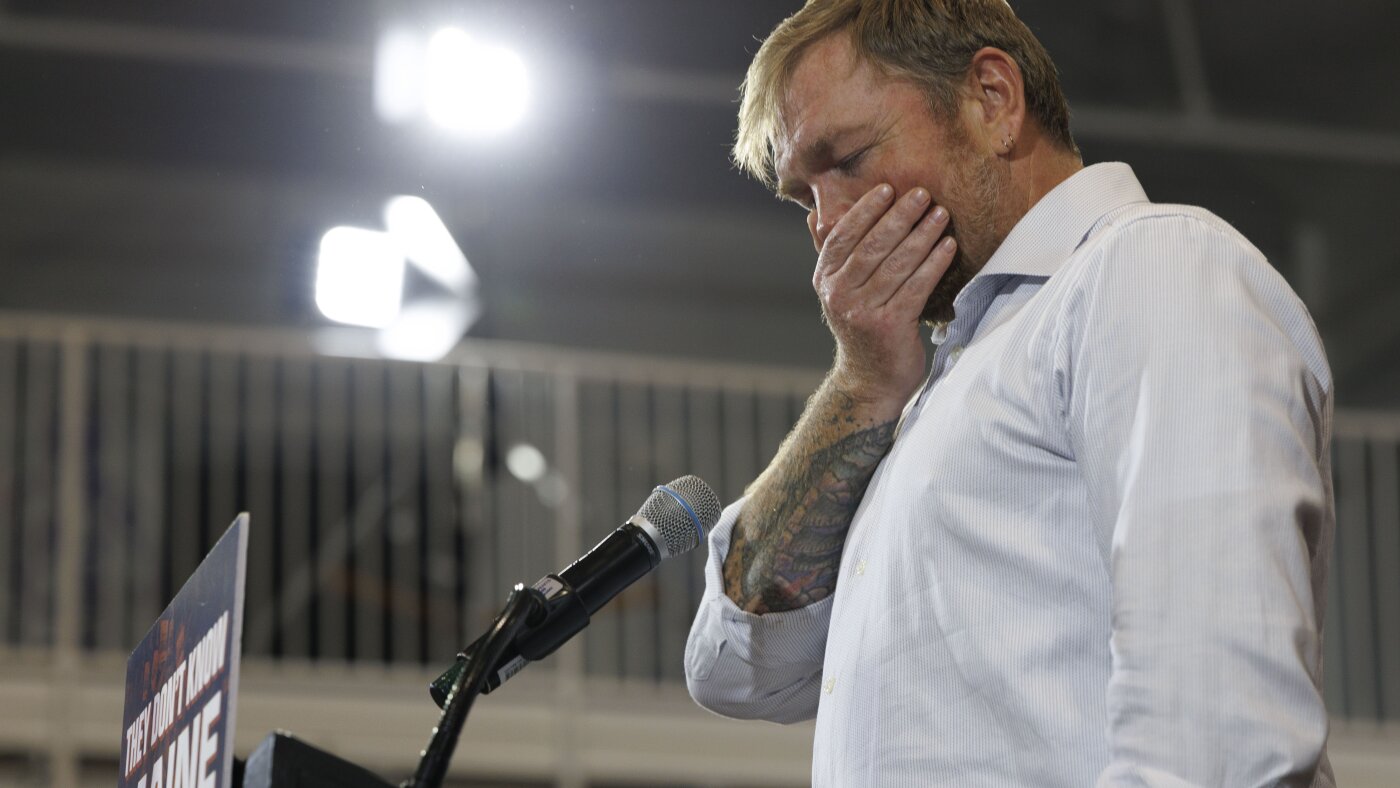
Graham Platner makes it official in Maine, submitting paperwork to leave Senate race
-

 Los Angeles, Ca2 hours ago
Knee irritation forces Shohei Ohtani out of Friday start, All‑Star game
-

 Detroit, MI2 hours ago
Detroit Evening Report: Waymo cars blocking first responders – WDET 101.9 FM
-

 San Francisco, CA2 hours ago
San Francisco Mayor Daniel Lurie Blocks Vacant Grocery Store Tax Proposal | KQED
-

 Miami, FL2 hours ago
Oregon Battling Miami, Mario Cristobal for Four-Star EDGE Recruit
-

 Dallas, TX2 hours ago
FC Dallas Forward Logan Farrington Inks Contract Extension
-

 Boston, MA2 hours ago
Red Sox face lengthy travel issues ahead of series vs. Mets
-

 Denver, CO2 hours ago
What’s going on with the Nuggets? Unpacking an NBA offseason on hold

