North Carolina
Western NC man threatened Sen. Thom Tillis, sentenced to probation


A Cullowhee man was sentenced to three years of probation for threatening to kill Republican U.S. Sen. Thom Tillis, a Republican, in a phone call.
Wyatt Austin Salus, 26, who is listed as an unaffiliated voter according to the N.C. Board of Elections, pleaded guilty Sept. 26, 2025 in U.S. District Court for the Western District of North Carolina in Asheville to making interstate threats, a felony.
Salus did not respond to a May 12 request for comment by the Citizen Times.
In the phone call made March 17, 2025, Salus called Tillis on his publicly listed Washington D.S. telephone number and left a message saying, “The only place you should feel safe in public if you see me is at a town hall. That’s the only place I want to see you in public. If I see you in public outside of that, buddy, you better start (expletive) running.”
Salus also accused Tillis of selling himself to corporate donors and called him a fascist.
“If I see you on the street, I’m going to run you the (expletive) over with my (expletive) car. You should not feel safe in North Carolina. Don’t you (expletive) show your face in the West. I will kill you if I see you,” Salus added.
Tillis is a second-term U.S. senator representing North Carolina who announced this year that he would not be seeking reelection. He recently came under fire from fellow Republicans for his stances opposing President Donald Trump’s policies, and in March 2025, his office published other death threats that he had received. Tillis also made headlines after he scrutinized former U.S. secretary of Homeland Security Kristi Noem during a Senate Judiciary Committee hearing in March 2026.
Kara Fohner is the Citizen Times public safety and breaking news reporter. Reach her at kfohner@usatodayco.com.



PINE KNOLL SHORES, Carteret County — A longtime Pine Knoll Shores public servant is preparing to begin a new chapter after nearly two decades with the town.
Ryan Thompson announced he will leave his full-time role with the Town of Pine Knoll Shores on August 12 after 18 years of service.
Thompson said he first came to Pine Knoll Shores in 2008 and has served the town in several roles, including police officer, chief of police, assistant town manager and most recently interim town manager.
In a message shared by the Pine Knoll Shores Police Department, Thompson said serving the community has been the greatest honor of his professional career.
Town of Pine Knoll Shores announces Ryan Thompson to depart after 18 years
He reflected on working alongside first responders through several hurricanes and coastal emergencies over the years, including Irene, Arthur, Matthew, Florence, Dorian, Isaias, Ophelia and Debby.
Thompson also highlighted the community’s response after Hurricane Helene devastated parts of western North Carolina in 2024. He said Pine Knoll Shores helped raise nearly $20,000 to support people impacted by the storm.
Thompson said Pine Knoll Shores has also been a special place for his family. His son served as a part-time firefighter with the Pine Knoll Shores Fire Department, and his wife served as the town’s tax collector.
Although he is leaving his full-time role, Thompson said he is not saying goodbye to the town.
He will begin serving as a public safety risk management consultant with the North Carolina League of Municipalities. He said the new role will allow him to work with cities and towns across the state to help support public safety and local governments.
Thompson also said he will remain with the Pine Knoll Shores Police Department as a part-time police officer.
He said he will also continue helping the town during its transition as Pine Knoll Shores begins the search for its next police chief and works through the town manager transition.
Captain Eric Tellefsen will become interim chief of police after Thompson’s departure.
Thompson said he is confident in the department’s leadership team and thanked the Pine Knoll Shores community for its trust, support and friendship over the past 18 years.

North Carolina
Key Raleigh real estate figure who helped bring Hurricanes to North Carolina has died

RALEIGH — E. Stephen Stroud, an influential Triangle real estate figure who was a key player in the Carolina Hurricanes’ move from Connecticut to Raleigh, has died.
Stroud was involved in several key developments across Raleigh and Wake County, including the Crossroads development in Cary, Imperial Center office park in Durham, Brier Creek and office parks at Highwoods and around Rex Hospital in Raleigh.
The Centennial Authority announced his death.
“Steve Stroud was a true visionary whose dedication and tireless efforts made the Lenovo Center a reality,” said Philip Isley, current chairman of the Centennial Authority. “Steve’s leadership during the arena’s construction laid the foundation for one of the premier sports venues in the country. We are deeply grateful for his service and extend our heartfelt condolences to his family, friends, and all who knew him.”
Stroud chaired the Centennial Authority, which oversees the arena that is home to the Hurricanes and NC State’s men’s basketball team, in its early years, guiding the planning, financing and construction of the arena. He worked with local and state leaders to help attract the National Hockey League’s Hartford Whalers to Raleigh, helping convince then-owner Peter Karmanos to move to North Carolina.
The Hurricanes have won two Stanley Cup championships since moving to North Carolina in 1997, including in June. Stroud served on the authority until 2002.
His work began in the mid-1980s as NC State sought a new basketball arena, but eventually became the Entertainment and Sports Arena in Raleigh. It is known as Lenovo Center today.
“It has done so much for the city.” Stroud told the News & Observer in 2019 when the arena turned 20. “I personally think the building is why national TV folks refer to us as ‘Raleigh’ instead of ‘Raleigh, North Carolina.’ It has helped us raise the identity of this city. Everyone knows where Raleigh is.”
The road in front of the main entrance to the Lenovo Center is named E. Stephen Stroud Way.
Stroud was raised in Rutherford County before moving to Raleigh in 1961 to attend North Carolina State University. Stroud left NC State during his junior year after getting married and began a real estate career in 1965. He founded Carolantic Reality in 1972 and merged the company, then called NAI Carolantic Realty, with Tri Properties in 2020.
Stroud was named CEO of the year by the Triangle Business Journal in 2016, one of many awards he won in his long career.
-

 News29 minutes ago
One person killed in Maine in second fatal ICE-involved shooting in less than a week | CNN
-

 New York2 hours ago
How a Family of 5 Lives on $46,000 a Year in Wakefield
-

 Los Angeles, Ca2 hours ago
Southern California braces for 110-degree heat, thunderstorms this week
-
 Detroit, MI2 hours ago
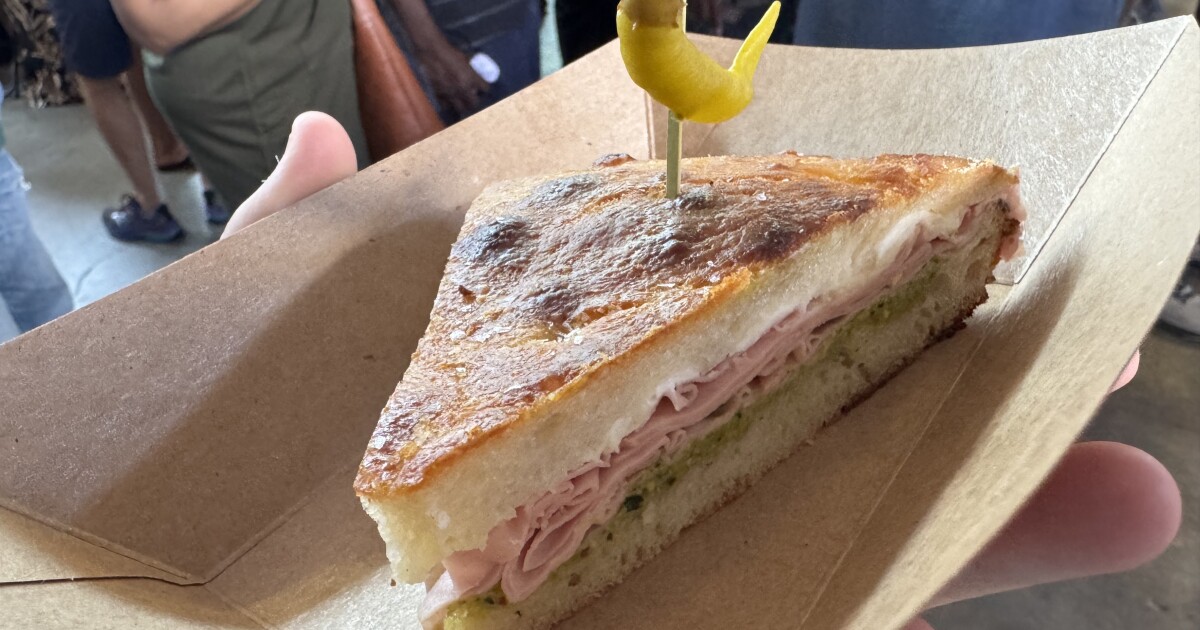
Detroit Sandwich Party returns to Eastern Market on Sept. 6
-

 San Francisco, CA3 hours ago
A Leak of San Francisco Police Drone Footage Exposes the New Reality of Urban Surveillance
-

 Dallas, TX3 hours ago
Viral East Dallas coffee shop fears major sales drop amid six-week road closure
-

 Miami, FL3 hours ago
3 hurt in fire on Lincoln Road that started underground
-

 Boston, MA3 hours ago
Rideshare driver charged in Logan airport passenger assault to appear in court

