North Carolina
RFK Jr. can't get off ballot in North Carolina, can't get back on it in New York


RALEIGH, N.C. — Robert F. Kennedy Jr. lost twice Thursday in his battles to stay on the presidential ballot in some states and get off of it in others.
North Carolina’s elections board refused to take him off that state’s ballot, with a majority saying it was too late in the process for him to withdraw. Meanwhile, an appeals court in New York rejected Kennedy’s request to get back on the ballot there, upholding a judge’s decision to disqualify him for having lied on elections paperwork about where he lived.
On Friday, Kennedy suspended his independent campaign and endorsed Republican Donald Trump. He has since sought to withdraw his name from the ballot in states where the presidential race is expected to be close, including North Carolina.
Simultaneously, he has tried to stay on the ballot in states like New York where his presence is unlikely to make a difference in the battle between Trump and Vice President Kamala Harris.
A midlevel appeals court on Thursday affirmed a ruling from a trial court judge who said Kennedy falsely claimed to live in New York on his nominating petitions, despite actually living in California.
Evidence presented at a short trial, the court said, showed that while Kennedy was a New York resident for decades — his father represented the state in the U.S. Senate — he has lived in the Los Angeles area since 2014, when he married “Curb Your Enthusiasm” actor Cheryl Hines. Kennedy had listed a home address in the tony suburb of Katonah, New York, but that was actually the home of a friend.
“This is not a situation where Kennedy erroneously listed a former residence in the nominating petition, but rather, Kennedy listed an address at which the record evidence reflects he has never resided,” the panel of judges wrote.
Kennedy’s New York attorney, Jim Walden, said he would appeal.
In North Carolina, the elections board’s three Democrats outvoted two Republicans to reject a request made by the recently certified We The People party of North Carolina to remove Kennedy and his running mate, Nicole Shanahan, from the party’s ballot line.
State board officials said that they had previously received a request signed by Kennedy to withdraw, but since he was the nominee of the party, it was the job of We The People to formally seek the removal.
The Democratic majority said making the change would be impractical, given that state law directs the first absentee ballots for the Nov. 5 elections be mailed to requesters starting Sept. 6. North Carolina is the first state in the nation to send fall election ballots.
By late Thursday, 67 of the state’s 100 counties will have received their printed absentee-by-mail ballots, , board Executive Director Karen Brinson Bell said. The chief printing vendor for the majority of the state’s counties has printed over 1.7 million ballots. Ballot replacement and mail processing would take roughly two weeks, and the reprinting would cost counties using this vendor alone several hundred thousand dollars combined, she added.
“When we talk about the printing a ballot we are not talking about … pressing ‘copy’ on a Xerox machine. This is a much more complex and layered process,” Brinson Bell told the board.
The two Republican board members suggested the state could have generated new ballots.
“I think we’ve got the time and the means to remove these candidates from the ballot if we exercise our discretion to do so,” Republican member Kevin Lewis said.
Board Chair Alan Hirsch, a Democrat, called the decision not to remove Kennedy “the fairest outcome under these circumstances.”
The state Democratic Party unsuccessfully fought We The People’s certification request before the board and later in state court.
___
Associated Press writer Michael Hill contributed from Albany, New York.



RALEIGH — NC State replaced Kevin Keatts with Will Wade in March 2025, introducing him 368 days ago in front of the Wolfpack community at Reynolds Coliseum. A little over a year later, Wade decided to leave his new program to return to LSU, the school that fired him for cause in 2022, beginning a long journey back to Power Four basketball.
Now, athletic director Boo Corrigan and the rest of the NC State administration must find a new leader for the men’s basketball program. To make matters more complicated, they won’t have a lot of time to do so, as the new head coach needs to be in place firmly before April 7, the day the transfer portal opens. However, early noise indicates the group in charge has eyes on two candidates.
Who are the candidates?
According to multiple reports, Corrigan and other power brokers at NC State zeroed in on Saint Louis head coach Josh Schertz and Tennessee associate head coach Justin Gainey as the primary two candidates for the opening. Both names were expected to be in the mix as soon as the Wade exit became more and more likely, although Corrigan shared no specific names during his Thursday press conference.
The NC State University Board of Trustees hosted an emergency meeting on Friday, with the primary subject being Wade’s buyout negotiation. Of course, speculation began quickly that there were discussions about the next coach of the Wolfpack, but that’s been confirmed not to be the case in the behind-closed-doors meeting for the board.
NC State Board of Trustees emergency meeting related to change in term of Will Wade’s buyout (from $5M to $4M, as AD Boo Corrigan said yesterday) not a new coach hire. Quickly went into closed session. No public business.
— Brian Murphy (@murphsturph) March 27, 2026
Even so, it seems as though NC State plans on making a strong push for Schertz first, despite his status as head coach at Saint Louis still and his recent agreement to a contract extension. That certainly makes things more complicated, but hiring Schertz would allow NC State to maintain any sort of positive momentum established by Wade and his regime in Raleigh. Still, Corrigan isn’t totally committed to a sitting head coach.
“I don’t think it has to be a sitting head coach at this point,” Corrigan said. “I think we want to find someone that knows how to coach and is a great coach, and has the ability to connect with people, both internal and external, with the players, be able to recruit. You have to be a good recruiter in this day and age.”
NC State will move as quickly as it possibly can, with Gainey and Schertz atop the list. That doesn’t rule out other options entirely, but all signs point to one of them being the most likely to be the next coach of the Wolfpack, ending the Will Wade era as quickly as it started.

A planned offshore wind project off North Carolina’s coast that could have powered roughly 300,000 homes has been scrapped after the federal government agreed to spend nearly $1 billion to halt its development, a decision that is drawing sharp reactions and raising questions about future energy costs in the state.
Under the agreement, the French energy company TotalEnergies will be reimbursed for leases it purchased in federal waters near Bald Head Island. In exchange, the company will redirect that investment into oil and natural gas projects, including liquefied natural gas (LNG) production.
The move comes as electricity demand in North Carolina and across the Southeast is rising, driven by population growth and the rapid expansion of energy-intensive data centers.
Energy analysts say removing a major potential source of power from the pipeline could have lasting implications.
“I think folks are trying to figure out how to reconcile this with the fact that we do need more electrons on the grid,” said Katharine Kollins, president of the Southeastern Wind Coalition. “Every state right now is looking at how we can develop more energy, not how we should be taking options off the table.”
The canceled project, known as Carolina Long Bay, was one of two offshore wind developments TotalEnergies had planned along the East Coast. The North Carolina portion alone would have generated about 1,300 megawatts of electricity and brought significant economic development to the region.
State leaders were quick to criticize the decision. In a post on X, Gov. Josh Stein said the Trump administration is “spending nearly $1 billion in taxpayer money to pay off a company to stop investments in the clean energy we need,” calling it “a terrible deal for the people of North Carolina and our country.”
The Interior Department, which negotiated the agreement, defended the move, saying offshore wind projects are too costly and unreliable to meet the nation’s energy needs. In a statement, officials said redirecting investment toward natural gas would provide “affordable, reliable and secure energy” while strengthening grid stability.
The debate reflects a broader divide over how to meet growing electricity demand while keeping costs down.
Offshore wind projects typically require high upfront investment but have no fuel costs once operational. Fossil fuel plants rely on fuel that can fluctuate in price.
“Using a billion dollars of taxpayer money to remove an option for North Carolina and then require that company to invest in LNG just doesn’t feel right,” Kollins said.
She and other advocates argue that offshore wind could help stabilize energy prices over time by diversifying the state’s power mix, particularly during periods of high demand or fuel volatility.
The federal government and industry leaders backing the deal say natural gas offers a more dependable source of power, especially as the grid faces increasing strain.
Part of that shift now points to LNG, which is traded on a global market. That means prices can rise or fall based on international demand, geopolitical tensions and export levels — dynamics that do not affect wind energy.
The cancellation also highlights uncertainty around offshore wind development in North Carolina. Duke Energy, the state’s largest utility, holds a neighboring lease in the same area but paused development last year as it reevaluated costs and policy conditions.
As state regulators and utilities map out how to meet future demand, the loss of Carolina Long Bay narrows the range of options.
For residents, the stakes may ultimately show up in monthly bills.
“When we limit our choices,” Kollins said, “we limit our ability to control costs.”

The North Carolina Tar Heels were a first-round exit in this year’s NCAA Tournament, but that does not mean that what transpires the rest of the way does not matter for the program.
It has been less than a week since the Tar Heels blew a 19-point lead in the second half against the VCU Rams, en route to an 82-78 loss in overtime. The result has raised doubts about Hubert Davis’ future as North Carolina’s head coach.
With all of that being said, here are a couple of things the Tar Heels should be wishing to happen later this week in the Sweet 16.
Duke Falls Short
The North Carolina-Duke rivalry is arguably the best one in all of sports. It was a tantalizing matchup the first time these two squared off this year, with Caleb Wilson and Cameron Boozer going head-to-head, as both players are expected to be selected in the top five of the 2026 NBA Draft.
However, the discrepancy between the two teams was apparent, even though the Tar Heels split the season series. The Blue Devils entered the NCAA Tournameent as the No. 1-overall seed in the entire field, while the Tar Heels limped into the field as a six-seed.
While North Carolina would obviously prefer playing in the upcoming round, which starts on Thursday night, nothing would make Tar Heels fans happier than to see Duke fall to St. John’s in the Sweet 16.
The Blue Devils have been playing with fire in the first two rounds, at various points, but they ultimately advanced to the second weekend of the tournament. St. John’s is a formidable opponent that could legitimately take down Duke.
One of the Teams With a Legitimate Head Coaching Option To Lose
It has been well-documented that North Carolina is likely to be in the coaching market, as Davis appears to be on his way out in Chapel Hill. If this occurs, the Tar Heels need to make a substantial hire that will elevate the program back to competing for national championships.
There will be a slew of options for North Carolina to consider, but two names to keep an eye on are Iowa State’s T.J. Otzelberger and Alabama’s Nate Oats. You may be asking yourself, ‘Why should North Carolina be rooting for potential head coach candidates to lose?’
Here’s why: the transfer portal opens on April 7, and ideally, North Carolina would want its presumed new head coach in place well before then. Those coaches will not be the only two to watch for, but they are arguably the most ideal.

‘Look, it’s a lawsuit!’ Lion King composer sues comedian for $27 million over song translation

Don’t want to miss the bloom? This L.A. scientist created a poppy forecast

DHS attorney said agents in Los Angeles should have ‘started hitting’ protesters, emails show
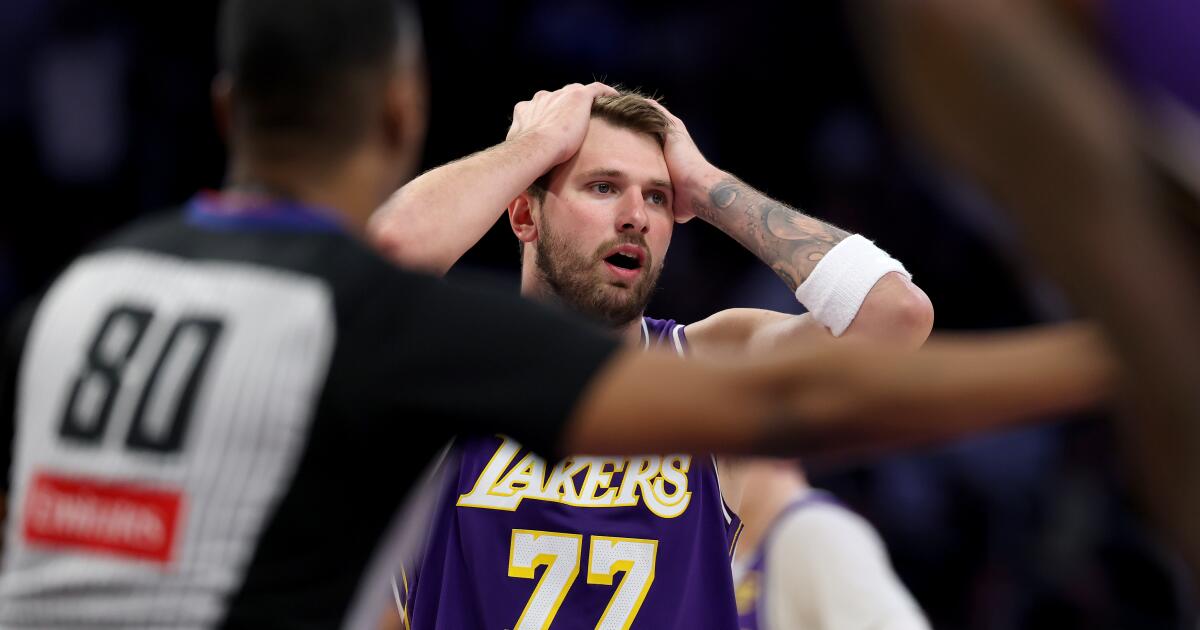
Lakers beat Nets, but Luka Doncic is facing suspension again after 16th technical

EU Parliament unblocks key political hurdle in digital euro talks

Florida High School Football Rankings: Top 25 teams – Oct. 21

How old is Bo Nix? What to know about Oregon quarterback ahead of 2024 NFL Draft

Cleary's 21 help Le Moyne down Central Connecticut State 69-64 in OT

99th annual Pony Swim held in Virginia

Indiana Members Credit Union announced as new anchor tenant at Bottleworks District
EU Parliament unblocks key political hurdle in digital euro talks

Man arrested in plot to firebomb Palestinian activist’s home after undercover op

WATCH: Senate hearing goes silent after Angel Father confronts top Dem over daughter’s death

US diplomat Marco Rubio denounces settler violence, tolls in Hormuz strait

Iran-linked hackers have breached FBI Director Kash Patel’s personal emails | CNN Politics
-

 Detroit, MI1 week ago
Drummer Brian Pastoria, longtime Detroit music advocate, dies at 68
-

 Movie Reviews1 week ago
‘Youth’ Twitter review: Ken Karunaas impresses audiences; Suraj Venjaramoodu adds charm; music wins praise | – The Times of India
-

 Sports7 days ago
IOC addresses execution of 19-year-old Iranian wrestler Saleh Mohammadi
-

 New Mexico5 days ago
Clovis shooting leaves one dead, four injured
-
 Business1 week ago
Disney’s new CEO says his focus is on storytelling and creativity
-

 Technology6 days ago
YouTube job scam text: How to spot it fast
-

 Tennessee4 days ago
Tennessee Police Investigating Alleged Assault Involving ‘Reacher’ Star Alan Ritchson
-

 Texas1 week ago
How to buy Houston vs. Texas A&M 2026 March Madness tickets