Mississippi
State responds after MS death row inmate Crawford asks US Supreme Court to stop execution


Executions in Mississippi: What to know
A look at the process of determining when and how a prisoner on death row in Mississippi should be executed.
More than a week after Charles Ray Crawford filed an emergency petition in the U.S. Supreme Court to stop his execution, the State of Mississippi is asking the Court to deny Crawford’s request.
Crawford, 59, has spent more than 30 years on death row and is scheduled to face execution at 6 p.m. Oct. 15, at the Mississippi State Penitentiary at Parchman for the 1993 kidnapping, rape and murder of a Mississippi college student.
Crawford filed two petitions Oct. 1 with the U.S. Supreme Court, one requesting an emergency stay of execution and the other seeking to have his case reviewed on claims of Sixth Amendment violations during his trial.
In a 38-page response filed Thursday, Oct. 9, the state refuted Crawford’s claims, asserting that he “has refused the process he was due, his punishment is just, and his execution will be constitutional.”
The state contends Crawford’s filings are a last-minute effort to halt his execution, years after the case was decided and far too late to be raised now.
The states stated that any “irreparable injury” to Crawford would be because “his lawful death sentence was finally carried out — not because this Court denies a stay.”
“His guilt is not in question — petitioner no doubt committed the crime that sent him to death row,” the state’s Oct. 9 response reads. “Petitioner was sentenced to death by a Mississippi jury in 1994. Three decades of litigation have not demonstrated constitutional errors occurred at trial. The Mississippi Supreme Court has upheld his conviction and sentence four times, and lower federal courts have denied him habeas relief. This Court has denied certiorari review at every turn.”
Crawford was convicted and sentenced to death in 1994 for the 1993 kidnapping, rape and murder of Kristy Ray from her Tippah County home in the Chalybeate community. Ray was a 20-year-old student at Northeast Mississippi Community College student.
In 1993, Crawford was out on bond awaiting trial on charges of aggravated assault and rape. Four days before the trial, Crawford broke into Ray’s home, left a ransom note to her family and abducted Ray from her parents’ home in Chalybeate — about 255 miles north of Jackson.
According to court records, Crawford took Ray to a barn, where Crawford handcuffed the community college student and stuffed a sock in her mouth before sexually assaulting her and stabbing her to death on a country road in northeast Mississippi’s Tippah County.
After Crawford’s family and attorney notified police that they feared Crawford was committing another crime, he was arrested.
“Petitioner initially told officers that he ‘didn’t know Kristy” or why officers wanted to speak to him,” the state’s response reads.
“When asked by FBI agents ‘if Kristy was alive,’ he ‘began to cry’ and ‘admit[ted] that Kristy was no longer alive.’ Petitioner then led officers to Kristy’s body, hidden in a wooded area near the abandoned barn. Her jeans had been ‘pulled down below her hips,’ her ‘hands were cuffed behind her back around a small cedar sapling,’ a ‘sock had been stuffed into her mouth, and a gag was around her head to keep it in place.’”
Court records state an autopsy later revealed Ray’s cause of death was “a large stab wound to the left mid-chest which punctured her heart and left lung, causing extensive internal and external hemorrhaging.” In addition, samples collected from the scene contained Ray and Crawford’s DNA.
More than 30 years after his 1994 conviction, Crawford’s current attorneys said his then-trial defense counsel conceded his guilt to the jury and prepared a defense arguing he was insane at the time of the crime — both stances Crawford opposed.
The attorneys stated defense counsel told jurors in guilt-phase closing arguments that Crawford was “‘legally responsible’ for the charged crimes and that he was ‘still dangerous to the community.’”
“Unsurprisingly,” the jury convicted Crawford and sentenced him to death, the attorneys say.
“Counsel made those sweeping concessions over petitioner’s repeated and vehement objections, which he expressed to both counsel and the trial court,” the Oct. 1 petition reads. “The trial court’s rejection of petitioner’s objections was a stark violation of the Sixth Amendment, which guarantees an accused the right to decide whether to permit counsel to concede guilt before the jury.”
The state responded by arguing that Crawford never instructed his counsel to maintain his innocence but instead to “‘vigorously advocate for acquittal’ which is exactly what counsel did.”
“Counsel pursued an insanity defense aimed at securing petitioner’s outright acquittal,” the state’s response reads. “The record reflects that counsel conceded underlying facts, yet at all times argued that Crawford was not guilty by reason of insanity.”
Seperately, Crawford’s attorneys filed a motion with the Mississippi Supreme Court requesting a rehearing on the setting of an execution date, arguing that no date should be set until his remedies with the U.S. Supreme Court are exhausted. The motion was denied Thursday, Oct. 9.
Pam Dankins is the breaking news reporter for the Clarion Ledger. Email her at pdankins@gannett.com.



Mississippi
What channel is Mississippi State baseball vs Ole Miss on today? Time, TV schedule to watch college baseball game

Mississippi State baseball, coming off a sweep of Vanderbilt, travels to Ole Miss for a three-game series, starting on March 27.
The Bulldogs (21-4, 4-2 SEC) swept Vandy last weekend in Starkville to move above .500 in league play after two weeks.
Ole Miss (19-7, 3-3) took two of three games from Kentucky last weekend in Oxford.
Mississippi State and Ole Miss will also play on April 28 in Pearl.
Here’s how you can watch Mississippi State baseball vs Ole Miss:
Mississippi State vs. Ole Miss on March 27 will be televised via streaming on SEC Network+, which is housed on the ESPN app and can be accessed via a SEC Network subscription. If you are subscribed to SEC Network, you can access SEC Network+ online.
- Game 1 start time: 6:30 p.m on March 27, SEC Network+
- Game 2 start time: 1:30 p.m. on March 28, SEC Network+
- Game 3 start time: 3 p.m on March 29, SEC Network
- Feb. 13: Hofstra, W 6-5
- Feb. 14: Hofstra, W 6-1
- Feb. 14: Hofstra, W 7-5
- Feb. 17: Troy, W 13-7
- Feb. 18: Alcorn State, W 19-0 (7 innings)
- Feb. 20: Delaware, W 9-2
- Feb. 21: Delaware, W 10-0 (8 innings)
- Feb. 22: Delaware, W 7-3
- Feb. 24: Austin Peay, W 16-3 (7 innings)
- Feb. 27: vs. Arizona State in Arlington, Texas, W 8-4
- Feb. 28: vs. Virginia Tech in Arlington, Texas, W 15-8
- March 1: vs. UCLA in Arlington, Texas, L 8-7 (10 innings)
- March 3: at Southern Miss, L 7-6
- March 5: Lipscomb, W 8-3
- March 6: Lipscomb, W 9-4
- March 7: Lipscomb, W 26-0 (7 innings)
- March 10: vs. Tulane in Biloxi, W 11-7
- March 13: at Arkansas, L 5-4
- March 14: at Arkansas, W 7-2
- March 15: at Arkansas, L 7-3
- March 17: Jackson State, W 17-1 (7 innings)
- March 20: Vanderbilt, W 4-2
- March 21: Vanderbilt, W 7-2
- March 22: Vanderbilt, W 17-7 (7)
- March 24: Southern Miss, W 12-0 (7)
- March 27: at Ole Miss, 6:30 p.m on SEC Network+
- March 28: at Ole Miss, 1:30 p.m on SEC Network+
- March 29: at Ole Miss, 3 p.m on SEC Network
- March 31: Grambling
- April 2-4: Georgia
- April 7: UAB
- April 10-12: Tennessee
- April 14: at Samford
- April 17-19: at South Carolina
- April 21: Memphis
- April 24-26: LSU
- April 28: vs. Ole Miss in Pearl, Miss.
- May 1-3: at Texas
- May 5: Nicholls
- May 7-9: Auburn
- May 14-16: at Texas A&M

OXFORD – No. 6 Mississippi State carries momentum and confidence into one of college baseball’s fiercest rivalries this weekend, traveling to face No. 18 Ole Miss in a three-game Southeastern Conference series at Swayze Field.
The Diamond Dawgs arrive in Oxford riding a five-game winning streak and carrying plenty of momentum into one of the league’s premier matchups. MSU sits at 21-4 overall and 4-2 in conference play, while the Rebels enter at 19-6 and 3-3 in the SEC.
Mississippi State has been one of the most complete teams in the country through the first half of the season. The Bulldogs are hitting .347 as a team with a .452 on-base percentage and 39 home runs, consistently putting pressure on opposing pitching staffs. Ole Miss counters with plenty of power of its own, already launching 46 homers while posting a .500 slugging percentage.
The engine for State’s offense has been graduate outfielder Bryce Chance, who leads the SEC with a .452 batting average and has struck out just three times all season. All-American infielder Ace Reese continues to anchor the middle of the lineup with a team-high seven home runs and 34 RBIs, while Noah Sullivan and Aidan Teel provide consistent production around them to give the Diamond Dawgs one of the deepest lineups in the league.
Mississippi State will lean on its weekend rotation that has begun to separate itself as a strength. Left-hander Charlie Foster is expected to get the ball in Friday’s opener. The Bulldogs will then turn to sophomore standout Tomas Valincius on Saturday. The southpaw has been dominant, going 5-0 with a 1.04 ERA and 47 strikeouts, highlighted by a 14-strikeout performance in his last outing. Right-hander Duke Stone is slated for Sunday and brings a 4-0 record with him into the series.
Ole Miss is expected to counter with left-hander Hunter Elliott in the opener, a veteran arm with a 3-0 record and 44 strikeouts, followed by right-hander Hudson Calhoun on Saturday. The Rebels have yet to announce a starter for the series finale. As a staff, Ole Miss owns a 3.56 ERA with 293 strikeouts, setting up a matchup between two pitching groups capable of missing bats at a high level.
While the Bulldogs have dominated at home — winning 19 straight games at Dudy Noble Field dating back to last season — this weekend presents another opportunity for State to prove itself away from Starkville. MSU is 1-3 in true road games this year but has shown the ability to compete against elite competition throughout the early part of the schedule.
The rivalry history leans in Mississippi State’s favor, with the Bulldogs holding a 268-213-5 advantage in the all-time series. State has also won two straight meetings between the programs, adding another layer of confidence heading into the weekend.
Visit www.HailState.com for the latest news and information on the baseball program. Fans can also follow the program on social media by searching ‘HailStateBB’ on X, Facebook and Instagram.Top of Form

‘I would call him a hybrid between a smoke phase and a red phase. He’s not a true smoke phase because of all the red in him.’
Hilarious video shows turkeys chasing delivery driver
Wild turkeys chased a UPS driver in Branford, Connecticut, as he tried to deliver packages.
A Mississippi turkey hunter’s season wasn’t off to a good start, but with a change in plans, a little scouting, some luck thrown in, he bagged a rare reddish-colored turkey and it’s considered a bird of a lifetime.
“I’d been hunting the same bird since opening day,” said Barrett Clark of Strong, which is located near West Point. “He finally frustrated me enough to where I just needed to go look for another bird.”
Clark wasn’t able to connect with the gobbler he was after. So, on Friday, March 20, he decided to check another property. He located a few gobblers that afternoon, but one looked different. It appeared to have a lighter color than normal, but Clark figured it was just the way the sunlight was hitting the bird.
The following morning, Clark and his father, Larry Clark, returned to the area in hopes of getting a shot at one of the birds.
A turkey hunt that was almost ruined
“We met and went in early Saturday morning,” Clark said. “We were probably 300 yards away from him when he started gobbling. It was right at sunrise. He was gobbling off the roost.”
The gobbler flew off the roost and continued to gobble. Clark said he lightly called the bird. Then, a gunshot rang out from a nearby property and the gobbling stopped. To make matters worse, minutes later a coyote appeared and it looked like he was after the turkey that had been gobbling.
“That coyote came within 15 feet of my dad and ran straight to where the turkey had been gobbling,” Clark said. “We thought our hunt was boogered up.”
MS hunter shoots turkey with strange colors
The hunt wasn’t over, though. About 10 or 15 minutes later the gobbling resumed and Clark lightly called back. A little later, Clark saw a turkey through the trees in the neighborhood of 100 yards away.
“I was really just seeing his head move,” Clark said. “I would see his fan occasionally, but it was mostly just his head. I could tell he was lighter, but I really wasn’t focused on that. I was trying to stay still and make a good shot.”
Clark said he was hunting in pines that were maybe 10 years old, and the understory was thick. The bird came within 50 yards of him, but there was no shot. The bird began to walk away but stepped into an opening, and Clark pulled the trigger of his 20-gauge shotgun.
Clark still didn’t understand what he’d shot. He said it was only when he and his father got closer that they realized how unusual it was.
“We could tell it was something that neither of us had ever seen,” Clark said.
What is it, and how rare is this turkey?
The bird is a light rust or cinnamon color and lacks any normal coloration, but putting a label on it isn’t easy.
“I would call him a hybrid between a smoke phase and a red phase,” said Caleb Hinton, Wild Turkey Program coordinator for the Mississippi Department of Wildlife, Fisheries and Parks. “He’s not a true smoke phase because of all the red in him.”
Hinton couldn’t put a number on it, but he said a genetic trait like this is very rare.
“Like all the genetic mutations, it’s exceedingly rare in the wild,” Hinton said.
And for a gobbler to express such a genetic trait is even more rare. Hinton said that upwards of 95% of the turkeys that express such traits will be hens, not gobblers.
“It’s just a once-in-a-lifetime trophy for the hunter,” Hinton said.
A lifelong outdoorsman and wildlife enthusiast, Brian Broom has been writing about hunting, fishing and Mississippi’s outdoors for the Clarion Ledger for more than 14 years. He can be reached at 601-961-7225 or bbroom@gannett.com.
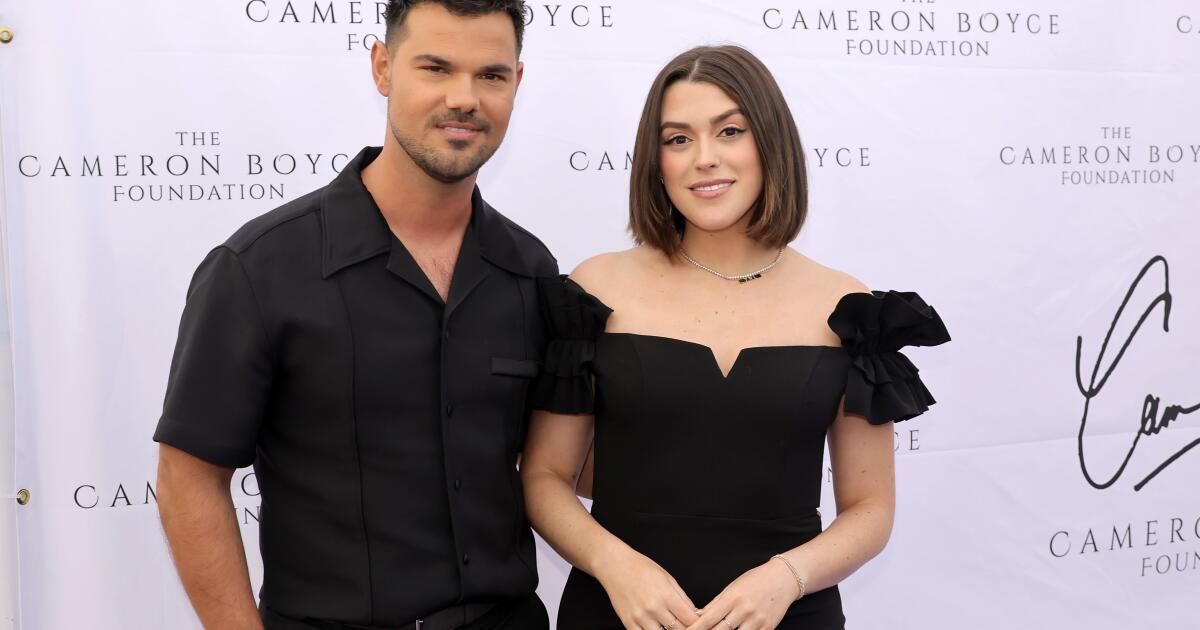
The two Taylor Lautners announce a baby Lautner is on the way

L.A. Affairs: Our night together reminded me of what I’d been missing this entire time

Trump jokes, rants, talks price of pens as Iran war enters fifth week

High school softball top 20 rankings for the Southland
Access Error

Florida High School Football Rankings: Top 25 teams – Oct. 21

How old is Bo Nix? What to know about Oregon quarterback ahead of 2024 NFL Draft

Cleary's 21 help Le Moyne down Central Connecticut State 69-64 in OT

99th annual Pony Swim held in Virginia

Indiana Members Credit Union announced as new anchor tenant at Bottleworks District

US diplomat Marco Rubio denounces settler violence, tolls in Hormuz strait

Iran-linked hackers have breached FBI Director Kash Patel’s personal emails | CNN Politics

Live: CPAC 2026 Day 2

Video: Will ICE Change Under Its New Leader?

DHS shutdown breakthrough comes at cost for Republicans as funding fights nears end
-

 Detroit, MI1 week ago
Drummer Brian Pastoria, longtime Detroit music advocate, dies at 68
-

 Movie Reviews1 week ago
‘Youth’ Twitter review: Ken Karunaas impresses audiences; Suraj Venjaramoodu adds charm; music wins praise | – The Times of India
-

 Sports6 days ago
IOC addresses execution of 19-year-old Iranian wrestler Saleh Mohammadi
-

 New Mexico5 days ago
Clovis shooting leaves one dead, four injured
-
 Business1 week ago
Disney’s new CEO says his focus is on storytelling and creativity
-

 Technology5 days ago
YouTube job scam text: How to spot it fast
-

 Tennessee4 days ago
Tennessee Police Investigating Alleged Assault Involving ‘Reacher’ Star Alan Ritchson
-

 Texas1 week ago
How to buy Houston vs. Texas A&M 2026 March Madness tickets