Mississippi
Editor’s Note | Three National Media Stories Herald MFP Team


I can think of very little I enjoy more than singing the praises of the truly remarkable and dedicated Mississippi Free Press team. And, boy, is this their week.
Before I share those details and links, let me lay down how we work at the Mississippi Free Press. We are a tight team. We all believe in the mission of sharing information that improves the lives of all Mississippians, not just the wealthiest and whitest. We work together, respect and support each other no matter where any of us fall on the masthead. We value diversity of background, ethnicity, upbringing and experiences. We actively learn from each other. None of us is here just to become a star; we all want everyone at the MFP to have their chance in the spotlight and win awards.
We have fun, and we work hard (and honor deadlines) with our team members’ live-work balance as a priority. Sadly, this is often not true in too many newsrooms, which can be very toxic, cutthroat and cliquey with certain people always getting the best stories. Argh.
 “passes” the solutions circle talking stick to Publisher Kimberly Griffin (on screen) who participated in the joint Mississippi Free Press-Youth Media Project election solutions circle remotely in July 2024 in the MFP-YMP newsroom. Student Jeremy Thomas is in the center. Photo by Donna Ladd
” data-medium-file=”https://i0.wp.com/www.mississippifreepress.org/wp-content/uploads/2024/12/YMP-students-talkingstick_cred-Donna-Ladd.jpg?fit=300%2C200&ssl=1″ data-large-file=”https://i0.wp.com/www.mississippifreepress.org/wp-content/uploads/2024/12/YMP-students-talkingstick_cred-Donna-Ladd.jpg?fit=780%2C519&ssl=1″ alt=”” class=”wp-image-50285″ srcset=”https://i0.wp.com/www.mississippifreepress.org/wp-content/uploads/2024/12/YMP-students-talkingstick_cred-Donna-Ladd.jpg?resize=1024%2C682&ssl=1 1024w, https://i0.wp.com/www.mississippifreepress.org/wp-content/uploads/2024/12/YMP-students-talkingstick_cred-Donna-Ladd.jpg?resize=300%2C200&ssl=1 300w, https://i0.wp.com/www.mississippifreepress.org/wp-content/uploads/2024/12/YMP-students-talkingstick_cred-Donna-Ladd.jpg?resize=768%2C512&ssl=1 768w, https://i0.wp.com/www.mississippifreepress.org/wp-content/uploads/2024/12/YMP-students-talkingstick_cred-Donna-Ladd.jpg?resize=1536%2C1024&ssl=1 1536w, https://i0.wp.com/www.mississippifreepress.org/wp-content/uploads/2024/12/YMP-students-talkingstick_cred-Donna-Ladd.jpg?resize=1200%2C800&ssl=1 1200w, https://i0.wp.com/www.mississippifreepress.org/wp-content/uploads/2024/12/YMP-students-talkingstick_cred-Donna-Ladd.jpg?resize=1568%2C1045&ssl=1 1568w, https://i0.wp.com/www.mississippifreepress.org/wp-content/uploads/2024/12/YMP-students-talkingstick_cred-Donna-Ladd.jpg?resize=400%2C267&ssl=1 400w, https://i0.wp.com/www.mississippifreepress.org/wp-content/uploads/2024/12/YMP-students-talkingstick_cred-Donna-Ladd.jpg?w=2000&ssl=1 2000w, https://i0.wp.com/www.mississippifreepress.org/wp-content/uploads/2024/12/YMP-students-talkingstick_cred-Donna-Ladd-1024×682.jpg?w=370&ssl=1 370w” sizes=”(max-width: 780px) 100vw, 780px”><figcaption class=) Two-time Youth Media Project student Paris Braggs (left) “passes” the solutions circle talking stick to Publisher Kimberly Griffin (on screen) who participated in the joint Mississippi Free Press-Youth Media Project election solutions circle remotely in July 2024 in the MFP-YMP newsroom. Student Jeremy Thomas is in the center. Photo by Donna Ladd
Two-time Youth Media Project student Paris Braggs (left) “passes” the solutions circle talking stick to Publisher Kimberly Griffin (on screen) who participated in the joint Mississippi Free Press-Youth Media Project election solutions circle remotely in July 2024 in the MFP-YMP newsroom. Student Jeremy Thomas is in the center. Photo by Donna Ladd
Oh, and we don’t invite in prima donnas who are only here to win awards and play savior. This group is kind to each other—including to managers and vice versa—and we know how to apologize because no one is perfect. That’s just our culture, and it’s part of why our teamwork is so strong—and why Publisher and Co-founder Kimberly Griffin and I have worked with an increasing number of our 18-member (and growing) team for 10 to almost 20 years.
And often, because we’re mostly Mississippians and women-founded and -run, yada yada, it can take a while for folks to notice just how good, respectively and impactful this lot is here in Mississippi, not to mention across the country.
But then a week like this one rolls around when, suddenly, three national media stories drop, none of which we pitched (we don’t spend your gifts on a national PR agency), about the MFP across several fronts: diversity/representation; fundraising scrappiness; and our success in building audience through smart social-media choices. Meantime, our traffic is spiking, and our individual donations pile up, and we are getting grants for two new reporter positions, and people across the nation and the world are looking closer at us and our innovative work for Mississippians.
Yes, we feel seen. And in turn, that means more support to increase systemic and pro-democracy journalism and our Mapping Mississippi project, and even deeper staff and reader diversity, and more impactful solutions circles and deep-dive journalism.
I dig it.
‘Clear How Badly We Were Being Limited’
Now, the national stories if you haven’t seen them, yet. First, NBC News interviewed Ashton Pittman for a piece about the impact of our exodus from the toxicity (and squelched links) of Twitter/X to Bluesky. “We have posts that are exactly the same on Twitter and on Bluesky, and with those identical posts, Bluesky is getting 20 times the engagement or more than Twitter,” Ashton told Kat Tenbarge. “Seeing a social-media platform that doesn’t throttle links really makes it clear how badly we were being limited.”
The big takeaway here for me is that we are also literally seen on this new social platform, which has proved in a few short weeks that our traffic was artificially limited on the old app. Now with more than 30,000 followers—a lot for a “local” newsroom—we surpassed our X following built over five years and are also drawing closer to the nearly 40,000 Jackson Free Press X following that took like 16 years to build there. Even as many newsrooms are screaming to get even 5,000 Bluesky followers, Ashton himself has more than 50,000 there, and that number is climbing fast.
 explains the “Golden Rules” of engagement to people gathered for a Solutions Circle in late 2023 in a Jackson, Miss., church. To the left is Ryan Perry, a 2016 Youth Media Project student she mentored, and to her right is 2023 YMP participant Hart Jefferson, then a high-school senior and now a freshman at Jackson State University. Photo by Imani Khayyam
” data-medium-file=”https://i0.wp.com/www.mississippifreepress.org/wp-content/uploads/2024/12/Solution-Circle-02-01-2024_cred-Imani-Khayyam3.jpg?fit=300%2C200&ssl=1″ data-large-file=”https://i0.wp.com/www.mississippifreepress.org/wp-content/uploads/2024/12/Solution-Circle-02-01-2024_cred-Imani-Khayyam3.jpg?fit=780%2C519&ssl=1″ alt=”” class=”wp-image-50283″ srcset=”https://i0.wp.com/www.mississippifreepress.org/wp-content/uploads/2024/12/Solution-Circle-02-01-2024_cred-Imani-Khayyam3.jpg?resize=1024%2C682&ssl=1 1024w, https://i0.wp.com/www.mississippifreepress.org/wp-content/uploads/2024/12/Solution-Circle-02-01-2024_cred-Imani-Khayyam3.jpg?resize=300%2C200&ssl=1 300w, https://i0.wp.com/www.mississippifreepress.org/wp-content/uploads/2024/12/Solution-Circle-02-01-2024_cred-Imani-Khayyam3.jpg?resize=768%2C512&ssl=1 768w, https://i0.wp.com/www.mississippifreepress.org/wp-content/uploads/2024/12/Solution-Circle-02-01-2024_cred-Imani-Khayyam3.jpg?resize=1536%2C1024&ssl=1 1536w, https://i0.wp.com/www.mississippifreepress.org/wp-content/uploads/2024/12/Solution-Circle-02-01-2024_cred-Imani-Khayyam3.jpg?resize=1200%2C800&ssl=1 1200w, https://i0.wp.com/www.mississippifreepress.org/wp-content/uploads/2024/12/Solution-Circle-02-01-2024_cred-Imani-Khayyam3.jpg?resize=1568%2C1045&ssl=1 1568w, https://i0.wp.com/www.mississippifreepress.org/wp-content/uploads/2024/12/Solution-Circle-02-01-2024_cred-Imani-Khayyam3.jpg?resize=400%2C267&ssl=1 400w, https://i0.wp.com/www.mississippifreepress.org/wp-content/uploads/2024/12/Solution-Circle-02-01-2024_cred-Imani-Khayyam3.jpg?w=2000&ssl=1 2000w, https://i0.wp.com/www.mississippifreepress.org/wp-content/uploads/2024/12/Solution-Circle-02-01-2024_cred-Imani-Khayyam3-1024×682.jpg?w=370&ssl=1 370w” sizes=”(max-width: 780px) 100vw, 780px”><figcaption class=) Mississippi Free Press Editor & CEO Donna Ladd (center) explains the “Golden Rules” of engagement to people gathered for a Solutions Circle in late 2023 in a Jackson, Miss., church. To the left is Ryan Perry, a 2016 Youth Media Project student she mentored, and to her right is 2023 YMP participant Hart Jefferson, then a high-school senior and now a freshman at Jackson State University. Photo by Imani Khayyam
Mississippi Free Press Editor & CEO Donna Ladd (center) explains the “Golden Rules” of engagement to people gathered for a Solutions Circle in late 2023 in a Jackson, Miss., church. To the left is Ryan Perry, a 2016 Youth Media Project student she mentored, and to her right is 2023 YMP participant Hart Jefferson, then a high-school senior and now a freshman at Jackson State University. Photo by Imani Khayyam
Why? Because our pro-democracy, people-focused work is right and needed for this moment and the new America—even as more and more Mississippians and Americans realize how partisan-obsessed and useless horse-race journalism is and how it helped lead us here. It’s also because great writing is at the heart of how we’re different. You don’t have to suffer through boring inverted-pyramid openings to get to information here; we train our folks and give them space to tell stories about real people over facts, figures and dates.
Yes, we are actually nonpartisan and will factcheck one party just like we do the other. We’ve always said we report “beyond partisanship,” and I can see that more people are understanding why that dedication is vital to do in a functioning democracy rather than outlets acting like lobbyists to get certain legislation passed (an obnoxious nonprofit media executive director actually scolded me one night at a dinner in Jackson for not lobbying for legislation).
It’s not our job to tell you how to vote, or declare who is guilty or innocent; it is journalism’s job to provide information that others can use to better figure these things out.
‘They Are a Beacon of Hope in Our Industry’
The second story is really special to me. You can recall that, in 2024, Kimberly and I won the first Robert G. McGruder Award for Diversity Leadership in the 2024 Poynter Journalism Prizes contest.
Again, these judges saw the Mississippi Free Press and laid it bare: “There are so many nonprofit newsrooms that have launched and do not take into account diversity and how to build trust in communities that have felt ignored,” the judges wrote. “The Mississippi Free Press built their newsroom with community and its diversity in mind. They are a beacon of hope in our industry and a true example to follow for other news organizations.”
Jennifer Orsi, a vice president and journalist at Poynter, interviewed Kimberly and me, as well as Dr. Beverly Hogan, Randall Pinkson, education reporter Torsheta Jackson and former MFP reporter Kayode Crown about why and how the MFP is different from most outlets that talk a game about inclusion but don’t deliver or give up when people leave and hope no one notices how white they are.
Bottom line: I’ve always been a talent hunter and spotter and then trainer, what Jennifer called our “out-of-the-box approach” to building a diverse team. And I’ve always done it while wearing the necessity for teams representative of our state on my forehead, not just my sleeve, as I told her. Why? Not to just be able to say “look, we’re diverse!” or to get grant dollars—but because Mississippians deserve reporters who look like, understand and respect them. That is too often not the case with folks coming into Mississippi looking for personal recognition and awards for reporting on “poverty.” You can’t manufacture this respect. It needs to be organic.
 100vw, 780px”><figcaption class=) Dr. Beverly Hogan, dressed in red at a Mississippi Free Press fundraising party she co-hosted, is the president emerita of Tougaloo College and an MFP adviser. She told Poynter that the MFP is “striking in bringing people together in all walks of life. She added: When readers see “journalists who look like them … it gives you a more trusting kind of sense that they are really practicing what they are advocating and presenting.”
Dr. Beverly Hogan, dressed in red at a Mississippi Free Press fundraising party she co-hosted, is the president emerita of Tougaloo College and an MFP adviser. She told Poynter that the MFP is “striking in bringing people together in all walks of life. She added: When readers see “journalists who look like them … it gives you a more trusting kind of sense that they are really practicing what they are advocating and presenting.”
I loved what Dr. Hogan, a good friend and adviser of the MFP, told Poynter about us: “They are striking in bringing people together in all walks of life. When readers see “journalists who look like them, whether they are male, female, white or Black … it gives you a more trusting kind of sense that they are really practicing what they are advocating and presenting. That means a lot.”
And I smiled at what Torsheta said about me spending three years recruiting her—not just because she’s a Black Mississippian, but because she is a brilliant writer, thinker and leader. She called me “very persistent,” adding, “And when she gets an idea in her head and she believes it’s a great one, she is not going to let it go.”
That is certainly true from the Jackson Free Press to the MFP to solutions circles to the Youth Media Project. But here’s the thing: Kimberly and I are doing this together—and we can’t and won’t do it without this amazing team of Mississippians or our readers’ passionate support.
‘Take the Hits and Keep Going’
The third national story this week was in the Chronicle of Philanthropy about our very successful approach to raising individual donations since we launched in March 2020 with a $50,000 donation.
Reporter Stephanie Beasley starts out talking about many outlets’ willingness to raise money after facing advertising downturns. “Mississippi Free Press, on the other hand, has been gaining readers and recognition by working to correct misinformation and reporting on both barriers and solutions to systemic issues like racism and poverty. And it’s done it all while winning big grants from regional and national funders,” she writes.
What we’ve learned is that the more individual donors you line up, the better your chances for attracting larger philanthropy; foundations, that is, want to know we won’t need them forever due to our continually growing individual-donor base. It makes sense.
Kimberly was direct with her advice for newsrooms—which are even more vital to democracy now than a month ago, or at least the good ones. “[It] takes an hour for me to ask for $10,000, and it takes an hour for me to ask for a $1,000 ad contract,” she said. “It’s the same hour.” She admitted that we were kind of terrified to ask for money—and it can still be demoralizing as women so good at what we do to be belittled and dismissed by some when you do. But, we’ve learned, you just keep moving to the next potential donor and tell your story about why good journalism matters so much.
That is, take the hits and keep going, or as we’ve long believed: “Do the right thing and wait.” What inspired me the most to get past the fear of raising money, of course, is taking care of this amazing team.
 100vw, 780px”><figcaption class=) Mississippi Free Press Publisher and co-founder Kimberly Griffin talks to the team at a monthly newsroom meetup in downtown Jackson, Miss. She told the Chronicle of Philanthropy that she and co-founder Donna Ladd were a bit “kind of terrified to ask for money” in the beginning, but got past it to support essential statewide journalism. Photo by Imani Khayyam
Mississippi Free Press Publisher and co-founder Kimberly Griffin talks to the team at a monthly newsroom meetup in downtown Jackson, Miss. She told the Chronicle of Philanthropy that she and co-founder Donna Ladd were a bit “kind of terrified to ask for money” in the beginning, but got past it to support essential statewide journalism. Photo by Imani Khayyam
I also love that Stephanie told the full story of Free Press journalism in Mississippi; it’s not like we’re the new kids on the block, as Mississippians well know. She quotes me here about reporting on systemic racism: “We wanted to talk to everybody and really do the kinds of historically informed, honest reporting that was talking about systems rather than buying into the crime obsessions that fed racism. … Jackson Free Press was rejecting that kind of coverage and going deeply into the history of segregation and race violence and terrorism that had caused white flight and led things to being the way that they were. As a result of that, we really attracted very fast a very inclusive audience.”
That is, our special sauce at the Mississippi Free Press, is engaging readers across Mississippi, the nation and the world about what is happening in Mississippi, a microcosm of both the U.S.’ history and current challenges. We do this through a very talented, smart, loving and inclusive team—and through direct engagement on social media and in solutions circles. As a result, so many of you step up to support our work time and time again. We see you, too.
The three pieces this week really tie together who we are and our unexpected success (at least to those who don’t know us and our cheeky temerity well). We value these articles, and we appreciate each of you for reading and supporting the MFP and YMP in whatever ways you can.
We’ve got this, together.
Give now to the MFP’s end-of-year NewsMatch campaign, and your gift is matched!
Related



GPS data from the Mississippi Department of Marine Resources, obtained by CBS News, tracks the movements of the boat that carried Nolan Wells to Horn Island on July 4. Wells was found dead after going missing following an outing on the island.
The vessel left a dock at approximately 9:56 a.m. that morning and arrived at Horn Island at 11:14 a.m. CBS News has previously reported that Wells was not on the boat when it departed the island.
According to the GPS data, the boat left Horn Island at 4:31 p.m. and returned to its original departure dock. It then traveled into Fort Bayou around 5:52 p.m. before returning to the dock at 6:06 p.m.
Later that evening, the boat went to the Fort Bayou boat launch at 7:19 p.m., according to the MSDMR report. From there, it traveled over land — presumably towed by a vehicle — to the Biloxi, Mississippi, residence of the boat’s owners.
The MSDMR report indicates that the boat’s owner, his mother and one other individual who was reportedly with Wells on the day of the incident have cooperated with the investigation.
The department’s report ends on July 5, following notification that the Jackson County Sheriff’s Office would take over as the lead investigative agency.
Wells, 18, was last seen on July 4 on Horn Island, where he had taken a boat trip with friends to celebrate the holiday, officials said. Wells traveled to the island with his friends but did not return to the mainland with them that afternoon, Jackson County Sheriff John Ledbetter has said.
He was last seen on the island at 3 p.m., according to attorney Ben Crump’s office. His mother reported him missing later that night and a search began.
His body was discovered July 6 off the coast of the island, which is about 10 miles south of the Mississippi mainland, following a search that involved the U.S. Coast Guard, the Mississippi Department of Marine Resources and the National Park Service.
Dental records confirmed the body was Wells, Jackson County coroner Bruce Lynd told CBS News. An autopsy took place on July 7, Lynd said, but the results were not immediately made public. Wells’ body was flown to Washington, D.C., for an independent autopsy, according to Crump.
Wells’ parents have said they don’t believe their son would’ve stayed behind on the island by choice when his friends left by boat.
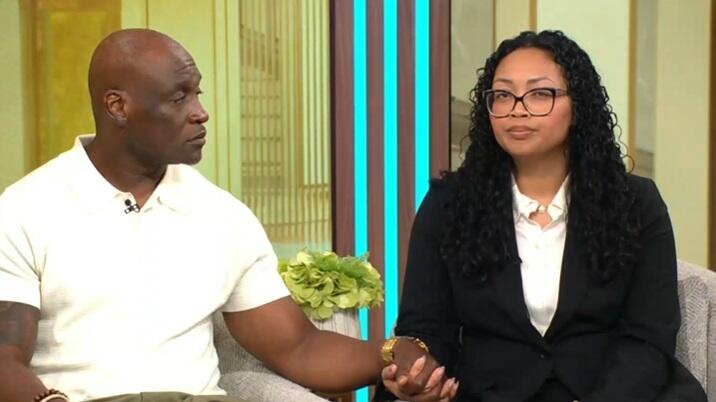
“No, he wouldn’t. Nolan always stays with the group,” Elmore Wonsley, Nolan’s father, told “CBS Mornings” last week. “If you be with me, you come back with me. So that I don’t understand, and with me being a parent, if I was in that situation, I would have told them, ‘You’re going to get back on this boat with me because I don’t want to answer to your parents if something happens to you.’”
When directly asked if he believed Nolan was left behind on the island, his father responded, “Yes. I don’t believe he decided to stay on the island by himself. It just doesn’t — that’s not his character.”
Wells went to Ocean Springs High School and was a rising sophomore on Southwest Mississippi Community College’s football team. Crump said Wells was a good swimmer.


Permanent daylight saving time in New Jersey
House approves permanent DST: NJ gets later sunsets year-round but darker winter mornings; sunrise could be ~8:25 a.m.
Are Americans finally done changing the clocks twice a year? Congress moved a step closer to ending the ritual after the U.S. House passed legislation that would make daylight saving time permanent.
It hasn’t been approved by the Senate yet, but it did pass the House with broad support (308-117). If it passes the Senate, it could be signed by President Donald Trump or become law without his signature, unless he vetoes it.
Trump has previously backed ending twice-a-year time changes.
“I am going to work very hard to see The Sunshine Protection Act signed into Law. It’s time that people can stop worrying about the ‘Clock,’” he wrote in a May Truth Social post.
A few versions of the Sunshine Protection Act were introduced in Congress. Rep. Vern Buchanan, R-Florida, introduced the one that’s gaining ground last year.
Here’s what to know about daylight saving time and the move to change it.
What is daylight saving time and why do we use it?
Daylight saving time is the practice of setting clocks forward an hour from March until November in an effort to gain more sunlight during the summer months.
According to the Library of Congress, it was first enacted in 1918 as a fuel cost-saving measure during World War I.
Daylight saving time became federal law under the Uniform Time Act of 1966. Under the law, some states can opt to exempt themselves from daylight saving time.
Would Mississippi keep daylight saving time year-round?
In 2021, the Mississippi Legislature passed a law saying the state plans to stick with daylight saving time year-round. But that only takes effect if Congress changes the federal law to let states adopt it all the time. A bill updating the effective date died in committee in the 2026 session.
Nineteen states, including Mississippi, are ready to make daylight saving time permanent if Congress changes the law to make the twice-a-year time shift optional, according to the National Conference of State Legislatures (NCSL).
How later sunrises would affect Mississippi
Sunrise and sunset times in summer would look the same.
But the period from November to March would be different. The amount of daylight would be the same, just shifted an hour later than usual.
Mississippi could expect the latest winter sunrises around 7:59 a.m. in mid-January. The earliest sunsets would shift from about 4:46 p.m. in early December to 5:46 p.m., according to timeanddate.com.
Why permanent daylight saving time failed before
Yes. Congress did drop Daylight Saving Time before.
The move failed in 1974 after parents worried about kids going to school before dawn, risking more vehicle crashes.
Some parts of the country, like Michigan or Indiana, don’t see sunrise until after 9 a.m. with the permanent daylight saving time.
When clocks fall back in 2026
Clocks will “fall back” from 2 a.m. to 1 a.m. on Sunday, Nov. 1, 2026, unless Congress changes the law.
Daylight saving time ends on the first Sunday in November each year, under current law. That’s when we get back that missing hour of sleep from the spring time change.
Does Mississippi change clocks twice a year?
Yes. Mississippi, which is in the Central time zone, observes daylight saving time.
What time is it in Mississippi?
Visit timeanddate.com to see the current time in Jackson.
Which states don’t observe daylight saving time?
Most of the U.S. participates in daylight saving time except for Hawaii and most of Arizona. The Navajo Nation in the northeast corner of the state does participate.
Bonnie Bolden is the Deep South Connect reporter for Mississippi with USA TODAY Network. Email her at bbolden@usatodayco.com.
Melina Khan is a national trending reporter for USA TODAY. Keep up with her on X @melinakh and Instagram @bymelinakhan.
Mississippi
Mississippi teen accused of killing elderly couple had worked for them before shooting: family

A teenager in Mississippi knew the elderly couple he’s accused of killing before sparking a standoff with law enforcement, according to new testimony in court.
Cordarius Hobbs, 17, is charged with killing 74-year-old Billy Blair and his 71-year-old wife Virginia Carol Blair during a home break-in on June 3 in Mendenhall, Mississippi.
Family members of Hobbs testified during the Thursday preliminary hearing that he knew the couple.
Family members testified that Hobbs did work for the Blairs for things like cleaning around the house before the alleged shooting, according to WAPT.
Billy Newsome, Hobbs’ grandfather, said he believes his grandson was called to work on the day of the alleged shooting but believes he’s innocent.
“My grandson used to work for the man, why you gone rob a man that you work for,” Newsome said. “Why you gone stay there that long and you know the police out there, and then you gone wait until everybody gets there to run, it just ain’t adding up, something just ain’t right here.”
On June 3, three contractors installing a generator at the Blairs’ home discovered Carol Blair’s car door open with several guns on the seats around 10 a.m., prompting them to call the Simpson County Sheriff’s Department for a welfare check at 11:30 a.m, according to a Mississippi Bureau of Investigation investigator.
By noon, the investigator said that officers arrived and were met with shots fired at them, starting a nearly two-hour-long standoff.
Hobbs was captured after trying to run away from officers, the official said, adding that the teen was unarmed when he was caught.
Carol Blair was found in a bedroom curled in the fetal position and had three gunshots to the back of her head. Bill Blair was found lying on his back in the kitchen with three gunshot wounds to his face.
The state investigator said three firearms were found inside the home as well as 280 shell casings, all owned by Bill Blair.
Hobbs’ defense attorney, Zachary Vaugh, argued that there’s a lack of direct forensic evidence connecting the teenager to the shooting.
“There was nothing to say he’s a principal, he’s the one that pulled the trigger on these things,” Vaugh said. “One of the things alone was, one of the victims was shot twice on one side of the head and once on the other. I think that’s pretty compelling that somebody else may have been in there. There’s a lot of things that are possible, just a tremendous amount of things.”
“When you have an officer say there’s no one that can identify him at the time of the shooting, I just don’t see how that adds up,” he said.
Hobbs is charged with two counts of capital murder and one count of burglary, in addition to 10 other charges. He was denied bond.
In a statement on Facebook, the couple’s family previously said, “We are crushed in spirit, bruised, and brokenhearted, but we are not alone.”
Jason Busby, who was friends with the couple, remembered them as being extremely selfless when speaking with WLBT.
“The man would’ve given you the shirt off his back, his wife is the same, and they’re just great people. It’s just a tragedy,” Busby said. “Everybody around here is still in shock. They were just good people.”
-

 Politics8 minutes ago
Inside Trump’s Swift Construction of a White House Helipad
-

 Science20 minutes ago
The Wildfire Researchers Who Burn Houses Down on Purpose
-
Lifestyle44 minutes ago
Apache chef Nephi Craig says cooking Native food saved his life
-

 Technology56 minutes ago
Google is better at playing the AI regulations game
-

 World1 hour ago
Iran calls on Houthis to prepare to cut off Red Sea gateway — can the terror group do it?
-

 Politics1 hour ago
Todd Blanche roasts Adam Schiff in heated hearing: ‘You’re a lawyer, you know the rules’
-

 Health1 hour ago
Game-changing cholesterol pill wins FDA approval after cutting LDL nearly 60%
-

 Sports1 hour ago
2026 AL, NL MVP Odds: Ohtani Favored; Alvarez Holding Off Challengers


