Maryland
Gov. Wes Moore says DOGE could learn something from his own efficiency push in nearby Maryland

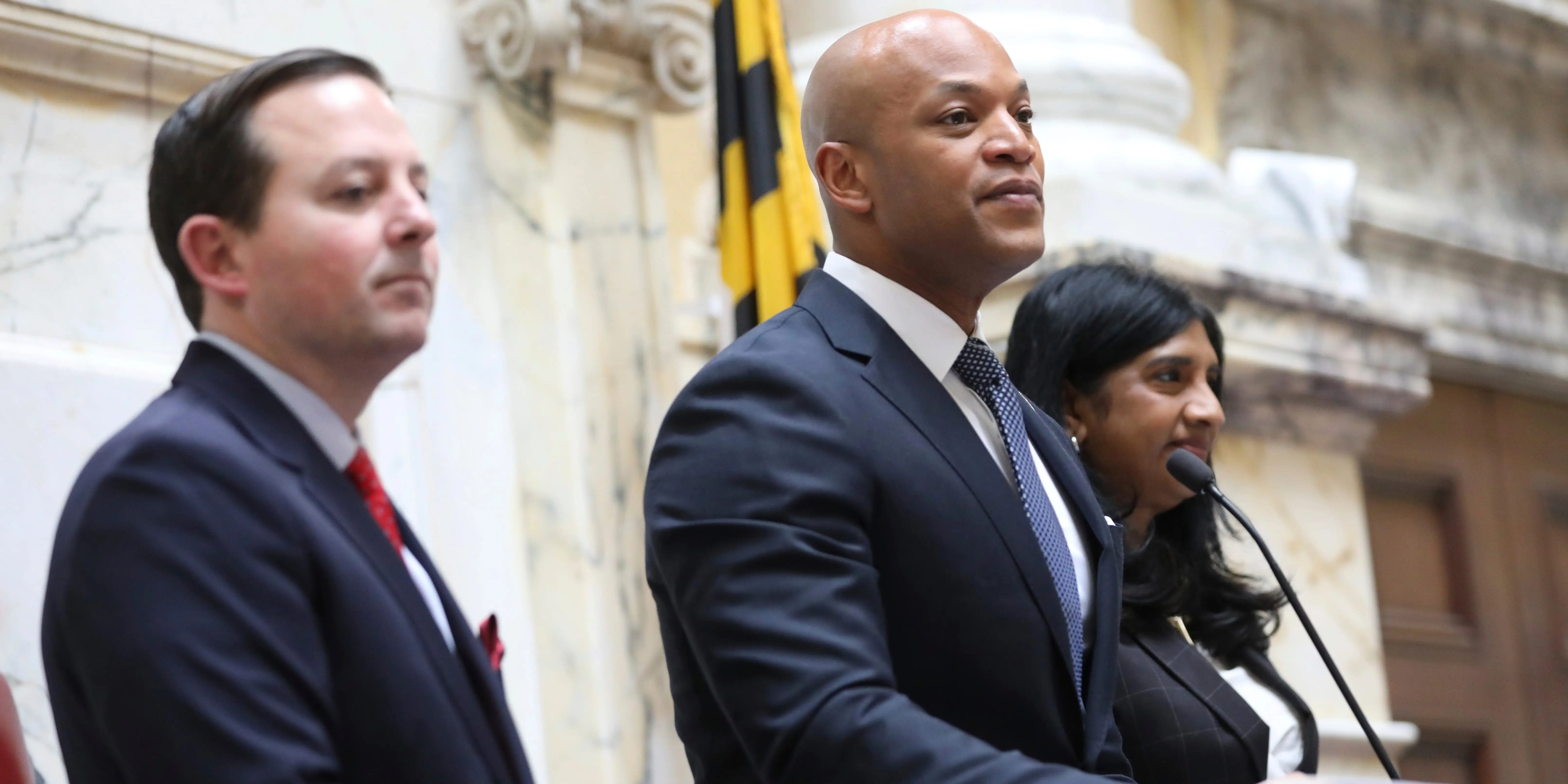
- The forthcoming DOGE commission has been the talk of Washington in recent months.
- Just miles away, Gov. Wes Moore of Maryland is pushing his own government efficiency plans.
- Moore wants to save the state $50 million by weeding out waste.
President-elect Donald Trump’s planned Department of Government Efficiency has been the talk of Washington, especially since Tesla CEO Elon Musk and businessman Vivek Ramaswamy will co-lead the effort.
A perhaps less talked about but also significant government efficiency effort, however, is also taking shape not far from Capitol Hill.
Gov. Wes Moore of Maryland announced this month his state would launch an initiative to weed out waste. His goal: Find $50 million in savings for the current fiscal year.
Maryland faces a $3 billion budget gap. So Moore is proposing $2 billion in spending reductions to his $67.3 billion budget plan. An executive order that Moore signed earlier this month directs state agencies to identify cost savings and eliminate redundancies.
Moore told Business Insider in a recent interview that while he didn’t know DOGE’s full slate of proposals, he thinks they “should probably take a look” at what his administration is doing to boost government efficiency in Maryland.
“We’re looking at everything from fleet management to how we’re looking at IT consolidation to how we’re looking at real estate,” he said. “These items alone are going to save the state of Maryland tens of millions of dollars.”
“DOGE should pay attention to what we’re doing with our government modernization,” he added.
Moore is a first-term Democrat leading one of the country’s bluest strongholds, while the DOGE is a national GOP-led effort. When asked if more Democrats should embrace government efficiency efforts, Moore said voters are looking for results.
“If people are asking, ‘Where’s the future, and what should I look to for inspiration?’ I would say, ‘look at the states,’” he said. “The budget that I just proposed is giving a tax cut to nearly two-thirds of Marylanders — and 82% of the people in my state are either about to get a tax cut or have no change at all in their tax code.”
Moore told BI his plan would cut corporate taxes and eliminate the inheritance tax. The plan would also create a 6.25% tax rate for single filers making at least $500,000 and a 6.5% tax rate for state residents who earn $1 million or more. Under the current tax code, single filers in Maryland who make over $250,000 have an income tax rate of 5.75%.
Similar to the optimism of DOGE’s leaders, Moore believes his state’s efforts can serve as a model for forthcoming efficiency efforts.
“We’re doing a lot of things that people are paying attention to… and a lot of innovation that we’re hoping for is actually happening within our state,” he said. “I’m really proud that Maryland is helping to lead the charge on that.”



See America’s most iconic hot dogs
Welcome to the United States of Hot Dogs! We’ve compiled a few of the best hot dogs eaten across the country.
Although Maryland is often celebrated for its seafood, one over-the-top creation has carved out its own loyal following among locals and visitors alike: The Baltimore-style hot dog.
Sausage is merely its first layer of meat. It’s wrapped in a thick slice of fried beef bologna and piled high with toppings.
It’s proof that while hot dogs are truly an All-American food, their real power lies in how they adapt to local tastes.
Hot dogs were “invented” in the U.S. after German sausages were served in buns. They’re a staple of baseball games — the all-American pastime. And they are truly a democratic food: nearly anyone can afford to enjoy them.
But even more, hot dogs are American because of their adaptability, reflecting the ingenuity and diversity that gives our country such a rich culinary tapestry.
“You can tell the story of America through hot dogs. There are probably other things you could use, other objects or icons, but I think hot dog is a really good one,” said Bruce Kraig, a Ph.D. food historian and author of “Hot Dog: A Global History’ and ‘Man Bites Dog: Hot Dog Culture in America.”
Regional hot dog toppings, from chili in Cincinnati to celery salt in Chicago to jalapeños in the Southwest, tell distinct stories of place.
Here in Baltimore, Maryland, our contribution to the United States of Hot Dogs is the Baltimore-style hot dog.
What is a Baltimore-style hot dog?
At its core, the Baltimore dog is a meat-on-meat masterpiece. It starts with a kosher all-beef sausage that is split, fried and wrapped alongside thick, charred bologna slices.
It’s traditionally topped with raw onions and yellow mustard, with a pickle spear on top or on the side. Some variations include the addition of sweet relish, ketchup or cheese.
“In this creation, grease from the bologna mixes with the grease from the hot dog, and both find their way into the bread to form an unforgettable aroma, taste and aftertaste — and 200 points on your cholesterol count,” Baltimore historian Gilbert Sandler told The Baltimore Sun in a 2019 story.
Where did the Baltimore-style hot dog come from?
Its origins are often somewhat unclear, but it’s believed to have originated during the Great Depression when, according to TasteAtlas.com, “people added bologna slices to the hot dog in order to make it a fuller, heartier meal.”
Jewish delis along Baltimore’s historic “Corned Beef Row” were looking for ways to offer working-class customers a filling, calorie-dense meal for a small chunk of change, leading to the birth of the Baltimore-style hot dog.
First becoming popular in the early 1940s at Mandell and Ballow deli, the bologna-wrapped hot dog spread throughout Baltimore, The Sun reported.
“Despite being a nutritionally questionable combo of two of the world’s least-healthful meats, the bologna dog continues to be a local favorite, enjoyed without apology,” FoodRepublic.com wrote in 2023.
Four best places to try a Baltimore-style hot dog
Attman’s Delicatessen: A Baltimore institution since 1915, Attman’s version of the Baltimore-style hot dog sits at the top of its menu. Its dog — for $7.99 — comes with your choice of mustard, relish, chopped onions and ketchup. Details: 1019 East Lombard St., Baltimore; 410-563-2666, attmansdeli.com.
Weiss Deli: Another Baltimore staple, Weiss serves speciality sandwiches and, of course, the Baltimore-style hot dog. You can customize the $7.49 dog with up to eight toppings, but its most popular version comes with just deli mustard and raw onions on top of the bologna-wrapped sausage. Details: 1127 East Lombard St., Baltimore; 410-276-7910, baltimoreweissdeli.com
The Dog House Carryout: A legendary landmark in Baltimore, The Dog House Carryout has been slinging its classic comfort food for more than 75 years. You can get a quarter-pound all-beef hot dog for $6.95, with bologna added for an extra $1.25. The dog comes with your choice of mustard, relish, onions and ketchup. Details: 617 Fallsway, Baltimore; 410-685-7269, thedoghousebaltimore.com
Killa Dogz: Killa Dogz, one of the more modern hot dog spots in the city, offers a wide variety of options, including what it calls the “Bmore” dog. At $7, its version is deep fried, wrapped in bologna and “served on a squishy bun with mustard.” Chili and cheese are among the top ways to customize its dog. Details: 6106 Belair Rd, Baltimore; 443-438-7822. killadogz.com.
Jennifer Borresen contributed the interactive graphic to this story. She is a graphic journalist at USA TODAY, specializing in explanatory graphics and illustrations in various fields, including politics, science, weather and entertainment.

BALTIMORE, MD. – A Hanover man was sentenced to 15 years in federal prison followed by lifetime supervised release on Wednesday for attempting to provide material support to ISIS, federal prosecutors announced.
Michael Sam Teekaye, Jr., 22, pleaded guilty in January 2026 after unknowingly revealing a plot to travel abroad and fight for the designated foreign terrorist organization to an undercover law enforcement officer, prosecutors said.
What we know:
Court documents reveal that between March and October 2024, Teekaye coordinated travel arrangements with a Somali ISIS fighter. His itinerary detailed a flight departing from Baltimore/Washington International Airport (BWI) to Turkey, with subsequent travel through Ethiopia to cross into Somalia.
FBI agents arrested Teekaye at BWI on October 14, 2024, after he cleared airport security, according to previous FOX 5 D.C. reporting.
READ MORE: Maryland man arrested for allegedly attempting to join ISIS
Leading up to his arrest, court documents say that Teekaye prepared for his departure by practicing at a Maryland shooting range and attempting to purchase an assault rifle, which was blocked due to an existing state probation status.
Days before his arrest, Teekaye sent the undercover officer a photograph of himself wearing a mask and wielding a large machete, declaring a choice of “victory or martyrdom.”
Following his arrest, prosecutors say Teekaye made multiple unprovoked statements to law enforcement vowing to resume his violent efforts upon his eventual release from custody and threatening the lives of prison guards.
Dig deeper:
Federal authorities noted that Teekaye established a secondary plan to execute domestic terrorist attacks targeting Jewish individuals and institutions supporting Israel within Maryland if his international travel failed. A digital forensic search of his phone uncovered specific search histories focused on Jewish organizations and community members in Howard County, alongside queries regarding home break-ins and escaping murder charges.
A local rabbi impacted by the surveillance spoke during the sentencing hearing regarding the threat’s toll on the community.
The Source: Information from the U.S. Attorney’s Office for the District of Maryland and previous FOX 5 D.C. reporting.
Maryland
Governor Moore Announces Awardees for $1.23 Million Investment to Help Maryland Workers Thrive in a Changing Economy

Updated:
ANNAPOLIS, MD – Governor Moore today announced the awardees for the Maryland Lighthouse Industries Upskilling and Reskilling Program, a $1.23M investment that will help Marylanders build skills for careers in high-growth industries increasingly shaped by artificial intelligence (AI) and other emerging technologies. The awards, which will support nearly 600 individuals, will go to organizations across Maryland that are expanding workforce training opportunities in the state’s critical lighthouse industries, including life sciences, technology, aerospace, defense, and manufacturing.
“We are setting up Maryland to lead the nation in this rapidly changing economy, and leaving no one behind in the process,” said Gov. Moore. “By investing in lighthouse industries we are empowering and strengthening our workforce to build the necessary skills for jobs of the future shaped by emerging technologies. This program will ensure that pathways to work, wages, and wealth continue to grow across our state.”
Governor Wes Moore announced the Maryland Lighthouse Industries Upskilling and Reskilling Program earlier this year. Funded through the Talent Innovation Fund, this program is part of a $4 million investment that gives Marylanders experience in rapidly-growing sectors increasingly shaped by emerging technologies. This investment funds hands-on learning for workers, supports the state’s long‑term economic competitiveness, expands the talent pipeline for Maryland employers, and positions the state as a destination for companies looking to grow and innovate.
“Maryland is uniquely poised to lead the AI economy because we have a highly-skilled workforce and innovative companies,” said Maryland Department of Labor Secretary Portia Wu. “Helping more workers to develop leading-edge technology skills will prepare them for the jobs of tomorrow and help shape the future of these industries right here in Maryland.”
Through industry-driven partnerships, this program will help Maryland workers gain in-demand technical and transferable skills and ensure Maryland employers have the talent they need to remain competitive in a rapidly changing global economy.
Awardees and focus areas include:
- BioBuzz Networks, Inc.: Life Sciences (Statewide)
- Davis Unlimited Information Technologies, Inc.: Cybersecurity (Capital Region, Central Maryland)
- HUBZone Council, Inc.: Quantum/AI (Capital Region, Central Maryland, Western Maryland)
- Maryland MEP, Inc.: Manufacturing (Statewide)
- Technology Advancement Center, Inc.: Cybersecurity (Statewide)
- Technology Growth Initiative Inc. dba Fearless Institute: Cybersecurity (Statewide)
- University of Maryland, College Park: Aerospace and Defense (Southern Maryland)
“Maryland MEP is excited and honored to be a part of the lighthouse upskilling program,” said Mike Kelleher, CEO of Maryland MEP, one of the awardees. “This funding will enable manufacturers and manufacturing workers throughout Maryland to receive training in the fundamentals of artificial intelligence and the application of these skills in the manufacturing environment to compete at the global level.”
The Maryland Department of Labor developed this program in consultation with the Governor’s Workforce Development Board—the governor’s chief policy-making body for workforce development.
For more information, visit the Maryland Lighthouse Industries Upskilling and Reskilling Program webpage.
The Moore-Miller administration continues to directly invest in workforce development to prepare for and lead in the new AI economy, reinforcing the administration’s dedication to Maryland’s workforce. In February, Governor Moore announced the Lighthouse Industries and AI Internship program to expand training and experiential learning opportunities in life sciences, technology, aerospace and defense, and manufacturing for college seniors and recent graduates.
###
-

 Nevada3 minutes ago
Local artists on Northern Nevada stages, now through Labor Day weekend
-

 New Hampshire6 minutes ago
Trans athletes drop lawsuit to gain access to girls’ sports in New Hampshire after SCOTUS ruling
-

 New Jersey11 minutes ago
Family describes frantic moments delivering baby on the NJ Turnpike
-

 New Mexico18 minutes ago
Hidden gem in Cloudcroft, New Mexico has best BBQ in US
-

 North Carolina21 minutes ago
North Carolina Airport Looks to Expand Commercial Service | AirlineGeeks.com
-

 North Dakota26 minutes ago
San Francisco plots risky socialist bank modeled after controversial experiment
-

 Ohio33 minutes ago
Feeling itchy? Ohio leads nation with 6 cities on Orkin’s 2026 bed bug list
-

 Oklahoma36 minutes ago
Oklahoma’s Brent Venables named to 2026 Dodd Trophy Preseason watch list

