Florida
Obama grand jury convening in Florida would be major boost for Trump


The Department of Justice’s federal grand jury case to investigate Obama administration officials over their 2016 assessment of Russian election interference could take place in Florida, which would likely provide a more favorable legal environment for the DOJ.
Attorney General Pam Bondi has authorized federal prosecutors to investigate statements and testimony from Obama administration officials regarding alleged ties between President Donald Trump’s 2016 presidential campaign and Russia, directly targeting what Trump has long labeled the “Russia Hoax,” while potentially diverting attention from renewed scrutiny over the Jeffrey Epstein files.
Speculation among legal experts has centered on Florida as a possible location, and the New York Times reported on Tuesday that prosecutors would present the case to a grand jury in South Florida, should the evidence warrant it, citing people briefed on the move who spoke on the condition of anonymity to discuss ongoing investigations.
Newsweek has contacted the DOJ as well as former President Barack Obama’s office via email outside of regular office hours.
Why It Matters
While the venue for the grand jury has not yet been announced, and federal authorities have not indicated when or where jurors will be seated, placing the investigation outside Washington, D.C. would serve as a tactical win for Trump.
Bondi’s move coincides with the Senate’s confirmation of Judge Jason A. Reding Quiñones as the first U.S. attorney of Donald Trump’s second term, and whose appointment fuels speculation centered on the Southern District of Florida as a possible location.
What to Know
Legal experts, such as attorney James Burnham, have called South Florida the “logical” choice for the location of the grand jury, especially in light of setback suffered by the Trump administration in Washington, D.C.
“All eyes on the Southern District of Florida and its newly confirmed US Attorney Jason Reding Quinones, ” he wrote on X on Tuesday.
Trump won the state with 56.1 percent of the vote in the 2024 presidential election. Grand juries are selected from the surrounding community, which in Washington, D.C., means they’re largely drawn from a predominantly Democratic population—Donald Trump received only about 6.6 percent of the D.C.’s vote in the 2024 election.
The Department of Justice has sparred with James Boasberg, the chief judge of the U.S. District Court for the District of Columbia, who issued a temporary restraining order in March blocking Trump’s use of the 1798 Alien Enemies Act to deport Venezuelan nationals—prompting Trump to label him a “Radical Left Lunatic” and call for his impeachment.
The DOJ filed a rare misconduct complaint against Boasberg after he blocked immigration enforcement actions and warned that Trump officials might “disregard federal court rulings,” which the administration saw as evidence of bias.
Trump administration officials are wary to present evidence in a D.C. court that took decisions pertaining to the Russia investigation that began in 2017, The New York Times reported. And having a Trump-appointed U.S. attorney like Quiñones in Florida could significantly influence the process. U.S. attorneys have wide discretion in prioritizing cases, allocating resources, and shaping how aggressively prosecutions are pursued.
Why Florida Could Host the Grand Jury
Federal rules typically require grand juries to operate where the alleged criminal conduct occurred.
For Florida to be the venue, one path could see prosecutors attempt to establish a jurisdictional link between the FBI actions pertaining to the Russia investigation launched under the Obama administration and the search of Trump’s Mar-a-Lago estate for classified documents in 2022.
Prosecutors might argue that actions set in motion in 2016 eventually led to conduct involving classified documents in Florida, justifying the Southern District as the location.
Mandel Ngan/AFP via Getty Images
Who Is Jason A. Reding Quiñones?
Confirmed in a 52-44 party-line Senate vote, Jason A. Reding Quiñones now leads one of the nation’s busiest federal districts.
Quiñones is a Miami native and the son of a Cuban political refugee. He graduated from Florida International University’s law school in 2008, worked in corporate law, served as a U.S. Air Force military lawyer, and later became a Justice Department prosecutor in Miami. Despite early poor evaluations and a dropped discrimination complaint, he transitioned to the civil division and received satisfactory reviews.
What People Are Saying
John Solomon, columnist and journalist, told the Real America’s Voice channel on Tuesday: “This is a major development. We told you last week that Pam Bondi, the Attorney General, had given permission for a strike force to begin. That’s a very specific tool the Justice Department uses on major conspiracies. And we told you then we would know it was getting serious when the grand jury jumped into action.
“We now know that a grand jury will be impaneled—most likely, my sources are telling me, it could be in Florida, where the raid of President Trump’s Mar-a-Lago home happened.”
Attorney, James Burnham wrote on X on Tuesday: “All eyes on the Southern District of Florida and its newly confirmed US Attorney Jason Reding Quinones. Given various setbacks in DC during Trump 45, the extraordinarily lopsided beltway jury pool, and the factual connection to Palm Beach–SD Fla is a logical place for DOJ to pursue this incredibly high stakes grand jury investigation.” X
Judge Quiñones told the Miami Herald: “As the son of a Cuban political refugee and a proud Miami native, I am deeply honored by the trust and confidence that President Trump, Attorney General Bondi, and the United States Senate have placed in me. As the United States Attorney for the Southern District of Florida, I will work tirelessly to protect the American people, restore impartial justice, and defend the rule of law without fear or favor.”
What Happens Next
It remains unclear what charges, if any, the grand jury will consider, who will be investigated, or when proceedings will begin.
The Justice Department must first formally convene the grand jury.



Tiger Woods showed signs of impairment and was arrested at the scene of a car crash in which he struck another vehicle and rolled his Land Rover.
Published On 27 Mar 2026
Tiger Woods was arrested on a DUI charge following a rollover crash in Jupiter Island, Florida, that did not cause any significant injuries.
Martin County Sheriff John Budensiek said Woods and the person in the other vehicle were not injured. Woods was able to crawl out of the passenger side of his Land Rover.
Recommended Stories
list of 4 itemsend of list
The crash occurred just after 2pm (18:00 GMT), not far from where Woods lives on Jupiter Island. Budensiek said Woods attempted to pass a pressure cleaner truck while driving on a two-lane road. He swerved to avoid a collision as he was passing the truck, but clipped the back end of its trailer. Woods’s vehicle then rolled onto its driver’s side.
Budensiek said investigators at the scene found Woods to be showing signs of impairment. He did a breathalyser test, which came out negative, but he refused to take a urine test. Authorities charged him with driving under the influence with property damage and refusal to submit to a lawful test, Budensiek said. Both charges are misdemeanours.
Woods’s manager at Excel Sports did not immediately respond to a text message seeking information.
This was at least the third time Woods has been involved in a car crash, most recently in February 2021, when his SUV ran off a coastal road in Los Angeles at high speed, leading to multiple leg and ankle injuries. Woods said later doctors considered amputation.
Woods has played 11 tournaments since that 2021 crash, not finishing closer than within 16 shots of the winner the four times he finished 72 holes.
He was also arrested on a DUI charge in 2017 when South Florida police found him asleep behind the wheel of his car that was parked awkwardly with damage to the driver’s side. Woods said he had taken a bad mix of painkillers. He later pleaded guilty to reckless driving.
Woods won his fifth Masters and 15th major in 2019. He has 82 wins on the PGA Tour, tied for the all-time record with Sam Snead.
Woods, 50, had been working his way back to golf from a seventh back surgery in September. He had not decided whether he could play in the Masters on April 9-12.
His last official tournament was the British Open in 2024. Woods ruptured his Achilles tendon in March 2025, and that kept him off the course all season, even before the back surgery. He managed to play in his indoor TGL golf league on Tuesday night.
He has kept deeply involved in PGA Tour affairs as chairman of the Future Competition Committee that is restructuring the model of the tour.
Woods also faced a soft deadline at the end of the month to decide whether to become the US Ryder Cup captain for the 2027 matches in Ireland. Woods was offered the job for the last Ryder Cup and did not turn it down until June. The PGA of America wants a decision much sooner this time.

WASHINGTON — The House Ethics Committee found Friday that Democratic Rep. Sheila Cherfilus-McCormick of Florida had committed numerous violations of House rules and ethics standards, a ruling that could add weight to Republicans’ push to expel her from Congress.
After meeting for over seven hours Thursday night, an ethics panel composed of four Democrats and four Republicans found that Cherfilus-McCormick had committed 25 ethics violations. The panel said it would recommend a punishment in the coming weeks.
The allegations center around her receipt of millions of dollars from her family’s health care business after the state of Florida made an overpayment of roughly $5 million in disaster relief funds. Cherfilus-McCormick is accused of using that money to fund her 2022 congressional campaign through a network of businesses and family members.
The congresswoman, who is running for a fourth term representing a southeastern Florida district, has denied wrongdoing, and her attorney stridently criticized Thursday’s public hearing — the first open proceeding in nearly 15 years. But the ruling from the Ethics Committee could fuel a potential vote on her expulsion and divide a Democratic Caucus that is trying to make a comeback to power in the November elections.
Cherfilus-McCormick also faces federal charges for allegedly stealing the $5 million in COVID-19 disaster relief funds and using it for purchases like a 3-carat yellow diamond ring. Her brother, former chief of staff and accountant were also charged in the alleged scheme. She pleaded not guilty to those charges, and her attorney indicated Thursday that the trial is expected to start in the coming months.

-
UP NEXT

Trump extends deadline for Iran strikes amid talks
01:25
-
Trump says he will sign order to pay TSA workers following weeks of long lines
01:37
-
U.S. stocks suffer biggest loss since the war with Iran started
06:41
-
North Carolina mother missing for 24 years is reunited with daughter
01:48
-
Rocky statue temporarily moving inside Philadelphia Museum of Art
00:20
-
Judge says he won’t dismiss Nicolás Maduro’s case over legal fees dispute
08:59
-
Viral robot appearances on the rise as White House hosts humanoid robot
02:56
-
Trump calls mail-in ballots a ‘way of cheating’ despite casting one himself
01:02
-
Utah police investigate Taylor Frankie Paul on third allegation of domestic violence
02:39
-
Melania Trump unveils humanoid robot at D.C. summit
01:00
-
Meta and YouTube found liable of negligence in social media addiction trial
04:42
-
Trump gets Iran war briefings through strike video montages, U.S. officials say
01:34
-
Quadruple amputee and pro cornhole player accused of murder
02:14
-
‘Reacher’ star Alan Ritchson cleared after neighborhood fight
01:34
-
OpenAI announces it is shutting down video platform Sora
02:33
-
Jury in New Mexico finds Meta violated state law in child exploitation case
03:01
-
How Elon Musk’s Mississippi power plant is affecting residents
04:21
-
NTSB says there were two controllers in LaGuardia tower at time of fatal collision
06:31
-
Rubio testifies in trial of former roommate accused of secretly lobbying for Venezuela
02:01
-
Officials summarize audio inside cockpit before crash at LaGuardia
03:51
Top Story
-
UP NEXT
Trump extends deadline for Iran strikes amid talks
01:25
-
Trump says he will sign order to pay TSA workers following weeks of long lines
01:37
-
U.S. stocks suffer biggest loss since the war with Iran started
06:41
-
North Carolina mother missing for 24 years is reunited with daughter
01:48
-
Rocky statue temporarily moving inside Philadelphia Museum of Art
00:20
-
Judge says he won’t dismiss Nicolás Maduro’s case over legal fees dispute
08:59
Nightly News Netcast
Nightly News
Play All

‘The Madison’ adds to Taylor Sheridan’s ‘Yellowstone’ legacy — ‘Marshals’ not so much

Bluetti’s Sora 500 solar panel is incredibly powerful for its size

Russian man who assaulted woman during Barron Trump FaceTime call sentenced to 4 years

Dem senators dodge crucial question on illegal alien accused of killing Chicago college student

Giant golden spiders could spread this summer; experts downplay health risk

Florida High School Football Rankings: Top 25 teams – Oct. 21

How old is Bo Nix? What to know about Oregon quarterback ahead of 2024 NFL Draft

Cleary's 21 help Le Moyne down Central Connecticut State 69-64 in OT

99th annual Pony Swim held in Virginia

Indiana Members Credit Union announced as new anchor tenant at Bottleworks District
Dem senators dodge crucial question on illegal alien accused of killing Chicago college student

EU Parliament unblocks key political hurdle in digital euro talks
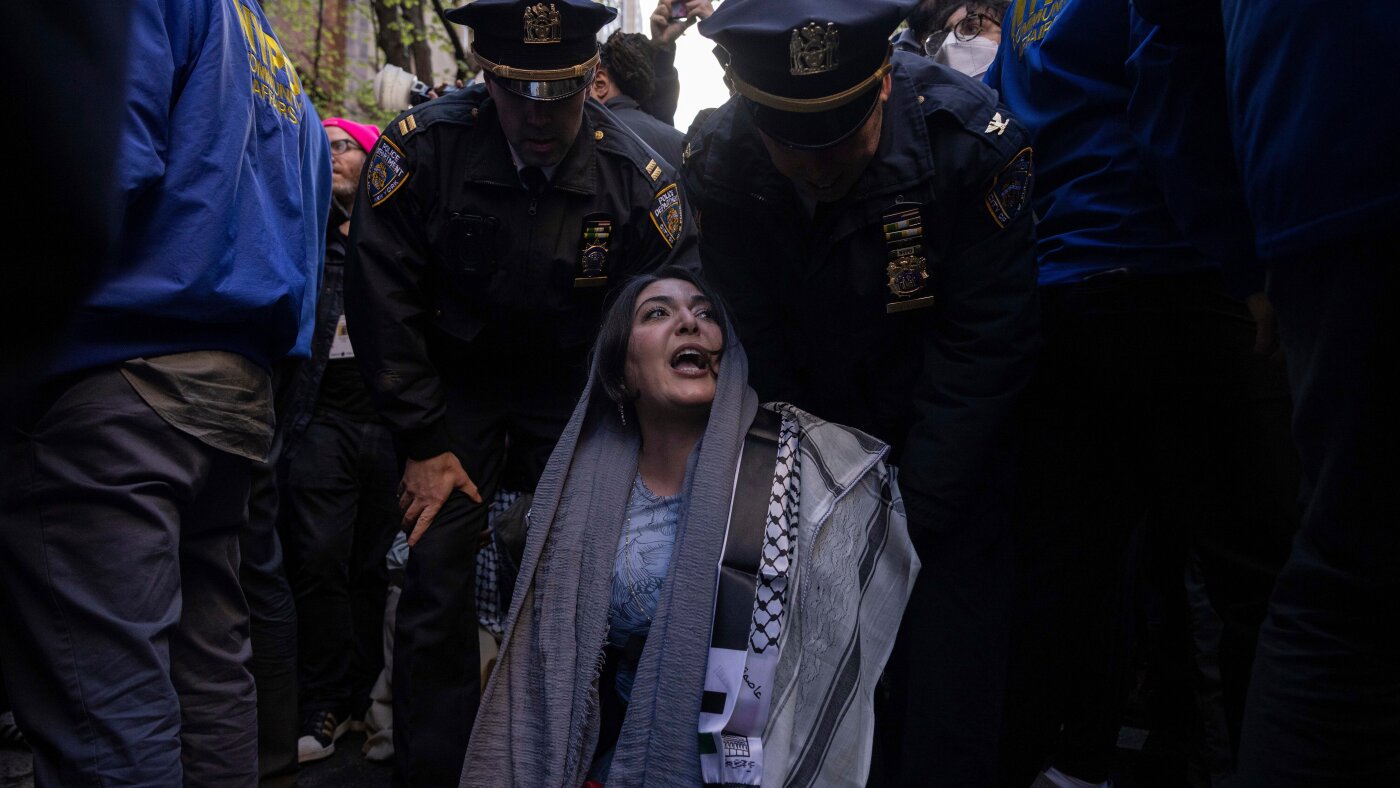
Man arrested in plot to firebomb Palestinian activist’s home after undercover op

WATCH: Senate hearing goes silent after Angel Father confronts top Dem over daughter’s death

US diplomat Marco Rubio denounces settler violence, tolls in Hormuz strait
-

 Detroit, MI1 week ago
Drummer Brian Pastoria, longtime Detroit music advocate, dies at 68
-

 Movie Reviews1 week ago
‘Youth’ Twitter review: Ken Karunaas impresses audiences; Suraj Venjaramoodu adds charm; music wins praise | – The Times of India
-

 Sports7 days ago
IOC addresses execution of 19-year-old Iranian wrestler Saleh Mohammadi
-

 New Mexico5 days ago
Clovis shooting leaves one dead, four injured
-
 Business1 week ago
Disney’s new CEO says his focus is on storytelling and creativity
-

 Technology6 days ago
YouTube job scam text: How to spot it fast
-

 Tennessee4 days ago
Tennessee Police Investigating Alleged Assault Involving ‘Reacher’ Star Alan Ritchson
-

 Texas1 week ago
How to buy Houston vs. Texas A&M 2026 March Madness tickets