Dallas, TX
Dallas’ poverty-fighting CitySquare out of funding and will close at year’s end


Dallas nonprofit CitySquare — for decades a leader in the battle against poverty and homelessness — has run out of money to do its work and will go out of business at year’s end.
In an interview Friday with its leaders, I learned CitySquare will devote the rest of 2024 to transferring its many programs, which serve 27,000 people annually, to other neighborhood providers.
CitySquare also expects to turn over its Opportunity Center campus, across Interstate 30 from downtown, to another operator as a hub for poverty-fighting organizations.
“We didn’t have the time we needed to really right the ship,” said CEO Annam Manthiram, who arrived in late August in hopes of creating a new identity for CitySquare. “We kept thinking fundraising would come back early this year and thought the brand was stronger than it was.”
CitySquare’s long-time visionary was Larry James, a champion of the poor who in 1994 became head of the fledgling Central Dallas Ministries, as the nonprofit was originally known.
James grew the operation into a powerhouse responsible for many good works in Dallas — permanent and temporary housing, food resources, health care and job creation. He also educated policymakers and led anti-poverty efforts at the behest of elected officials.
CitySquare was synonymous with James, perhaps too much so. Once he moved from his CEO job to a board seat in 2021, community members who long supported his work also began to move on.
Ongoing cuts in operating costs, staff and programming in the last year or so haven’t kept up with the “millions of dollars decline” in giving, said board chair Lewis Weinger.
Weinger and Manthiram told me CitySquare’s prospects were further hurt by a lack of financial transparency to the board and donors after James’ retirement and by “culture-workplace issues.” They said they could not provide details of those issues because of HR considerations.
This month, the leadership team and board decided the best outcome for the neighbors who rely on CitySquare’s services was to go public with plans to cease operations and enlist partners to take over the work at year’s end.
CitySquare’s main campus, on Malcolm X Boulevard just south of Interstate 30, provides services such as a food pantry, workforce training and a community resource center. Also on the site are 50 cottages that shelter a fraction of the 500 neighbors in its housing programs.
The best news in this grim moment is that local philanthropic foundations have CitySquare’s back and will provide funds to carry the nonprofit and its programs through the year.
Wayne White, president and CEO of the Communities Foundation of Texas, told me Friday he and others have met with CitySquare leaders to determine how best to ensure neighbors don’t lose services. He said his team “is committed to working with funders and nonprofits to address the gap that will exist once CitySquare winds down their work.”

When I profiled Manthiram in February, she had a sense of the financial problems, but she believed she would have three years to turn things around. “I didn’t anticipate as big of a budget shortfall as actually existed,” Manthiram said, “and the board didn’t know the budget deficit was as large as it was.”
For example, the board had been told the shortfall in CitySquare’s $39 million budget for 2022 was $1.6 million. Manthiram discovered the deficit was $3.2 million. Despite her cost-cutting after arriving in the last quarter of 2023, the nonprofit expects final numbers to show it finished last year with a $2 million deficit.
The previous CEO, John Siburt, took the job in January 2021 after serving as CitySquare president for five years. He left in December 2022 and is now president of Timberview Farmstead in Fort Worth. CitySquare’s chief financial officer and chief development officer at the time, both of whom had been on staff for only a couple of years, also left in 2022.
“There was no intentional hiding of the financial situation,” Siburt told me Saturday. He did not comment on the workplace-culture issues beyond saying “the need to change the CitySquare model created tension at times.”
In separate interviews, Siburt and James said CitySquare’s aggressive attempts to keep people housed during the pandemic triggered an unsustainable financial picture. “I took responsibility for overextending us during COVID,” Siburt said. He later chose to leave the organization “out of a belief that both CitySquare and I could benefit from a fresh start.”
James said the nonprofit many times tried to do too much. “We would see the need and we were sure filling that gap was the right thing to do.”
For example, with struggling residents further crippled by COVID, CitySquare paid the rents and mortgages of hundreds of people and operated 1,000 apartments as permanent supportive housing. Once pandemic-related funding dried up, the nonprofit continued the program with the misguided belief fundraising would catch up.

Weinger described it like this: “Larry could pick up the phone to a few very generous donors and say, ‘This is the check I need each of you to write.’ We didn’t have that path forward any more.”
After James’ departure, Weinger said, a lack of faith and mistrust developed. “It became sort of a Catch-22 that, once Annam was on board, didn’t give her the time to show what we could do.”
Manthiram didn’t uproot her two school-age sons and leave a good job running an Albuquerque homeless services agency to be part of closing down a venerable nonprofit in Dallas.
But with no other apparent choice, she is determined CitySquare’s programs stay in place and its 85-member staff continues its work — eventually under other nonprofits. “My goal now is putting together a transition team to figure out which community-based groups are the best for the neighbors,” Manthiram said. ”Perhaps community partners will even more effectively lift neighbors out of poverty and homelessness than we’ve been able to do in the last few years.”
The Opportunity Center property likely will become even more valuable once the proposed redesign and expansion of I-30 is complete. CitySquare leadership is adamant any new owner maintain the programming without gentrifying the neighborhood.
CitySquare could have sold the building and land to provide funding to get through this year, Weinger said. “But then what about next year?”
Manthiram is heartened that this transition will put neighbors first and avoid gaps in services. “A favorite verse of mine is ‘With God all things are possible,’” she said. “Right now this feels like the right decision.”



The glitz. The glam. The parties. The trips. The allure of high fashion bedazzled with a life of luxury. As with much of the filter-polished nature of social media, all is not as it appears.
For Shaun Balkum, he was living a dream as a high-fashion model with ties to New York and as one of Dallas’ most recognizable faces. The statuesque king of pose was living the high life — or so it seemed. Gracing the runways and booked for Dallas’ marquee fashion shows like DIFFA, Balkum appeared to have it all. Behind closed doors, though, was a past riddled with pain, trauma, suicide ideation and repeated bouts with homelessness. With nowhere to turn and little help, he internalized in the dark, not knowing that many of his peers were also struggling in the same deafening silence.
“Being in the industry for about 15 years now, I’ve been through a lot,” the 34-year-old father of two tells the Observer. “Working in New York at a young age and seeing so many people going down different, dark paths, and the industry just eating them up, was eye-opening for me. A lot of people on the outside will wonder ‘why is this actor on drugs’ or ‘why is there so much suicide within these careers?’ What they don’t realize are the things that these individuals put themselves through. They don’t express or talk about it because they feel like they’re going to be judged at the end of the day by their peers and family.”
Going digital-second
With the dominance of a digital-first culture, creatives today face unprecedented pressure, from constant content demands, online comparison, scrutiny, burnout and isolation. According to a recent study conducted by Creators for Mental Health, an organization that aims to provide resources to digital creators, approximately 1 out of 10 creators say that they’ve experienced suicidal thoughts, with nearly 2 out of 3 creators admitting to mental health challenges such as anxiety and depression. Higher incidence rates rank even more among tenured creators.
According to the National Institute of Health (NIH), suicide continues to be one of the leading causes of death in the U.S. The rate observed among influencers is nearly double the NIH’s reported national average.
And, as online content creation has become an increasingly lucrative path, market oversaturation has fueled added stressors of competition and gig instability.
“There’s an influx of constant competition,” says Jessica Serna, a veteran influencer behind My Curly Adventures. “People don’t realize that it’s not enough just to take good pictures and videos. A lot of times there’s way more going on [behind the scenes] so that you can stand out amongst 100,000 other influencers and creators. I think that’s where the burnout comes – it’s the pressure to stay above in such a competitive field.”
In videos captured across the country, the Dallas-based Serna is all smiles and full of vibrancy as she and her husband traverse turquoise Caribbean waters and dive deep into the ocean blue. Posting daily, she has amassed an audience of over 300,000 Instagram followers sourcing tips on travel, lifestyle and food. Over on TikTok, her reach extends even further with 571,000 followers.
While Serna admits that all that glitters can be gold in the influencer lifestyle, there can also be a dullness when creators face the not-so-glamorous business side of being a creative in order to stand out among a sea of others.
“This has been the most stressful job I’ve ever [had],” Serna says. “I go to sleep thinking about things. I wake up and there’s the pressure of… so many businesses that don’t value your time, or wait two weeks to issue you a paycheck, and then want something the next day, only to ghost you again for another three weeks. Or, a paycheck that you were supposed to get three months ago is now taking its time because it got caught up in something corporate.”
Late paychecks and the pressure to be perfect are only the tip of the iceberg of what creatives experience.
In a recent Youtube confessional titled “being a full time influencer ruined my life,” Dallas creator Ashley Devonna candidly detailed what life was really like for her behind the filters, hashtags and sponsorships. After a 4-year hiatus to recover, the Texas Woman’s University graduate is back, but now on her own terms. Many others are still stuck in the cycle.
Finding community on and offline
Balkum cites a lack of community and safe spaces for honest reflection, as well as a shortage of affordable mental health resources, as inspiring him to launch his House of Balkum Foundation, a 501(c)(3) initiative stemming from the inadequacies of the fashion industry, and now offering emergency relief assistance, emotional support, community gatherings and mental health and wellness resources. His upcoming event, Saving the Creatives —dubbed the “church for creatives” — will feature an all-star panel of Dallas’ top talent including Celebrity Stylist KJ Moody, Actor and Model Kamen Casey, Photographer Jamie House and others, to discuss the challenges suffocating the industry, but also to provide solutions and support.
“We’re all intertwined in a way, and we all need each other,” Balkum says. “You know, the models need the photographers, and the photographers need the makeup artists, and the makeup artists need the models. At the end of the day, I want creatives to understand that they finally have somebody here for them, and that’s looking after them. For all of the creatives that have felt alone, that have struggled in silence – we hear you. You can talk to us and we’ll provide whatever help that we can for you.”
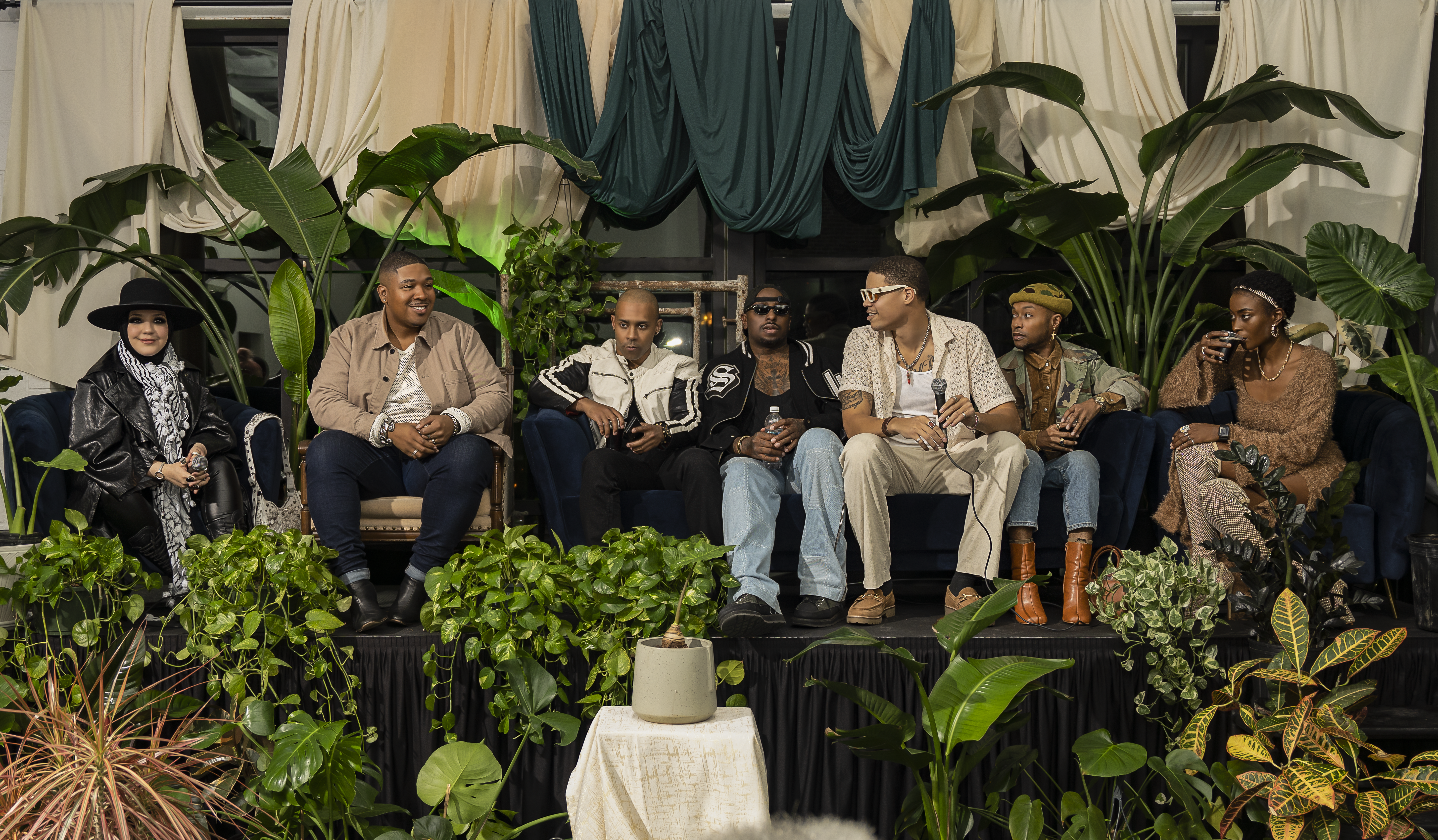
Dallas startup RM11 is on a similar mission. The creator-first platform was founded by Natasha August and boasts numerous perks that allow creators to own their relationships with their followers, receive fair monetization and build a sustainable business – and, hopefully, a less stressful one.
“Creators are entrepreneurs in every sense of the word,” August says. “They’re building brands, communities, revenue streams and entire businesses around their voice and audience. The more I learned about the creator economy, the more I realized how underserved creators really are. They’re expected to be talent, a marketer, customer support, content strategist, community manager and business owner all at once. I saw an opportunity to build something that gave creators more control, better tools and a more supportive way to monetize directly from their audience.”
Recently, RM11 strategically partnered with both Revive Health Therapy and Creators 4 Mental Health – a major step in its mission to support creator well-being, reduce burnout and build a healthier creator ecosystem through its CreatorCare approach. RM11 creators have access to licensed mental health professionals who specialize in creator-specific stressors, as well as affordable, flexible therapy options, community support and wellness tools to help manage burnout and emotional fatigue.
“One of the biggest misconceptions that the general public has is that creating content is easy or not a ‘real job.’ In reality, creators are running small businesses, often by themselves, while also putting their personality, image and personal life in front of the public,” August says. “There’s also a misconception that if someone has followers or makes money online, they must be confident, happy or unaffected by negative comments and pressure. But creators can experience burnout, isolation, anxiety and emotional exhaustion just like anyone else, sometimes even more intensely because their work is so personal and public.”
According to a 2026 study with data from Social Blade, Texas ranks fourth among the nation’s largest hubs for online influencers, accounting for roughly 8% of the most-followed creators. The state is also home to 1 out of 10 creators ranked in the top 500 of the creator ecosystem. If you want to make it to the top of the creator economy, Dallas is where you come. Therefore, Dallas-based businesses like House of Balkum and RM11 are not only essential but necessary with growing demand.
“Being an influencer is easy, but when something’s easy, and you actually want to be successful in it, that’s when it gets harder than people even realize. I’m extremely grateful for it though,” Serna says. “It’s so funny how something can be so simultaneously amazing and so draining at the same time.”
Saving the Creatives will be hosted by The House of Balkum on Sunday, July 12, at 6:00 p.m. at Four Day Weekend, 5601 Sears Street. Tickets are available for $35.
If you or someone you know is struggling with suicidal thoughts, help is available. You can call or text 988 to reach the Suicide & Crisis Lifeline, or chat via 988lifeline.org for free, confidential support 24/7.

Subscribe to The Y’all — a weekly dispatch about the people, places and policies defining Texas, produced by Texas Tribune journalists living in communities across the state.
Two companies tied to a Dallas investor filed a federal lawsuit to lift a moratorium in an ongoing East Texas water dispute, alleging a groundwater district has illegally blocked their efforts to extract water from beneath land they own.
This is the latest legal action taken in a growing battle over groundwater resources in East Texas.
Kyle Bass, a venture capitalist and owner of Redtown Ranch Holdings LLC and Pine Bliss LLC, is seeking to end a moratorium on large-scale water extraction projects imposed by the Neches & Trinity Valleys Groundwater Conservation District. The lawsuit, filed through Redtown Ranch and Pine Bliss, argues that the conservation district violated the constitutional rights of Bass and his companies by denying access to water beneath the land and also seeks an undisclosed amount of compensation.
Redtown Ranch and Pine Bliss, both funded by Bass’ private equity firm Conservation Equity Management, filed permits with the Neches & Trinity Valleys Groundwater Conservation District to drill 43 water wells across two counties that, when fully operational, could extract billions of gallons of water from the Carrizo-Wilcox Aquifer.
“What we’re trying to do here is just prevent the district from weaponizing its regulatory power to strip my clients of their property rights,” said Mollie Mallory, an attorney with Tillotson Patton, the law firm representing Redtown Ranch and Pine Bliss LLC. “The whole purpose here is just to hold them accountable and to get them to follow their own rules.”
Bass said he hasn’t been treated fairly by the district despite following its rules for years. He said the roadblocks enacted by the district, such as the moratorium, prevented his company from testing the groundwater beneath land he owns.
“This is bigger than just what happened to me,” Bass wrote in a statement to The Texas Tribune. “My lawsuit is about protecting the property rights of all Texas landowners and making clear that government regulators cannot simply change the rules to pick winners and losers.”
The groundwater district had not been served with the new lawsuit as of Wednesday afternoon, said Holli Pryor-Baze of Skelton Slusher Barnhill Watkins Wells PLLC, the attorney representing the groundwater district.
“We certainly disagree with the allegations, but are not prepared to say more than that,” she said.
A board meeting for the district will be held next week, at which time Pryor-Baze said she hoped to have been served and given time to think through the lawsuit.
Battle over water rights
The lawsuit follows a yearslong battle over groundwater access that reached a fevered pitch during the second special session of the 2025 legislative session in August. State lawmakers at the time tried and failed to set a statewide moratorium on projects of this magnitude until the state could study its aquifers to determine how much water is available and how quickly the groundwater supply replenishes.
It all began when Conservation Equity Management purchased thousands of acres in Houston, Anderson and Henderson counties with the intent to drill 43 high-capacity water wells. The latter two counties are represented by a groundwater conservation district that gave initial approvals for the project to move forward because the applications were administratively complete, a legal term meaning they were filled out properly.
The project drew the ire of East Texans, who were already angry at a number of Dallas-area organizations seeking to extract water from the region. But poultry producer Wayne-Sanderson Farms LLC, which has operations in East Texas, sued to stop the project, claiming that the wells would drain the area of its main water source and impact its operations. Wayne-Sanderson Farms uses water from the Carrizo-Wilcox Aquifer for its processing plants and feed mills.
A district judge approved a settlement between the groundwater conservation district and Sanderson Farms and barred the district from approving certain applications until the aquifer could be studied. It also voided the original decision that the applications were administratively complete.
Then, on May 21, 2026, the district adopted a resolution calling for a moratorium on any “new non-exempt groundwater permit applications.” This moratorium prevents the district from taking action on applications for projects that don’t provide water for local use, such as for households, agriculture or local businesses.
The moratorium will end in October or when the district finishes reviewing and updating its rules — whichever is later. The district is in the process of doing so right now, Pryor-Baze said.
Conservation Equity Management sued to vacate the judge’s moratorium, then filed the latest lawsuit to stop the district’s moratorium in federal court in Tyler on July 7.
The goal is to allow Pine Bliss and Redtown Ranch to finish the administrative process as laid out in the district’s bylaws. This would include going through the State Office of Administrative Hearings before beginning operations.
“We would just continue down that road with the hope that we eventually get to do exploratory drilling to see what water is on their land,” Mallory said.
Source link

(Editor’s Note: As part of the preparation for training camp, this series will introduce 25 players who are new to the Cowboys’ roster, rookies and veterans alike. We’ll continue with outside linebacker Tyrus Wheat.)
The 2026 season will mark a homecoming for Wheat, who is now back in Dallas for his second stint with the Cowboys. As an undrafted free agent out of Mississippi State, Wheat signed with the Cowboys in 2023 on the practice squad before quickly being signed to the active roster a few months afterwards.
In his rookie season, Wheat saw a majority of his snaps come on special teams with 197, and only 31 snaps on defense. That would flip in his second season, with 165 snaps on defense and 46 on special teams. Through two years, Wheat played in 20 games and tallied 18 tackles and half a sack before spending a year with the Lions in 2025.
As is true across all levels of football, you can never have enough pass rushers. Wheat gives the Cowboys another pass rusher, who has the added ability to be able to help out on special teams as well as a blocker on kickoffs.
As for how much he’ll be in the defensive rotation, that’ll have to be something he earns in training camp. The Cowboys have some younger pass rushers ahead of him now like Donovan Ezeiruaku and first-round pick Malachi Lawrence, so there’ll need to be some proving done. That said, Wheat is also coming off his best year yet with the Lions. Will it be enough to find a role in the pass rush rotation? Oxnard will give us a good idea of that.
- Wheat played a vital special teams role for the Lions last season, tallying 11 special teams tackles which was the third-most for Detroit in 2025. He played a career-high 215 special teams snaps in order to get to that point.
- Wheat’s one and only season away from the Cowboys thus far in his career saw him play in 15 games for the Lions, where he also tallied a career-high 15 tackles and 1.5 sacks despite only playing 66 defensive snaps.
- After wearing 91 in his first stint with Dallas, Wheat returns to the Cowboys wearing 90 now, which was last worn by defensive tackle Solomon Thomas.
-

 Denver, CO2 minutes ago
Victor Marx wins GOP primary for Colorado governor, defeating veteran lawmaker after unorthodox campaign
-

 Seattle, WA9 minutes ago
Widower of pregnant woman who was shot to death in Seattle sues homelessness authority
-

 San Diego, CA12 minutes ago
Terrifying moment huge sea lions chase tourists off popular California beach
-

 Milwaukee, WI24 minutes ago
Milwaukee leaders condemn ICE arrests as agency ignores City mask ordinance
-

 Atlanta, GA27 minutes ago
Georgia Secretary of State opens investigation into voter registration mailers sent to deceased residents
-

 Minneapolis, MN32 minutes ago
Minneapolis chief communications officer Adam Fetcher out amid possible criminal charges
-

 Indianapolis, IN39 minutes ago
Indiana Workforce Pell Grant options limited so far
-

 Pittsburg, PA42 minutes ago
Pennsylvania leaders take new approach to cracking down on robocalls

