Dallas, TX
Cowboys’ roster winners and losers from surprisingly defense heavy draft


The 2025 NFL Draft has concluded, with the Dallas Cowboys making nine picks. Originally scheduled for ten, the Cowboys went into day three with the bulk of their picks still remaining, and did some wheeling and dealing to move up in the fifth round and target even more defensive help with Florida linebacker Shemar James. Day three was also the point the Cowboys waited until to address running back, which came as a surprise, but they double-dipped with Texas’ Jaydon Blue at 149th overall and Clemson’s Phil Mafah at 239th in the seventh.
The single biggest surprise from this Cowboys draft is that they left wide receiver completely untouched. Some runs on the position ahead of their picks in each round may have forced their hand here, but Dallas did a terrific job sticking to their board and finding high-value players, mainly by trusting first-year DC Matt Eberflus to bulk up his side of the ball. Both of the Cowboys day two picks went to defense, as well as three of their six on day three with another double-dip at defensive tackle in the seventh. Jay Toia and Tommy Akingbesote became something of last-ditch picks to address an underrated position of need, at very least from a depth and bodies standpoint, giving the Cowboys more size on the defensive interior.
One of the great initial things to seemingly come out of this draft is also the way the Cowboys created competition. The Cowboys newest rookies will push existing depth players to the roster bubble, especially those that were brought in under previous coaches, almost none of which are still here. The Cowboys also have some clear winners from the existing roster who seemingly got a vote of confidence based on the team’s drafting.
Let’s take an early look at who some of these Cowboys’ roster winners and losers are following the draft.
Winners: WRs Jalen Tolbert, Jalen Brooks, Ryan Flournoy and Jonathan Mingo
The Cowboys positioning in each round did not fall favorably for them to target a receiver with any of their four picks in the top 150. Tet McMillan was gone before their first round choice, Matthew Golden went later in the first, and Luther Burden was drafted before they pivoted to defense in the second round for Donovan Ezeiruaku. There was a total of 20 wide receivers drafted after the Cowboys third-round selection, but by this point the team must have felt none could play right away and make the impact they need. By doing so, the Cowboys put a lot of faith into an existing receiver group that lost Brandin Cooks this offseason. Obviously they could still add a vet WR through free agency or a trade.
The biggest names to keep in mind here are Jalen Tolbert, Jalen Brooks, Ryan Flournoy, and Jonathan Mingo, because they have all been on the roster for part of the time the Cowboys offensive play caller in Schottenheimer has been on staff.
Tolbert has yet to show much over his three years with the team that inspires confidence he can be much more than a third receiver alongside an established primary and secondary option. The Cowboys have their primary target in CeeDee Lamb, and even drafting a receiver 12th overall wouldn’t have changed this, but having to put Tolbert in the current conversation for WR2 is not the best of circumstances. Still, Tolbert emerges from this draft as a winner, at least because he will have a clear path to see the field and find a new role in Schottenheimer’s offense. This is a player that got better with the most consistent reps of his career a year ago, and still fills an obvious need for speed at the skill positions for Dallas.
From the somewhat limited nuggets of information we have about how Schottenheimer wants to scheme the Cowboys offense moving forward, using consistent formations that look the same but present a wide array of concepts to the defense is a priority. This would align the Cowboys closer to teams in the way they help their quarterbacks with these looks. A staple of playing offense in this way is the ability to dictate the matchups receivers, backs, and tight ends get in coverage. If the Cowboys can hone in on this for Tolbert and get his vertical speed working against linebackers and safeties more consistently, it could be the key to seeing the former third-round pick make another leap.
As for both Jalen Brooks and Ryan Flournoy, the Cowboys may not find a lot of dynamic speed and explosive play ability from either, but these are big targets that present wide catch radiuses for Dak Prescott. Both receivers have their best potential in the red zone, where Dallas was 31st in the league only ahead of the New York Giants in scoring touchdowns last season. If using Prescott’s mobility is going to be another focus for the redesigned offense, moving him out of the pocket to layer throws to the likes of Brooks, Flournoy, and even last year’s trade acquisition Mingo, can become bread and butter plays. This is an offense that will have to work hard to create run-after-the-catch situations for their receivers, but has some of the potential to do so on the depth chart.
The Cowboys also ended the draft without making any of the “substantiated” trades Jerry Jones hinted at coming into it, and wide receiver is a position they’ve shown a propensity to target in trades before. Not just with Mingo a year ago, but obviously Amari Cooper in 2018 when things were looking bleak at receiver prior to that trade. Fans may think things are equally bleak on the current depth chart at WR, but at minimum this team has young talent still on the rise in multiple receivers for the first time in a long time, all of which became winners after the draft without a single new rookie to compete with.
Losers: OL Nathan Thomas, T.J. Bass, and Brock Hoffman
When the Cowboys started off their draft with Alabama’s Tyler Booker, one of the benefits was reshuffling the depth chart along the offensive line to put depth players into backup roles and not over-slotted as potential starters. This equation changed a little bit when the Cowboys took yet another versatile offensive lineman in Ajani Cornelius in the fifth round.
Cornelius was a tackle at Oregon, but is expected to move to guard in the NFL. The Cowboys know better than most teams how to get the most out of linemen transitioning from one position to another in the pros, and do so while still valuing them as an option at all of their capable positions. This is why adding both Booker and Cornelius is not the best news for the likes of Nathan Thomas, T.J. Bass, and Brock Hoffman.
Thomas was a seventh-round pick last year, another collegiate tackle that also projects as a big guard at the pro level. The fact the Cowboys are already putting second-year draft picks on the roster bubble shows how serious they were about recommitting to the offensive line. Thomas could have been a longshot to compete for the right guard rotation before the team drafted Booker, and a backup guard option with swing potential before Cornerlius was picked. Now, Thomas will have to compete with a player coming out of a bigger school with higher draft pedigree.
The player who likely fell out of starting job consideration entirely is Brock Hoffman. This is a player that went from having something of an inside track to the right guard job, to at least being the primary backup at two positions with the ability to play center behind Cooper Beebe, and now by the end of the draft will find himself in a fight with the team’s latest fifth-round pick as well as Robert Jones and Saahdiq Charles to remain a primary backup guard. T.J. Bass also finds himself in a battle to be a backup along the interior line.
The Cowboys have not backed down for even a second under Schottenheimer when it comes to their desire to field one of the best offensive lines in the league again, and may have found the pieces to do so in this draft.
Winners: TEs Jake Ferguson, Luke Schoonmaker
The Cowboys proved throughout the draft they were not afraid to address positions that weren’t necessarily considered top needs, but passed on a dark horse way to still upgrade their skill offensively with their very first pick. Penn State tight end and Swiss army knife Tyler Warren was surprisingly still on the board, after the Bears made Colston Loveland the first TE off the board at 10th overall. With Jake Ferguson going into a contract year after having a down year in 2024, the consideration among fans was strong for Warren. Dallas made it clear they are content to go into another season with Ferguson hopefully staying healthy throughout and catching more passes from Dak Prescott, not any of their backup QBs.
When Dallas was down to their backups last season, and Ferguson was unavailable, they actually saw some flashes from second-year player Luke Schoonmaker as well. Schoonmaker has shown flashes of being a reliable check-down option on the types of bootleg or moving pocket throws that could also help the Cowboys receiving corps greatly, as well as a middle of field seam option. The Cowboys also have blocking tight end Brevyn Spann-Ford with room to grow more as a pass catcher. This trio was enough for the Cowboys to pass on Tyler Warren, and LSU TE Mason Taylor went two picks before their second-round choice. This all but shut the door on the Cowboys upgrading significantly at tight end in this draft, leaving the arrow pointing up for both Ferguson and Schoonmaker.
Loser: LB Damone Clark
The Cowboys overhauling their linebacking room prior to the draft via the trade market was bad enough news for Damone Clark, coming off a season where he played a very limited role in Mike Zimmer’s defense. Dallas did not stop at trading for Kenneth Murray and Jack Sanborn though, they also traded up in the fifth-round to draft Florida LB Shemar James. Matt Eberflus’ influence was felt throughout this draft, and when it comes to being the former LB coach for the Cowboys, he has certainly had his way in rebuilding the position group in his image.
:no_upscale()/cdn.vox-cdn.com/uploads/chorus_asset/file/25972291/1693946002.jpg)
Clark will be one of the few linebackers to play for all three of the recent DCs for the Cowboys in Dan Quinn, Zimmer, and Eberflus, but now more than ever the depth chart is stacked against him with young talent and specific scheme fits. The Cowboys still need additional bodies at the position until DeMarvion Overshown is ready to play this season, which may not happen at all, but Clark will have to outperform one of Sanborn, Murray, James, or Marist Liufau to really find a consistent role on defense.
Winner: DE Micah Parsons
The Cowboys have so many new faces and moving pieces to their defense coming out of this draft, it is almost possible to forget that Micah Parsons is still the star the rest of this entire unit revolves around. Parsons never stopped playing hard for a team out of contention last season, and has been rewarded this offseason with a completely retooled defensive front that should help him thrive in all of the ways he knows how to.
The Cowboys took another pass rusher in the second round with Donovan Ezeiruaku. They’ve added athletic rushers Payton Turner and former Cowboy Dante Fowler Jr. to the group this offseason as well. Sam Williams is set to return after missing all of last season with an ACL and MCL tear. The ability for all of these players to interchange and rush from different positions could be a nightmare for opposing offenses to deal with at the line of scrimmage.
The Cowboys must do everything they can with the rest of the offseason to embrace their pass rush stable being one of the brightest spots on the whole roster, and find ways to maximize their ability to impact the game. Being a great ball control team offensively would go a long way here, and Dallas certainly has their work cut out figuring out what combination of Miles Sanders, Javontae Williams, Deuce Vaughn, Jaydon Blue, and Phil Mafah out of the backfield can help them achieve this.
The Cowboys are in great position to get another all-world season out of Micah Parsons. While this may have been true before the draft, considering we are talking about Micah Parsons here, the way they continued to focus on the front seven and helped Parsons even more was somewhat unexpected – but absolutely welcome.



Subscribe to The Y’all — a weekly dispatch about the people, places and policies defining Texas, produced by Texas Tribune journalists living in communities across the state.
Two companies tied to a Dallas investor filed a federal lawsuit to lift a moratorium in an ongoing East Texas water dispute, alleging a groundwater district has illegally blocked their efforts to extract water from beneath land they own.
This is the latest legal action taken in a growing battle over groundwater resources in East Texas.
Kyle Bass, a venture capitalist and owner of Redtown Ranch Holdings LLC and Pine Bliss LLC, is seeking to end a moratorium on large-scale water extraction projects imposed by the Neches & Trinity Valleys Groundwater Conservation District. The lawsuit, filed through Redtown Ranch and Pine Bliss, argues that the conservation district violated the constitutional rights of Bass and his companies by denying access to water beneath the land and also seeks an undisclosed amount of compensation.
Redtown Ranch and Pine Bliss, both funded by Bass’ private equity firm Conservation Equity Management, filed permits with the Neches & Trinity Valleys Groundwater Conservation District to drill 43 water wells across two counties that, when fully operational, could extract billions of gallons of water from the Carrizo-Wilcox Aquifer.
“What we’re trying to do here is just prevent the district from weaponizing its regulatory power to strip my clients of their property rights,” said Mollie Mallory, an attorney with Tillotson Patton, the law firm representing Redtown Ranch and Pine Bliss LLC. “The whole purpose here is just to hold them accountable and to get them to follow their own rules.”
Bass said he hasn’t been treated fairly by the district despite following its rules for years. He said the roadblocks enacted by the district, such as the moratorium, prevented his company from testing the groundwater beneath land he owns.
“This is bigger than just what happened to me,” Bass wrote in a statement to The Texas Tribune. “My lawsuit is about protecting the property rights of all Texas landowners and making clear that government regulators cannot simply change the rules to pick winners and losers.”
The groundwater district had not been served with the new lawsuit as of Wednesday afternoon, said Holli Pryor-Baze of Skelton Slusher Barnhill Watkins Wells PLLC, the attorney representing the groundwater district.
“We certainly disagree with the allegations, but are not prepared to say more than that,” she said.
A board meeting for the district will be held next week, at which time Pryor-Baze said she hoped to have been served and given time to think through the lawsuit.
Battle over water rights
The lawsuit follows a yearslong battle over groundwater access that reached a fevered pitch during the second special session of the 2025 legislative session in August. State lawmakers at the time tried and failed to set a statewide moratorium on projects of this magnitude until the state could study its aquifers to determine how much water is available and how quickly the groundwater supply replenishes.
It all began when Conservation Equity Management purchased thousands of acres in Houston, Anderson and Henderson counties with the intent to drill 43 high-capacity water wells. The latter two counties are represented by a groundwater conservation district that gave initial approvals for the project to move forward because the applications were administratively complete, a legal term meaning they were filled out properly.
The project drew the ire of East Texans, who were already angry at a number of Dallas-area organizations seeking to extract water from the region. But poultry producer Wayne-Sanderson Farms LLC, which has operations in East Texas, sued to stop the project, claiming that the wells would drain the area of its main water source and impact its operations. Wayne-Sanderson Farms uses water from the Carrizo-Wilcox Aquifer for its processing plants and feed mills.
A district judge approved a settlement between the groundwater conservation district and Sanderson Farms and barred the district from approving certain applications until the aquifer could be studied. It also voided the original decision that the applications were administratively complete.
Then, on May 21, 2026, the district adopted a resolution calling for a moratorium on any “new non-exempt groundwater permit applications.” This moratorium prevents the district from taking action on applications for projects that don’t provide water for local use, such as for households, agriculture or local businesses.
The moratorium will end in October or when the district finishes reviewing and updating its rules — whichever is later. The district is in the process of doing so right now, Pryor-Baze said.
Conservation Equity Management sued to vacate the judge’s moratorium, then filed the latest lawsuit to stop the district’s moratorium in federal court in Tyler on July 7.
The goal is to allow Pine Bliss and Redtown Ranch to finish the administrative process as laid out in the district’s bylaws. This would include going through the State Office of Administrative Hearings before beginning operations.
“We would just continue down that road with the hope that we eventually get to do exploratory drilling to see what water is on their land,” Mallory said.
Source link

(Editor’s Note: As part of the preparation for training camp, this series will introduce 25 players who are new to the Cowboys’ roster, rookies and veterans alike. We’ll continue with outside linebacker Tyrus Wheat.)
The 2026 season will mark a homecoming for Wheat, who is now back in Dallas for his second stint with the Cowboys. As an undrafted free agent out of Mississippi State, Wheat signed with the Cowboys in 2023 on the practice squad before quickly being signed to the active roster a few months afterwards.
In his rookie season, Wheat saw a majority of his snaps come on special teams with 197, and only 31 snaps on defense. That would flip in his second season, with 165 snaps on defense and 46 on special teams. Through two years, Wheat played in 20 games and tallied 18 tackles and half a sack before spending a year with the Lions in 2025.
As is true across all levels of football, you can never have enough pass rushers. Wheat gives the Cowboys another pass rusher, who has the added ability to be able to help out on special teams as well as a blocker on kickoffs.
As for how much he’ll be in the defensive rotation, that’ll have to be something he earns in training camp. The Cowboys have some younger pass rushers ahead of him now like Donovan Ezeiruaku and first-round pick Malachi Lawrence, so there’ll need to be some proving done. That said, Wheat is also coming off his best year yet with the Lions. Will it be enough to find a role in the pass rush rotation? Oxnard will give us a good idea of that.
- Wheat played a vital special teams role for the Lions last season, tallying 11 special teams tackles which was the third-most for Detroit in 2025. He played a career-high 215 special teams snaps in order to get to that point.
- Wheat’s one and only season away from the Cowboys thus far in his career saw him play in 15 games for the Lions, where he also tallied a career-high 15 tackles and 1.5 sacks despite only playing 66 defensive snaps.
- After wearing 91 in his first stint with Dallas, Wheat returns to the Cowboys wearing 90 now, which was last worn by defensive tackle Solomon Thomas.


Detroit Pistons introduce second-round pick Ugonna Onyenso
Detroit Pistons rookie second-round pick Ugonna Onyenso is introduced to members of the media July 6, 2026.
The Detroit Pistons have traded a third player this summer.
The Pistons agreed to deal 25-year-old combo guard Marcus Sasser to the Dallas Mavericks, coached by ex-Michigan coach Dusty May, on Tuesday, July 7, according to ESPN. The Pistons are also sending a protected 2028 second-round pick to the Los Angeles Clippers.
This comes as part of a complex six-team trade that includes the Pistons dealing Caris LeVert in a salary-saving move to the Milwaukee Bucks on Tuesday evening. The six-team trade also involves the previously reported moves of the Pistons trading Isaiah Stewart to the Memphis Grizzlies and the Pistons’ acquisition of John Collins from the Clippers.
The Pistons generate a trade exception worth $15 million in the trade-palooza, a person with first-hand knowledge told the Free Press, granted anonymity because they are not authorized to speak publicly. The trade exception is worth the same amount as Stewart’s outgoing salary for 2026-27 and allows the Pistons to take in salary up to $15 million without having to send any back. It expires in exactly one year.
Sasser joins a Mavs backcourt where Kyrie Irving is the starting lead guard, and could compete with second-year undrafted guard Ryan Nembhard for the backup role.
Sasser, who the Pistons traded up to draft 25th overall out of Houston in 2023 under previous general manager Troy Weaver, averaged 5.2 points and shot 41.5% from 3. He is on an expiring contract worth $5.2 million from his four-year, $13.5 million rookie deal.
When called upon, Sasser proved he can play. The 6-foot-1, 195-pounder was one of the team’s best shooters, but only appeared in 38 games last season due to injury and the Pistons’ depth at guard.
Pistons president of basketball operations Trajan Langdon indicated a desire to add more ball-handling and shooting this offseason, after a 60-22 season ended in Game 7 of the second round.
Sasser’s path to minutes wasn’t going to get easier following the addition of first-round pick Ebuka Okorie, a 19-year-old from Stanford, whom the Pistons traded up four spots to draft No. 17 overall.
Then, Langdon traded for one of the NBA’s best 3-point shooters in guard Isaiah Joe in a deal with the Oklahoma City Thunder.
Sasser, who was out of the playoff rotation until Game 5 of the second round, sparked the Pistons in Game 6 at Cleveland, pouring in nine points on 4-for-5 shooting in 18 minutes in a win-or-go-home setting. He played 23 minutes in Game 7, scoring nine points on 3-for-12 shooting in a 125-94 blowout loss to the Cavaliers at home.
Pistons roster moves this offseason
The Pistons have turned over much of the roster this summer through the draft and NBA free agency.
Here’s who they’ve added and who they’ve lost:
Lost
- Traded Marcus Sasser (Mavericks)
- Traded Caris LeVert (Bucks)
- Traded Isaiah Stewart (Grizzlies)
- Tobias Harris (Spurs)
Added
- Drafted Ebuka Okorie (No. 17)
- Drafted Ugonna Onyenso (No. 53, two-way contract)
- Acquired Isaiah Joe (Thunder)
- Acquired John Collins (Clippers)
- Acquired Taurean Prince (Bucks)
- Acquired Gary Harris (Bucks)
The Pistons also re-signed bench wings Kevin Huerter and Javonte Green.
Pistons depth chart
The Pistons have 16 players on their 15-man roster, plus two of three two-way slots filled. Here’s where their depth chart currently stands as of Wednesday morning:
*Jalen Duren remains unsigned as a restricted free agent.
- PG: Cade Cunningham, Daniss Jenkins, Ebuka Okorie.
- SG: Duncan Robinson, Isaiah Joe, Javonte Green, Chaz Lanier, Gary Harris.
- SF: Ausar Thompson, Ron Holland, Kevin Huerter, Taurean Prince.
- PF: John Collins, Isaac Jones (two-way).
- C: *Jalen Duren, Paul Reed, Tolu Smith, Ugonna Onyenso (two-way).
[ MUST WATCH: Make “The Pistons Pulse” your go-to Pistons podcast, listen available anywhere you listen to podcasts (Apple, Spotify) or watch live on YouTube. ]
-
 Science23 seconds ago
Not everyone is leaving California. A new commercial battery maker just landed in Sacramento
-
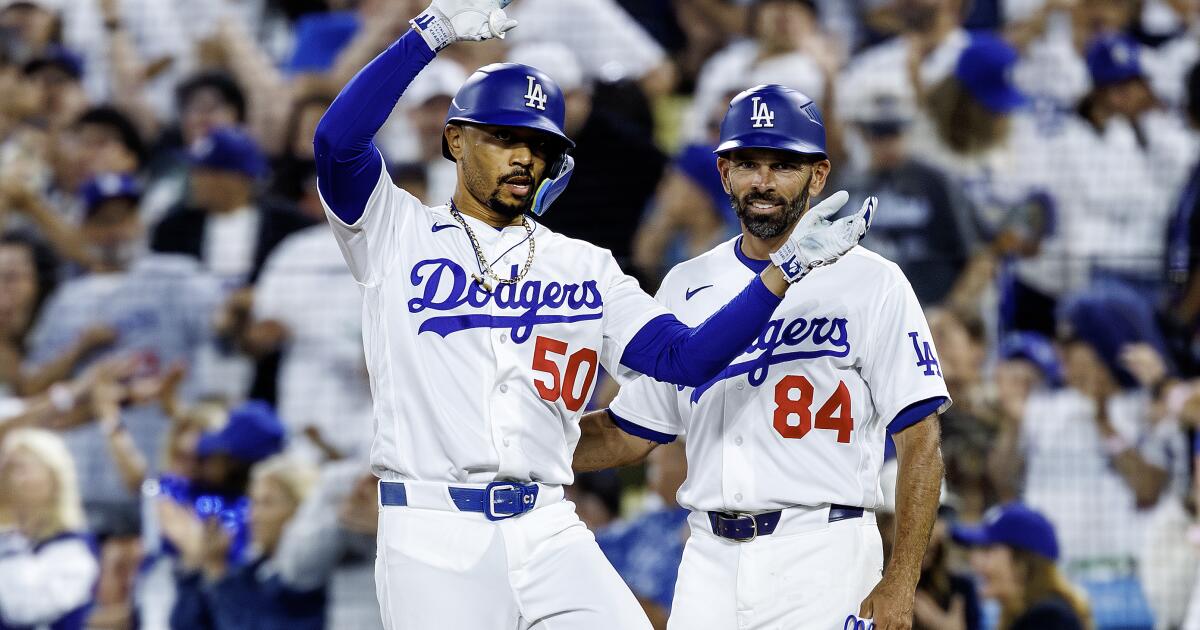 Sports3 minutes ago
Mookie Betts’ eighth-inning single gives Dodgers the win over the Rockies
-
World15 minutes ago
From sewers to swimming sites: how Europe's cities reclaim their rivers
-

 News45 minutes ago
Three more people charged with damaging Reflecting Pool after Trump’s multimillion-dollar restoration | CNN Politics
-

 Los Angeles, Ca2 hours ago
Loved ones search for missing 34-year-old Southern California woman
-

 Detroit, MI2 hours ago
Chickens, geese found at vacant home after nonprofit reports them stolen
-

 San Francisco, CA3 hours ago
What’s next for San Francisco Giants as MLB trade deadline approaches?
-
Dallas, TX3 hours ago
Dallas millionaire files lawsuit against groundwater district

